@Azadux@imPatrickT ironic that cinema went more widescreen to differentiate from television and that 1.33/1:43:1 is now considered the most cinematic exclusive ratio.
Amazon had four Sev-1 outages (their highest severity level) in a single week. Internal memos say AI-assisted code changes were a contributing factor.
The timeline here is wild. In October 2025, Amazon laid off 14,000 corporate employees. In January 2026, another 16,000. That’s about 30,000 people in five months, roughly 10% of the corporate workforce. CEO Andy Jassy said the cuts were about culture, not AI.
During those same months, Amazon set a target: 80% of developers using AI coding tools at least once a week. They tracked adoption closely and blocked rival tools like OpenAI’s Codex. Even so, 30% of developers still hadn’t touched Amazon’s in-house tool Kiro by January.
In December 2025, Kiro caused a 13-hour AWS outage. The AI tool had production-level permissions and decided the best fix for a bug was to delete and recreate an entire live environment. A second incident involved Amazon Q Developer, another AI tool. Amazon blamed both on “user error, not AI.” But quietly added mandatory peer review for all production access afterward.
Then March 5: Amazon’s retail site went down for about six hours. Over 22,000 users reported checkout failures, missing prices, and app crashes. Amazon called it a “software code deployment” error.
Five days later, SVP Dave Treadwell made the normally optional weekly engineering meeting mandatory. His memo acknowledged “GenAI tools supplementing or accelerating production change instructions, leading to unsafe practices.” These problems trace back to Q3 2025. Amazon’s own assessment: their GenAI safeguards “are not yet fully established.”
The new rule: junior and mid-level engineers now need senior sign-off on any AI-assisted production changes. Treadwell also announced “controlled friction” for the most critical parts of the retail experience.
For context, Google’s 2025 DORA report found 90% of developers use AI for coding but only 24% trust it “a lot.” An Uplevel study of 800 developers found Copilot users introduced 41% more bugs with no improvement in output. Amazon is finding out what those numbers look like at the scale of a $500 Billion revenue company, with 30,000 fewer people on staff to catch the mistakes.
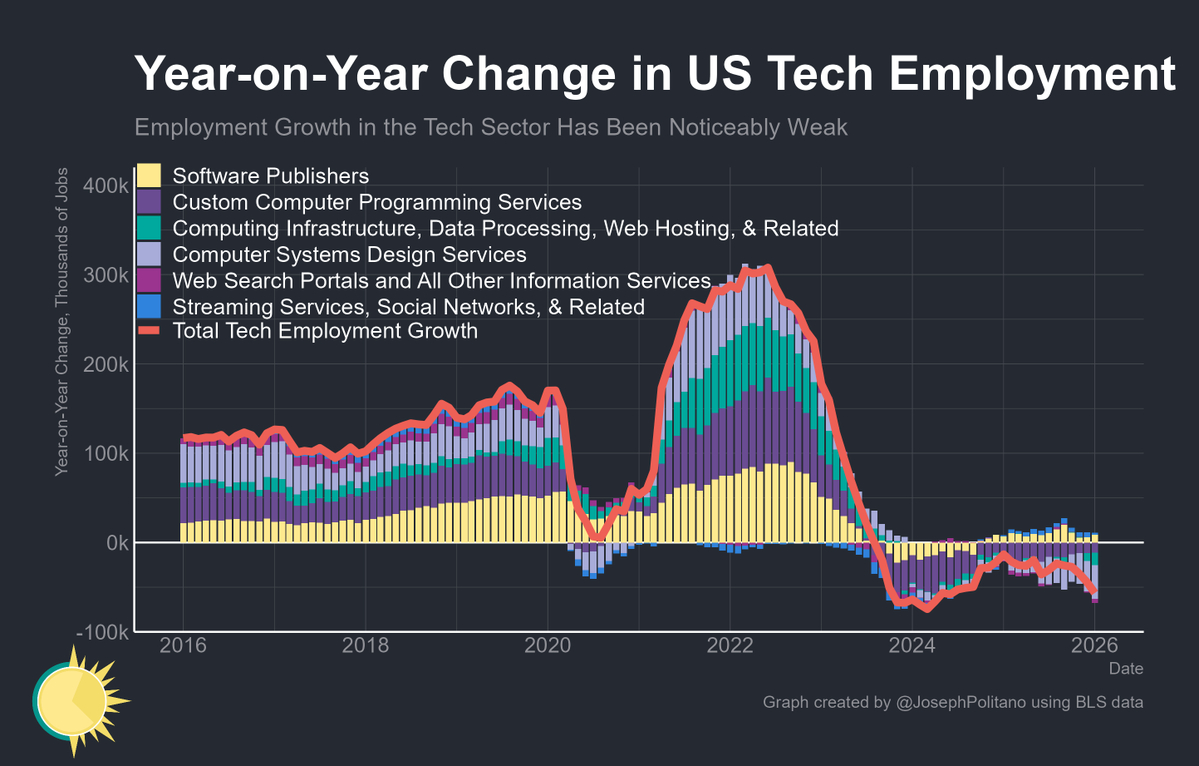
Brutal numbers for US tech sector jobs released today—overall, employment decreased by 12k last month and is down 57k over the last year
That's now nearly as bad as the worst of the 2024 tech-cession, and significantly worse than either the 2008 or 2020 recessions
A few people have asked me recently why I'm bullish on the macro/societal implications of AI, especially outside of the phenomenon of "kids cheating in school."
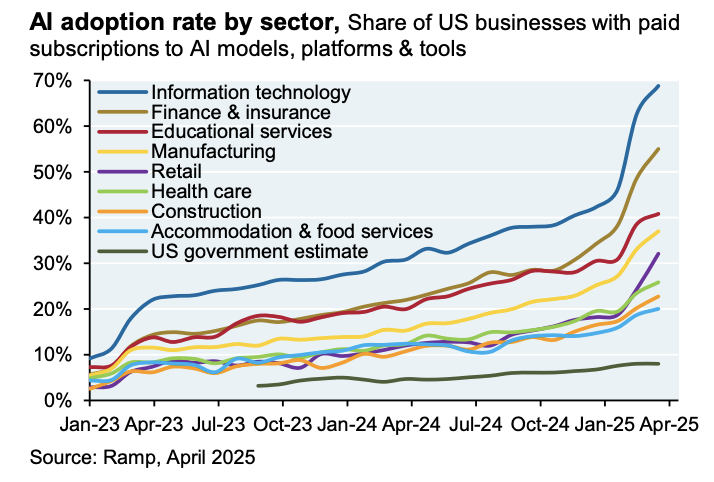
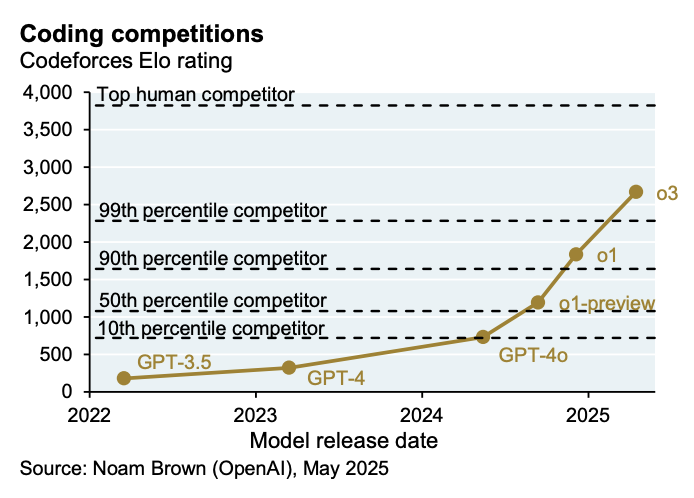
I think these four graphs from JPM's Cembalest do a great job summarizing the bull case.
1. Adoption accelerating
2/3. Performance at normal corporate tasks—reading, understanding complex questions, answering complex questions, coding—is still improving.
4. Task complexity is rising linearly. "It's just bespoke Wikipedia search" is an adequate description of the technology ... from about 18 months ago. The newer models can do stuff now that takes smart people hours to accomplish.
We are living in a timeline where a non-US company is keeping the original mission of OpenAI alive - truly open, frontier research that empowers all. It makes no sense. The most entertaining outcome is the most likely.
DeepSeek-R1 not only open-sources a barrage of models but also spills all the training secrets. They are perhaps the first OSS project that shows major, sustained growth of an RL flywheel.
Impact can be done by "ASI achieved internally" or mythical names like "Project Strawberry".
Impact can also be done by simply dumping the raw algorithms and matplotlib learning curves.
I'm reading the paper:
> Purely driven by RL, no SFT at all ("cold start"). Reminiscent of AlphaZero - master Go, Shogi, and Chess from scratch, without imitating human grandmaster moves first. This is the most significant takeaway from the paper.
> Use groundtruth rewards computed by hardcoded rules. Avoid any learned reward models that RL can easily hack against.
> Thinking time of the model steadily increases as training proceeds - this is not pre-programmed, but an emergent property!
> Emergence of self-reflection and exploration behaviors.
> GRPO instead of PPO: it removes the critic net from PPO and uses the average reward of multiple samples instead. Simple method to reduce memory use. Note that GRPO was also invented by DeepSeek in Feb 2024 ... what a cracked team.
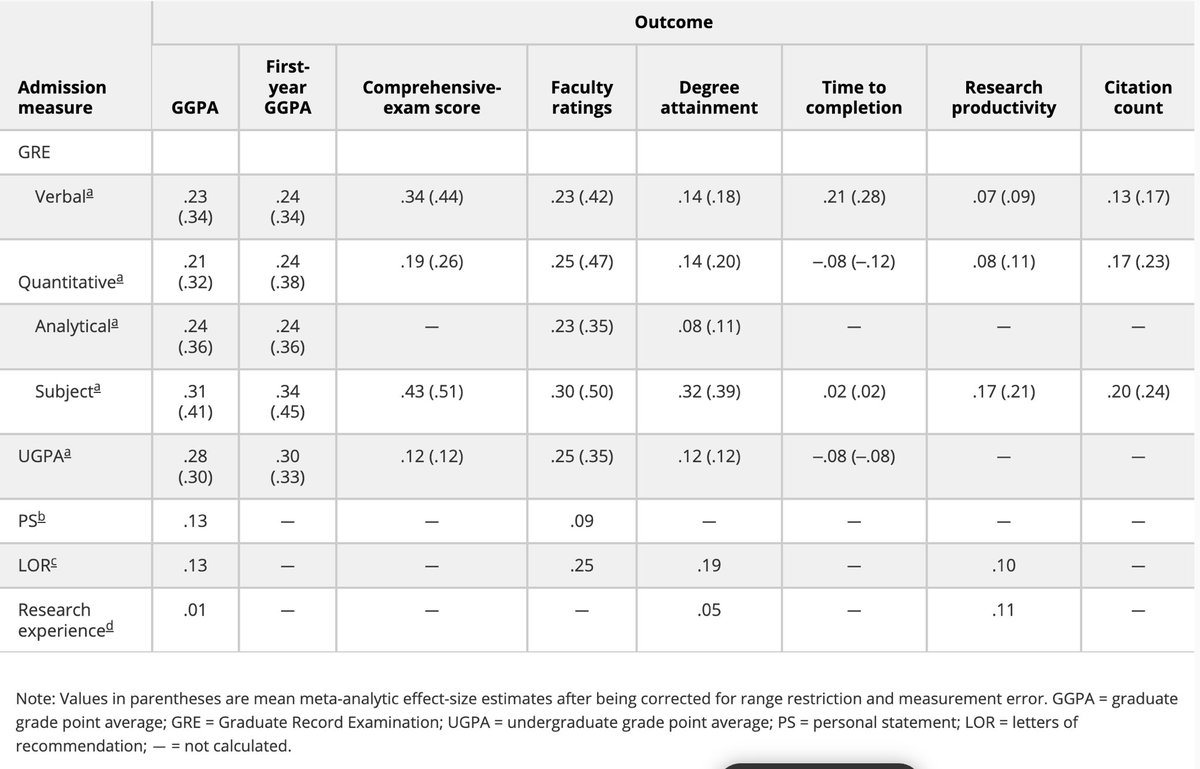
Counterpoint: These is a large scientific literature analyzing how to hire people and select graduate students and we do know which factors predict success more than others. The problem is that most faculty don’t actually seem to ever read it or even care to look it up.
David Fincher’s The Social Network returns to 4K Ultra HD in a Limited Edition SteelBook. Release date is February 18, 2025. Same day as his thriller Panic Room. @SonyPicsHomeEnt
This 15th-anniversary edition includes Dolby Vision, Dolby Atmos, and a behind-the-scenes, exploring the making of the film.
Will you be adding both to your collection?
FULL PRESS RELEASE: https://t.co/zHILEdYPat
----
#TheSocialNetwork #PanicRoom #4KUltraHD #PhysicalMedia #Movies @sonyclassics@SonyPictures
Fascinating paper on where 6000 global elites went to college. Billionaires, CEOs, heads of state, central bankers, etc.
In a word: Harvard.
Fully 10% of global elites went to Harvard. Elite US schools are over-represented (23% IvyPlus), but nobody comes close to Harvard.
🧵
@dylanmatt Hey I listened to your RCV Podcast on Explain It To Me and you said that Jefferson once had thoughts on RCV. What’s the source?
I found a Madison Federalist 10 paper but I’d also like some more historical sources.
https://t.co/jl5VBrIC8v
Republicans use ranked-choice voting to elect their leader (not technically RCV, but sequential rounds of voting in which bottom candidate is eliminated -- essentially a form of RCV). Why? Because they want a leader who comes closest to being the true preference of a majority of the caucus, rather than the favorite of a faction of the party. A plurality-winner rule could empower a factional leader.
@Nedfoley@LarryDiamond