This is a super exciting release - Claude Fable 5 is the same underlying model as Mythos but with added safeguards. The benchmarks are great and it's SOTA on everything by a margin but I'll add that *qualitatively* also, this is a major-version-bump-deserving step change forward (imo of the same order as Claude 4.5 was in November), peaking especially for long problem-solving sessions on very difficult problems. You can give it a lot more ambitious tasks than what you're used to, the model "gets it" and it will just go, and it's never felt this tempting to stop looking at the code at all (but don't do this in prod!). The model still has quirks that people will run into and the safeguards are configured to be a little too trigger happy for launch, which can hopefully be tuned over time.
I feel a lot of things changing as working software increasingly comes out on a tap. The Jevon's paradox kicks in and I feel my own demand for software growing substantially. You can ask for anything - explainers, visualizers, dashboards, bespoke single-use apps (e.g. a full wandb that is hyper-specific just for your project), you can 10X your test suite, auto-optimize code, run giant research projects with custom HTML for the results, anything! "Free your mind" (Matrix ref). Really looking forward to all the things people build!
There will be no AI jobpocalypse.
The story that AI will lead to massive unemployment is stoking unnecessary fear. AI — like any other technology — does affect jobs, but telling overblown stories of large-scale unemployment is irresponsible and damaging. Let’s put a stop to it.
I’ve expressed skepticism about the jobpocalypse in previous posts. I’m glad to see that the popular press is now pushing back on this narrative. The image below features some recent headlines.
Software engineering is the sector most affected by AI tools, as coding agents race ahead. Yet hiring of software engineers remains strong! So while there are examples of AI taking away jobs, the trends strongly suggest the net job creation is vastly greater than the job destruction — just like earlier waves of technology. Further, despite all the exciting progress in AI, the U.S. unemployment rate remains a healthy 4.3%.
Why is the AI jobpocalypse narrative so popular? For one thing, frontier AI labs have a strong incentive to tell stories that make AI technology sound more powerful. At their most extreme, they promote science-fiction scenarios of AI “taking over” and causing human extinction. If a technology can replace many employees, surely that technology must be very valuable!
Also, a lot of SaaS software companies charge around $100-$1000 per user/year. But if an AI company can replace an employee who makes $100,000 — or make them 50% more productive — then charging even $10,000 starts to look reasonable. By anchoring not to typical SaaS prices but to salaries of employees, AI companies can charge a lot more.
Additionally, businesses have a strong incentive to talk about layoffs as if they were caused by AI. After all, talking about how they’re using AI to be far more productive with fewer staff makes them look smart. This is a better message than admitting they overhired during the pandemic when capital was abundant due to low interest rates and a massive government financial stimulus.
To be clear, I recognize that AI is causing a lot of people’s work to change. This is hard. This is stressful. (And to some, it can be fun.) I empathize with everyone affected. At the same time, this is very different from predicting a collapse of the job market.
Societies are capable of telling themselves stories for years that have little basis in reality and lead to poor society-wide decision making. For example, fears over nuclear plant safety led to under-investment in nuclear power. Fears of the “population bomb” in the 1960s led countries to implement harsh policies to reduce their populations. And worries about dietary fat led governments to promote unhealthy high-sugar diets for decades.
Now that mainstream media is openly skeptical about the jobpocalypse, I hope these stories will start to lose their teeth (much like fears of AI-driven human extinction have).
Contrary to the predictions of an AI jobpocalypse, I predict the opposite: There will be an AI jobapalooza! AI will lead to a lot more good AI engineering jobs, and I’m also optimistic about the future of the overall job market. What AI engineers do will be different from traditional software engineering, and many of these jobs will be in businesses other than traditional large employers of developers. In non-AI roles, too, the skills needed will change because of AI. That makes this a good time to encourage more people to become proficient in AI, and make sure they’re ready for the different but plentiful jobs of the future!
[Original text in The Batch newsletter.]
This works really well btw, at the end of your query ask your LLM to "structure your response as HTML", then view the generated file in your browser. I've also had some success asking the LLM to present its output as slideshows, etc.
More generally, imo audio is the human-preferred input to AIs but vision (images/animations/video) is the preferred output from them. Around a ~third of our brains are a massively parallel processor dedicated to vision, it is the 10-lane superhighway of information into brain. As AI improves, I think we'll see a progression that takes advantage:
1) raw text (hard/effortful to read)
2) markdown (bold, italic, headings, tables, a bit easier on the eyes) <-- current default
3) HTML (still procedural with underlying code, but a lot more flexibility on the graphics, layout, even interactivity) <-- early but forming new good default
...4,5,6,...
n) interactive neural videos/simulations
Imo the extrapolation (though the technology doesn't exist just yet) ends in some kind of interactive videos generated directly by a diffusion neural net. Many open questions as to how exact/procedural "Software 1.0" artifacts (e.g. interactive simulations) may be woven together with neural artifacts (diffusion grids), but generally something in the direction of the recently viral https://t.co/z21CP5iQfu
There are also improvements necessary and pending at the input. Audio nor text nor video alone are not enough, e.g. I feel a need to point/gesture to things on the screen, similar to all the things you would do with a person physically next to you and your computer screen.
TLDR The input/output mind meld between humans and AIs is ongoing and there is a lot of work to do and significant progress to be made, way before jumping all the way into neuralink-esque BCIs and all that. For what's worth exploring at the current stage, hot tip try ask for HTML.
In this letter, the CEO of Coinbase talks about non-technical teams shipping production code. Honestly, I don’t think he knows what he’s talking about.
Using AI agents makes it possible for teams who are not deeply technical in the syntax of a language to ship production code. But that team had better be very deeply technical in managing the structure and quality of the code that is produced.
What the agents give us is the ability to disengage from deep syntax. But they do not give us the ability to disengage from modular design and architecture. You still need to be deeply technical in those topics in order to produce good production quality code.
If you're a backend developer who wants to learn about databases and distributed systems, the reading list and lecture videos for the MIT distributed systems course are terrific places to start.
You can check all the material here:
https://t.co/Wk2cKGtKmV
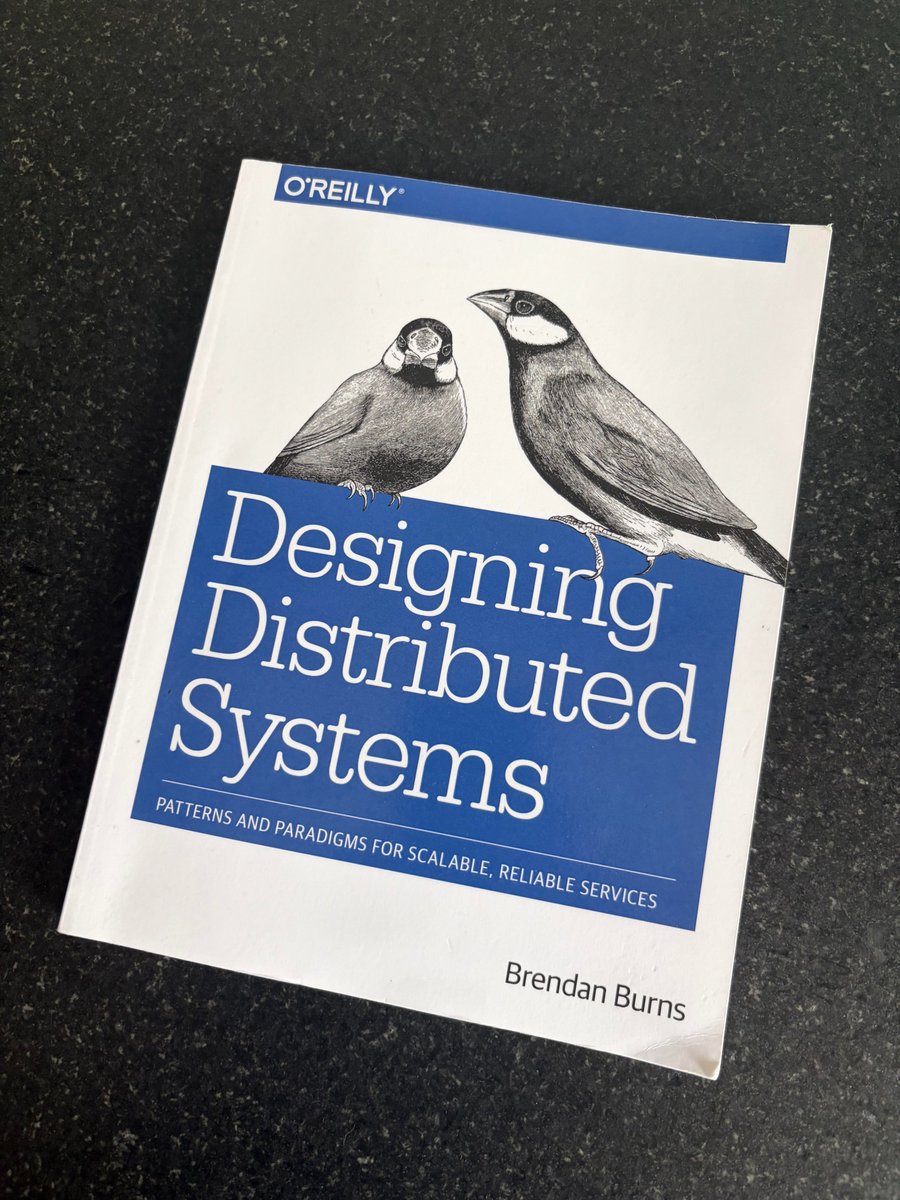
I just found a new book to learn Distributed System patterns. If you're also interested in having a look, the link comes directly from microsoft and it's free:
https://t.co/cjRvLtOT1t
Se viene rollo filosófico, aviso ;)
Llevo casi 30 años en el mundo tech. He cofundado empresas, gestionado equipos, invertido en startups, construido productos desde cero. Y hay algo que me está pasando con la IA que me cuesta describir con una sola palabra. Así que voy a intentar describirlo con varias.
La primera reacción, al menos en mi caso, cuando empiezas a usar estas herramientas de verdad, es una mezcla rara. Euforia. Miedo. Y sobre todo vértigo.
Ver que algo en lo que eras bueno, algo que te costó años construir, se convierte en commodity de golpe tiene mucho de desconcertante. Años construyendo una empresa, con patentes y con una tecnología que creías era una barrera de entrada y tu principal valor... y que de repente desaparece. No te lo esperas. Y aunque intelectualmente puedes entenderlo, vivirlo es otra cosa.
Pero ese miedo pasa. Al menos a mí me ha pasado.
Lo que viene después es energía. Proyectos que antes no intentaba porque el coste era demasiado alto, ahora los puedo arrancar en una tarde. Cosas que requerían un equipo, las puedo explorar solo pese a llevar años sin programar y alejado de la parte técnica.
Nuevas oportunidades.
De repente, para muchas cosas no dependo del equipo técnico de mi empresa. Y eso es por una parte reconfortante, pero por otra inquietante.
El techo no ha bajado... es que ha desaparecido. Y eso tiene algo de adictivo, de "joder, ¿por qué no estaba haciendo esto antes?".
Y aquí entra algo que creo que mucha gente no está considerando: la paradoja de Jevons.
En el siglo XIX, cuando se inventaron máquinas de vapor más eficientes, todo el mundo asumió que se consumiría menos carbón. Ocurrió exactamente lo contrario. La eficiencia hizo que usar carbón fuera más barato, así que se usó para más cosas, en más sitios, por más gente. El consumo total se disparó.
Con la IA va a pasar lo mismo. No vamos a escribir menos software porque la IA lo haga más rápido. Vamos a escribir muchísimo más, en muchos más sitios, para muchos más problemas que antes ni siquiera intentábamos resolver porque el coste era prohibitivo. La demanda de inteligencia no se reduce cuando se abarata. Se expande.
Hay un estudio de Berkeley en HBR (https://t.co/sRjR7sWszs) que lo confirma de forma bastante incómoda.
Investigadores de Haas School of Business pasaron 8 meses dentro de una empresa de 200 personas observando qué pasa cuando das herramientas de IA a todo el mundo y dices "adelante". Lo que encontraron contradice todo lo que nos han vendido: los empleados trabajaron más rápido, asumieron más tareas y extendieron su jornada. Nadie se lo pidió. Lo hicieron solos porque la IA hacía que "hacer más" se sintiese posible.
Un empleado lo resumió mejor que cualquier paper: "Pensabas que ahorrarías tiempo y trabajarías menos. Pero no trabajas menos"
El 77% de los empleados que usaban IA en otro estudio decían que les había aumentado la carga de trabajo.
La IA no te devuelve tiempo. Expande el perímetro de lo que sientes que deberías estar haciendo.
Y luego está el estudio del MIT (https://t.co/7rZqK7Pi8W) , que me parece el más incómodo de todos.
Pusieron a 54 personas con electrodos en la cabeza mientras usaban ChatGPT para escribir. Los que usaron IA mostraron un 47% menos de conectividad neuronal durante la tarea. El cerebro no trabajaba menos duro. Directamente se apagaba en las zonas vinculadas al pensamiento crítico y la creatividad.
Pero el dato que más me impactó es otro: el 83% de los usuarios de IA no podían citar ni una frase del ensayo que acababan de escribir. Porque nunca fue realmente suyo.
Y cuando al final de la prueba les quitaron la herramienta, el cerebro no se recuperó. Los patrones de desconexión persistieron.
Los investigadores lo llaman "deuda cognitiva". La misma lógica que la deuda técnica en software: cada atajo de hoy acumula intereses que pagas mañana en forma de menor capacidad para pensar de forma independiente.
El problema no es que la IA te haga menos inteligente. Es que tu cerebro optimiza para el entorno que le das. Y si dejas de ejercitar las partes difíciles del pensamiento, esas partes dejan de estar afiladas.
Pero entiendo perfectamente al otro lado también.
Hay un desarrollador que habló hace poco sobre algo que me impactó bastante.
Su tweet es este : I was a 10x engineer. Now I'm useless.
El video de 12 minutos merece la pena verlo (https://t.co/gLjCPrFfl3)
Describe haber construido un producto completo con IA, que funciona, que la gente usa, que genera ingresos... y al que no tiene ningún vínculo emocional. Porque no sufrió para hacerlo. Y lo describía como fabricar hot dogs: el producto existe, cumple su función, pero tú no pusiste nada de ti.
Eso conecta con algo más profundo que no estamos discutiendo suficiente.
Antes aprendías construyendo. El sufrimiento del proceso era el mecanismo. Te ibas a dormir sin saber cómo resolver algo y te levantabas con la solución, y eso te cambiaba. Ahora puedes construir sin ese ciclo. Más output, sí. Pero menos crecimiento.
Y luego está la red de seguridad. Un desarrollador siempre podía tomarse un año sabático y volver a un trabajo mejor pagado. O dejar su empresa actual sin miedo a encontrar casi lo que quisiera al día siguiente y con mejores condiciones.
Ese colchón existía de verdad y organizaba la vida profesional de mucha gente. La pregunta que nadie quiere hacerse en voz alta es si eso sigue siendo así. Tengo mis dudas.
Y aquí viene lo más complicado: no hay término medio fácil. Una vez que empiezas a usar estas herramientas en serio, tu cerebro deja de querer volver al esfuerzo. No es que puedas reservarte lo difícil para ti y delegar lo aburrido. Es todo o nada.
La energía nueva es real. Y la pérdida también es real. El error está en intentar resolver esa tensión demasiado rápido, en elegir un bando antes de haberlo vivido de verdad.
Lo que sí tengo claro, después de verlo en primera persona, es que la línea divisoria no es generacional.
He visto veteranos de 20 años sacarle un partido tremendo a estas herramientas. Y recién llegados que las tratan como una abstracción filosófica en lugar de algo que puedes usar hoy mismo.
La edad no predice nada. Lo que predice es la disposición. Si corres hacia el cambio o lo miras desde la barrera esperando a que alguien te explique si es seguro cruzar.
Nadie sabe exactamente adónde va esto. Y desconfío de los que dicen que sí lo saben, en cualquiera de los dos sentidos.
Lo que sí sé es que quiero estar en el grupo que corre hacia ello. Con la incomodidad incluida. Con la pérdida incluida. Con las preguntas sin respuesta incluidas.
Porque la alternativa es quedarse parado. Y eso, con o sin IA, nunca ha funcionado.
A junior dev asked his Senior: "What separates a $100k engineer from a $300k one?"
The senior didn't say React. He didn't say AI tools. He opened MIT 6.824 Distributed Systems and said - "Start here"
This course will break your brain in the best way:
• How Raft consensus keeps systems alive when servers die
• How Google File System stores data at a scale most devs can't imagine
• Why your app survives or collapses - under real pressure
• The consistency vs availability decision that every big system loses sleep over
Framework devs are everywhere
Engineers who understand why systems fail and how to stop it are not
That's the gap. That's the salary difference
Google DeepMind acaba de hacer algo que creo que va a pasar desapercibido para la mayoría pero que tiene implicaciones muy importantes.
Han cogido AlphaEvolve (su sistema de IA que "evoluciona" código como si fuese selección natural) y lo han puesto a diseñar algoritmos de teoría de juegos. No a ejecutarlos. No a optimizar parámetros. A inventar algoritmos nuevos desde cero.
Y los algoritmos que ha descubierto funcionan mejor que los que los investigadores humanos llevan años perfeccionando.
Vamos por partes, que esto tiene miga.
Primero, el contexto. En teoría de juegos hay dos grandes familias de algoritmos para resolver juegos de información imperfecta (como el póker): CFR y PSRO. Llevan décadas siendo la base de todo. Los investigadores los mejoran publicando variantes — ajustando pesos, cambiando fórmulas de descuento, probando combinaciones. Es un trabajo lento, basado en intuición y papers de conferencias.
Lo que ha hecho DeepMind es tratar el diseño de esos algoritmos como un problema de búsqueda. En vez de que un investigador piense "¿y si ajusto este parámetro?", AlphaEvolve trata el código fuente del algoritmo como un genoma que puede mutar, recombinar y seleccionar. No ajusta números. Reescribe lógica. Puede inventar operaciones nuevas que no existían.
¿El resultado? Dos algoritmos nuevos.
El primero, VAD-CFR, introduce algo que ningún investigador humano habría probado: un mecanismo de "calentamiento" que filtra el ruido de las primeras iteraciones y pesos que se adaptan a la volatilidad de cada momento del entrenamiento. Lo probaron en 11 juegos distintos. Lo entrenaron solo en 4. Y los mecanismos funcionaron en los 7 que no había visto nunca. Es decir, no son trucos específicos para un juego — la lógica se generaliza.
El segundo, SHOR-PSRO, descubrió por su cuenta algo que a un humano le costaría plantear: que el algoritmo que usas para entrenar y el que usas para evaluar deberían ser diferentes. Arranca explorando de forma agresiva y gradualmente va apretando hacia el equilibrio exacto. Esa asimetría es contraintuitiva (normalmente usas el mismo algoritmo en ambas fases) y sin embargo funciona mejor.
Ahora bien, seamos realistas sobre el alcance.
Estamos hablando de juegos relativamente pequeños. Variantes de póker, dados, Goofspiel. No es StarCraft. No son sistemas multiagente a gran escala del mundo real.
Los algoritmos descubiertos no tienen garantías teóricas de convergencia — funcionan empíricamente, pero no están formalmente demostrados. Y ya había trabajo previo (DDCFR, 2023) que intentaba aprender parámetros de descuento con reinforcement learning.
La diferencia es que esos enfoques anteriores ajustaban botones que ya existían. AlphaEvolve puede inventar botones nuevos. Esa distinción es clave: optimizar parámetros encuentra mejores ajustes. Evolucionar código encuentra mejores algoritmos.
Y creo que ahí está la idea de fondo que merece la pena retener.
El diseño de algoritmos siempre ha sido un proceso artesanal. Un investigador tiene una intuición, la formaliza, la prueba, publica un paper y otro investigador construye encima. Es lento. Es brillante. Y ha funcionado durante décadas.
Lo que DeepMind está proponiendo (y demostrando) es que ese espacio de posibles algoritmos es tan enorme que la exploración humana solo araña la superficie. AlphaEvolve no entiende teoría de juegos. No tiene intuición. Pero explora ese espacio a una velocidad y con una amplitud que ningún equipo humano puede igualar. Y ya está encontrando cosas que los humanos no habían visto.
Me recuerda a algo que llevo diciendo desde hace tiempo: la IA no va a sustituir al investigador.
Pero el investigador que use IA va a dejar atrás al que no la use. Esto no es "la IA reemplaza a los diseñadores de algoritmos."
Es que diseñar algoritmos acaba de convertirse en un problema que la IA puede ayudar a resolver. Y eso lo cambia todo... aunque suene menos llamativo que un titular sobre la singularidad.
Estoy convencido de que vamos a ver esto en muchos más campos. La IA como herramienta de exploración de espacios de diseño que los humanos no podemos recorrer solos.
Fármacos, materiales, arquitectura de redes, logística. El patrón es el mismo: hay un espacio enorme de posibilidades, la intuición humana explora un rincón, y la IA puede explorar el resto.
La pregunta es si estamos preparados para aceptar que un algoritmo diseñado por una máquina (que no "entiende" lo que hace) puede ser mejor que el nuestro. Me da que a más de uno le va a costar ;)
Paper: https://t.co/x7GQIPKTC2
Prof. Donald Knuth opened his new paper with "Shock! Shock!"
Claude Opus 4.6 had just solved an open problem he'd been working on for weeks — a graph decomposition conjecture from The Art of Computer Programming.
He named the paper "Claude's Cycles."
31 explorations. ~1 hour. Knuth read the output, wrote the formal proof, and closed with: "It seems I'll have to revise my opinions about generative AI one of these days."
The man who wrote the bible of computer science just said that. In a paper named after an AI.
Paper: https://t.co/juSOmK9vOt
I have AIDHD.
The models are so good that I’m working on 5 different projects a day.
At first it felt like distraction, but I’ve shipped more features and apps in the last 3 months than ever before.
AI made building fun again. It’s a better programmer than me, so I can focus on creativity instead.
I’m grateful to be alive at this moment. Decades from now, people will look back at this era as the best time to be a maker.
Huge respect to the people building the models so idiots like me can just make stuff.
Uber CEO Dara Khosrowshahi just described the exact moment companies stop hiring engineers.
It’s closer than anyone wants to admit.
Khosrowshahi: “About 90% of our coders are using AI.”
But that’s not the number that matters.
30% of those engineers have become power users. And what’s happening to their output has no historical precedent.
Khosrowshahi: “They are showing a clear differentiation in the number of diffs.”
A diff is a code release. The purest measure of engineering productivity.
Khosrowshahi: “It’s changing their productivity in a way that I’ve never, ever seen before.”
Right now, the math still favors hiring.
If an average engineer becomes 25% more efficient, Uber hires more engineers to go faster.
But that equation has an expiration date.
Khosrowshahi: “Maybe 5 years from now as the engineers get more and more productive, I may not decide to add engineering headcount.”
The tipping point isn’t when AI replaces engineers.
It’s when adding an AI agent and buying GPUs produces more output per dollar than hiring a human.
Khosrowshahi: “At that point instead of adding an engineer, I should add agents and buy some more GPUs from Nvidia.”
When the CEO of a company built entirely on software says that out loud, it’s not a prediction. It’s a planning assumption.
Khosrowshahi: “The job of a coder is going to change from actually writing the code to orchestrating agents who are writing the code.”
Not writing. Orchestrating.
The engineer becomes the conductor. The AI becomes the orchestra.
The most valuable asset in a tech company is officially shifting from human capital to pure compute.
And once that math flips, it doesn’t flip back.
It is hard to communicate how much programming has changed due to AI in the last 2 months: not gradually and over time in the "progress as usual" way, but specifically this last December. There are a number of asterisks but imo coding agents basically didn’t work before December and basically work since - the models have significantly higher quality, long-term coherence and tenacity and they can power through large and long tasks, well past enough that it is extremely disruptive to the default programming workflow.
Just to give an example, over the weekend I was building a local video analysis dashboard for the cameras of my home so I wrote: “Here is the local IP and username/password of my DGX Spark. Log in, set up ssh keys, set up vLLM, download and bench Qwen3-VL, set up a server endpoint to inference videos, a basic web ui dashboard, test everything, set it up with systemd, record memory notes for yourself and write up a markdown report for me”. The agent went off for ~30 minutes, ran into multiple issues, researched solutions online, resolved them one by one, wrote the code, tested it, debugged it, set up the services, and came back with the report and it was just done. I didn’t touch anything. All of this could easily have been a weekend project just 3 months ago but today it’s something you kick off and forget about for 30 minutes.
As a result, programming is becoming unrecognizable. You’re not typing computer code into an editor like the way things were since computers were invented, that era is over. You're spinning up AI agents, giving them tasks *in English* and managing and reviewing their work in parallel. The biggest prize is in figuring out how you can keep ascending the layers of abstraction to set up long-running orchestrator Claws with all of the right tools, memory and instructions that productively manage multiple parallel Code instances for you. The leverage achievable via top tier "agentic engineering" feels very high right now.
It’s not perfect, it needs high-level direction, judgement, taste, oversight, iteration and hints and ideas. It works a lot better in some scenarios than others (e.g. especially for tasks that are well-specified and where you can verify/test functionality). The key is to build intuition to decompose the task just right to hand off the parts that work and help out around the edges. But imo, this is nowhere near "business as usual" time in software.
Focus is becoming the rarest skill on the planet. Talent, intelligence, marketing, prompting, vibe coding, and whatever else doesn't matter as much as being able to channel your attention for an extended period of time into one useful thing that you want to see in the world.
L’enginyeria basada en agents va més enllà del "vibe coding" i té com a objectiu l’automatització del màxim nombre possible de tasques del procés de desenvolupament de programari
He fet un recull de recursos com a part del meu propi procés d'aprenentatge:
https://t.co/QAVLjAIrYb
✨ A dream I had finally came true: I can now chat directly with my sites to build any feature or fix any bug just via Telegram
I've been playing with OpenClaw for 3 weeks now and it's great but I was always too scared to run it on any production server
And I was right a bit as @marckohlbrugge was able to hack it by social engineering and acting as if it was me, and with enough tries it believed him, and was able to modify the server, change SSH keys etc. of course I had it isolated properly on its own VPS and it didn't touch anything sensitive (as it should!)
Marc then reported that bug to @steipete who patched it fast
But I wanted to try something more basic and simple, and I think maybe more secure: to just connect Claude Code on my server to Telegram which would be hard locked to only messages from me
So I installed claude-code-telegram by @RichardAtCT on the server and run it as a system daemon and it works really well
The cool thing is that I was already using Telegram for server errors like this:
> Photo AI - ❌ Random credits giveaway failed (Attempt 30/30) with an exception: SQLSTATE[HY000]: General error: 5 database is locked
So now I can just reply, "Ok fix this", and Claude Code on the server in production will try (and probably succeed) in fixing it
In the video below I asked it to make show [🌳 Parks ] on the map by default on load, it did that, then I reloaded the page and it instantly worked
One thing it still needs is sending actual messages while it's doing stuff which OpenClaw does really well, it's annoying to just wait while it says "Working..." but that's probably next
I'm Boris and I created Claude Code. I wanted to quickly share a few tips for using Claude Code, sourced directly from the Claude Code team. The way the team uses Claude is different than how I use it. Remember: there is no one right way to use Claude Code -- everyones' setup is different. You should experiment to see what works for you!


![AndrewYNg's tweet photo. There will be no AI jobpocalypse.
The story that AI will lead to massive unemployment is stoking unnecessary fear. AI — like any other technology — does affect jobs, but telling overblown stories of large-scale unemployment is irresponsible and damaging. Let’s put a stop to it.
I’ve expressed skepticism about the jobpocalypse in previous posts. I’m glad to see that the popular press is now pushing back on this narrative. The image below features some recent headlines.
Software engineering is the sector most affected by AI tools, as coding agents race ahead. Yet hiring of software engineers remains strong! So while there are examples of AI taking away jobs, the trends strongly suggest the net job creation is vastly greater than the job destruction — just like earlier waves of technology. Further, despite all the exciting progress in AI, the U.S. unemployment rate remains a healthy 4.3%.
Why is the AI jobpocalypse narrative so popular? For one thing, frontier AI labs have a strong incentive to tell stories that make AI technology sound more powerful. At their most extreme, they promote science-fiction scenarios of AI “taking over” and causing human extinction. If a technology can replace many employees, surely that technology must be very valuable!
Also, a lot of SaaS software companies charge around $100-$1000 per user/year. But if an AI company can replace an employee who makes $100,000 — or make them 50% more productive — then charging even $10,000 starts to look reasonable. By anchoring not to typical SaaS prices but to salaries of employees, AI companies can charge a lot more.
Additionally, businesses have a strong incentive to talk about layoffs as if they were caused by AI. After all, talking about how they’re using AI to be far more productive with fewer staff makes them look smart. This is a better message than admitting they overhired during the pandemic when capital was abundant due to low interest rates and a massive government financial stimulus.
To be clear, I recognize that AI is causing a lot of people’s work to change. This is hard. This is stressful. (And to some, it can be fun.) I empathize with everyone affected. At the same time, this is very different from predicting a collapse of the job market.
Societies are capable of telling themselves stories for years that have little basis in reality and lead to poor society-wide decision making. For example, fears over nuclear plant safety led to under-investment in nuclear power. Fears of the “population bomb” in the 1960s led countries to implement harsh policies to reduce their populations. And worries about dietary fat led governments to promote unhealthy high-sugar diets for decades.
Now that mainstream media is openly skeptical about the jobpocalypse, I hope these stories will start to lose their teeth (much like fears of AI-driven human extinction have).
Contrary to the predictions of an AI jobpocalypse, I predict the opposite: There will be an AI jobapalooza! AI will lead to a lot more good AI engineering jobs, and I’m also optimistic about the future of the overall job market. What AI engineers do will be different from traditional software engineering, and many of these jobs will be in businesses other than traditional large employers of developers. In non-AI roles, too, the skills needed will change because of AI. That makes this a good time to encourage more people to become proficient in AI, and make sure they’re ready for the different but plentiful jobs of the future!
[Original text in The Batch newsletter.]](https://pbs.twimg.com/media/HIIb1VGaUAAZoAB.jpg)