Andreessen is describing an organizational physics problem that most people misread as a leadership platitude.
Every person inside a company who isn’t the CEO is being evaluated on execution against existing commitments. Their incentive is to protect current revenue, hit quarterly targets, and avoid blame for things that go wrong. New products threaten all three simultaneously. They cannibalize existing lines, they pull engineers off shipping commitments, and if they fail, the person who championed them gets punished while the person who said “we should focus” gets promoted.
This creates a specific organizational gravity. In a 10,000 person company, roughly 9,950 people wake up every morning with the rational incentive to prevent new things from happening. Product managers are measured on shipped features for the current product. Sales wants tools that close this quarter’s pipeline. Finance models next year based on this year’s revenue mix. Engineering leads protect their headcount by showing utilization against existing roadmaps.
The CEO is the only person in the entire org chart whose incentive structure rewards creation over maintenance. They’re the only one who can absorb the political cost of pulling 40 engineers off a revenue-generating product to build something with zero customers. They’re the only one who can tell the CFO that Q3 is going to look ugly because they’re funding a bet. They’re the only one who doesn’t get fired for a failed product launch.
This is why “product-led” companies die the moment the founder leaves. Look at Apple post-Jobs 1985-1997. Look at Microsoft from 2000-2014 under Ballmer. Revenues grew. The stock was flat for 14 years. The company shipped zero new product categories. Ballmer optimized the existing machine. Nadella came in and forced Azure, forced the cloud pivot, forced the GitHub acquisition, forced the OpenAI bet. Every one of those moves had internal opposition. Every one required someone with termination-proof conviction.
The “wills them into existence” framing is the accurate part. Will as in overriding the immune system of a large organization that treats new products the way a body treats a foreign organ. The CEO is the only one with enough immunosuppressant authority to keep the transplant alive long enough to take.
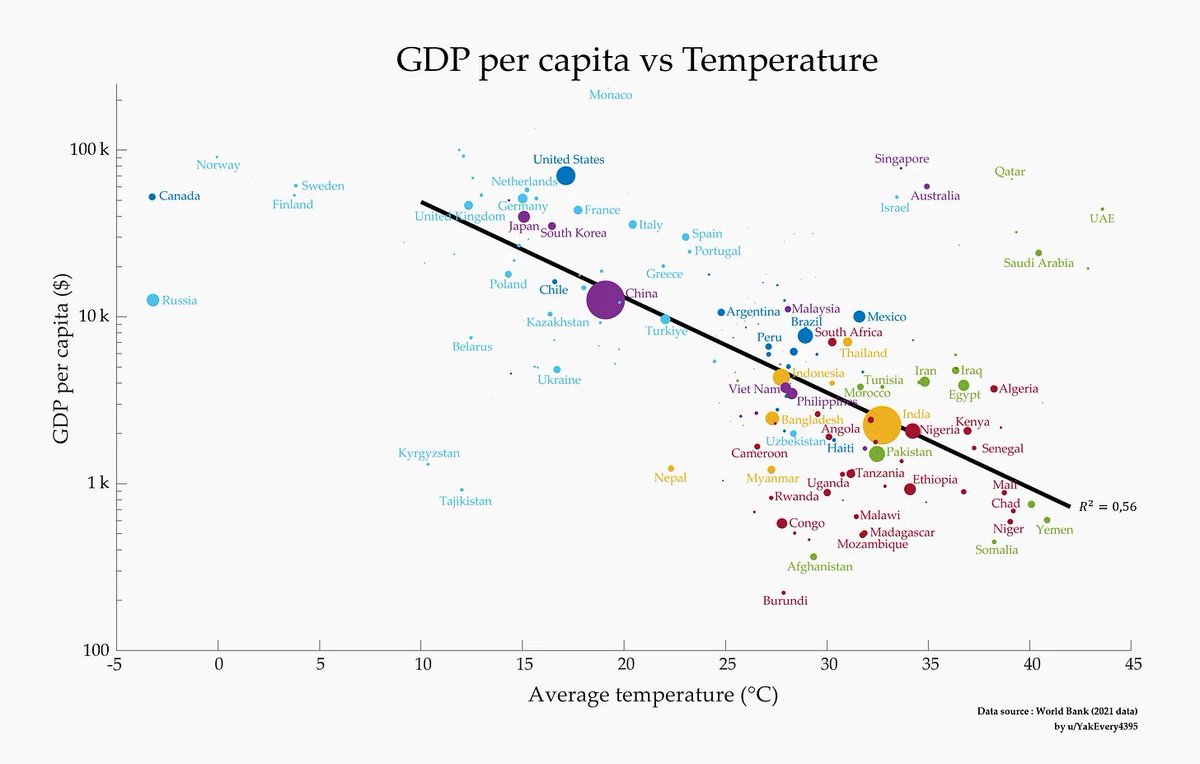
Think of all the most innovative cultures. What do they all have in common? Cold seasons.
You cannot afford to be lazy in a cold, seasonal climate:
- You can’t live impulsively. If you don’t stock food or plan winter shelter, you’re dead
- You must cooperate, or you’re dead
- You must delay gratification, or you’re dead
- You must create tools, preserve food and build storage systems, or you’re dead
Lazy, shortsighted behavior is punishable by death. Cognitive load increases and forward thinking becomes a selective breeding trait.
The closer to the equator you are, the less change there is. Resource abundance and constant climate mean no pressure to innovate, no long-term planning requirements. Warmth means comfort and comfort means complacency (biologically speaking).
Seasonal cognition is what led to the invention of calendars, agriculture and scheduling. The environmental force that paved the way for:
- Industrial revolutions
- Scientific method
- Modern infrastructure
Innovation thrives where the future is uncertain and immediate gratification is punished. Future orientation is an environmental phenomenon.
A mistake that cost me 2 years: Thinking preparation was progress. Reading every book. Taking every course. Planning every detail. Meanwhile, someone dumber than me started badly and figured it out. Preparation feels productive but it's often just fear dressed up as strategy. You learn to swim by getting in the water, not by studying water.