Muscle cells merging in real time
You’re watching one of [in my opinion] the coolest things your body does without you ever noticing
(muscle precursor cells literally fusing into one long, powerful fiber).
- Alignment: individual myoblasts migrate and line up like they’re preparing for formation
- Recognition: cells “sense” compatible neighbors through surface proteins
- Contact: membranes begin to thin and synchronize their signaling
- Fusion: boundaries dissolve and nuclei gather inside a shared cytoplasm
- Strengthening: the new multinucleated fiber becomes the machinery that lets you lift, run, and repair
The glowing green nuclei are each a tiny command center contributed by a merging cell.
The red signal traces the membranes as they stretch, touch, and finally blend into a unified structure.
This is how muscles grow and regenerate - i.e. this is "strength" engineerednat the cellular level
Credit: Yue Lu, Elizabeth Chen Lab
How can gene therapy developers overcome commercialization barriers? Innovations in vector design, cost reduction, and patient access models are essential. What strategies do you think might help make gene therapies accessible?
🧬 3 weeks later, Pfizer’s Beqvez exit still stings for gene therapy. Why did a $3.5M hemophilia B cure fail after all? Let’s unpack the lessons for gene therapy’s future.
The Beqvez exit exposes a critical gap between regulatory approval and market success, driven by vector production and adoption challenges. It presents an opportunity to rethink AAV design and manufacturing for greater efficiency and accessibility. At Ambryon, we leverage AI to model and optimize vector design & manufacturing, aiming to accelerate solutions that advance gene therapy. https://t.co/Nf6QlzhOAh
⚡ Breakthrough Study
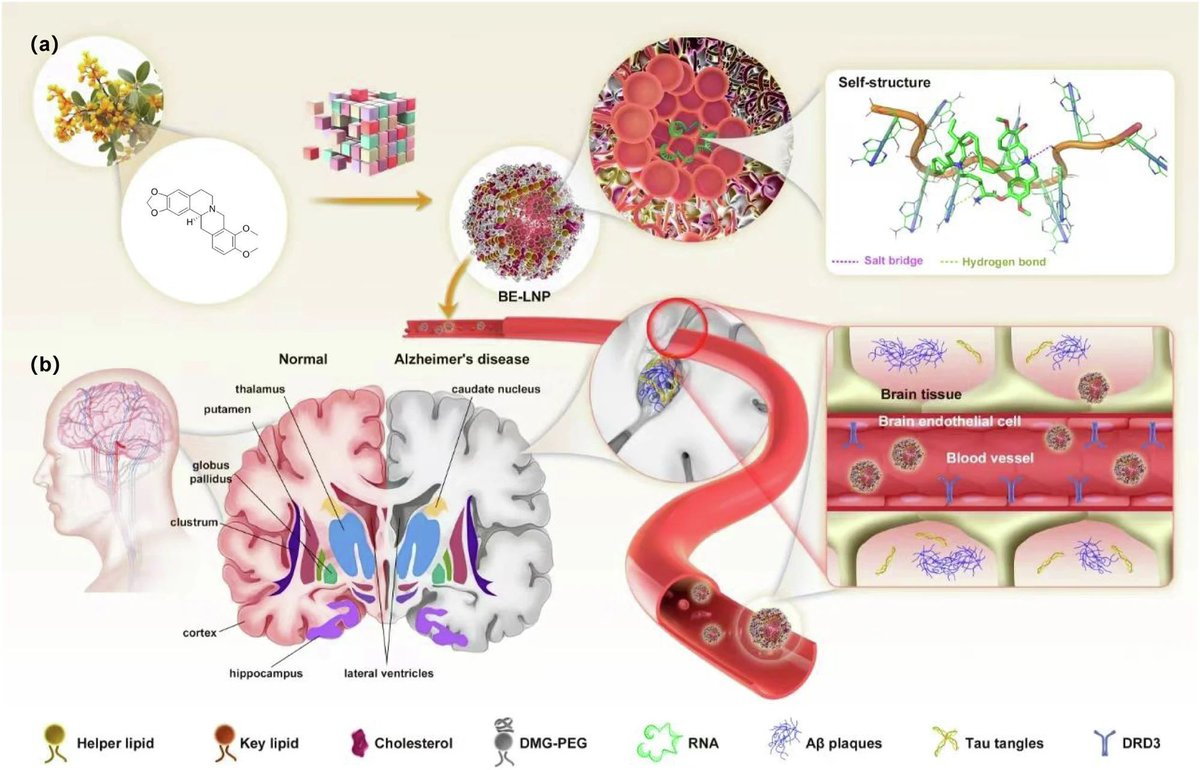
A new study in Nat. Commun. unveils berberine-inspired ionizable lipid nanoparticles (LNPs) designed to deliver nucleic acid therapeutics across the blood-brain barrier (BBB). Leveraging the structure of protoberberine alkaloids, these LNPs enhance stability via poly(A) self-assembly and target brain cells using dopamine D3 receptor-mediated endocytosis. This addresses a critical hurdle in treating neurological disorders with gene therapy.
In murine models of Alzheimer’s, glioma, and cryptococcal meningitis, these LNPs reduced disease markers (like amyloid-β) and improved survival, achieving a 7-fold increase in brain delivery efficiency over standard LNPs. They exhibited low immunogenicity, neuroprotection, and sustained mRNA expression for 28 days post-administration.
This bioinspired approach advances vector design by combining structural stability with targeted delivery, offering a scalable platform for neurological therapies.
#Alzheimers #GeneTherapy #LNP https://t.co/9dcIEq9Hwf
AAV9 delivery of Magea13 attenuates myocardial injury in mouse model of acute myocardial infarction (AMI) by inhibiting the cAMP-PKA signaling pathway.
AMI, caused by prolonged coronary artery occlusion, leads to cardiac tissue damage and heart failure; Magea13 overexpression in mice reduced infarct size, improved cardiac function, and decreased apoptosis via this pathway.
https://t.co/PefNitGlgx
New study demonstrates that AAV9-mediated delivery of GBA1 and GDNF rescues neurological defects in a murine model of neuronopathic Gaucher disease (nGD).
Gaucher disease, caused by GBA1 mutations, leads to glucocerebrosidase deficiency, causing glucosylceramide accumulation, neurodegeneration, and motor deficits in nGD.
The AAV9 vector, engineered with a synapsin promoter to target neurons, co-expressed GBA1 and GDNF, reducing glucosylceramide levels, improving motor function, and extending lifespan in nGD mice.
#GeneTherapy #AAV #Gaucher https://t.co/JKDuXo6qh0
A new Adv. Sci. study demonstrates that a single AAV-ie-Eh3 injection rescues hearing and vestibular function in mice with Atp6v1b2 knockout, linked to syndromes like DDOD. This congenital deafness model shows hair cell loss due to lysosomal dysfunction, which the therapy reversed by delivering functional Atp6v1b2, restoring lysosome morphology and auditory function for 24+ weeks -- a potentially powerful gene therapy approach for inner ear disorders.
AAV-ie-Eh3, an engineered AAV-DJ variant, originated from efforts to optimize inner ear gene delivery. First described in 2019, AAV-ie was modified with a peptide (DGTLAVPFK) to enhance cochlear cell transduction. The Eh3 promoter, derived from Rbm24 and paired with Hsp68, was later added to ensure hair cell specificity, as refined in this study.
#GeneTherapy #VectorDesign https://t.co/h3SYzrMeBm
⚡ Breakthrough Study
A new Nature Communications study shows MyoAAV vectors deliver CRISPR-Cas9 to restore dystrophin in Duchenne muscular dystrophy (DMD) mice, achieving widespread muscle repair with minimal off-target effects.
First described in 2021, MyoAAV is a family of adeno-associated virus (AAV) vectors engineered for superior muscle targeting. Developed via directed evolution, MyoAAV uses unique capsid variants >10x more efficient at reaching muscle than AAV9, avoiding liver off-targeting, making it ideal for gene therapy in muscular disorders like DMD.
The new study leverages MyoAAV to deliver CRISPR-Cas9, repairing the dystrophin gene across skeletal muscles, including hard-to-reach areas, with long-term benefits in mice. This could transform DMD treatment, reducing reliance on invasive methods.
https://t.co/E1ktHhAgP0
#GeneTherapy #Duchenne #DMD #Biotech
🚀 Ultragenyx's AAV8 gene therapy DTX401 shows promise for glycogen storage disease Type Ia (GSDIa). A phase 1/2 trial reduced cornstarch needs by 68% in adults, improving glycemic control with a safe profile. $RARE #GeneTherapy#AAV https://t.co/1mTWRnHqgW
Gene therapy for cystic fibrosis shows promise. Learn about CFTR delivery, CRISPR/Cas9, & challenges in this new review paper. Free PDF: https://t.co/hZnWNjE1M6 #CysticFibrosis#GeneTherapy#CRISPR
Study on cancer survivors using oral doses of either dasatinib and quercetin, or fisetin or other senescent cell removers to extend health span.
https://t.co/qNrRcBCKT8
🚀 Miniaturizing base editors for gene therapy! Our new @ambryonbio Insights post "Making Base Editors Smaller for Gene Therapy," dives into how a smaller Cas9 orthologs enhance base editing efficiency in human cells and their significance in advancing gene therapy. Inspired by the recent review by Song et al. (https://t.co/BXq1wjWfSt), it shows how miniaturizing tools like base editors can improve delivery and precision, while remaining viable for manufacturing.
Read our full analysis here: https://t.co/sQWV1aUOBc #GeneTherapy #Biotech #CRISPR
Today at @CellSystemsCP we report in back-to-back papers (!) led by @nbwang22 on how cell state potentiates the influence of individual transcription factors to drive cell-fate programming
&
how we used these insights to scale up production of motor neurons from primary fibroblasts, allowing us to deliver these directly converted neurons into the brains of mice.
Updated tweetorial coming soon (links below!)
⚡ Breakthrough Study
Doshi et al. reveal CD19-targeted CAR-T cells eradicate pre-existing AAV neutralizing antibodies (NAb) in mice, enabling successful systemic redosing of AAV8 vectors. This tackles a major hurdle in AAV gene therapies, where NAb often block efficacy due to environmental exposure or prior vector use.
CD19 CAR-T therapy depletes not just peripheral but also tissue-resident B cells and plasma cells in bone marrow, spleen, and lymph nodes, unlike traditional B-cell mAbs targeting CD19, CD20, or B220, which failed to remove high-titer NAb. This deep immune modulation reduced NAb to levels (<1:5) allowing therapeutic transgene expression, like human factor VIII, comparable to NAb-negative mice.
This could revolutionize AAV vector re-administration, critical for patients needing repeat dosing or improved vectors. Could CAR-T unlock broader AAV therapy access?
Read the paper here: https://t.co/43y652plF3
#GeneTherapy #AAV #CAR-T
HSV-1 vectors show promise in gene therapy for cancer, vaccines, & neurological diseases. Learn how they can deliver genes effectively & safely. Free PDF: https://t.co/jtIz4jcj5G