IF YOUR CRYPTO VANISHES, WHO IS RESPONSIBLE?
GM Web 3 Natives!
let's talk Web3 and the Law.
Been on this street for long and I've seen trends come and go, but Web3? Nah! it's the future.
Walk with me on this👇
We must deal decisively with universities that admit irresponsibly beyond their approved quotas, as the chief cause of backlog at the Nigerian Law School, says Dr. Gbemisola Odusote, PhD, Director General of the Nigerian Law School.
#legaleducation#law#sdgs#lawyers#Nigeria
Compulsory Physical call to bar ceremony is outdated. We cannot be in digital age and still be held back analog ideas.
Virtual call to bar ceremony must be urgently considered.
I will join other stakeholders to make a case for virtual call to bar ceremony.
Risking the lives of thousands of young people, traveling for call to bar to an unsafe city (Abuja), under the sleepy watch of an incompetent President, is unfair and no longer sustainable.
At best, physical attendance should no longer be compulsory.
Virtual call-to-bar ceremony is doable and ought to be given consideration, given the escalating security situation in the country.
Enrolment at the Supreme Court was physical. Now, it is completely virtual.
Pre call to bar clearance used to be physically done at Bwari in Abuja. Now, everything is done online.
In light of the security situation in the country, insisting on physical call to bar ceremony is not only dishonest but also foolhardy.
Desperate times require desperate measures.
In one week, Army officers ended a promising young man’s life, now Police officers have killed another young man.
Youth and young persons, you don’t hate this enough.
@ChisomHarr It’s so disheartening to think that after all the efforts and struggles and even the sacrifices. It’s turned out this way.
“God Knows best.”- My consolation
Let’s connect though, also from the star campus.
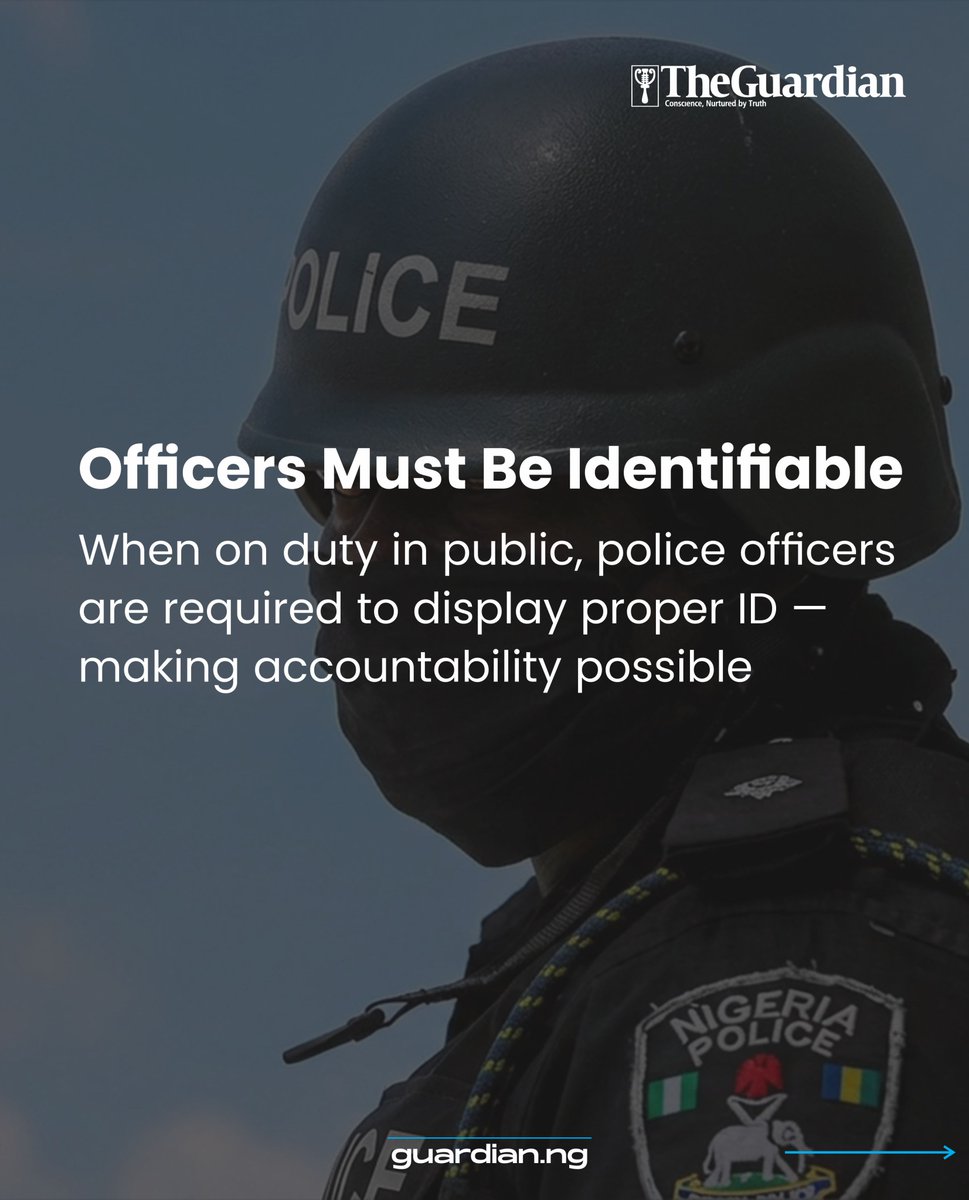
The Federal High Court sitting in Warri, Delta State, has ruled that Nigerians have the constitutional right to record police officers while performing their duties in public, in a judgement seen as a boost for accountability and civil liberties.
Delivering the ruling on Tuesday in suit No. FHC/WR/CS/87/2025 Justice H. A. Nganjiwa held that police officers must wear visible name tags, display their force numbers, and refrain from harassing, intimidating, arresting, or confiscating devices from citizens recording their activities
Follow @GuardianNigeria for more updates
#RightToRecordPolice #FederalHighCourtWarri #PoliceAccountability #CivilLibertiesNG
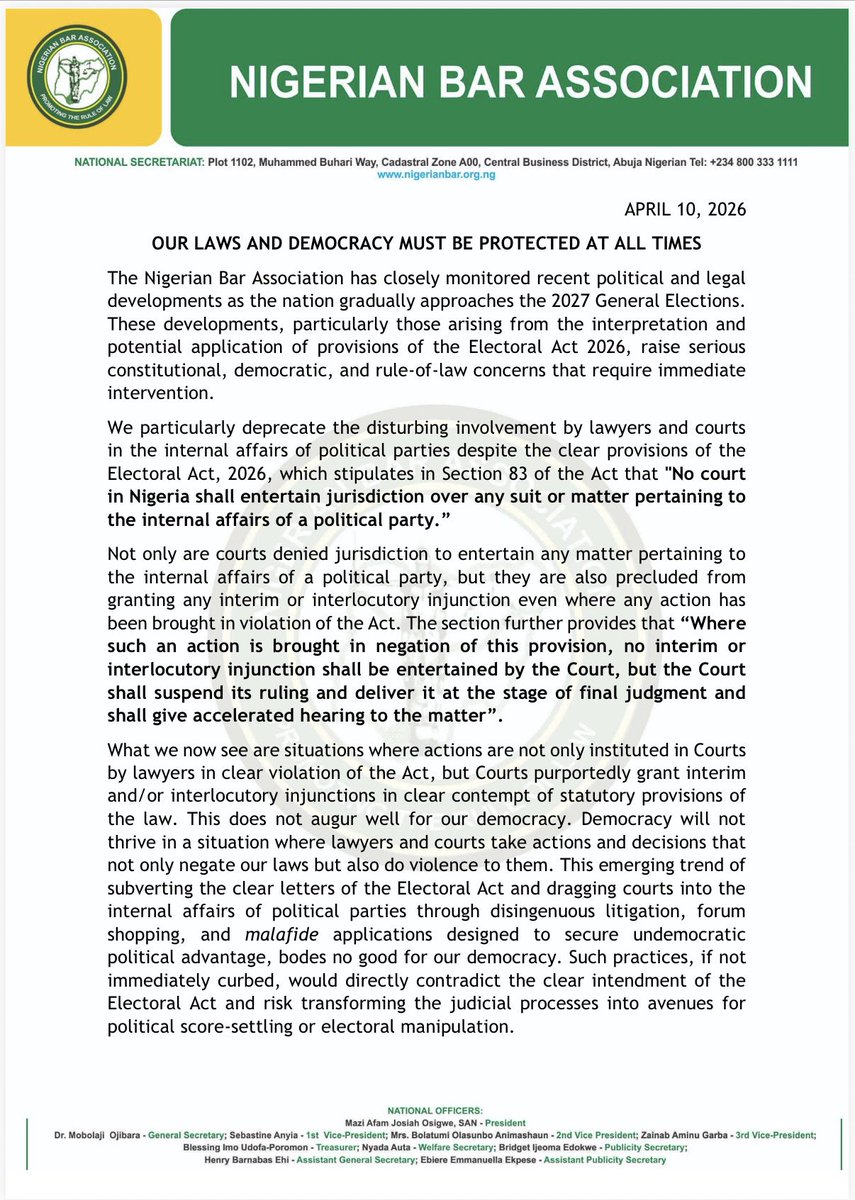
OUR LAWS AND DEMOCRACY MUST BE PROTECTED AT ALL TIMES
The Nigerian Bar Association has closely monitored recent political and legal developments as the nation gradually approaches the 2027 General Elections. These developments, particularly those arising from the interpretation and potential application of provisions of the Electoral Act 2026, raise serious constitutional, democratic, and rule-of-law concerns that require immediate intervention.
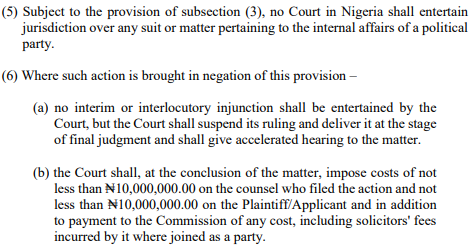
We particularly deprecate the disturbing involvement by lawyers and courts in the internal affairs of political parties despite the clear provisions of the Electoral Act, 2026, which stipulates in Section 83 of the Act that “No court in Nigeria shall entertain jurisdiction over any suit or matter pertaining to the internal affairs of a political party.”
Not only are courts denied jurisdiction to entertain any matter pertaining to the internal affairs of a political party, but they are also precluded from granting any interim or interlocutory injunction even where any action has been brought in violation of the Act. The section further provides that “Where such an action is brought in negation of this provision, no interim or interlocutory injunction shall be entertained by the Court, but the Court shall suspend its ruling and deliver it at the stage of final judgment and shall give accelerated hearing to the matter”.
What we now see are situations where actions are not only instituted in Courts by lawyers in clear violation of the Act, but Courts purportedly grant interim and/or interlocutory injunctions in clear contempt of statutory provisions of the law. This does not augur well for our democracy. Democracy will not thrive in a situation where lawyers and courts take actions and decisions that not only negate our laws but also do violence to them. This emerging trend of subverting the clear letters of the Electoral Act and dragging courts into the internal affairs of political parties through disingenuous litigation, forum shopping, and malafide applications designed to secure undemocratic political advantage, bodes no good for our democracy. Such practices, if not immediately curbed, would directly contradict the clear intendment of the Electoral Act and risk transforming the judicial processes into avenues for political score-settling or electoral manipulation.
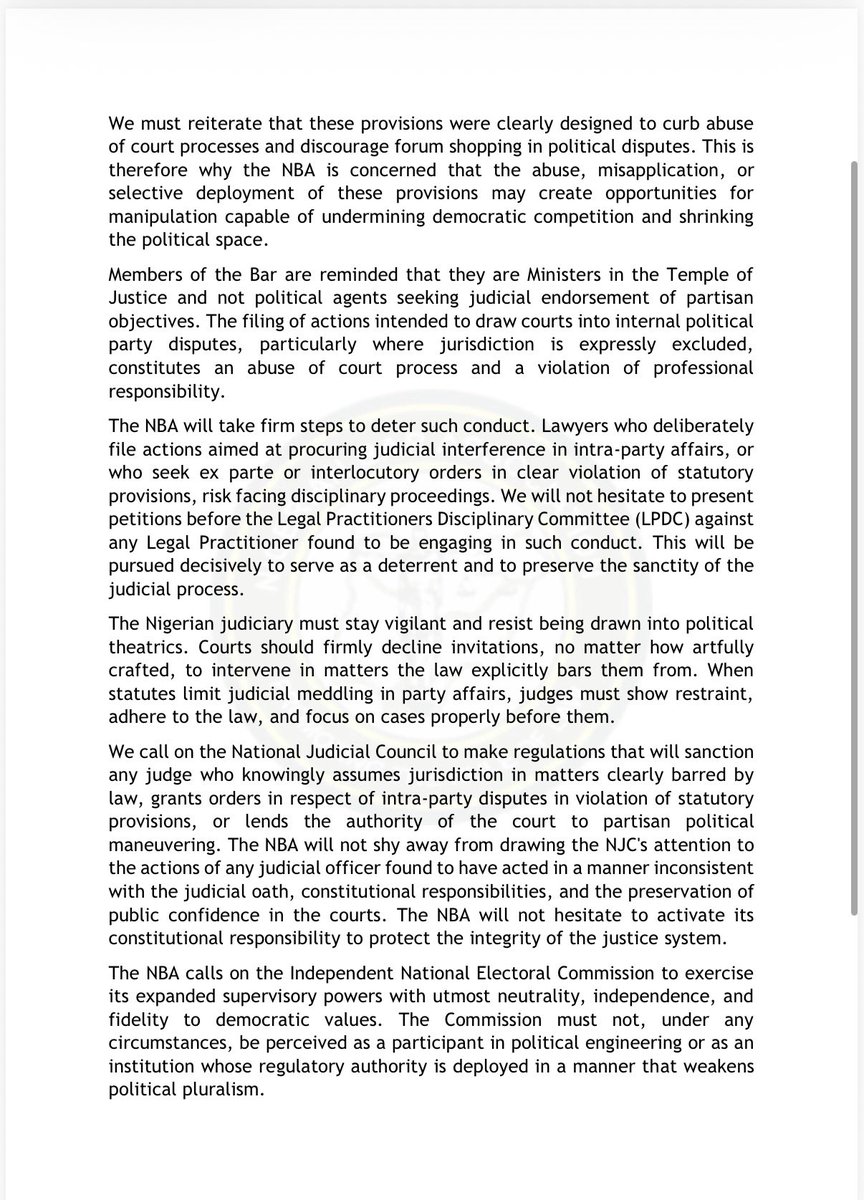
We must reiterate that these provisions were clearly designed to curb abuse of court processes and discourage forum shopping in political disputes. This is therefore why the NBA is concerned that the abuse, misapplication, or selective deployment of these provisions may create opportunities for manipulation capable of undermining democratic competition and shrinking the political space.
Members of the Bar are reminded that they are Ministers in the Temple of Justice and not political agents seeking judicial endorsement of partisan objectives. The filing of actions intended to draw courts into internal political party disputes, particularly where jurisdiction is expressly excluded, constitutes an abuse of court process and a violation of professional responsibility.
The NBA will take firm steps to deter such conduct. Lawyers who deliberately file actions aimed at procuring judicial interference in intra-party affairs, or who seek ex parte or interlocutory orders in clear violation of statutory provisions, risk facing disciplinary proceedings. We will not hesitate to present petitions before the Legal Practitioners Disciplinary Committee (LPDC) against any Legal Practitioner found to be engaging in such conduct. This will be pursued decisively to serve as a deterrent and to preserve the sanctity of the judicial process.
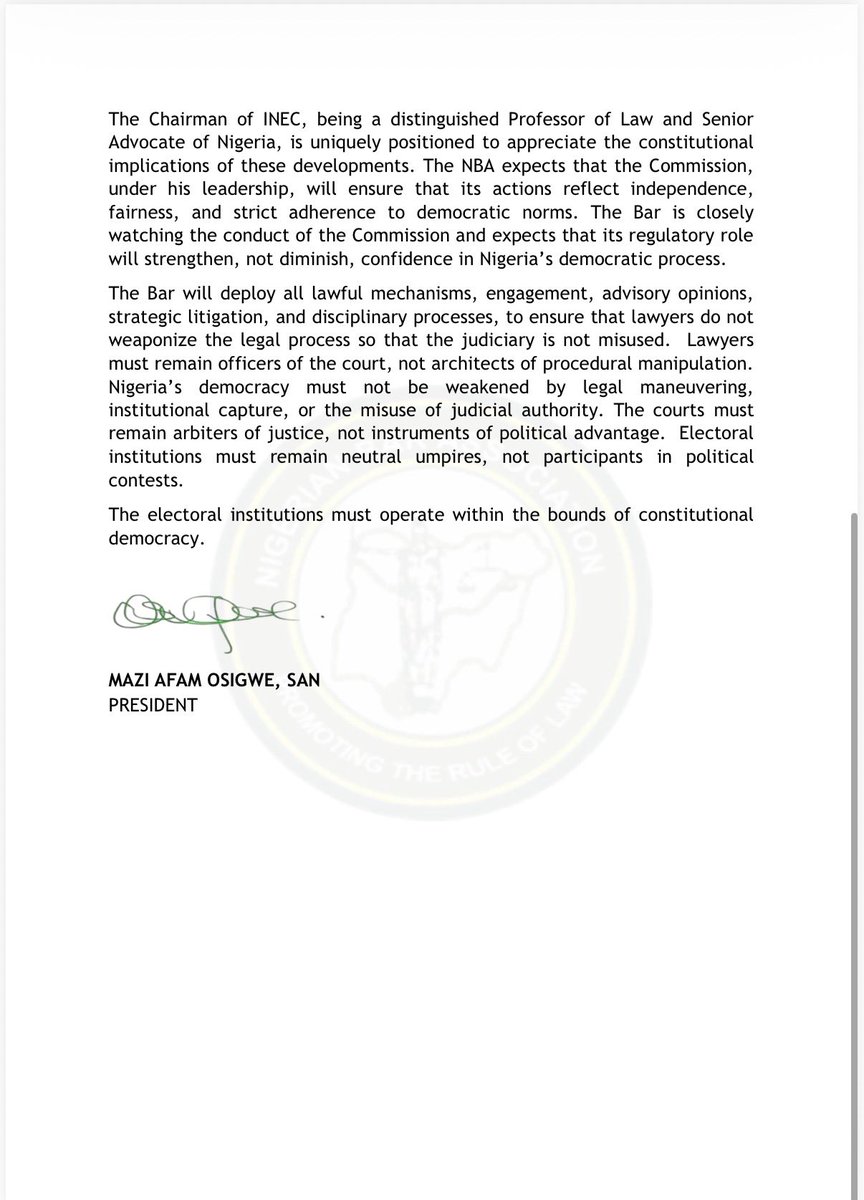
The Nigerian judiciary must stay vigilant and resist being drawn into political theatrics. Courts should firmly decline invitations, no matter how artfully crafted, to intervene in matters the law explicitly bars them from.