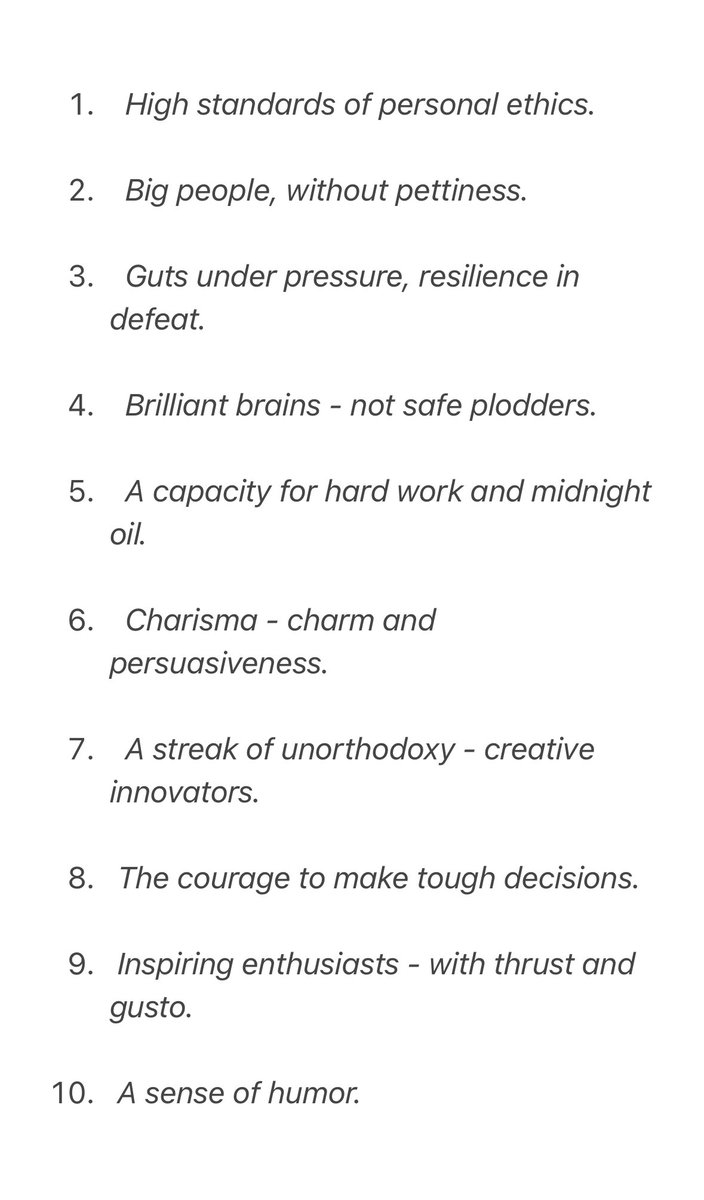
Watch this 2-hour Lee Kuan Yew interview. It'll change how you think about leadership.
It is more valuable than 20 business books.
Bookmark & give it 2hour today, no matter what.
We crafted this logo as a small tribute to @Arattai, a homegrown app that connects millions with simplicity and pride.
A tribute to the app that connects hearts.
@zoho@svembu#Arattai#Zoho#MadeInIndia
For nearly three decades, we’ve built software that powers countless Indian businesses and millions across the globe.
But there’s something special about building it in India, in a sustainable and timeless way.
We’re Zoho—India’s business software. 🙏 ✨
UPDATE:
Had a detailed Arattai call with @Arattai Tech Team today. They work on Sundays as well which is Brilliant. Working 24x7 to roll out a Seamless App. Salute to them.
I got an opportunity to test Arattai Meeting, which is super seamless. Can be a substitute for Quick Meetings with Recording as well. You should try it out friends.
All the updates which we are collectively posting on X, are being properly considered and implemented. The best part is, They Are Listening 🙏
Their Next Update with all Fixes will be 🔥🔥🔥
Eagerly waiting for the Next DROP ❤️
Happy to be a Constructive Voice,
#FI
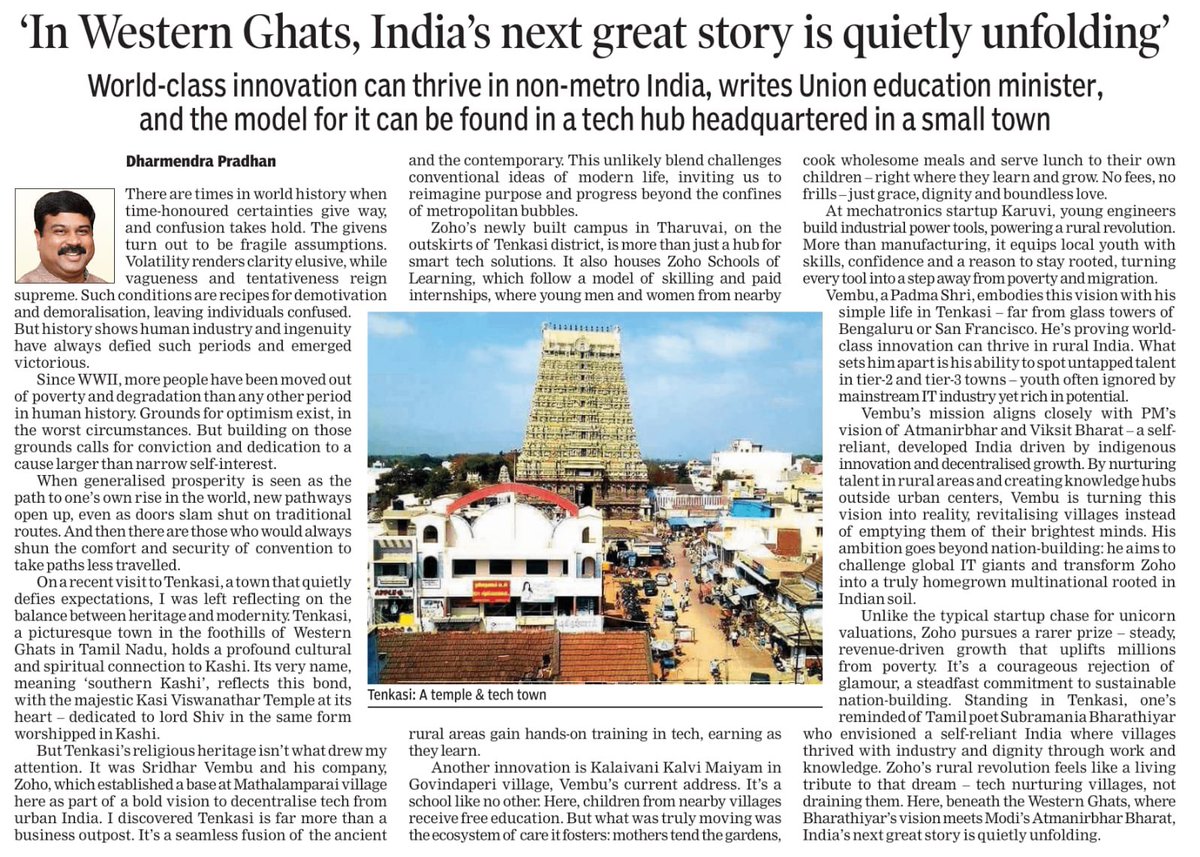
The bold vision of Shri @svembu to decentralise tech from urban India is a steadfast commitment to sustainable nation-building aligned to the vision of Viksit Bharat. I write about @Zoho’s rural revolution and India’s next great story that is quietly unfolding in our Western Ghats. https://t.co/W49NVlr4zt
We've been using @Zoho for our business needs. I'm happy that its an Indian company building internationally.
In fact, in some areas - Zoho One is better than Google Workspace, and it's not just the price.
We were setting up filters for @bayfolio - and if you're in the MFD (mutual fund distribution) business you'll know that there are tonnes of emails flying into your inbox from the 40+ mutual fund houses EVERYDAY.
PLUS our back end software uses MailBack emails to update our client list. This generates a tonne of email every day. We'll get to this.
But the filtering features on Zoho are far far better than Gmail / Google Workspace.
Here's a screenshot of the filters:
Now imagine, you get a tonne of marketing emails every day, that become irrelevant and takes up space in your inbox.
You don't need them after X days/weeks - this filter just deletes them!
Webinars are also an example, once the webinar is over, there is no point in retaining those emails - delete.
Or other features, like saving the attachment to Zoho WorkDrive (even Google Drive) - this is fantastic.
What I'm sharing is just a preview of the capability. I haven't seen this from Google yet. And Zoho is an Indian company that I'm proud to say has done something far beyond what international players have done.
Is it perfect, maybe not. But they'll be ahead of the game when it comes to enterprise software.
#buildinpublic #bayfolio
@Airtel_Presence I reported a DTH issue 3 days ago with no response yet. Customer support is unhelpful, repeating the same questions and giving random dates. Seriously considering switching. Very disappointed! #Airtel#CustomerService
Everyone switching to Zoho Mail now? Waaaaaay ahead of you guys.
I recommend the @ZohoOne all-employee plan though.
40+ apps for the price of (less than) 1.
Even if you use only 4 (Mail, WorkDrive, Cliq, Connect), you win. I guarantee, you will use at least 7.
📢 𝗭𝗼𝗵𝗼 𝗦𝗰𝗵𝗼𝗼𝗹𝘀 𝗔𝗱𝗺𝗶𝘀𝘀𝗶𝗼𝗻𝘀 𝗢𝗽𝗲𝗻! 📢
Enroll now for the upcoming entrance examination at Zoho Schools of Technology/Business in Chennai.
Exam Date: December 30, 2023.
Apply now!
𝗵𝘁𝘁𝗽𝘀://𝘄𝘄𝘄.𝘇𝗼𝗵𝗼𝘀𝗰𝗵𝗼𝗼𝗹𝘀.𝗰𝗼𝗺/𝗮𝗱𝗺𝗶𝘀𝘀𝗶𝗼𝗻-𝗳𝗼𝗿𝗺
Elon Musk fired 6,500 employees at Twitter.
A little birdie told me it's down to:
- 2 designers
- 6 iOS developers
- 20 web developers
- Around 1,400 sales and operations people
How is it possible that we are still using this website?
Two words:
Parkinson's Law.
Have you ever wondered why seemingly simple tech companies have tens of thousands of employees?
Sometimes, it's because they have huge sales forces or tech support/operations people.
But often it's also due to Parkinson's Law.
Parkinson's law is like lighter fluid for bureaucracy.
It's a business tapeworm that slowly eats away at companies, making them less and less efficient and innovative over time.
Parkinson's Law is the idea that the work will generally expand to the amount of time, budget, and number of people allocated to it, and no matter how many people you allocate to it, those people will feel busy.
They'll feel busy because, due to the excess time/slack in the system, they'll start focusing on less and less important tasks.
Here's how it manifests on an individual level:
Let's say you have a report due in a week.
The report might only take you around five hours to finish if you really focus and work efficiently. However, because you know you have a week to complete it, you might find yourself spending a lot more time on it than you need to.
You'll be more prone to distractions, take longer breaks, or perhaps decide to add more details, tables, graphs, and so forth.
Essentially, the task becomes more complex and time-consuming purely because you have more time in which to do it.
And here's how it manifests across organizations:
Imagine a big tech company. A social media company with various departments. Each department has tasks that it must complete to contribute to the overall productivity of the company.
Now, suppose each department is given a budget and a set amount of time to complete its tasks for the year.
According to Parkinson's Law, each department will use its entire budget and the entire allotted time, even if the tasks could have been completed more efficiently.
This is because as resources and time increase, departments tend to become more complex and less efficient.
For example, a department might add more steps to its procedures, requiring more approvals and creating more paperwork, which slows down the process.
Or it might use the full budget on additional personnel or equipment that doesn't necessarily improve productivity.
The department might also use the full budget to justify the same or larger budget for the next year, since budgets in many organizations are often determined based on the previous year's spending.
This is a phenomenon known as "budget padding" or "spend it or lose it" mentality.
Inefficiencies can also develop in staff allocation. If a department expands, it might add managerial positions that aren't strictly necessary.
More employees are hired to manage, creating layers of bureaucracy that may not contribute to productivity and can even slow decision-making.
I have seen this occur over and over again in my career. The larger the team, the larger the budget, the longer the timeline, the less gets accomplished.
I'm very curious to see how many more tech companies come to this realization.
So often, good times + revenue growth = Parkinson's Law.