“Perhaps the intelligence of Silicon Valley—vacant, arrogant, unfeeling, artificial—is simply the intelligence we deserve. But that intelligence cannot flourish without enablers.”
https://t.co/ZSngFOUsd4
Why yes, you CAN play our from-the-ground-up remake of Riven on Steam Deck!
Riven is now Steam Deck Verified ✅ and works great with the built-in controls and display. 🎉
Try it now ⤵️
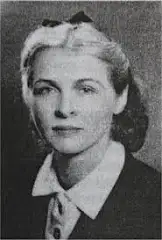
Woman of the Day Polish Resistance fighter Irena Iłłakowicz born OTD 1906 in Berlin to Polish parents, posthumously promoted to 2nd Lieutenant for her courage. Codename: Barbara Zawisza.
Irena’s aristocratic family moved to Finland after the October Revolution began in the Soviet Union in 1917 and returned to Poland when it regained independence after the end of WW1.
After finishing high school, Irena continued her education at the University of Grenoble where she became fluent in several languages and for a hobby, she climbed mountains. During one of her ascents in the Swiss Alps, one of the other climbers died when he fell into a deep crevass. At considerable risk to herself, she retrieved his body and was awarded the Swiss Gold Mountaineering Badge.
Her first marriage to a Kurdish prince failed. Tehran was not a friendly place for Western women and there were other difficulties in the marriage. After two years, she escaped from him to Tehran, travelling hundreds of miles on a motorcycle including through desert areas. The Polish embassy allowed her to return to Poland. She later married a fellow Pole in Warsaw and gave birth to their only child, a daughter named Ligia.
When Nazi Germany occupied Poland in October 1939, Irena and her husband joined the Zachód (West) section of the Polish underground army, changing addresses frequently to try to stay one step ahead of the Gestapo. Her extensive contacts, European education and fluency in seven languages made her ideal as an agent and she was given particularly dangerous missions, travelling to and from Berlin as a courier carrying reports on German transports and military-economic reconnaissance.
Irena was arrested and detained by the Gestapo on 7 October 1942 at Pawiak Prison in Warsaw. Her arrest was apparently accidental but she endured harsh interrogations and revealed nothing. She knew that if her interrogators broke her, it would cause significant damage to her organisation.
Other agents, knowing her role in intelligence, sent her a vial of cyanide but she did not use it. Her husband arranged for her to be freed from prison, bribing a guard to put her in the group of non-political prisoners to be transported to Majdanek, the concentration and extermination camp built by the SS just outside Lublin during the German occupation of Poland. It was a ploy. A group of underground fighters dressed in Gestapo uniforms and speaking German disrupted the telephone network and drove up to the camp gate in a car, producing a forged document - an order to transfer the prisoner to Warsaw to continue the investigation.
Back in Warsaw, Irena enjoyed a few brief weeks of rest and convalescence before returning to her intelligence work. This time, she was placed in the anti-communist section concentrating on the Soviet intelligence network in Poland, in an attempt to help her avoid further attention by the Gestapo. Plans were in place to transfer her to London imminently with another agent.
Her bags were packed, she had money and a passport - she was all set to go when she received an urgent message summoning her to a meeting “about an important issue”. This was on 4 October 1943 and she didn’t come back.
Irena’s body was found in the Mokotów Fields, a large park in Warsaw. She had been shot. Her passport and money were still on her so it wasn’t robbery and it wasn’t likely to be the Gestapo which preferred to arrest its prisoners and interrogate them. Russian intelligence was thought to be responsible.
Irena was 37.
She was buried in a Warsaw cemetery under the name of Barbara Zawisza. Because the Gestapo often sent agents to family funerals and other ceremonies, her husband participated in her funeral dressed as a gravedigger and her mother as a cemetery attendant. After the war, in 1948, her mother was finally able to place a plaque with Irena’s real name on her grave.
Dear @Channel4News
The Y2K bug did not “turn out to be a phantom issue”.
Hundreds of thousands of us worked our bloody socks off to make sure the world went on working. The fact that nothing went badly wrong took a decade of planning and effort.
Sloppy bloody reporting
Thread: Japanese historian Hirayama Yu, who has written over a dozen books on the Sengoku period and served as historical advisor for movies and dramas set in that time period, is going viral after weighing in on the Yasuke controversy, arguing that Yasuke was a samurai. 1/3
July marks my 10th month of unemployment and I’m not proud to admit it but I really need some help 🥹
My bills are piling up and I have no way of paying them, all I ask for is a RT.
Previous clients include @SweeetTails, @Syndicate, @MrRoflWaffles and @Spratt!