Why WADA bans things:
Performance Enhancement: There is medical or scientific evidence that the substance or method can improve or has the potential to improve athletic performance. This is <5% of the substances on the list
Health Risk: The substance or method poses an actual or potential risk to the athlete’s health and well-being.
Violation of the Spirit of Sport: The use of the substance goes against the fundamental ethics and values of athletic competition. This is MOST of the substances on the list
My old account @LouiseMBurke has been clearly hacked - believe me, crypto isn’t one of my “Ch” things. X won’t delete the hacked account or restore it to me, so jump ship and join the real me on a space where we can talk all things sports nutrition. Lots of new stuff to discuss!
What in the world did we just see!
The 2 hour marathon barrier has been broken. Three guys went under the old world record...
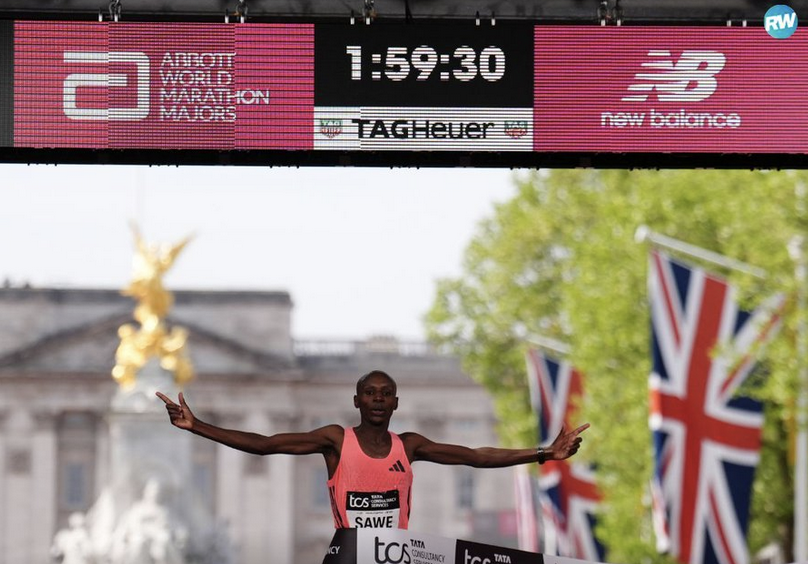
Sabastian Sawe just ran 1:59:30 with crazy negative splits, closing the last half in 59:01....faster than the American Record in the half.
One of the most mind blowing performances we've seen. How did we get here?
Every breakthrough is a mixture of belief and progress.
It takes folks daring to see what's possible, surrounding themselves with a quality team and doing the work to give themselves a shot.
You've got to bet on yourself in a big way.
When asked whether he believed he could run a sub-2-hour marathon before the race, Sawe answered with one word:
"Yes."
Let's get the obvious out of the way. Performance enhancing drugs are the legitimate question mark to every breakthrough.
So Sawe did as much as he could about taking that off the table.
He and his team asked to be tested all the time. His sponsor put up 50K to the Athlete Integrity Unit. The tests are run independently, no advance notice. Over a 2 month stretch, he went through 25 drug tests.
There's always a doubt. There has to be given what we know. Hopefully there's transparency in the results. But hats off to Sawe for addressing it:
"I want to prove that I am clean when I set foot at the start line."
But how'd we actually get here where two guys went sub 2 in the same race?
1. Shoe tech
We've had a revolution in shoe technology that boosts running economy.
For years shoe companies said their shoe would make you faster and was mostly marketing. Until 2016, when it actually did.
Initial research showed a 3-4% saving in economy, while subsequent work has shown it's highly variable.
Now, it's a matching game. Find the perfect shoe for your form and you can get a big boost.
Normally, it takes years of lots of miles and strength training to boost economy.
But now we get that instant boost that not only helps boost performance but often leaves us feeling less beat up in the later stages of the marathon.
So we get a little bit less hitting of the wall...
2. The fuel
For a long time, fueling was limited by biology. You can only take in and process so much.
Then in the 2000s, researchers found if we mixed sugars, we can boost intake because they're processed differently.
Then recently, Maurten found if you use a hydrxogel, you boost utilization without GI distress anymore.
We've gone from pushing 60g/hr to 120g/hr in a few decades.
Again...less bonking.
3. Depth
A few decades ago, you spent your career racing on the track and then once your speed started to fade a bit you went to the marathon.
Now, many skip right to the marathon. That's where the money is.
And with the economy boost from the shoes, you can make that jump quickly.
More depth of talent means more competitors in their prime pushing barriers.
4. Belief
Even with the shoes and tech, a few years ago sub 2 hours seemed a long way off, until Kipchoge pushed that barrier in a series of time trials.
Yes, they weren't official races and had contrived pacing. But it absolutely shifted everyone's thinking on what is possible.
A generation of runners saw Kipchoge go for it.
Our prediction of what is possible changed.
It's mind blowing how far we've come in such a short time.
What once seemed decades away, just got smashed twice in the same race.
Hats off to Sawe, especially for addressing the scourge of doping and showing folks what is possible with a lot of hard work, some crazy belief, and some fortuitous advances.
The structural and functional aspects of exercise-induced cardiac remodeling and the impact of exercise on cardiovascular outcomes
https://t.co/0HFzHqbKMx
This is the most logical move.
Sports separated by sex with a small exception for DSDs that negate androgens like complete androgen insensitivity syndrome.
1/
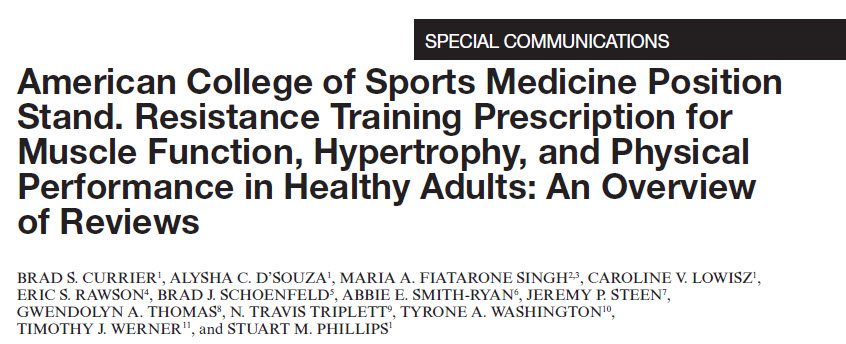
Big update in exercise science: ACSM has revised its resistance training Position Stand for the first time since 2009. That is a 17-year gap, and a lot has changed. 🧵https://t.co/Vk3yQj3Rmp
Training Physiology… Cardiorespiratory Fitness vs Aerobic Fitness
To conclude the posts from the last few days.
I want to be clear about what I am not saying.
I am not arguing that runners should only train at low heart rates. I am not suggesting that higher intensities are harmful. I am not proposing a rigid, formula-driven approach to training where everyone stares at a watch and refuses to exceed an arbitrary number.
Intensity has an important place in endurance development. Threshold work, tempo efforts, and even high-intensity intervals stimulate meaningful adaptations, including mitochondrial biogenesis, neuromuscular efficiency, and improvements in maximal oxygen uptake. The issue is not intensity itself. The issue is distribution.
The current online obsession with so-called “zone 2” training has, in many cases, made the discussion worse rather than better. Influencers often present it as a magic zone with a fixed heart rate range that applies universally. That framing is inaccurate and oversimplified. Physiological thresholds vary widely between individuals, and without metabolic or lactate testing, no one can precisely define them from a generic formula. Turning aerobic development into a single number on a watch misses the larger point.
The real conversation is about relative intensity and recovery cost. If most weekly training is performed at a moderate metabolic intensity, even if it feels comfortable, the cumulative physiological burden remains higher than necessary for base development. That narrows metabolic range, raises recovery demand, and over time may contribute to the injury patterns and stagnation many runners experience.
When something gains traction, the next step is not to argue more loudly. It is to tighten the framework so it withstands scrutiny.
One common critique is that first lactate threshold varies widely, and heart rate alone cannot define it. That is entirely correct. A heart rate in the mid-140s may sit below threshold for one athlete and above it for another. The only precise way to determine this is through metabolic or lactate testing. Any heart rate number used in discussion is illustrative, not diagnostic. The principle is distribution, not a fixed cutoff.
Another predictable critique is that high-intensity training also builds mitochondria. It does. High-intensity work stimulates mitochondrial biogenesis and improves performance. The nuance is that extensive time below aerobic threshold refines substrate utilization, enhances capillary density, and lowers the metabolic cost of submaximal work. Different stimuli drive different adaptations. The argument is not to eliminate intensity but to ensure that the base is sufficient to support it.
Some will object to the term “aerobic deficiency syndrome,” noting that it is not a formal medical diagnosis. That is also correct. It is a coaching framework describing a training distribution mismatch. Used in that context, it is a conceptual tool, not a pathology.
Injury risk is multifactorial, and no single variable explains it. Sleep, load spikes, footwear, strength, prior history, and biomechanics all matter. The claim is not that moderate intensity causes injury. The claim is that chronic moderate metabolic stress layered onto repetitive impact increases cumulative recovery burden, which is one contributor to overuse patterns. That framing aligns with what we understand about tissue adaptation and recovery.
Others will point out that elite runners appear to train at what looks like moderate intensity. The key word there is relative. What appears moderate externally may sit well below aerobic threshold for a highly developed athlete. Relative intensity matters more than absolute pace.
And finally, some runners will say they have trained this way for decades without injury. That may be true. Some athletes tolerate a chronic moderate distribution beautifully. That does not invalidate the physiology. It simply means their durability and recovery capacity have matched the stress.
This discussion is not about rigid heart rate targets or demonizing moderate effort. It is about understanding relative intensity, recovery cost, and long-term durability. Individual thresholds vary. The principle is distribution... and maintaining margin.
The position really isn’t extreme. I’ve seen the consequences of this moderate intensity trap in my office for decades. It does not say never run above a certain heart rate. It does not claim that moderate intensity is harmful. It does not suggest that everyone has an aerobic deficiency. It simply observes that many runners unintentionally live in a metabolically moderate zone for most of their training, that this narrows physiological range, raises cumulative recovery burden, and may contribute to performance stagnation and injury patterns over time.
Intensity builds fitness and has a role in a runner’s development. But… A well-developed aerobic base lowers the cost of that fitness.
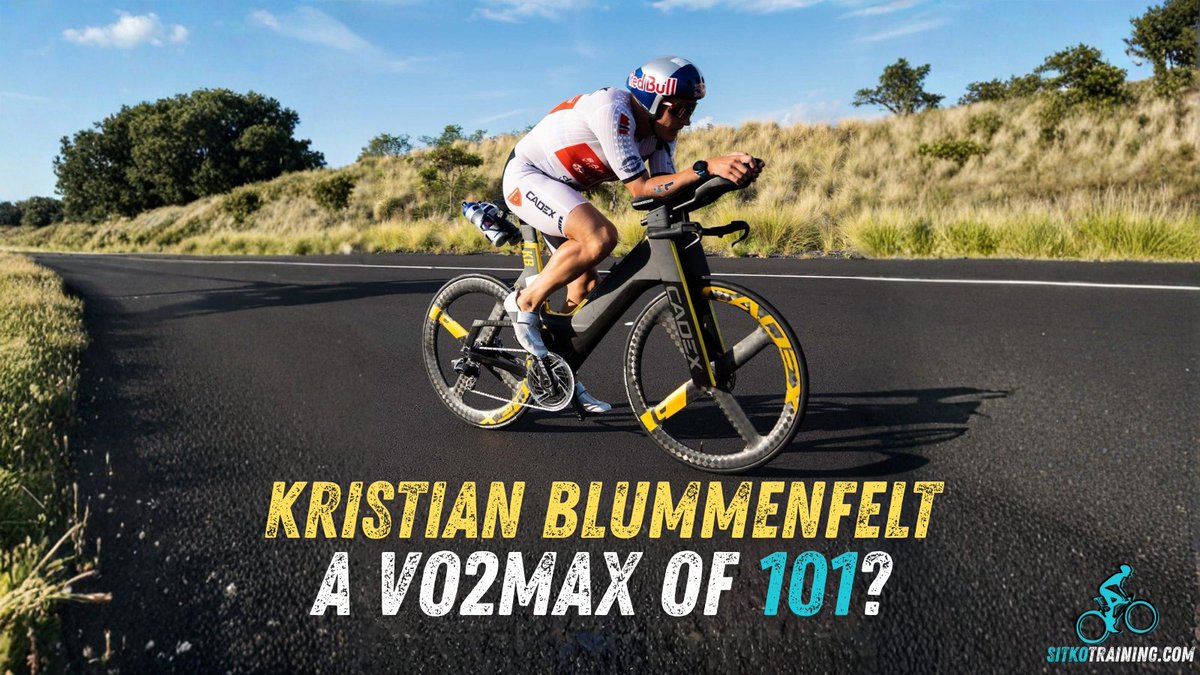
🧵 VO₂max of 101? Let’s slow down.
Recently, Olympic triathlete Kristian Blummenfelt shared images from a lab test on social media.
Headlines followed instantly:
👉 “World record VO₂max”
👉 “Over 101 ml·kg⁻¹·min⁻¹
But is this real?
Let’s analyze it with lab eyes👇
Protein Doesn’t Count When It Comes to Counting Calories 🧵
Except… it does. Just not the way people think!
Protein's my favourite nutrient, but it's not magic... a resurgence in all the amazing things protein can do... among them, it doesn't work in CICO 😉
@JohnGoldman @old_and_fast@Alan_Couzens It is likely helping with your recovery and allowing you to train more too, likely the reason it is banned from sport…
@Brady_H I am 63 yo triathlete training 15 hr/wk, RHR while sleeping (Garmin 935) was 43, and sitting at wake up (Hrv4training) 45, all numbers are averages during 2025.
New meta-analysis finds that taking an ice bath after strength training impairs gains.
The inflammation, damage, stress is the SIGNAL for adaptation.
Take it away...we blunt the response.
Sometimes, damage is a good thing...
A massive team effort to produce this joint ESSA & ACSM expert statement on “Physical Activity and Exercise Intensity Terminology”, which has been published in both JSaMS https://t.co/CqHzbleCht & https://t.co/XEnHHagwRC
Thread 🧵👇🏽