Seth Godin gave a masterclass on how to build an unforgettable brand in the age of AI:
1. Marketing is not about spend. It is about creating the conditions for other people to eagerly spread your idea.
2. Authenticity is overrated. What customers actually want is consistency. Show up the same way every single time and that is worth more than any Super Bowl ad.
3. Everything your company does is a marketing decision. How you answer the phone. What you charge. How you design things. Marketing is not a department. It is everything.
4. Trust is simple. Make a promise. Keep it. Especially when it is hard.
5. Successful brands are built with your customers talking about you. Not you talking about you.
6. A brand is not a logo. A brand is a promise. Nike has a brand. Hyatt has a logo. One of them you know exactly what to expect. The other you do not.
7. You are measuring the wrong things. Follower counts. Stock price. Open rates. False proxies will take your business in the wrong direction faster than anything else.
8. Social media followers mean nothing. Godin has 400,000 Instagram followers and says if he posts about a new book maybe 12 people buy it. The number is a distraction.
9. Stop trying to be famous. The goal is not to get more famous. The goal is to get less famous and more trusted.
10. Average marketing reaches average people. Average people will not buy your product. You need the people who will talk about you, challenge you, and eagerly pay more for better.
11. When you pick your customers you pick your future. Stop trying to reach everyone. Start trying to deeply serve someone specific.
12. Better beats louder every time. One guy running a wine email list with 130,000 subscribers does $30 million a year in revenue. No ads. No social media hustle. Just consistently better.
13. The real opportunity with AI is not making things cheaper. It is making things better. The businesses that use AI to deepen relationships will win. The ones using it to cut costs will race to the bottom.
14. Your job is not to do your job. Your job is to solve problems for other people and make things better by making better things. Everything else is just noise.
15. When AI becomes the buyer it will always choose the cheapest option. If your entire business strategy is being the cheapest, AI will destroy you. The only protection is being worth it in ways that cannot be easily measured.
16. The next level of marketing is permission at a depth nobody has achieved before. The brand that knows your tools, your projects, your needs, and shows up to help without being asked will be impossible to replace.
17. Most businesses will use AI to spam more people faster. The businesses that win will use AI to serve fewer people better. That gap is the biggest opportunity in marketing right now.
18. You have a squadron of summer interns available for twenty dollars a month. They are not that good but they are very eager. The businesses learning to be good bosses of AI right now will have an enormous advantage over everyone waiting to figure it out later.
19. The question every business should be asking is not how do I get more attention. It is how do I become the kind of business that people would genuinely miss if it disappeared tomorrow. That answer is your entire marketing strategy.
Sequoia's thesis that the next $1T company will sell work, not software, is the most important reframe in AI right now.
The argument: if you sell a copilot, you're competing with every new model release. But if you sell the outcome — books closed, contracts reviewed, claims handled — every AI improvement makes your margins better, not your product obsolete.
The key insight most people miss: for every $1 spent on software, ~$6 is spent on services.
The entire SaaS playbook was about capturing the software dollar. The AI playbook is about capturing the services dollar — at software margins.
Not "AI for accountants." The AI accounting firm.
Not "AI for lawyers." The AI law firm.
The companies that figure this out won't look like SaaS companies. They'll look like services firms rebuilt on software infrastructure.
That's a fundamentally different company to build, fund, and scale. And most founders are still building copilots.
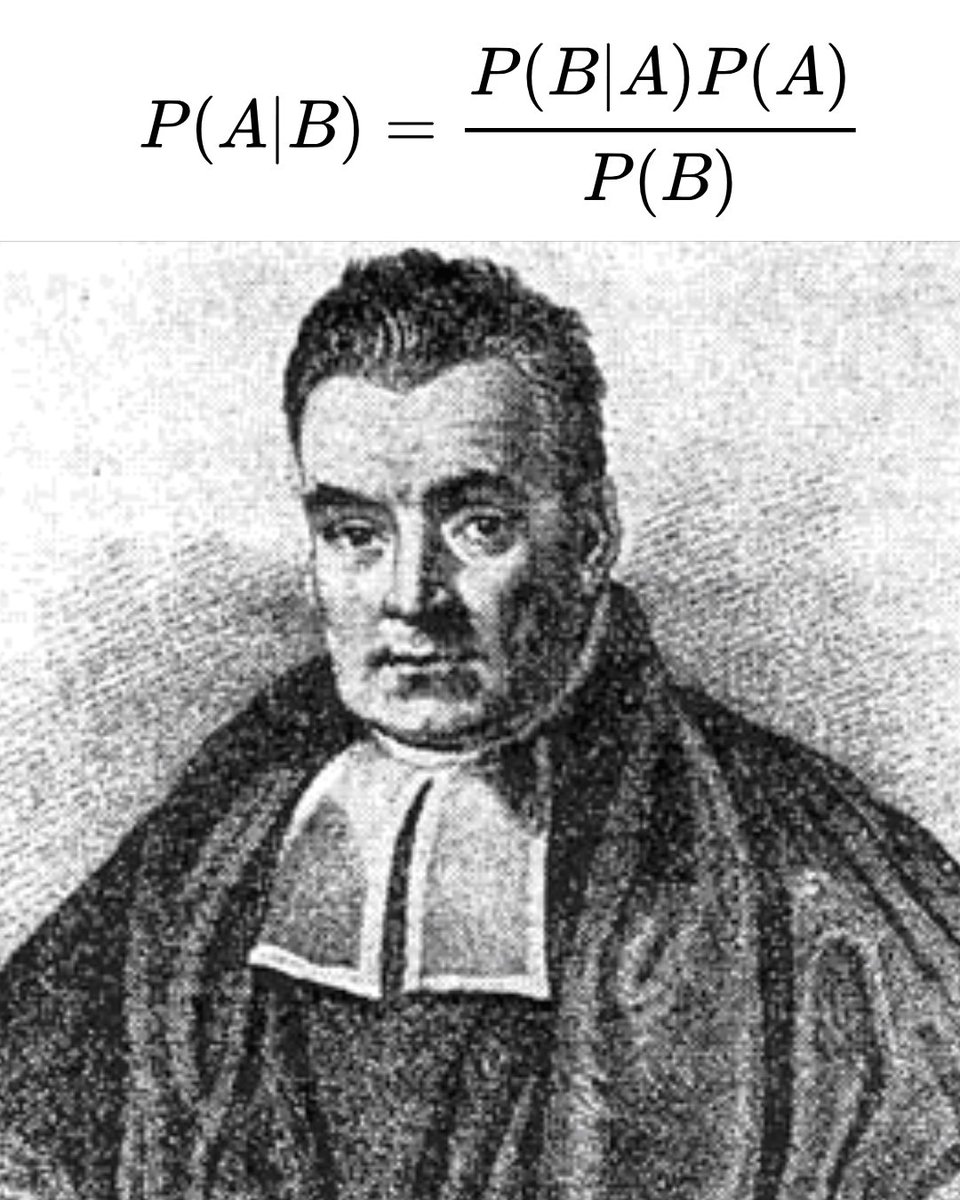
Bayes’ theorem is probably the single most important thing any rational person can learn.
So many of our debates and disagreements that we shout about are because we don’t understand Bayes’ theorem or how human rationality often works.
Bayes’ theorem is named after the 18th-century Thomas Bayes, and essentially it’s a formula that asks: when you are presented with all of the evidence for something, how much should you believe it?
Bayes’ theorem teaches us that our beliefs are not fixed; they are probabilities. Our beliefs change as we weigh new evidence against our assumptions, or our priors. In other words, we all carry certain ideas about how the world works, and new evidence can challenge them.
For example, somebody might believe that smoking is safe, that stress causes mouth ulcers, or that human activity is unrelated to climate change. These are their priors, their starting points. They can be formed by our culture, our biases, or even incomplete information.
Now imagine a new study comes along that challenges one of your priors. A single study might not carry enough weight to overturn your existing beliefs. But as studies accumulate, eventually the scales may tip. At some point, your prior will become less and less plausible.
Bayes’ theorem argues that being rational is not about black and white. It’s not even about true or false. It’s about what is most reasonable based on the best available evidence. But for this to work, we need to be presented with as much high-quality data as possible. Without evidence—without belief-forming data—we are left only with our priors and biases. And those aren’t all that rational.
“The best people possess a feeling for beauty, the courage to take risks, the discipline to tell the truth, the capacity for sacrifice. Ironically, their virtues make them vulnerable; they are often wounded. sometimes destroyed.”
— Ernest Hemingway
The Storyteller, 1921.
most people don’t realize how absurdly rare real connection is… how fragile, contingent, & wildly improbable it is to genuinely click with another human.
this is actually what makes it quite beautiful.
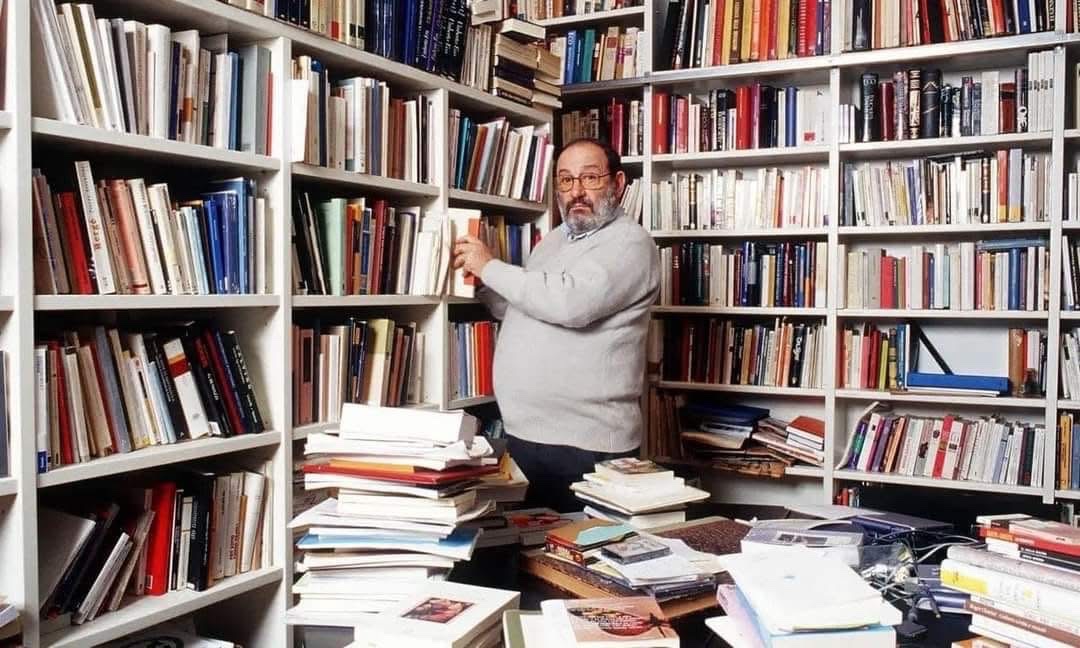
Umberto Eco, who owned 50,000 books, had this to say about home libraries:
“It is foolish to think that you have to read all the books you buy, as it is foolish to criticize those who buy more books than they will ever be able to read. It would be like saying that you should use all the cutlery or glasses or screwdrivers or drill bits you bought before buying new ones.
“There are things in life that we need to always have plenty of supplies, even if we will only use a small portion.
“If, for example, we consider books as medicine, we understand that it is good to have many at home rather than a few: when you want to feel better, then you go to the ‘medicine closet’ and choose a book. Not a random one, but the right book for that moment. That’s why you should always have a nutrition choice!
“Those who buy only one book, read only that one and then get rid of it. They simply apply the consumer mentality to books, that is, they consider them a consumer product, a good. Those who love books know that a book is anything but a commodity.”
"I love all the articles about Elon saying he doesn't know what he's doing… and I say, who are YOU? This guy is landing rockets. He's landing rockets on robot drone rafts in the ocean. And you're saying he doesn't know what he's doing. Well, who else is landing rocket? You ever land a rocket on a robot drone? Who are you?
I mean, okay, you're telling me he's an idiot. You're telling me he's an idiot. I just want to know who YOU are, so I know – why should I believe YOU as opposed to my friend Elon, and we're out here watching this rocket land, which I think is really cool. And you're there in front of your Apple Macintosh, and typing up an article, saying Elon's an idiot."
— Larry Ellison, 2018
“To be silent the whole day long, see no newspaper, hear no radio, listen to no gossip, be thoroughly and completely lazy, thoroughly and completely indifferent to the fate of the world is the finest medicine a man can give himself.”
― Henry Miller