Elon: Optimus 3 is almost done. Entering the final stage.
Most advanced robot on Earth. Nothing else compares.
Production starts this summer. Classic S-curve ramp.
High volume next year. Optimus 4 next.
New robot. Every year. That’s the goal.
@elonmusk
@Mobily1100 Kindly advise your customer care reps to provide better service, as they are the first point of contact & the face of Mobily. That would be a great solution, I believe. I kindly request your reassurance that you will continue to remain the best telecom service provider in KSA
.@Mobily Visited two Dammam outlets in 24 hours to transfer my SIM from visit to company visa for govt portal registration. No support — told to buy a new SIM. Very disappointing service, rude and unprofessional behavior.
In 1798, a scientist effectively “weighed” the Earth — without leaving his laboratory.
The English scientist Henry Cavendish designed an incredibly sensitive experiment.
Inside a quiet wooden shed, he hung a horizontal rod from a very thin wire. Two small lead spheres were attached to the ends of the rod.
Nearby, he placed two much larger lead balls.
Because of gravity, the large spheres slightly pulled the smaller ones. The force was extremely tiny — so small that the rod twisted by only a minute fraction of a degree.
Yet that tiny twist held a big secret.
By carefully measuring this small movement, Cavendish determined the strength of the gravitational attraction between objects.
From this, scientists could calculate the mass of the entire Earth.
His estimate was remarkably close.
Cavendish calculated Earth’s mass to be about 6 × 10²⁴ kilograms, while modern measurements give 5.97 × 10²⁴ kilograms.
Sometimes the biggest discoveries come from measuring the smallest forces.
Many people don't understand just how brutal diminishing returns in theoretical physics were.
Physics barely existed before 1820. After 1970, there was essentially nothing left to discover.
In 1819 there were probably less than 100 full-time paid physicists in the whole world.
By 2026 there are probably about a million physicists across academia and industry, and that number was already huge in the 1970s when physics sort of "ended" with QCD and electroweak unification.
A small, brave band of gentlemen-scholars and amateurs worked out the most important parts of physical law in the 1800s. People doing it as a hobby!
Today, vast armies of professionals equipped with supercomputers toil away in the quantum gravity dungeon, unable to make progress.
Diminishing returns are brutal.
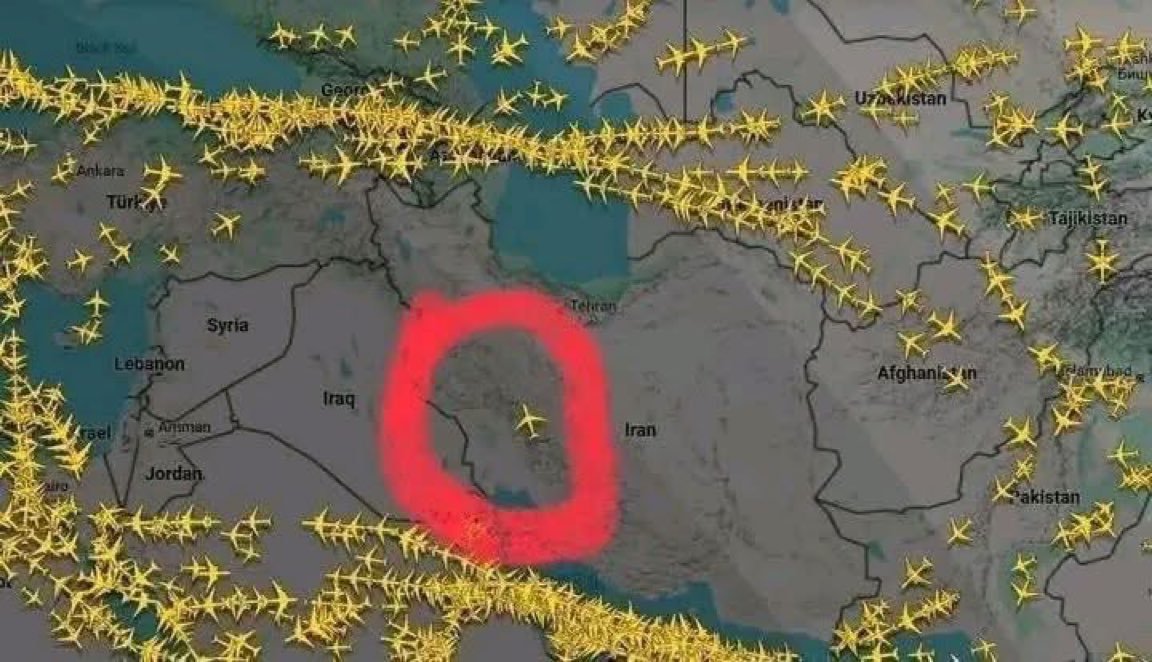
🚨🇮🇷 REGIME CHANGE IN IRAN; CAN AIRPOWER ALONE DO THE JOB?
The theory behind regime change without ground troops is seductive.
Bomb the leadership, cripple the military, spark a popular uprising, and let the regime collapse from within.
Washington and Jerusalem appear to be betting on exactly that formula.
But history, and Iran itself, suggest the odds are far lower than the rhetoric implies.
The current campaign has already delivered dramatic results.
U.S. and Israeli strikes have targeted hundreds of regime and military sites, killing senior leaders and degrading missile infrastructure. If regime change were ever going to happen from the air, this is what the opening act would look like.
And yet U.S. intelligence officials are already warning that the regime may prove far more resilient than expected because the Islamic Republic is not a one-man dictatorship.
It is a layered security state built around the Islamic Revolutionary Guard Corps (IRGC), intelligence services, clerical networks, and paramilitary organizations like the Basij.
Decapitate the top and the system still functions.
Historically, regime collapse happens when security forces stop defending the regime.
That’s what happened in Romania in 1989, in Tunisia in 2011, even in Iran itself in 1979. Without that elite fracture, regimes can survive staggering levels of military damage.
So far there is little evidence of such a split.
Analysts note that Iran’s security apparatus remains intact and loyal, aggressively suppressing dissent even during wartime.
Foreign attacks often produce the opposite of regime collapse: nationalist consolidation. A leadership that was unpopular on Monday can become the defender of national sovereignty by Friday.
There is another structural problem. Regime change is not just about destroying the old government, it’s about replacing it, and right now, there is no obvious successor.
Exiled opposition figures lack domestic power bases, and internal reformists have been purged for years. The most organized alternative inside Iran may actually be the IRGC itself.
Which means the collapse scenario Washington hopes for could simply produce a more militarized regime rather than a democratic one.
There is also the uncomfortable lesson of modern war: airpower rarely delivers political transformation by itself.
NATO bombed Serbia for 78 days before Milošević fell, and even then, internal political pressure finished the job.
Libya required an armed rebellion on the ground.
Iraq required a full-scale invasion.
Iran is far larger, more populous, and more politically cohesive than any of those cases. Which leaves Washington and Jerusalem pursuing a narrow path to success.
The best-case scenario is a campaign that weakens the regime enough for internal actors, protests, elite defections, or a coup to finish the job.
Without a fracture inside Iran’s security establishment, regime change from the air remains a strategic gamble.
Everyone criticizing Iran for striking the Gulf and Cyprus
What do you expect when you kill their leader, bomb the hell out of them and explicitly say you want to topple the regime?
They are fighting for survival. They have nothing to lose
Thats why this war is a terrible idea