#NASAWebb provides a never-before-seen look at the five galaxies known as Stephan’s Quintet. This image, composed of 150 million pixels, is Webb’s largest picture to date so far: https://t.co/GxUeFJFvfK
#UnfoldTheUniverse
🧵[3/8] Astronomers had already observed stars orbiting around the compact, massive, ‘invisible’ SgrA*🌀, and suspected it to be a black hole. The EHT has zoomed-in to provide the first direct visual proof #OurBlackHole#SgrABlackHole
@pl_pierce If your friends don't mind a YA book, Mackenzi Lee's "This Monstrous Thing" is a great book that fits the criteria (and is by someone I'm fairly sure you know)!
Exciting news if you are interested in Ultra-Diffuse Galaxies (or if you are interested in any galaxies, imo): our study of the formation of globular clusters (GCs) in UDGs is on the arXiv: https://t.co/GR5mqY6KsT
Hot off the press! The N-body shop is thrilled to officially introduce the Mint Condition DC Justice League Simulations, with a paper led by @elaadapplebaum ! (https://t.co/RXoBLEraEJ). https://t.co/ommKfEtQ1M
It turns out that most of our field UDGs had early mergers (z>1) that temporarily spun them up and redistributed their star formation. In many UDGs, we see bursts of star formation at high radii for billions of years post-merger: https://t.co/UTGayIlwJV
New paper day! We use the Romulus25 cosmological simulation to study the formation and evolution of 100+ ultra-diffuse galaxies (UDGs) in the field: https://t.co/ogTvsrEvJN
#nbodyshopgotchu
However, field UDGs have typical star formation rates for their stellar masses, so what’s really happening is that star-forming gas is spreading out! This results in bright, new stars forming at larger radii, leading to an increase in size over time. But why?
Check out my iposter tomorrow on the origins of ultra-diffuse galaxies using one of the ONLY cosmo sims capable of resolving the evolution of dwarf galaxies in a cluster environment, RomulusC. I'm also giving an "iposter-plus" presentation tomorrow morning at 9:10am #AAS235
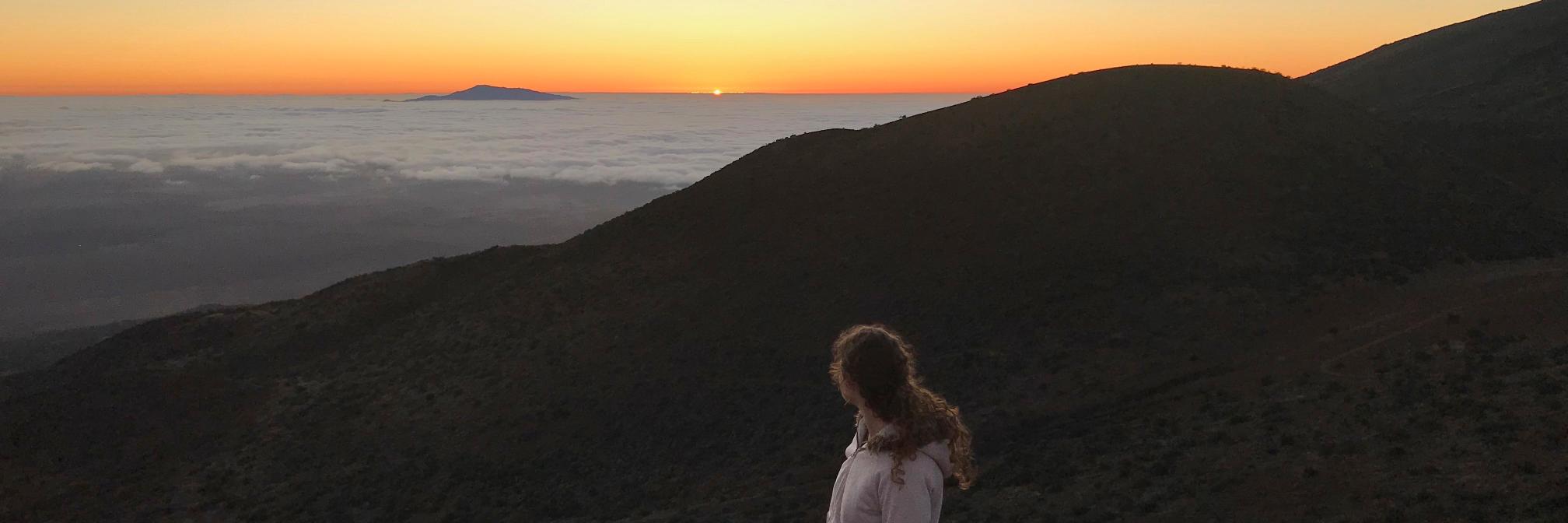
I'm in Hawaii this week for #AAS235 and I presented my thesis research (A Deep Dive into the Distribution Function: Phase Space Dynamics of Plasma Instabilities in the Early Universe) as a dissertation talk! You can watch here: https://t.co/fugNagfRkj