One month until London Q-Immuno Day 2026! 🧬💻
Join us on May 8th for interdisciplinary discussions at the intersection of theory, computation and immunology. 🥳
More details and free registration at: https://t.co/YLQAVB7pK9
The Sim lab has been hard at work and we’re proud to present our first paper.
We developed new methods to study peptide:KIR interactions.
Congratulations to star postdoc Tanusya Murali who led the project.
https://t.co/hN0fbGOSRx
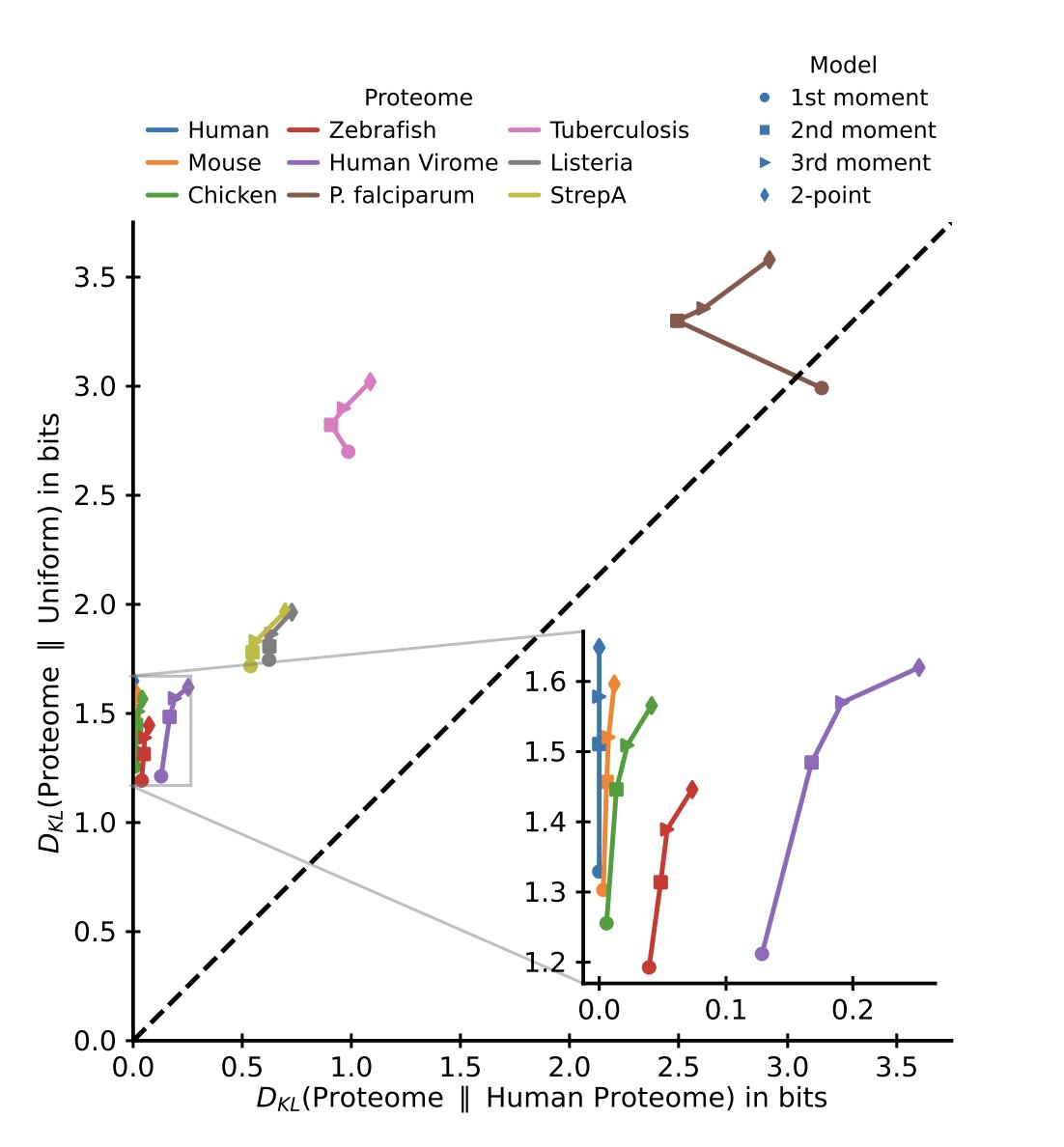
How different are self and nonself? This is a central question in immunology.
In our latest work just published in @PRX_Life we demonstrate that at the peptide-level statistical differences between host and pathogen proteomes are minor
A statistical physics framework that models peptidomes across species shows that self and nonself peptides are nearly one and the same, implying that the immune system benefits by targeting antigens near those represented in the organism’s own proteome.
https://t.co/5OLzHq8EbM
An important implication for cancer treatment is that neoantigens that are just one mutation from self are not strange antigen at all, as sometimes thought.
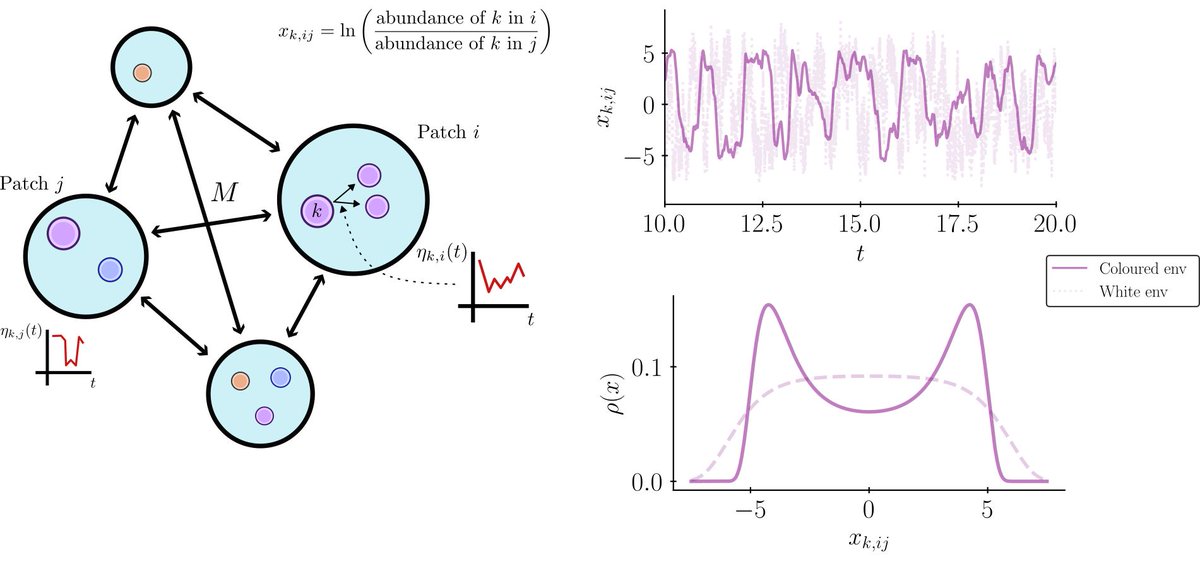
Excited to share the latest preprint from the lab "Fluctuating environments are sufficient to drive substantial variability in species abundance across locations" now up on arXiv https://t.co/jODwJoqzhk 🎉
Our work on these questions has been motivated by our experimental findings uncovering substantial variation in the human immune repertoire across blood and tonsils. https://t.co/Gd1wxBtuhV
Later on I will give an invited talk in the session "AI driven insights into immune responses: vaccines, infections, and disease" laying out a vision for combining AI with TCRseq to study human immunity
We are #absolutely#thrilled to #present@ImmunityCP - Deep profiling of human T cells defines compartmentalized clones and phenotypic trajectories across blood and tonsils: Immunity https://t.co/5X7DoSyz5l