I am so happy that our paper on the spatiotemporal bias in beta-arrestin signaling is finally out in @scisignal! In this short tweetorial, I would like to sum up the main findings. 🧵https://t.co/945vGEXvHh
I am delighted to report that our latest paper has now been published in Science Advances:
https://t.co/4zxfrizMSo
In this study, we generated and characterised a humanised GLP‑1R mouse model carrying the gain‑of‑function A316T variant using CRISPR/Cas9 knock‑in technology.
Hooray!! The first major product from the lab is out today @Nature.
Small molecules that bind the GPCR-transducer interface change G protein subtype selectivity in predictable ways, enabling rational drug design.💥
Check it out! 👉https://t.co/oO21BkoxVQ
🧵👇
Our latest review in Eur J Pharm Sci summarizes recent advances (2018–2024) in #fluorescent probe development for Class A #GPCRs, analyzing over 120 newly developed probes covering 60 GPCRs. https://t.co/gKkTsEKFgi
Our new photoaffinity labelling technology (https://t.co/6LbhlQ8KEf) is published in @angew_chem. It is more biocompatible, more efficienct, cheaper and easily accessible, even as a late-stage modification. We are working with @EnamineLtd to make it available for the community.
We are depositing the following mice to @MMRRC
Adgrf5-EGFP-CT-IRES-CRE
GPR123- EGFP-CT-IRES-CRE
GPR124- EGFP-CT-IRES-CRE
GPR125- EGFP-CT-IRES-CRE
Gpr133-EGFP-CT-IRES-CRE
GPR156-IRES-Cre
GPR156-mGL-IRES-Cre
GPR75-IRES-Cre
Bai1 mGL-CT-IRES-Cre
GPRC5A- EGFP-CT-IRES-ERT2-CRE
1/2
Delighted to share our study on promiscuous chemokine binding at a chemokine receptor, now published in @MolecularCell!!!
Molecular basis of promiscuous chemokine binding and structural mimicry at the C-X-C chemokine receptor, CXCR2: Molecular Cell https://t.co/SRqhb18fEq
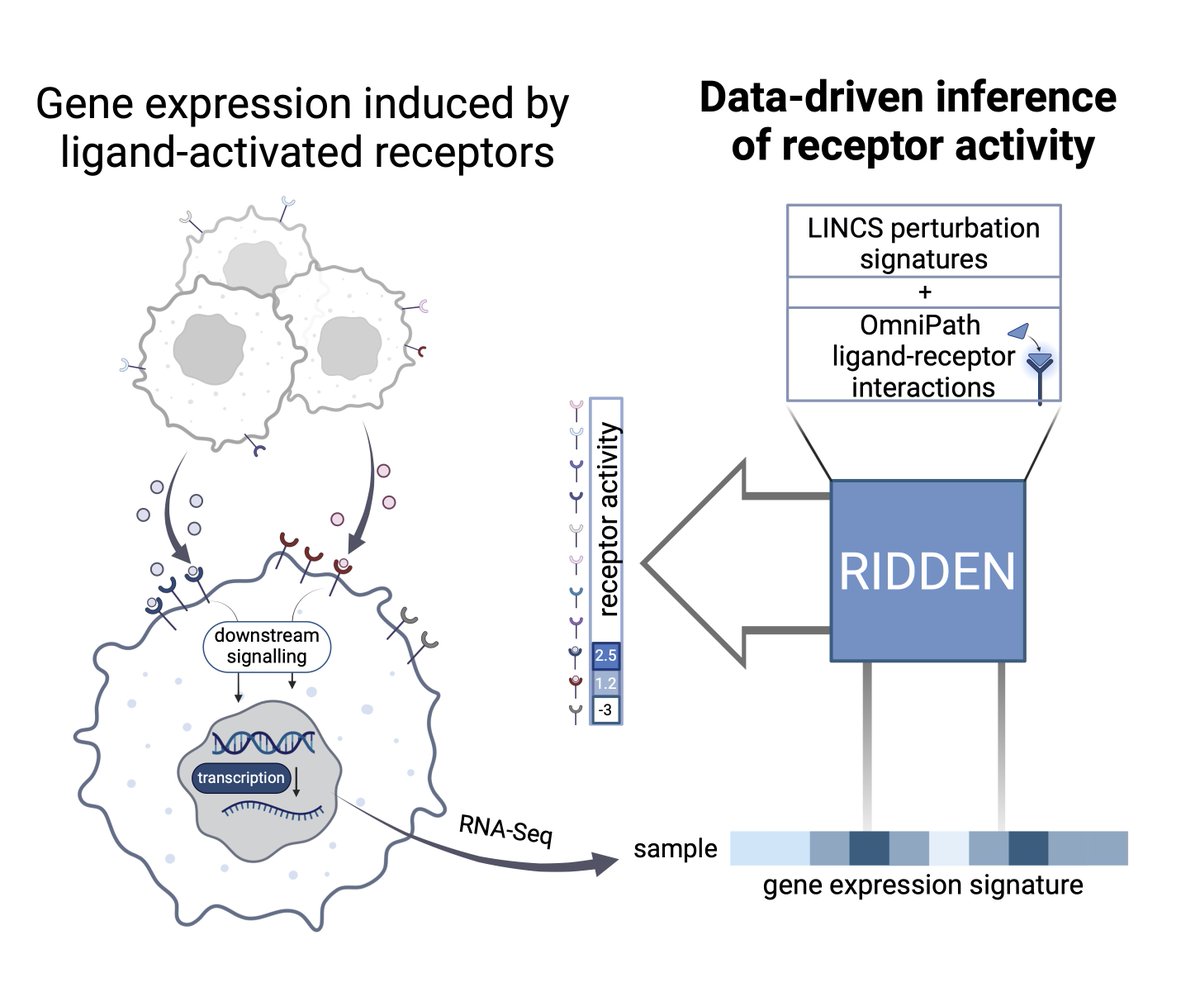
Receptors are essential for cell communication, yet most comp CCC tools focus on ligand/receptor expression, not receptor activity. To address this, we developed RIDDEN, a model that infers activity for 229 receptors from transcriptomics data. 1/ n https://t.co/MNWfK2NSzD 1/n
Our perspectives on the various aspects of bias in GPCR function, with a special focus on their relevance to the kidney, have been published in @NatRevNeph. https://t.co/knY2bAZKBE
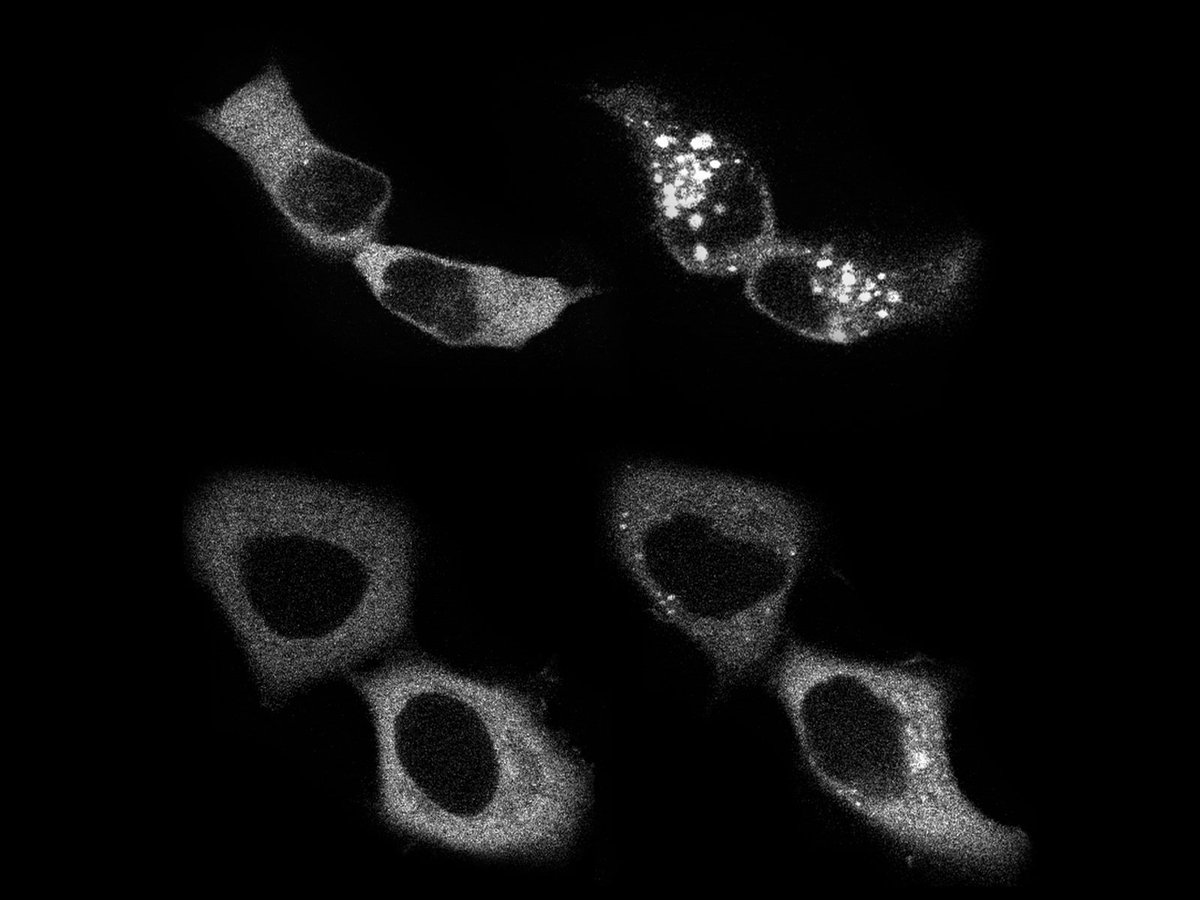
Astonishingly, differences in beta-arrestin recruitment almost completely disappeared without endocytosis. Since beta-arrestins form stable interaction with AT1R, even at endosomes, we speculated that agonist-specific differences occur endosomally.
To get a broader picture, @ben_szalai built an ODE-based mathematical model. This model verified the role of ligand k_off and revealed that compartment-specific differences in GPCR phosphorylation/dephosphorylation are crucial for ligand k_off effects to emerge.
Why is that so? Since differences in agonist effects developed over a relatively long time, we hypothesized that receptor endocytosis might account for it. We then checked what happens in the absence of endocytosis.
I am so happy that our paper on the spatiotemporal bias in beta-arrestin signaling is finally out in @scisignal! In this short tweetorial, I would like to sum up the main findings. 🧵https://t.co/945vGEXvHh
We measured the transducer activation profile of various AT1 angiotensin receptor agonists in real time with BRET sensors. We found substantial temporal variance in agonist effects for beta-arrestin recruitment but not for G protein activation.
A new paper shows that the #endocytosis of #GPCRs such as AT1R can influence biased signaling through #BetaArrestin, suggesting the efficacy of beta-arrestin-binding ligands depends on spatial location as much as on receptor conformation. @semmelweishu https://t.co/ReFrZhsmNO