It's the 14th year into a 25-year journey that began in 2013... I've never been more convinced that the future is going to be extraordinary.
Here's everything we covered in 5 days at the @Abundance360 2026 summit DIRECTLY from our faculty!
POD UP! Besties are back! 🚨
-- ICE Chaos in Minneapolis
-- Clawdbot Takeover
-- Why the Dollar is Dropping, Gold and Silver Ripping
-- California Governor Race
(0:00) Bestie intros + quick Davos recap
(9:55) ICE chaos in Minneapolis: aftermath and reactions
(45:54) Clawdbot takeover: Jason demos his OpenClawd instances, Kimi K2.5, entering the next phase of AI
(1:09:58) De-dollarization, gold and silver ripping
(1:20:05) California governor race
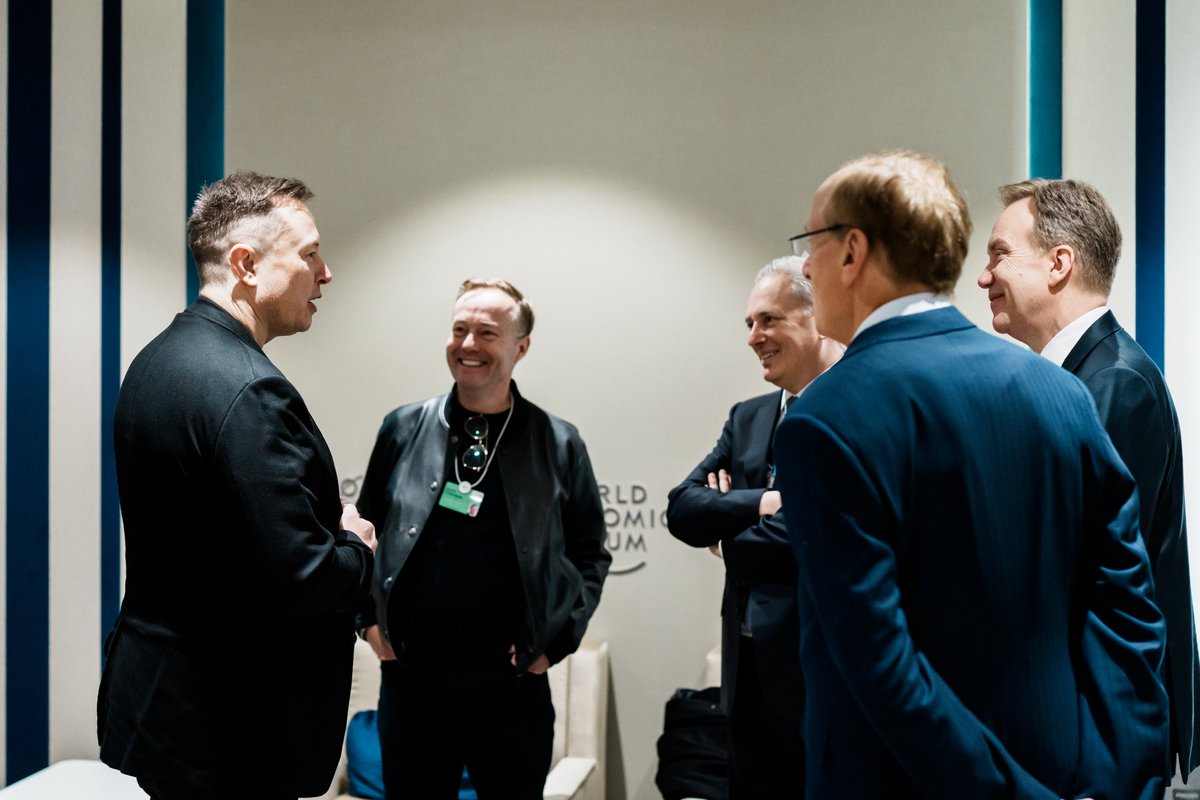
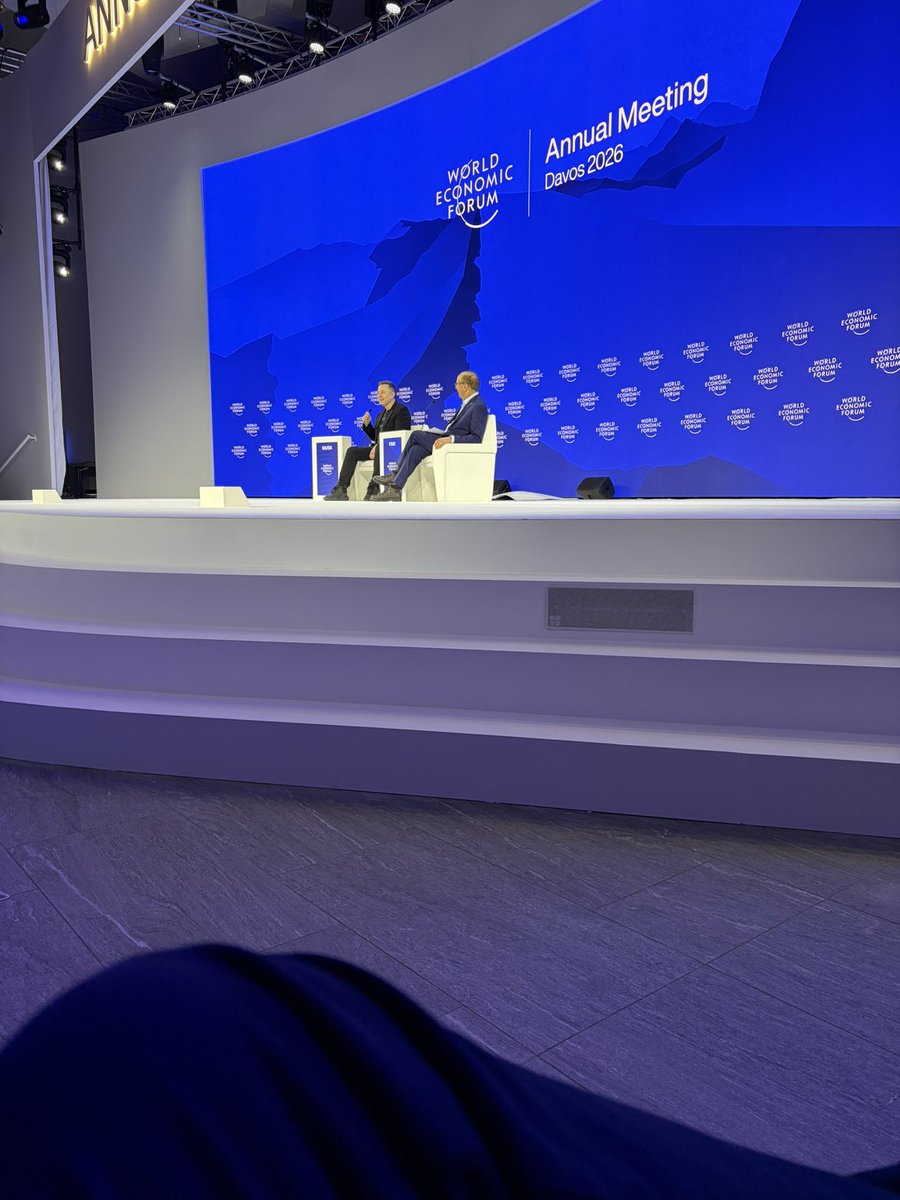
Great to finally welcome @elonmusk to #Davos.
His conversation with Larry Fink on AI, robotics and the future of technology reflected both ambition and optimism about what lies ahead.
Innovation is moving fast, and with the right leadership and collaboration, it can be a powerful force for progress. #wef26
LIVE from Davos: Satya Nadella joins the Besties! 🚨
@satyanadella sits down with @Jason and @DavidSacks from the main stage at USA House!
-- Future of AI copilots and agents: how white collar work will change
-- Scaling revenue and profits with flat headcount
-- Views on diffusion and having the US AI stack win globally
-- Foundation model concerns?: OpenAI's IP, will open-source win?
-- SaaS adoption in the age of AI
(0:00) Jason and Sacks welcome Microsoft CEO Satya Nadella
(1:31) Future of AI copilots and agents, impact on white collar work
(8:01) How Microsoft has scaled revenue and profits with flat headcount
(10:50) The extreme competition in AI: Microsoft, xAI, Google, OpenAI, Anthropic
(12:39) Views on diffusion, how the US tech stack can win globally
(19:59) OpenAI deal, owning the IP, thoughts on open-source winning AI, Microsoft's AI stack, do they need a foundation model?
(26:08) What enterprise software adoption looks like in the age of AI
My top @elonmusk quotes @ Davos #WEF26
“I’m often asked are there aliens among us? And I say I am one, but they don’t believe me”.
“People ask me: do I want to die on Mars, and I’m like yes, just not on impact”.
Me too, Elon. Me too. 🚀👽
Join my conversation with @elonmusk on AGI timelines, energy, robots, and why abundance is the most likely outcome for humanity's future, alongside my Moonshot Mate @DavidBlundin!
(00:00) - Navigating the Future of AI and Robotics
(04:54) - The Promise of Abundance and Optimism
(10:02) - Energy: The Key to a Sustainable Future
(15:00) - The Role of Education in a Changing World
(41:07) - Health, Longevity, and the Future of Humanity
(50:51) - AI's Impact on Labor and Employment
(55:05) - Universal High Income: A New Economic Paradigm
(57:58) - Navigating the Singularity and AI's Acceleration
(01:02:30) - The Role of AI in Healthcare and Surgery
(01:08:22) - Ethics and AI: Programming Values into Machines
(01:14:18) - The Future of Space Exploration and AI's Role
(01:33:30) - The Chip Shortage Crisis
(01:42:46) - Simulation Theory and Consciousness
(01:48:18) - The Search for Extraterrestrial Life
(01:58:28) - The Future of Robotics and AI Integration
''In a world where strong powers act openly on the basis of interest and power, weaker actors must either build real power, align themselves with power - or accept their irrelevance''.
There has never been a rules-based international order. What is new is admitting it.
The American arrest of Venezuela’s dictator Nicolás Maduro (and his wife), accompanied by the use of military force, has understandably prompted many in Europe to lament what they see as a breach of the rules-based international order.
The purpose of the following reflections is to place this assumption in perspective.
If we confine ourselves to the permanent members of the UN Security Council, only the United Kingdom and France can be said to respect - more or less consistently - what Europeans refer to as “the rules-based international order.”
Russia is waging war in Ukraine in blatant violation of international law. China’s conduct in the South China Sea has no place within the framework of international law. And neither does the American arrest of Maduro.
In other words, the majority of the permanent members of the Security Council have - diplomatically speaking - a relaxed relationship with the UN Charter and other fundamental components of the rules-based international order.
That the United States, Russia, and China adhere to the principles of the rules-based international order only until they no longer do so is nothing new.
The difference lies rather in how such violations are justified. The United States continues to legitimize its actions in a normative language of human rights, responsibility, and international order - even when the arguments are thin. Russia and China, by contrast, increasingly refer openly to spheres of influence, historical entitlement, and civilizational particularities.
Russia - and before it the Soviet Union - has a long history of invading countries within its sphere of interest that failed to fall into line. China has been a member of the WTO for 25 years without ever genuinely respecting the organization’s rules. The United States, for its part, has carried out a substantial number of military operations without a UN mandate since the Second World War.
The question, therefore, is not when these three countries abandoned respect for the international order. The question is rather whether they ever truly embraced it in anything other than a rhetorical sense.
Upon closer reflection, one is compelled to conclude that “the rules-based international order” is, to a large extent, a normative phantom—one to which small and medium-sized European states have shown a particular fondness for rhetorical devotion. Much like their principal cooperative institution: the EU.
This is not to say that norms are without significance. Rules do matter—but they operate asymmetrically. They discipline the weak far more effectively than they constrain the strong.
In principle, I see nothing wrong with toasts to principles that are difficult to live up to on a daily basis.
The point of a toast is to install an ideal: a conception most people recognize and respect. If successful, this has two advantages.
First, it provides a norm to which one can appeal when it is violated. Even if one does not tell the full truth at all times, the norm of truthfulness is a good thing. It offers a starting point for legitimate criticism when a specific person, in a specific situation, is not being truthful. And that is useful.
Second, norms can, in fortunate cases, induce shame in those who violate them—and public shaming when they are caught in flagrante. No society can function without such mechanisms of control and self-control.
Seen in this light, there is of course nothing wrong with European countries - and the EU as a whole - professing their commitment to the rules-based international order.
The problem arises when Europeans genuinely and in all seriousness believe that the world is in fact governed by rules, and that violations are consistently called out and sanctioned.
Why? Fundamentally because this has little to do with reality. Because it is an illusion—and permanent illusions are dangerous.
What ultimately governs the course of world affairs is power. Toasts to the rules-based international order cannot and should not obscure that fact.
Great powers comply with rules as long as it is in their interest to do so. The moment that interest disappears, so does compliance. Small and medium-sized states can only hope that the great powers will continue to play by the rules. For if they do not—what then? Nothing. In practice, the rules become void, and the law of the strong prevails.
For this reason, the real problem with the American arrest of Maduro is not that international law has once again been set aside. Historically speaking, that is nothing new.
What is new is that Europeans still pretend to be surprised.
That great powers recognize the “rules-based international order” only when it suits them is therefore not new. What is new is merely that they are increasingly no longer bothering to conceal it.
Sex also existed before the liberalization of pornography. What was new was not that people suddenly began doing things they had never done before. What was new was that they no longer felt ashamed of it - and allowed it to become common knowledge that this is how the world actually works.
In this sense, the new international reality more closely resembles the liberalization of pornography than the emergence of wholly new and epoch-making activities in bedrooms around the world.
In a world where strong powers act openly on the basis of interest and power, weaker actors must either build real power, align themselves with power - or accept their irrelevance. Appeals to unenforced rules change nothing. Protests without sanctioning capacity change nothing. Moral outrage without material means changes nothing.
For Europe, this means that the question is no longer whether the rules-based international order has been violated. That question is irrelevant. The only relevant question is which instruments of power Europe possesses - military, economic, and strategic - and whether there is political will to use them.
If not, Europe will continue to speak the language of norms in a world that has moved on to the language of power. Elegant - but without effect.