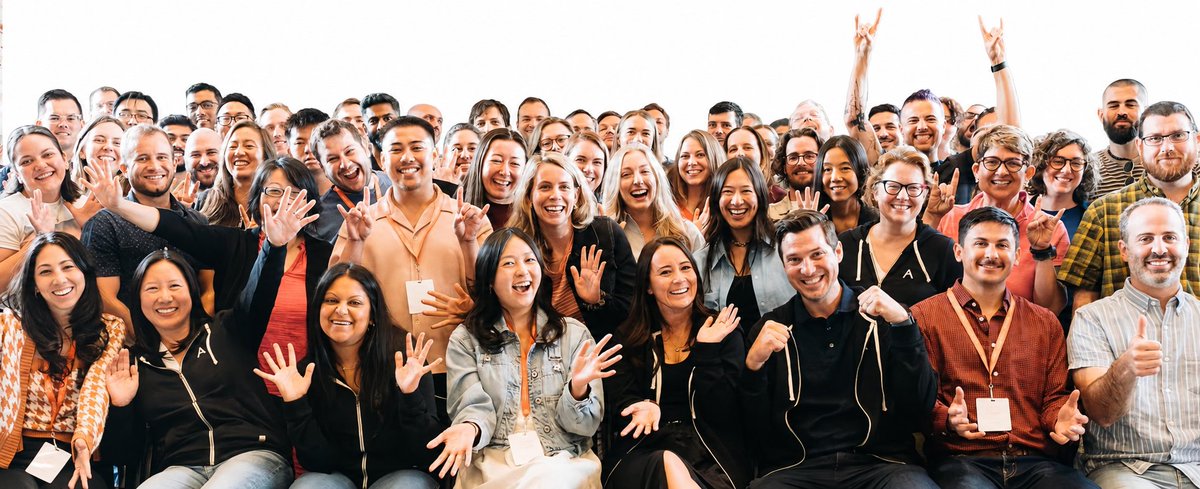
Seven years ago when we started @GoHumanFirst, we had a vision to unlock better research for all humans, faster. Today, I’m thrilled to share that we sold the company to @ICONplc (NASDAQ: ICLR), a global leader in drug development with 90 locations in 45 countries. https://t.co/vEAVqs2bfJ
@kanjun love the focus on using AI to enhance collaborations with other people... feels like (somehow??) a missing design principle in so many products recently
When we started Loyal there was no FDA pathway for a any lifespan extension drug.
Today the FDA accepted our third one!
LOY-003, our daily pill for helping large dogs live longer (and healthier) lives, has earned RXE efficacy approval.
Last week was my final week at @AbridgeHQ.
It’s hard to capture what these almost 8 years have meant to me. Together, we grew from 10 people to more than 550, and today Abridge serves over 250 of the largest health systems across the U.S. It has been the opportunity of a lifetime.
At an All Hands earlier this year, @molly_g shared that what you take with you from every job is simply: (1) the lessons you learned and (2) the people you met along the way. I couldn’t agree more.
The lessons are too many to count: how to navigate the idea maze and build from 0→1; how to create a product people love and come to depend on; how to fuse AI with humanity and build trustworthy systems; and how to build an exceptional team and culture.
More than anything, the people are what made this chapter so special. I’ve had the great fortune of working alongside some of the most mission-oriented, dedicated, and selfless people I’ve ever met. When people truly live Abridge’s values—The Obstacle Is the Way, Help Others Win, and Taste Good Things—it’s no surprise that they take extraordinary ownership, go the extra mile, and help those around them succeed. We’ve shared laughs, laugh-cries, and the kind of camaraderie that comes only from being in the trenches together.
Even after so many years, I still can’t get enough of our internal love stories channel. Every story is a reminder of why this work matters. It’s been a privilege to help build something that meaningfully changes the day-to-day experience of care for clinicians and patients.
One of the greatest gifts of this final week was hearing from so many of you. Your messages—sharing memories, moments, and what our time together meant—touched me more than I can say.
To @ShivdevRao, Abridgers past and present, our investors, and our partners: thank you for trusting me, challenging me, teaching me, and building alongside me. Whatever I gave to Abridge, I received back many times over.
I’m leaving as a huge believer in Abridge, its people, and its mission. I’m incredibly optimistic about what lies ahead and can’t wait to cheer the team on.
As for what’s next, I’ll be advising teams I admire and staying close to the ideas, people, and problems that inspire me. I know I’ll be back to building before long, but for now, I’m closing this chapter with so much gratitude. Onwards. 🚀
When your children ask what you were doing during the AI revolution, what do you want to tell them?
We're using AI to find new medicines and save lives. Join us.
Someone asked me recently why I’ve become interested in aesthetics after having spent most of my life more interested in STEM-adjacent topics. I hadn’t really considered the question consciously before, but I’m certainly thinking about aesthetics more than I used to. I think it’s a confluence of things:
• Many things today are ugly and far uglier than they used to be or need to be. Once you see this, it’s kinda hard to stop perceiving it. (Early twentieth century phone boxes versus modern phone boxes; old water fountains versus new water fountains; etc.) As someone with a naively meliorist assumption that most things should be getting better rather than worse, it’s all a bit perplexing: why did we stop doing things nicely? Is it a choice? Was there a malevolent spell cast upon us? This vein led me to think more about modernism and why much of art became more intentionally "challenging", grotesque, opposed to prettiness, rebarbative, dissonant, etc. Can or should anything be done about this? Is this just how things ought to be?
• Relatedly, much of modernism involved a kind of explicit repudiation of cultural continuity and represented a schism with prior practices. This is maybe most evident in American architecture, where the International Style exhibition in 1932 initiated the displacement of a rich tapestry of prior styles. This cultural break seems important and interesting to me, and I suspect that the rejection had important consequences outside of the aesthetic domain. Samuel Hughes has been exploring this question in his recent writing at @WorksInProgMag; @RuxandraTeslo is also pulling on this thread. Elaine Scarry wrote about how beauty inspires creation. If so, the inverse may also be true: ugliness inhibits it.
• It’s clearly the case that changes in the aesthetic domain can at least inspire progress in other places. Petrarch helped set some of the preconditions for the Renaissance which in turn fostered the scientific revolution and Enlightenment. Things like World Fairs (the 1851 Fair at the Crystal Palace recorded 6 million admissions when the population was 21 million) reflect the popular interdependency that used to exist between aesthetics and material development.
• @tedgioia and others have written about stuck culture and how so many domains seem to have ceased to straightforwardly advance in the way that they did up until the nineties or thereabouts. This is obviously peculiar and interesting. What changed, and what does it mean? Is it about the internet and fragmentation? Is it about a loss of supply? Is it just about having reached the zenith of various mediums?
• I’m generally interested in markets and the dynamics of creation. In aesthetics broadly, I find the reflexivity between supply- and demand-side factors to be very thought-provoking. There’s a natural desire to view satisfaction of individual preferences as the yardstick to measure market success, but things get interesting and even a bit unsettling when we start to think about how the supply might start to shape the demand. I often think about this in the context of food. Why is food so much worse in Germany than many of its neighbors? Germany certainly doesn’t have less material ability to produce good food; indeed, Germany is richer than the countries around it. There’s probably something about German food supply chains that is impoverished relative to France and Italy, but the Germans themselves don’t seem too upset about it. It just seems that the Germans are stuck in an objectively worse market equilibrium than their neighbors: the food is bad and they’ve gotten used to it. The obvious question then is where else these kinds of reflexive patterns apply, and where else we’re stuck in some objectively inferior equilibrium, even if preferences are in some superficial sense being sated.
• While this is an extremely banal and obvious point, I hadn’t until recently thought much about or internalized how much one can study reasonably objective things ("the status of women in society", say) through artwork. (Thanks to @_alice_evans for opening my eyes here.) In this vein, I’m pretty excited about the possibilities over the coming years in computational art analysis. I want something that’s conceptually similar to Google Ngram timelines but for the visual arts.
• We've always tried to do things well at Stripe. I've come to see that attempting to do them beautifully is often a helpful way to break out of standard practices and to do something with greater novelty and in a way that might have other benefits besides. (Also, excellent people want to do great work because it is intrinsically satisfying. Explicitly allowing aesthetic considerations to carry weight avoids having to justify every assessment with some kind of torturous empiricism.)
• In his Nobel Lecture, Solzhenitsyn said that, among the Platonic virtues of goodness, truth, and beauty, that beauty is special, for it possesses a unique kind of irrefutability. He notes that arguments, writing, and philosophical systems can all be predicated on misapprehensions, but that “a true work of art carries its verification within itself.” He proceeds to observe that when goodness and truth are threatened, the “ever surprising shoots of beauty will still force their way through.” There is a lot of specious and motivated reasoning in the world today and plenty of questionable value systems. I don’t think that beauty directly reflects any definitive trait, but I’m intrigued by the idea that it can be a marker of deeper metaphysical coherence.
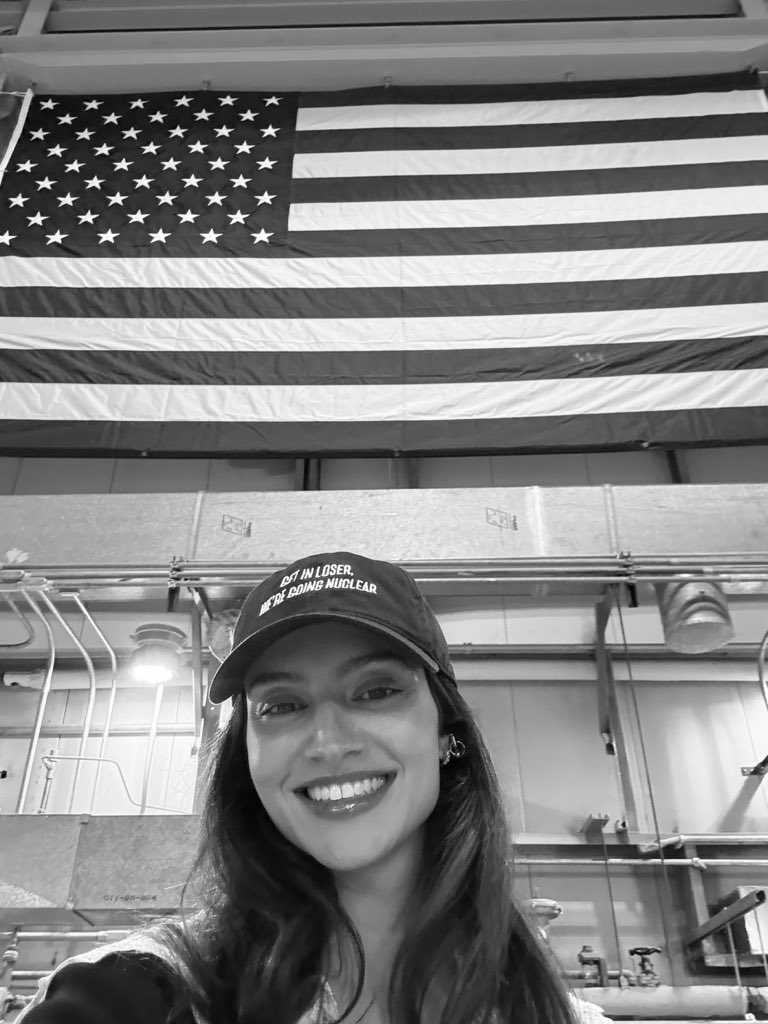
WE HAVE ACHIEVED CRITICALITY ✨
On the fourth of June 2026, the Idaho sun rose over the high desert kindling the dawn of the Second Atomic Age.
Last May, President Trump signed an executive order mandating that three reactors go critical before July 4th, 2026.
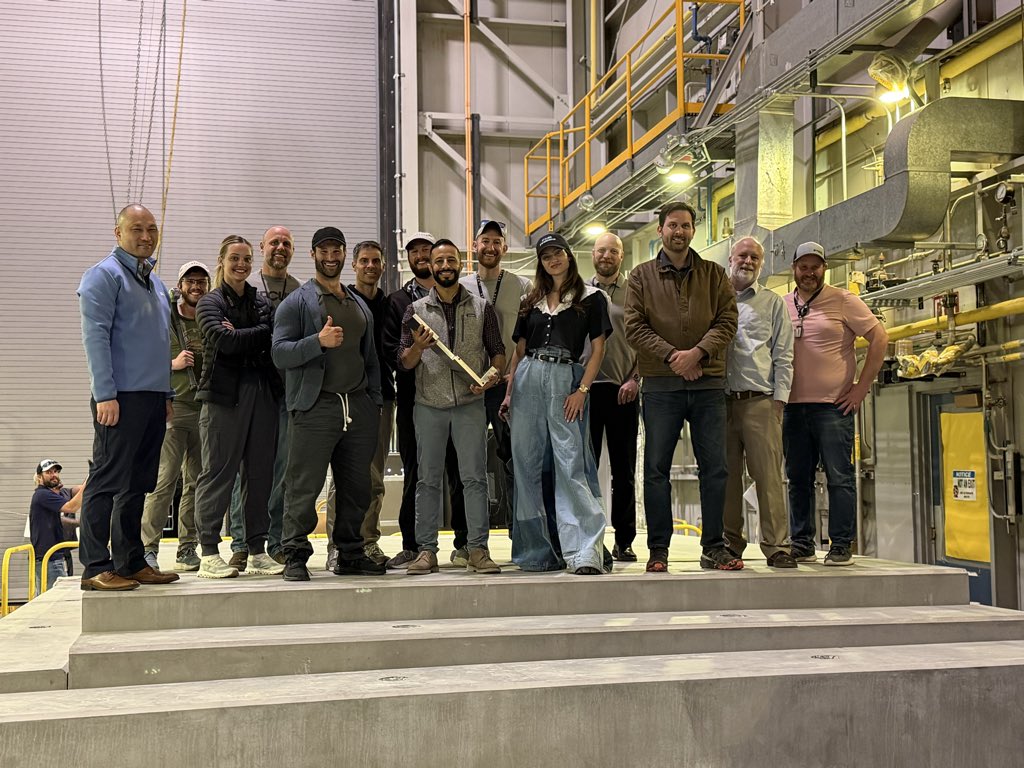
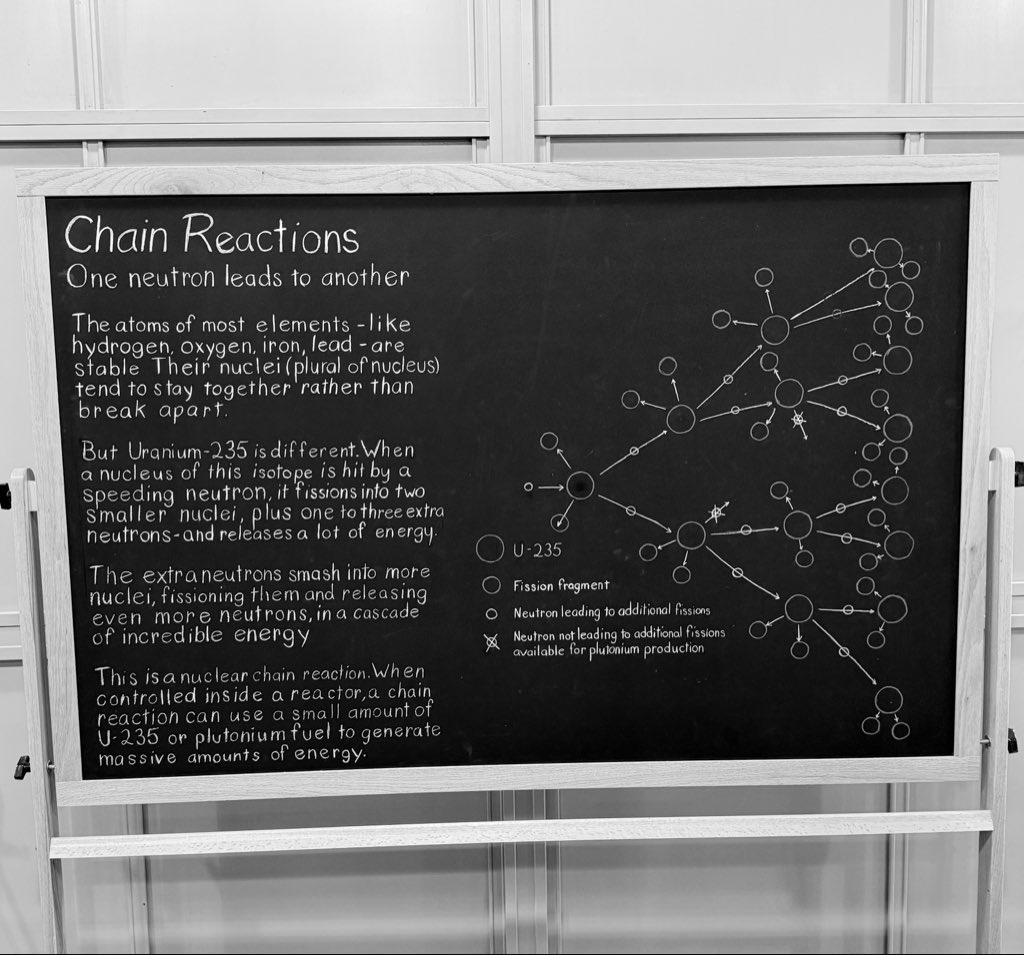
One month ahead of schedule, @AntaresNuclear answered, sustaining a steady chain reaction at Idaho National Laboratory.
This is the first new reactor brought to life at INL since 1973. The same ground where, in 1951, nuclear electricity first powered four light bulbs.
Criticality is only the beginning, a fleeting spark on a long and difficult road.
But it carries a message that echoes across the plains: American Nuclear is back.
Today marks the return of a new era, one where the United States once again tackles the hard things, where innovation is pursued without apology and celebrated without restraint.
It was powerful to stand on that iconic ground and witness history be made!
Congratulations to every single one involved ✨
Most people see the LinkedIn version of a career. This conversation is about everything that came before and alongside it: taking risks, growing with @AbridgeHQ, learning from unexpected places (Michelin-starred kitchens), and raising kids in a world shaped by AI.
Thanks, @SapienneAI for the thoughtful conversation.
1/ 1 in 9 people over 65 has Alzheimer's. By age 85, it's 1 in 3.
My dad has it. It's truly tragic. I've spent years researching and enrolling my dad in trials because most doctors aren't experts.
I finally put together a guide for friends and am sharing it here too.
A new study shows that individuals with similar levels of autistic traits are naturally drawn to one another. Brain scans reveal they use alternative, highly effective neural strategies to connect, challenging traditional deficit-based models of autism. https://t.co/6YgJpV6iHU
It took us two years to grow from $10 mm to $100 mm in Annual Recurring Revenue and 15 months to reach $200 mm. Nine months later, we crossed $300 mm. Vanta’s growth rate increased each of the past four quarters – compounding really is the eighth wonder of the world!
“But wait,” you might be thinking. “How does a software company founded before 2022 *increase* its growth rate?” Narrative violation!