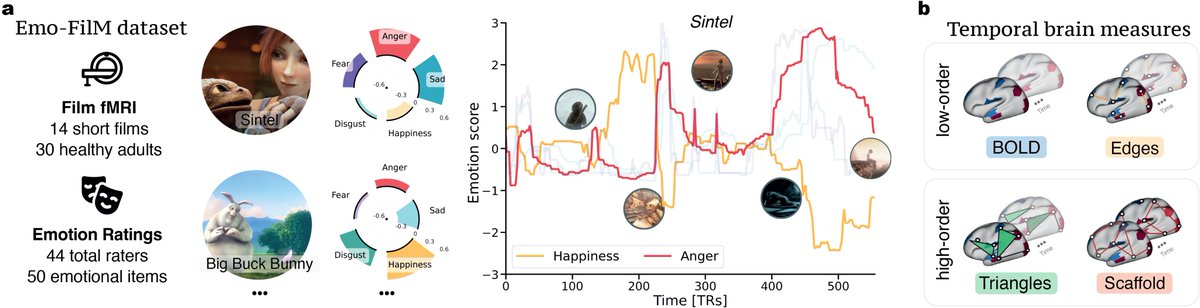
🧠🎬 What can different views of brain activity tell us about how emotion unfolds?
Across 14 films (~2.5h), we compared regional activity, pairwise connectivity & higher-order topology with 50 continuously rated affective features.
Our preprint is out👇
https://t.co/IxcgF2IuTU
7/ Bonus point I forgot to include! 😅
Our results do not point to a single localized “core” of emotion. Instead, affective information is distributed across interacting cortical–subcortical systems — in line with recent work moving beyond strictly localized accounts of emotion.
🧠🎬 What can different views of brain activity tell us about how emotion unfolds?
Across 14 films (~2.5h), we compared regional activity, pairwise connectivity & higher-order topology with 50 continuously rated affective features.
Our preprint is out👇
https://t.co/IxcgF2IuTU
6/ Huge thanks to the entire team for a fantastic collaboration across affective neuroscience, neuroimaging & network science. Special kudos to Lorenzo Zaffina for getting this project off the ground and driving its development with such substantial work!!!
1/ 🚨 Just out in @NatureNeuro! 🧠
We profiled >6,000 features of brain dynamics across humans + monkeys, mice, fish and worms 🧑🐒🐒🐁🐟🪱 to find a shared neural endpoint of anaesthesia: spatiotemporal isolation of local activity 🧵
🔗 https://t.co/ek0pIFDPqD
The first paper from my PhD is out in @NatureNeuro!
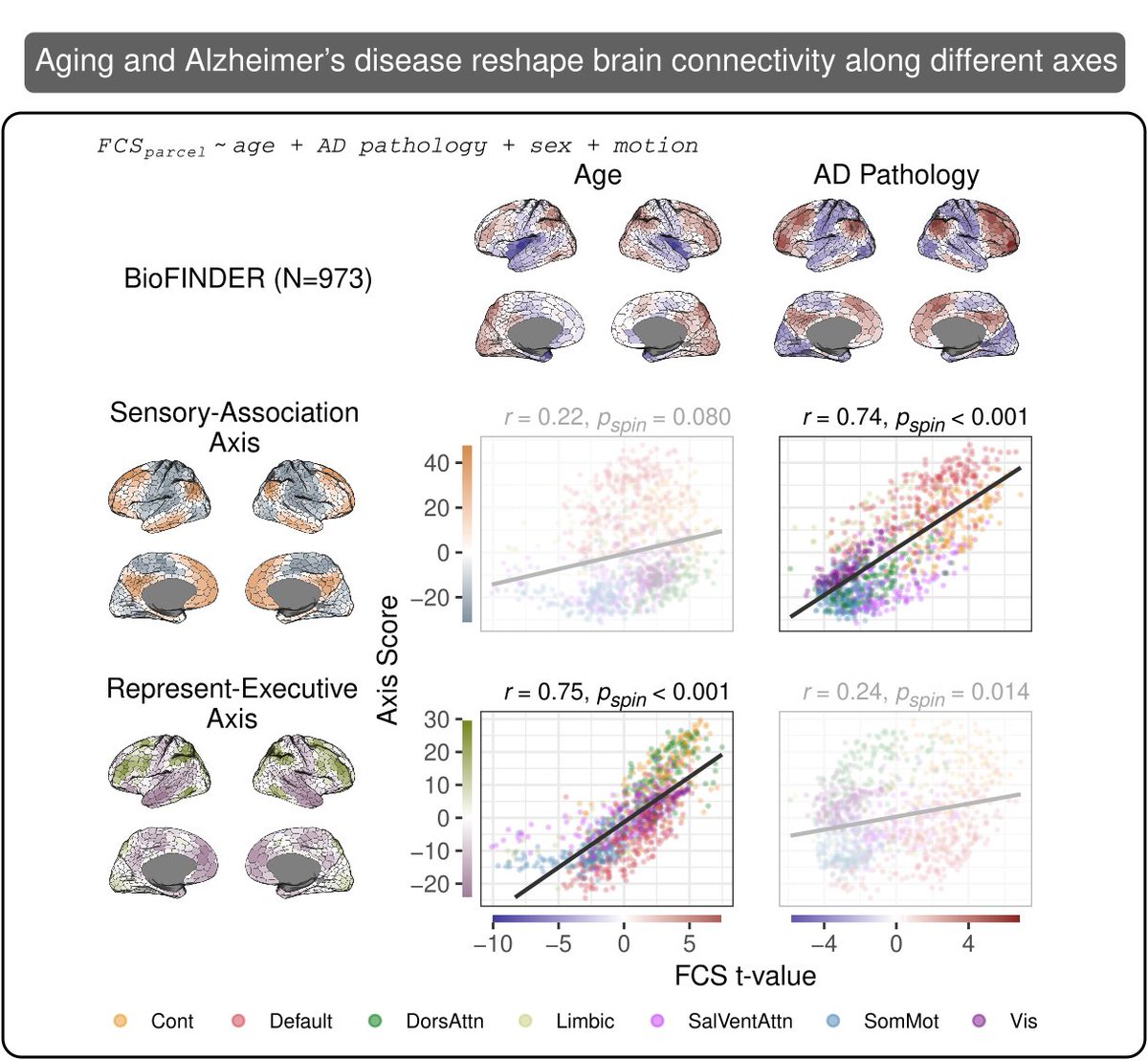
Aging and Alzheimer's disease both reshape how the brain communicates. But not in the same way: aging vs AD related alterations follow two distinct axes of brain organization
Paper → https://t.co/egNOLoxRSP
🧵⬇️
I’m hiring a postdoc in Dublin's DII!
Can explicit topology/higher-order structure make LLMs reason better about sci/tech innovation?
join us for TOPO-LLM: TDA + higher-order networks + transformers, with access to MareNostrum 5.
Apply by 9 Sept:
https://t.co/aAHCPT9UTL
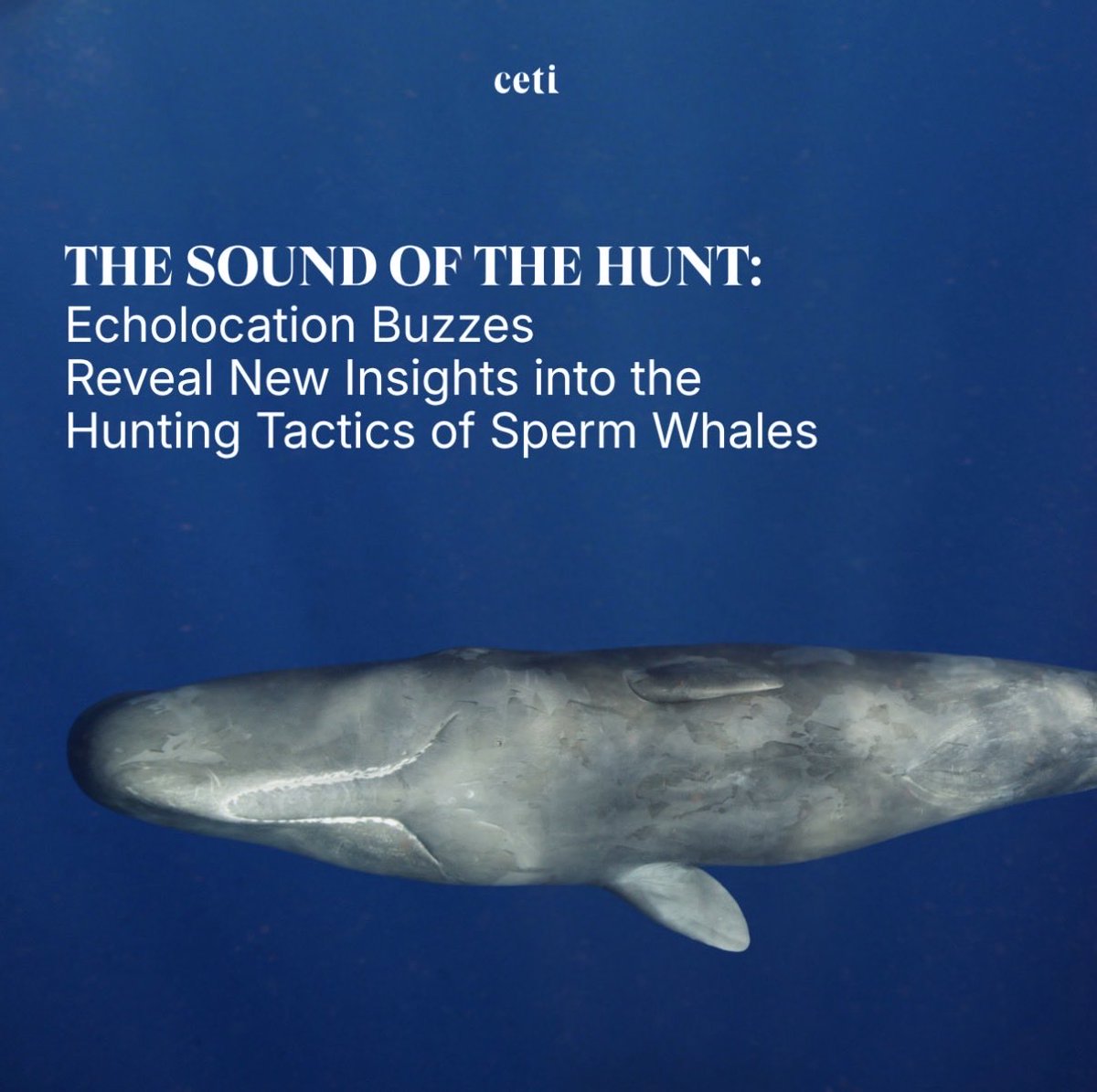
A new study by CETI Scientists analyzed thousands of hunting attempts and found that sperm whales flexibly switch prey-capture tactics within a single dive — adapting their approach in real time based on how their hunt unfolds. Read the pre-print here: https://t.co/krOgUvANLt
Excited to see this out! 🐳 One of the coolest projects I’ve had the chance to work on with @ProjectCETI and an amazing team. Looking forward to everything that’s next!
1/9 How does a sperm whale hunt in darkness, hundreds of metres beneath the surface?
Our new preprint reveals a two-level strategy: persistent search across whole dives, paired with rapid switching between distinct prey-capture tactics. Link in🧵
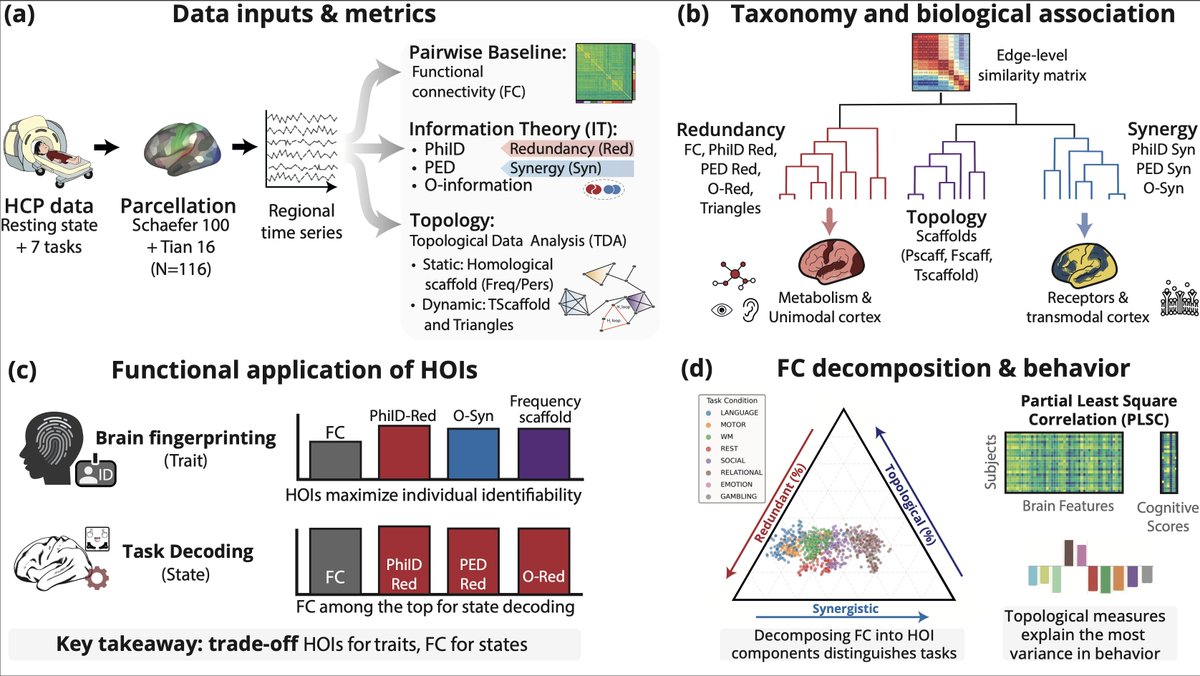
🧠 Want to understand how different higher-order methods compare in brain connectivity analysis?
Check out our new preprint — a fantastic collab with past & present @NPLab_ members:
🔗 https://t.co/T9GGlVPpn1
🧠 Happy to share that our work is now out in @NatureComms!
A great collaboration bringing together past and present members of @NPLab_ to compare higher-order models of brain function, from information theory to topology.
📄 https://t.co/tksiWn4tS2
Interactions in ecosystems often involve more than pairs of species.
Our new @CommsPhys Perspective, explores how #hypergraphs can bridge non-equilibrium dynamics & conservation, from coexistence and extinction to restoration and rewilding.
🔗https://t.co/MeubK8WLkK
🧠 New paper in @NatMentHealth !
In Parkinson's Disease, we show that patients at risk of cognitive decline have a distinct brain fingerprint, and that patient-specific networks associate with clinical outcomes and neurochemical substrate.
Paper 👇
"Topological Signal Processing: An Application-Oriented Tutorial" (by Flavia Petruso, Maria Giulia Preti, Dimitri Van De Ville): https://t.co/lZrpHsTD1P