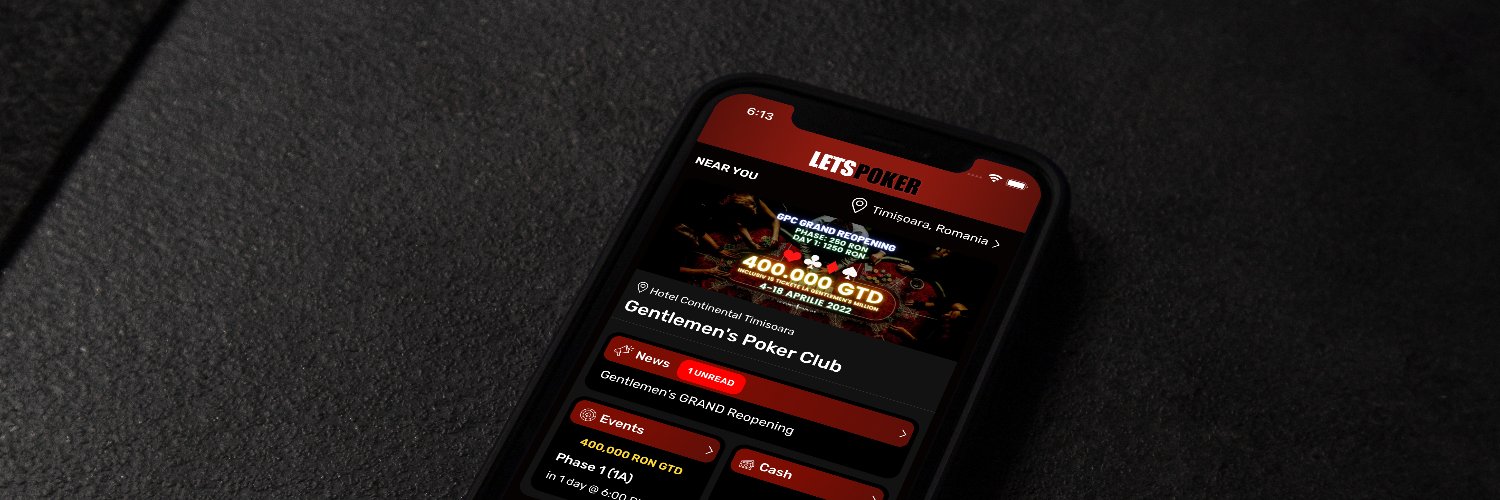
🎥 The Journey of LetsPoker
Proud to share the story of @LetsPokerApp as I presented at @EdgeGamingExpo! From its early days to becoming a trusted platform for poker organizers and players worldwide, we’re redefining what’s possible in live poker.
In this panel, I discuss our vision, the hurdles we’ve overcome, and how LetsPoker is transforming live events for everyone involved.
Thanks to EDGE for this opportunity and to all who’ve supported us along the way!
Freezeouts would be great if online satellites were still bringing in hundreds of players. But talking to regs, a lot of them simply wouldn’t bother traveling for a freezeout because there’s not enough value in it.
That’s obviously great for recreationals, but it also means smaller prize pools unless the satellite problem is fixed.
@andreasklinger@eurofounder Hey Andreas, that eurofounder account is obviously parody and good sarcasm that brings awareness on EU startup issues. I don’t think you should take it so seriously.
The UK gets this right with their 0 tax.
Here's a quote from an article that explains it.
"The reason for the decision not to tax is also quite simple: there wouldn't be any tax revenue. Indeed, there would be a revenue loss.
The point about betting of all types is that the winnings of some people are, and must be, entirely offset by the losses of others. Yes, certainly, there are companies in the middle who organise things and they are taxed on their earnings and profits in the usual manner. But the winnings of some punters come from the losses of others.
It's also a pretty standard part of the UK taxation system that if there is going to be tax charged on the income or profits of something then there will also be an equal allowance against losses on doing that same thing.
So, if we introduced a tax on betting winnings we would also need to have a system of credits or allowances for betting losses. And here's the problem with that idea: betting is a less than zero sum game. The winnings of any person or group of people are obviously the losses of all other people betting.
So tax charged would be equal to tax credits gained. But it's worse than that as the bookies are also getting their slice in the middle. Meaning that total winnings are less than total losses. So our credits and allowances for losses would be higher than any revenue gained from the winners.
And that's why we don't tax the winnings from spread betting. Because to do so would lead to revenue losses, not gains."
On the player side, profits don't exist; players' winnings are offset by others' losses, who should get a tax credit on them.
If you apply this to the entire player base the government would have to pay money back rather than collect anything. The only tax that makes sense is 0.
See:
https://t.co/AbGoYGmzEK
The UK gets this right with their 0 tax.
Here's a quote from an article that explains it.
"The reason for the decision not to tax is also quite simple: there wouldn't be any tax revenue. Indeed, there would be a revenue loss.
The point about betting of all types is that the winnings of some people are, and must be, entirely offset by the losses of others. Yes, certainly, there are companies in the middle who organise things and they are taxed on their earnings and profits in the usual manner. But the winnings of some punters come from the losses of others.
It's also a pretty standard part of the UK taxation system that if there is going to be tax charged on the income or profits of something then there will also be an equal allowance against losses on doing that same thing.
So, if we introduced a tax on betting winnings we would also need to have a system of credits or allowances for betting losses. And here's the problem with that idea: betting is a less than zero sum game. The winnings of any person or group of people are obviously the losses of all other people betting.
So tax charged would be equal to tax credits gained. But it's worse than that as the bookies are also getting their slice in the middle. Meaning that total winnings are less than total losses. So our credits and allowances for losses would be higher than any revenue gained from the winners.
And that's why we don't tax the winnings from spread betting. Because to do so would lead to revenue losses, not gains."
The UK gets this right with their 0 tax.
Here's a quote from an article that explains it.
"The reason for the decision not to tax is also quite simple: there wouldn't be any tax revenue. Indeed, there would be a revenue loss.
The point about betting of all types is that the winnings of some people are, and must be, entirely offset by the losses of others. Yes, certainly, there are companies in the middle who organise things and they are taxed on their earnings and profits in the usual manner. But the winnings of some punters come from the losses of others.
It's also a pretty standard part of the UK taxation system that if there is going to be tax charged on the income or profits of something then there will also be an equal allowance against losses on doing that same thing.
So, if we introduced a tax on betting winnings we would also need to have a system of credits or allowances for betting losses. And here's the problem with that idea: betting is a less than zero sum game. The winnings of any person or group of people are obviously the losses of all other people betting.
So tax charged would be equal to tax credits gained. But it's worse than that as the bookies are also getting their slice in the middle. Meaning that total winnings are less than total losses. So our credits and allowances for losses would be higher than any revenue gained from the winners.
And that's why we don't tax the winnings from spread betting. Because to do so would lead to revenue losses, not gains."
@RealKidPoker It’s (obviously) fake though. Socks wouldn’t be that clean even in most houses.
Saw a clip of people who did it for real and it’s as you expect. Socks all black.
What a ride. @MihaiNiste flies to Miami, plays heads-up with @ArtPeacock, and it’s all in our recent #LetsPokerRomania vlog.
Our goal: the “Drive to Survive” of poker.
Episode 17 is out now, with auto-English dubs that Youtube added, that even @SavagePoker called hilarious.
About 20 years ago, I "invented" one of the earliest "spell-as-you-type" systems for web browsers.
You know the red squiggly underlines in Google Docs or Word? That kind of live spell-checking didn’t exist in the browser back then.
The web was primitive, and there were no frameworks, just raw HTML, CSS, and JavaScript.
My solution was a bit of a hack, but it worked. I made the <textarea> background transparent and rendered a styled copy of the text behind it. Keeping everything perfectly synced was tricky, but I was proud of the result. It actually worked in real-time.
Proof (though it obviously doesn't render right any more):
https://t.co/wdcy8KNEBC
“Serving instant coffee in a VIP lounge saves pennies and costs reputation.”
Cost-cutting that harms experience is a false economy.
Invest where customers feel it. Value compounds.
@usr_oficial Link pe scurt in engleza: https://t.co/Onp9ecw6rH
Raportul oficial pentru comentacii de serviciu care vor spune ca articolul e platit de "industria mortii":
https://t.co/fL9355sJtt
✍️ Semnati manifestul STOP https://t.co/vNfxNhHLaO
Practic ati condamnat romanii la pierderi suplimentare de 1.6 miliarde de lei pe an.
Acei 1,6 miliarde de lei NU vin din "buzunarul industriei", ci din pierderile jucătorilor.
Dacă chiar v-ați dorit să ajutați jucătorii, ați fi investit în prevenție, educație și tratament. Nu în taxe mai mari pe pierdere.
Orice impozit suplimentar înseamnă mai multe pierderi pentru jucători, nu mai puțin joc. E un mecanism simplu:
➡️ costurile cresc,
➡️ operatorii se protejează,
➡️ jucătorii se mută la operatori ilegali sau plătesc diferența.
Nu trebuie să mă credeți pe cuvânt. Uitați un exemplu recent din Olanda (link in urmatorul comentariu)
Au introdus o simplă regulă de „protecție” și s-au trezit cu o piață neagră la fel de mare ca cea legală.
Realitatea:
– Jucătorii nu se opresc din jucat.
– Dar se pot muta rapid în ilegalitate.
– Sau pierd mai mult în legal, cu „protecții” doar pe hârtie.
Taxarea pierderii nu e reformă. E cinism.