The plan was to talk about tacit programming, but we never got around to it. Instead we found naming things is one of the hard problems of computing.
Host: @code_report
Panel: Marshall Lochbaum, Adám Brudzewsky, Stephen Taylor and Bob Therriault.
https://t.co/K8M1SzT6xu
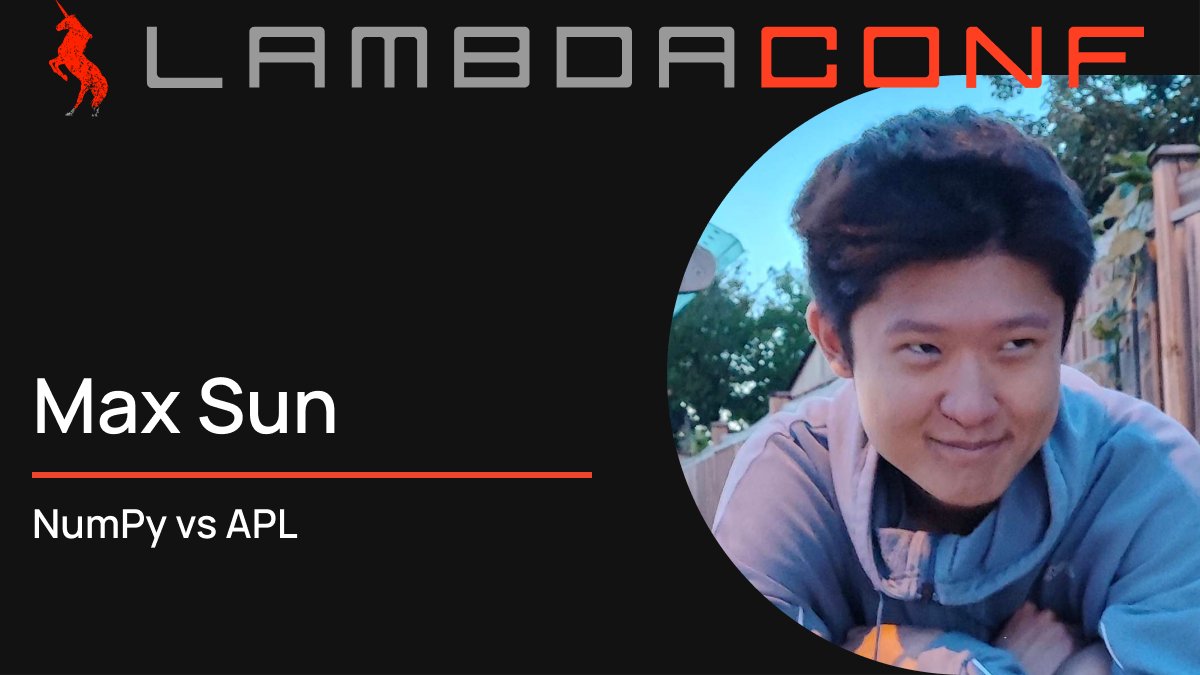
Explore the efficiency of array programming at #LambdaConf2024 with @Max_ErinMills. Learn how APL stands as a concise alternative to #NumPy. Perfect talk for those new to #APL. 🔥
Grab Your Early Bird Ticket before Jan. 21st! ➡️ https://t.co/VTGqSgfVy3
Advent of Code 2023 Day 7 (part 1) comparison between (Dyalog) #APL, #Kap, and base #rstats https://t.co/oEOH4tuvRV -- in which I detail an elegant array solution.
I'm all in for learning the APL glyphs, now!
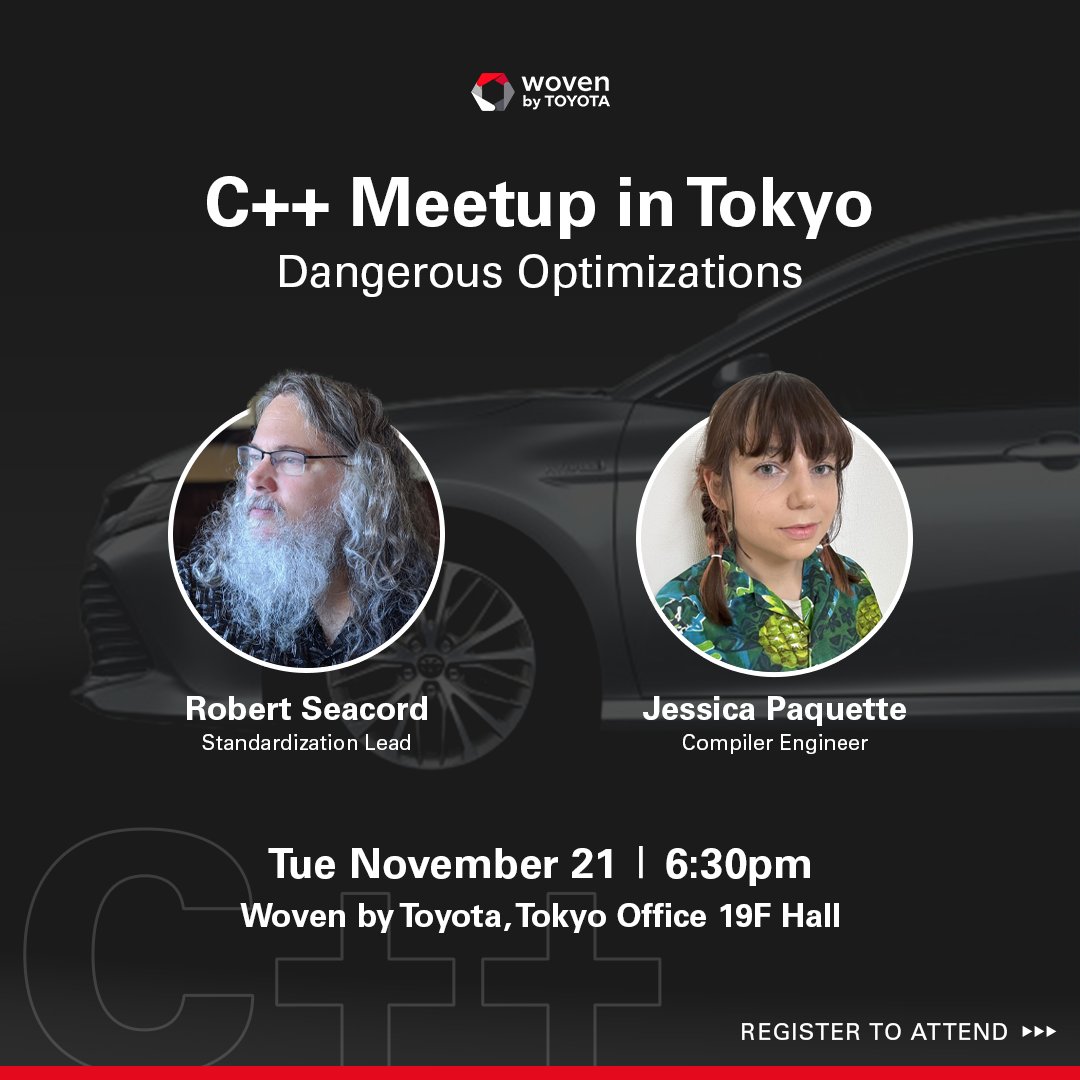
RSVP for our C++ #Meetup on November 21 at 6:30 pm (JST) at our Tokyo office! Join us for a joint presentation from @RCS and @barrelshifter to learn about improving optimization.
👋 RSVP by November 14, 12pm!
https://t.co/EakPePOCL4
⊏↯5_10⌊×26[⍥⚂50]+@a⇡26
vs
⎕c⎕a[?5 10⍴26]
New post: Hooray, Array! https://t.co/kDPehsWak6 in which I try out the new stack-based array language Uiua
Open challenge to @code_report (or anyone) to improve on my solution(s).
#APL#uiua#rstats
New post: Now You're Thinking with Arrays
in which I realise that I got into programming while exclusively learning languages with something interesting in common.
https://t.co/9TjNs4pBwi
(shoutout to @code_report)
@carroll_jono@code_report Absolutely! I learnt MATLAB in uni as well and then worked with R so the arrays in APL and friends have felt very familiar. I think it's because of that that the most exciting part of APL for me has been the combinator features like the fork and ⍥.
@adspthepodcast My two favourite languages are R and q so I was happy to hear R discussed even if not very positively! In R's defense, the built-in pipe is |> and the built-in outer product is %o%. I agree that it would have been nice to have had a separate scan function.
@dirk_sch It's a language that goes along with the kdb+ database. It's unfortunately not open source but does have a lot of nice features. Here's some example code: https://t.co/b2CP20HtHy
Some dataframe history: 'Statistical Models in S' (1991) is the book that first mentions dataframes. From Monday Morning Data Chat podcast episode 135: Dataframe Deep Dive w/ Devin Petersohn. https://t.co/KYdcehIk4C