The golden years of AirBNB were a temporary arbitrage on depreciation.
There was a universe of beautiful well-maintained properties and hosts that had not been worn down by short term guests.
And the AirBNB hosts didn’t properly estimate the cost of depreciation to maintain that standard, so costs were irrationally low
That era fundamentally cant return, it was a temporary arbitrage opportunity
There was once a supply of fairly pristine unused space and now there’s not
If a space does manage to hit the 2014 standard, it must charge a lot more to fight depreciation
And at that point a hotel is generally better
CEOs are uniquely prone to AI psychosis because they’re sufficiently distant from the last mile of work that still has to happen to generate most value with AI.
So when they play with AI, they see the happy path results, often not considering the next 10 or 20 things that have to happen to get sustainable results from agents.
“Look I made this awesome product prototype”. Yes but you didn’t have to review the code before it went into production and fix a bunch of issues.
“Look I generated a contract”. Yes but you didn’t verify all the terms before it goes out to the counterparty and didn’t have to wire up all the past contracts to work with.
The best thing you can do as a CEO is to use AI a *ton* to figure out the real implications of agents in the enterprise, and come out the other side with an appreciation for both the upside and the real work that goes into them.
@TriciaDearborn I’ve found the same in business and academic writing, too. People give me business docs written by AI and at first glance it looks amazing, but it’s impossible to unpack or make changes.
Not the case where ideas were human outlined then AI filled in the words.
@ajlamesa Payment providers used to pitch this when I led payments teams at Uber (10 years ago), we said “never bring this up again.” It was too shady for Uber under TK.
@leahfrombklyn It also feels like people are imagining a time when coffee shops existed without laptops? Go back 10 years and there were a LOT fewer coffee shops, but people were still there on their laptops.
Either way, the coffee is much better now.
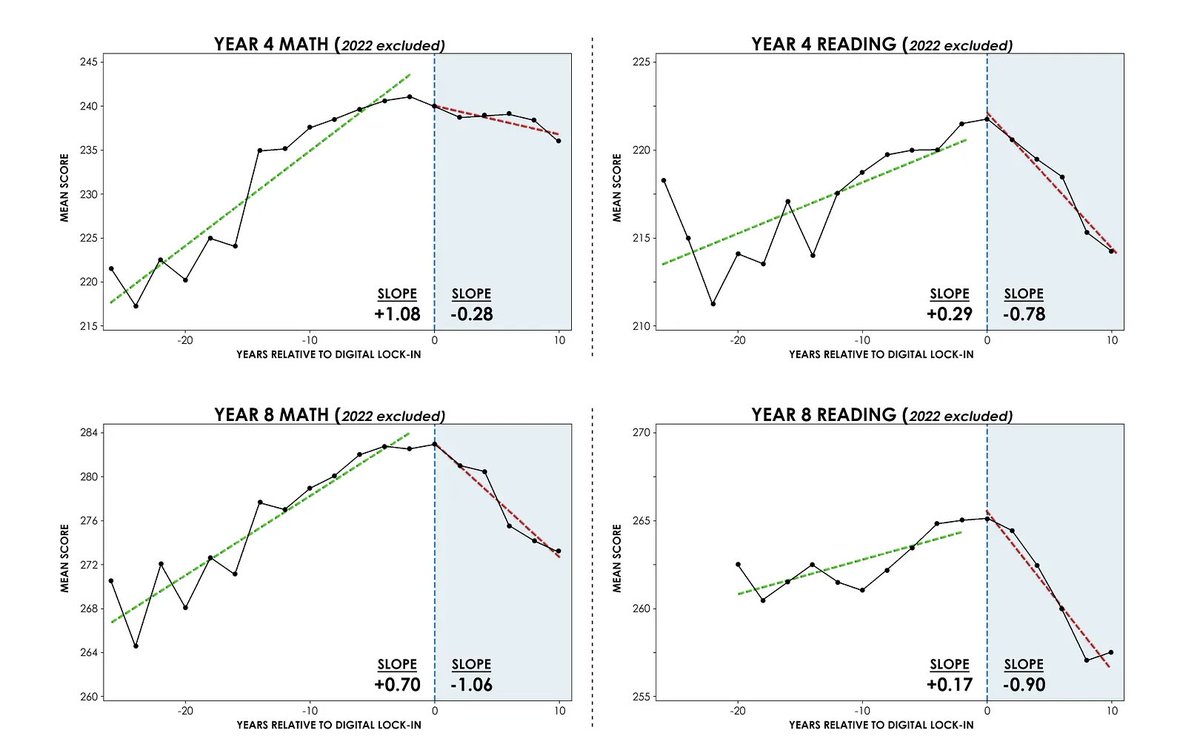
Still more evidence that EdTech harmed American education: Across states, the year that the state imposed mandates requiring computers/tablets, that's the year that test scores stopped rising and in most cases started falling.
From Jared Cooney Horvath
https://t.co/TSH1bfp8lA
@MrDanielBuck My schooling saw the transition between the two, I remember as a kid and teen thinking “what is this, how am I supposed to think through this when I haven’t been taught it yet.”
My math foundation forever damaged by 8th grade “new math” algebra, a class with no textbook…
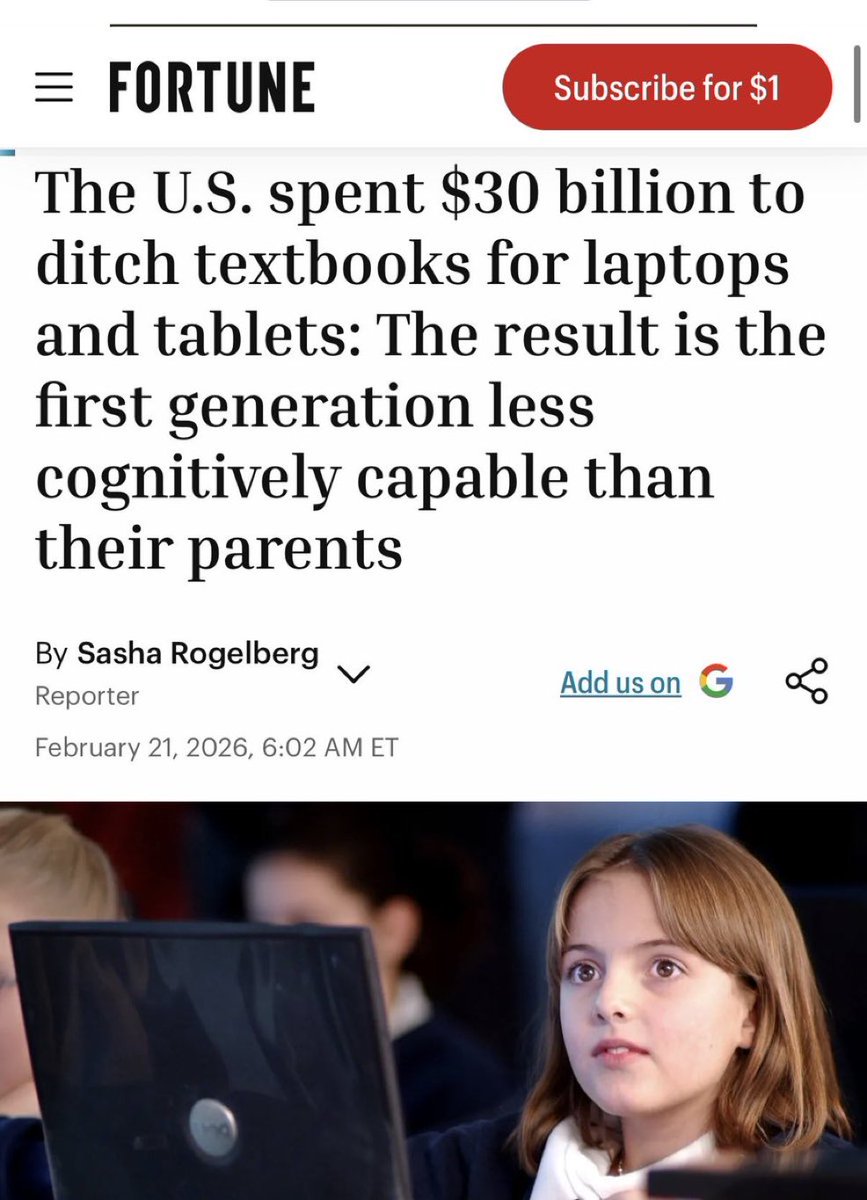
I taught during the rise of Chromebooks in classrooms and it was a nightmare
Kids cheating rampantly, Googling every single fact, refusing to read assuming that copy and pasting things from Wikipedia counted as an answer
Students were regularly able to circumvent controls to watch porn, play video games, and watch movies or YouTube in class
Students used shared Google Docs to gossip, bully each other, and plan crime (not joking)
Everyone knew it was a disaster but the district refused to stop using them because “this is the future, kids need to learn computers”, plus massive amounts of funding were tied to them
Mandatory testing was done on the computers and they were used for IEP accommodations so they were unavoidable
Eventually, things got so bad that despite vigorous protests from parents and administrators, I went almost entirely analog, requiring students only use paper and textbook except for state mandated tests
That worked really well until COVID, where remote learning once again became mandatory
Even after the return to classrooms administration required everything be accessible online at all times, so there was no longer any option to stop the digital distractions
A true nightmare for teachers and a system that has radically failed students
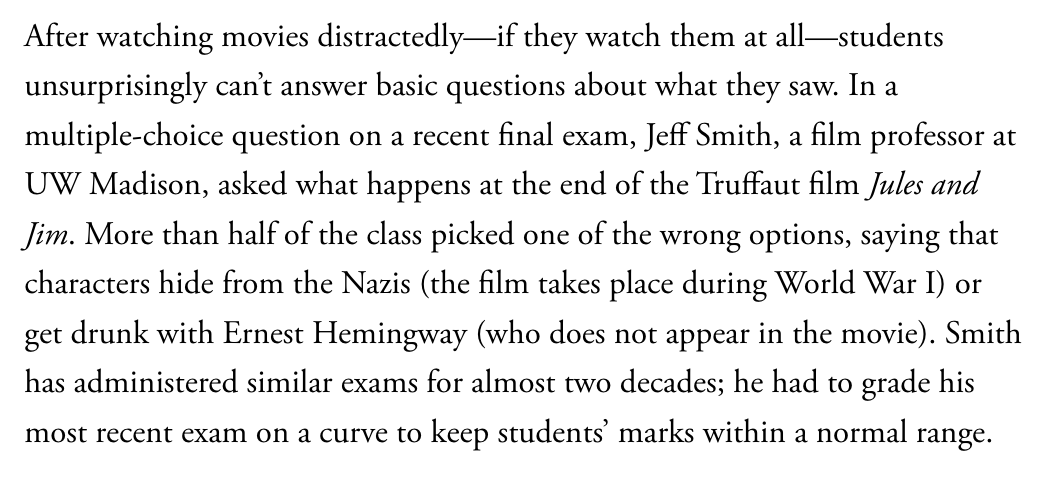
The attention crisis is so dire at schools right now that film professors can't even get their students to finish movies, and the kids don't even look up the plots of the movies they skip, so students fail basic in-class quizzes like "what happened at the end of the movie?"
@bryancsk Some truth there. I think it’s also because many tech folk don’t actually understand how their business works, or are incentivized to ignore unit economics or ROI of the products they are working on.