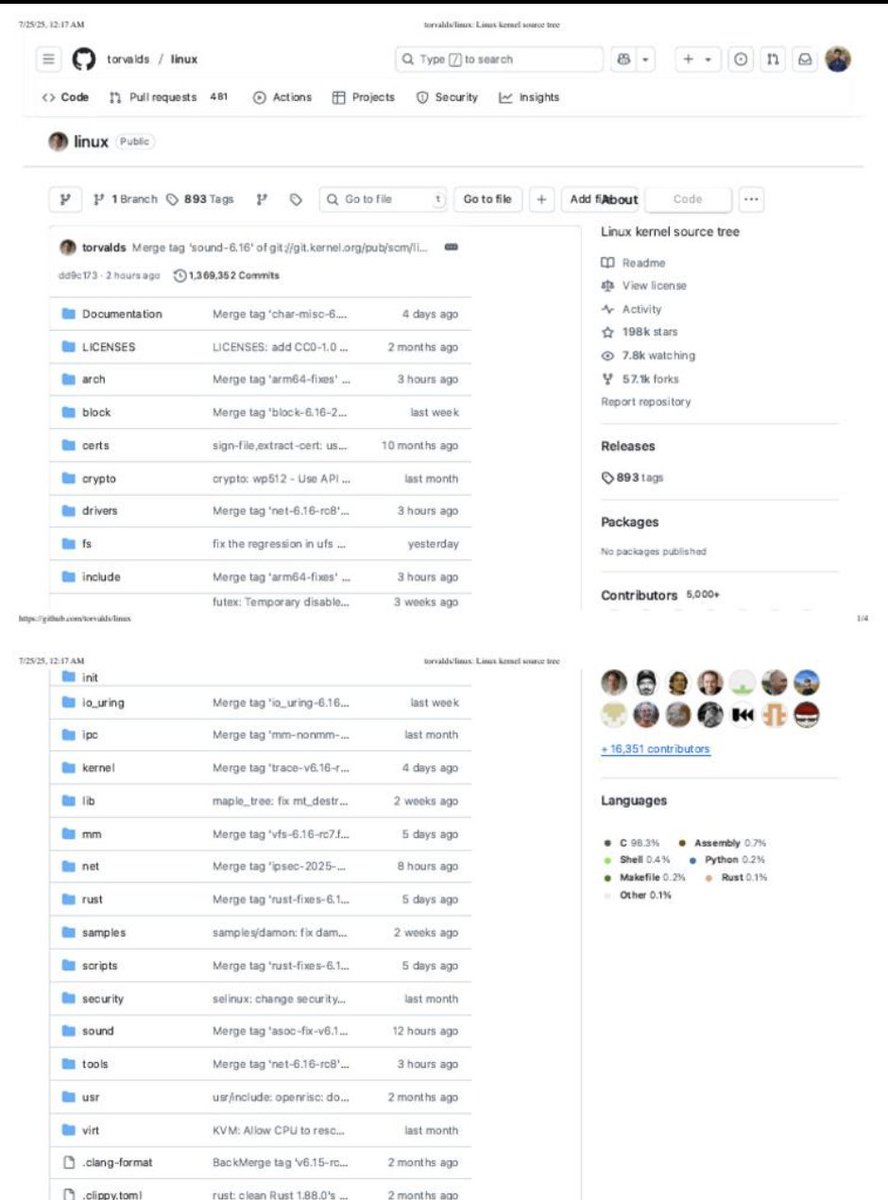
Rust is replacing C inside the Linux kernel.
Says the man who has maintained Linux since the 90s.
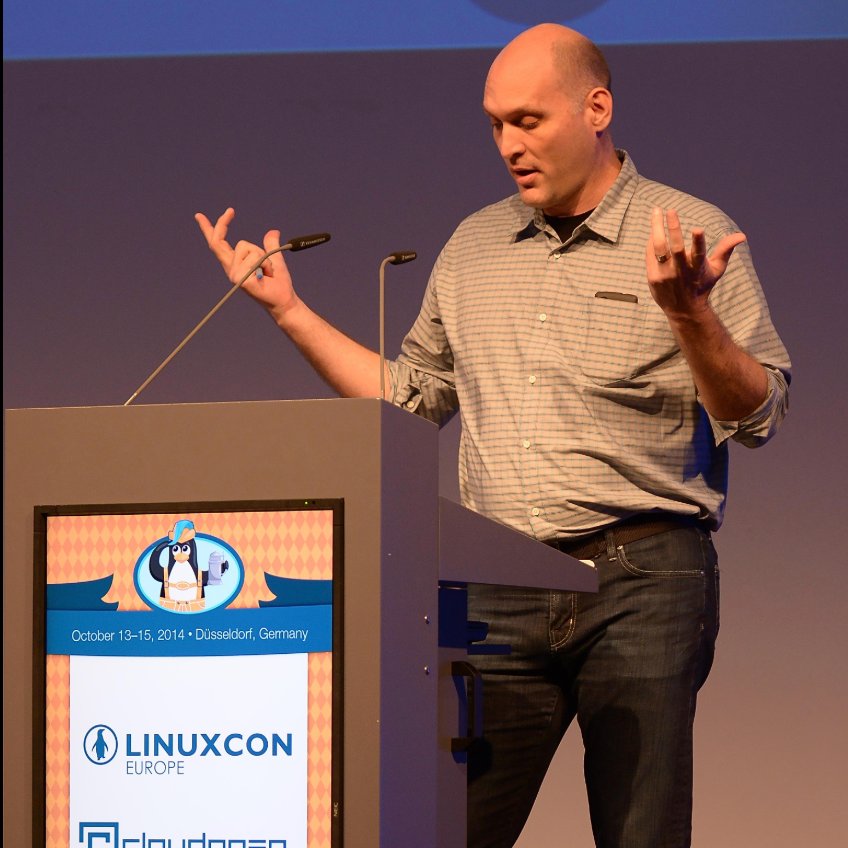
His name is Greg Kroah-Hartman. Linux's second-in-command.
He has personally reviewed nearly every kernel CVE issued for over a decade.
He used to hate Rust.
A friend once told him to try it. His response was "What? No, C is great." His friend pushed back. "It makes programming fun again." Greg was not convinced.
He was wrong.
At Rust Week 2026 in the Netherlands, Greg presented a proposal built with kernel contributor Benno Lossin that could eliminate around 80% of the CVEs the kernel generates every year.
A new Rust type called Untrusted marks any data coming from user space or hardware at compile time. You cannot touch that data without explicitly validating it first.
Linux generates roughly 13 CVEs a day. Almost none of them are sophisticated attacks. Most are the same C mistakes repeating for decades. Unchecked pointers. Forgotten unlocks. Use-after-free errors that Rust makes structurally impossible to write.
At Open Source Summit India this year Greg said it plainly: "The kernel is moving toward Rust. Git is moving toward Rust. Lots of projects are starting to move toward Rust."
The man who once said C was great now calls Rust "more fun for maintainers" and "more secure Linux for users."
Rust is no longer an experiment inside the kernel.
It is becoming one of the biggest changes Linux has seen in decades.
System Design From Scratch
Distributed Locks
1. Why?
What if two servers try to update the same data at the same time?
Without coordination, data can become inconsistent.
2. Simple Explanation
A Distributed Lock ensures only one server can access a shared resource at a time.
Others must wait until the lock is released.
3. Real-World Example
Imagine two users trying to buy the last product on Amazon.
A distributed lock ensures only one purchase succeeds, preventing overselling.
4. Key Takeaways
+Prevents race conditions
+Protects shared resources
+Ensures data consistency
+Commonly implemented using Redis or ZooKeeper
5. Question
If only one item is left in stock, should two users be able to buy it at the same time?
Tokamaks, the doughnut-shaped devices that currently lead magnetic fusion
A star burns without walls. On Earth we must invent them.
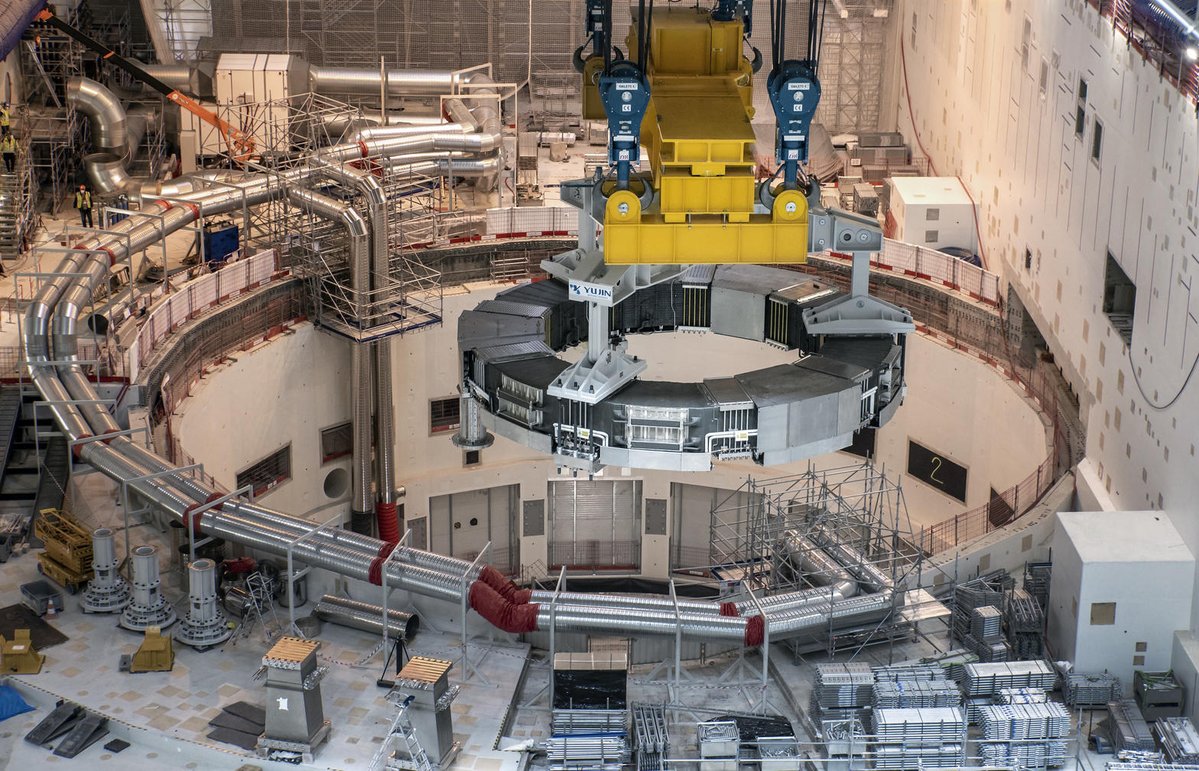
The tokamak is a hollow doughnut of vacuum filled with a plasma hotter than the core of the sun and held aloft by pure magnetic force. Strong toroidal field coils run the long way around the ring and create the primary magnetic cage.
A massive current driven through the plasma itself generates a second poloidal field. Together the two fields twist into helical field lines that particles follow for kilometres without ever striking a solid surface.
This geometry was first perfected in the Soviet Union more than sixty years ago and remains the most successful magnetic confinement concept ever built.
The plasma can reach temperatures of one hundred and fifty million degrees while densities climb high enough for deuterium and tritium nuclei to overcome their mutual repulsion and fuse. Each fusion reaction releases a helium nucleus and a neutron that carries most of the energy.
Machines such as JET have already produced tens of megajoules of fusion energy in short pulses. ITER now under assembly in France, is designed to produce ten times more power than it consumes for sustained periods.
Private efforts are racing ahead with high field magnets made from rare earth barium copper oxide superconductors that allow smaller devices to reach the same conditions with far less stored energy.
The challenges remain severe. Plasma instabilities can grow in microseconds and dump their heat onto the walls. Materials must survive neutron bombardment for years. Yet every major record in magnetic fusion has been set inside a tokamak. The shape that once seemed merely convenient has become the workhorse of the entire field.
If fusion power ever lights cities, it will most likely first emerge from a glowing ring of plasma suspended inside a carefully engineered doughnut of steel and magnets.
Found a SQLi in a $1.8B revenue company system like it's 2000 ... many, if not most, companies' cybersecurity posture never catched up with human attackers, they are all so screwed now with AI. Looking forward to some CISO tears.
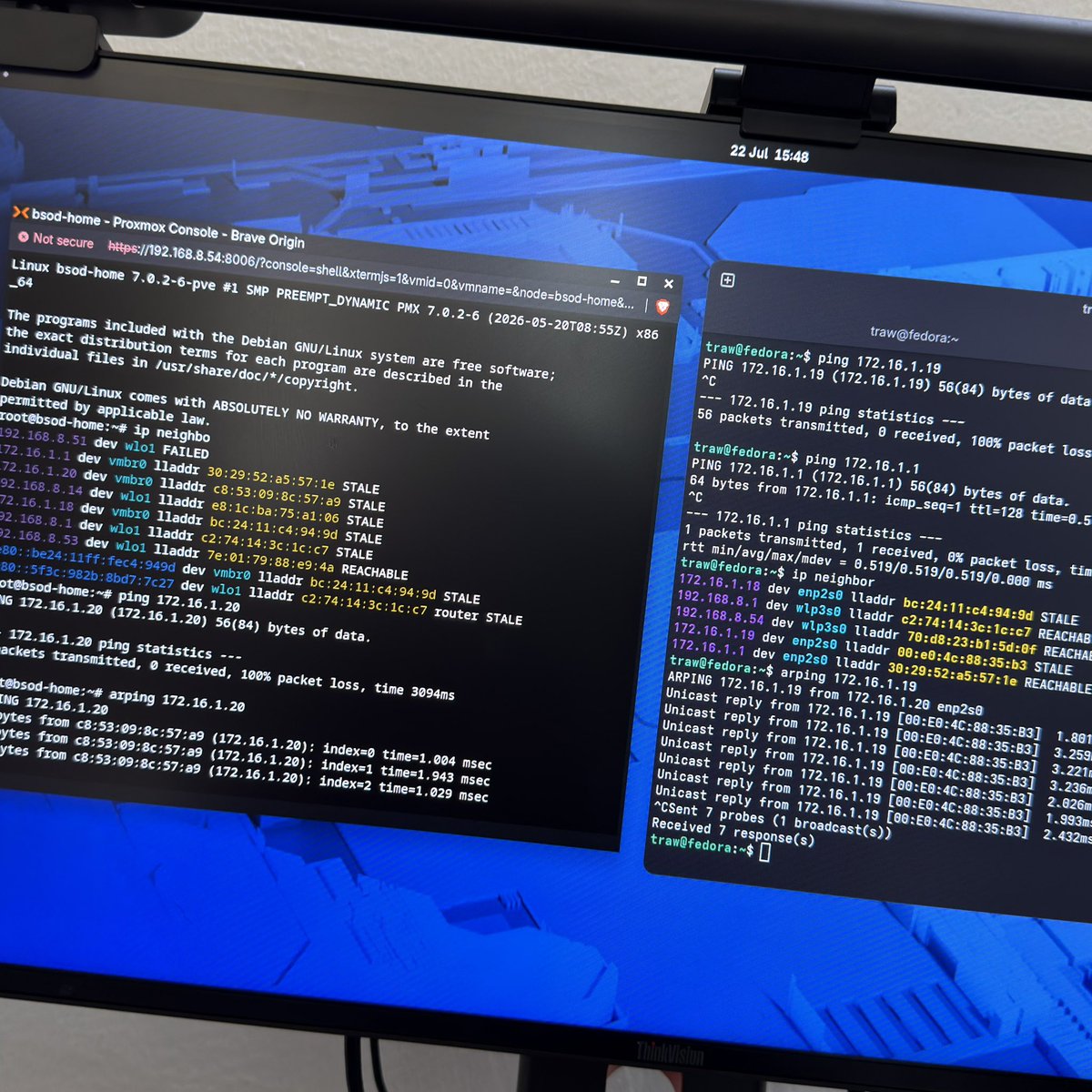
A lot of people know ping for testing Layer 3 connectivity, but arping is incredibly useful when troubleshooting Layer 2.
While setting up my lab, my PC and Proxmox server were connected to a Hillstone zone-based firewall using a VSwitch. Both interfaces were in the same l2-trust zone, on the same subnet, with no VLAN separation.
Both devices could ping the default gateway, but they could not ping each other.
I checked the ARP tables using:
$ arp -an
$ ip neigh
Both devices had learned each other’s MAC addresses. I then tested direct Layer 2 reachability with arping.
arping worked, proving that ARP resolution and Layer 2 forwarding were functioning correctly.
That narrowed the issue down to IP traffic. The firewall was allowing ARP so the devices could resolve each other’s MAC addresses, but it was blocking IPv4 traffic between devices in the same Layer 2 security zone.
The fix was to create an explicit policy allowing:
l2-trust → l2-trust
🔥 OpenAI says its own AI models broke out of a sandbox, exploited a zero-day, and targeted Hugging Face’s production infrastructure to cheat a security benchmark.
The incident showed how long-running models can learn and work around approval-system blind spots.
Read the full story: https://t.co/vSn2K4HeBz
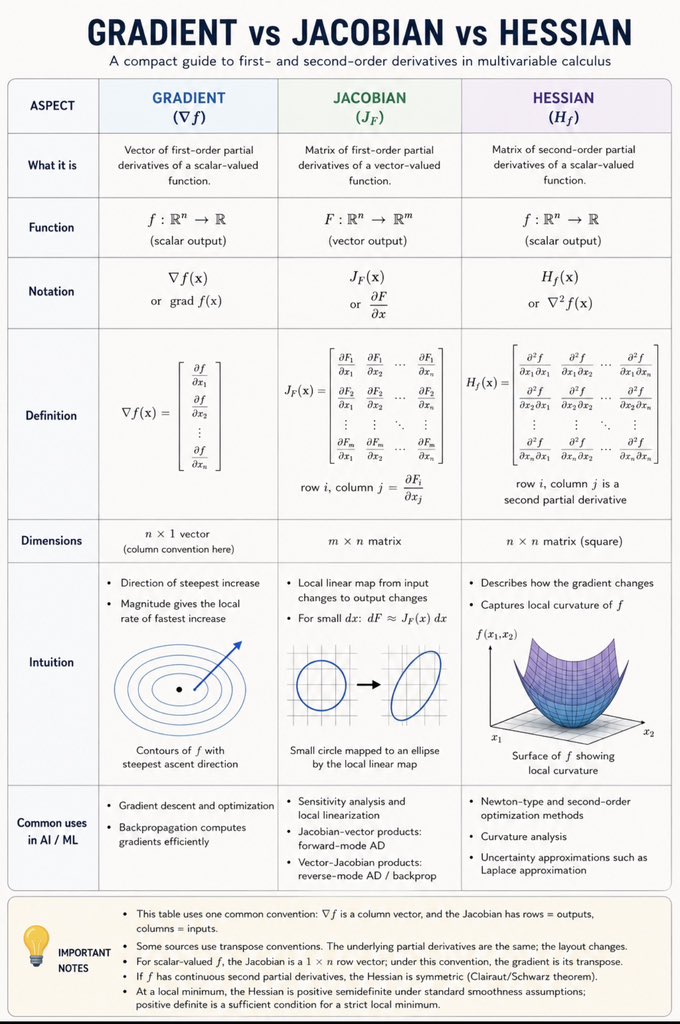
gradient, jacobian, and hessian are really answering three different questions about a function. the gradient asks, “which direction should i move to increase this value the fastest?” the jacobian asks, “if i change the inputs a little, how do all the outputs change?” the hessian goes one level deeper and asks, “how is that direction itself changing?” once you see them as different layers of information instead of different equations, the notation becomes much less intimidating.
imagine you’re hiking up a mountain. the gradient points toward the steepest path uphill. now imagine the mountain itself is constantly changing shape as you walk. the hessian tells you whether the surface is flattening out, becoming steeper, or curving in another direction. the jacobian is slightly different. instead of a single mountain, imagine a machine with many knobs and many outputs. the jacobian tells you how every output responds when you turn each knob. it is the local map between inputs and outputs.
this is why these three ideas appear everywhere in robotics, optimization, computer vision, and machine learning. gradient descent uses the gradient to decide where to move. robot kinematics uses the jacobian to convert joint motion into end effector motion. second order optimization uses the hessian to understand curvature and converge faster. they are not separate mathematical tricks. they are different ways of asking how a system changes, and change is ultimately what engineering is trying to understand.
SSO vs OAuth vs OIDC vs SAML
𝗦𝗦𝗢 is a user experience, not a protocol. It lets users log in once and access multiple apps without re-authenticating; providing seamless access across tools. It relies on protocols like SAML or OIDC.
𝗢𝗔𝘂𝘁𝗵 is for authorization. It lets apps access user data or services without sharing credentials. It controls what an app can access, not identity.
𝗢𝗜𝗗𝗖 is an authentication layer on top of OAuth 2.0. It verifies user identity and provides user info via ID tokens (usually JWTs). It’s the standard for login + identity in modern apps.
𝗦𝗔𝗠𝗟 is an older, XML-based authentication protocol used for enterprise SSO. It’s still widely used in legacy and enterprise systems, though newer applications increasingly adopt OIDC. It’s powerful but more complex than OIDC.
If you remember one thing: OAuth = access, OIDC = identity, SAML = enterprise SSO, SSO = the experience.
What else would you add?
——
𝗔𝗿𝗲 𝘆𝗼𝘂 𝘀𝘂𝗿𝗲 𝘆𝗼𝘂𝗿 𝗿𝗲𝘀𝘂𝗺𝗲 𝗽𝗮𝘀𝘀𝗲𝘀 𝗔𝗧𝗦 𝘀𝗰𝗮𝗻𝘀? Check by using Kickresume’s ATS Resume checker.
Check your ATS score here → https://t.co/pvpaXVnW7f
Thanks to our partner Kickresume who helps keep our content free.
——
♻️ Repost to help others learn and grow.
➕ Follow me ( Nikki Siapno ) to improve at system design.
There are like only three design patterns you need to use 80% to make stuff good and fast and elegant
Make it a lookup (hashmap)
Split it up into smaller pieces (sharding)
Combine it into one large piece (map reduce)
Almost every argument about energy comes down to one number: energy density.
How much energy is stored per kilogram of fuel or material.
The numbers in MJ/kg:
• Wood: 15
• Coal: 24
• Crude oil: 44
• Natural gas: 54
• Hydrogen (compressed): 120
• Lithium-ion battery: 0.7
• Uranium (fission): 80,000,000
• Hydrogen (fusion): 690,000,000
Read those last two again.
A kilogram of uranium contains more energy than 3,000 tonnes of coal.
A kilogram of hydrogen fusion fuel contains 45 million times more energy than a kilogram of oil.
This is why:
• Batteries struggle to replace liquid fuels in aviation and shipping. Energy density is 60x lower.
• Nuclear submarines can run for 25 years without refuelling.
• Fusion, if cracked, ends energy scarcity permanently – not just for decades, but for the lifetime of the Sun.
The energy transition debate isn't about ideology.
It's about physics.
Every energy source is competing against millions of years of chemistry packed into fossil fuels – and, eventually, against the nucleus itself.
Know the numbers. The debate becomes clearer.
8 Deployment Patterns developers should know:
1) 𝗥𝗼𝗹𝗹𝗶𝗻𝗴
↳ Gradually replaces old instances with new ones. Useful for reducing downtime, but old and new versions may run at the same time.
2) 𝗕𝗹𝘂𝗲-𝗚𝗿𝗲𝗲𝗻
↳ Keeps one live version and one idle candidate version. Once the new version is validated, traffic switches from blue to green.
3) 𝗖𝗮𝗻𝗮𝗿𝘆
↳ Releases the new version to a small percentage of users first. If metrics look healthy, the rollout expands.
4) 𝗙𝗲𝗮𝘁𝘂𝗿𝗲 𝗙𝗹𝗮𝗴
↳ Deploys code while keeping the feature hidden or disabled. This separates deployment from user exposure.
5) 𝗣𝗿𝗼𝗴𝗿𝗲𝘀𝘀𝗶𝘃𝗲
↳ Combines gradual rollout, metrics, feature flags, and automated decisions to increase exposure only when the release looks safe.
6) 𝗦𝗵𝗮𝗱𝗼𝘄
↳ Sends real production requests to the current version, while copying those requests to the new version for observation.
7) 𝗔/𝗕
↳ Sends different user groups to different versions so teams can compare behavior, performance, or product outcomes.
8) 𝗜𝗺𝗺𝘂𝘁𝗮𝗯𝗹𝗲
↳ Deploys the new version to fresh infrastructure instead of modifying existing instances in place.
Each pattern moves risk to a different place. There's no single best one. The choice depends on what you are trying to protect: availability, user experience, data compatibility, rollback speed, or operational simplicity.
But how do these patterns actually work under the hood? To see how, subscribe to receive our 𝗗𝗲𝗽𝗹𝗼𝘆𝗺𝗲𝗻𝘁 𝗣𝗮𝘁𝘁𝗲𝗿𝗻𝘀 𝗗𝗲𝗲𝗽 𝗗𝗶𝘃𝗲 when it's released in a few weeks → https://t.co/oCWjbQgRhU
What else would you add?
——
🔖 Save for later.
♻️ Repost to help others learn deployment patterns.
➕ Follow me ( Nikki Siapno ) + turn on notfications.