AI benefits can be for everyone if and only if certain conditions are met.
You ask your personal AI agent to find you an apartment in the neighborhood you chose, within the budget you set, and to apply for the one that fits.
It finds the listing. It fills in your details. It gets to the submission and the rental portal blocks it. Not because your application is wrong. Not because you can't pay. Simply because a piece of software, acting on your explicit instruction, made the request instead of your hand on a mouse.
That is the moment the old rules break.
When an agent acts for a person, it is that person acting. This point is worth repeating. When an agent acts for a person, it is that person acting.
Blocking the agent blocks the customer and no terms page should be allowed to quietly take away a person's right to delegate.
The same is true for regulators.
An AI agent making investment decisions for you — rebalancing a portfolio, checking disclosures, flagging a risky product — needs rules it can actually read and follow in real time, not a PDF written for a human to interpret months later.
Agents don't need to replace people. They need to be allowed to represent them and regulations need to be built agent-native, or they will be regulating a world that has already moved on without them.
Reach out if you are curious to learn more about or partner on compliance agents that surface these thoughts.
@Muse and Tasks in @GeminiApp are on different tracks. Will Task eventually be a standalone offering from @GoogleAI as the Personal AI marketplace shapes up?
The internet was built for humans clicking buttons, not agents acting for them.
OAuth has no real delegation, HTTP has no agent semantics, CAPTCHAs test humanity instead of authority, and the actions that matter most hide behind retention flows with no API at all. We need agent-native identity, delegation, and machine-readable service contracts baked into the protocols.
An agent acting for a person is that person acting.
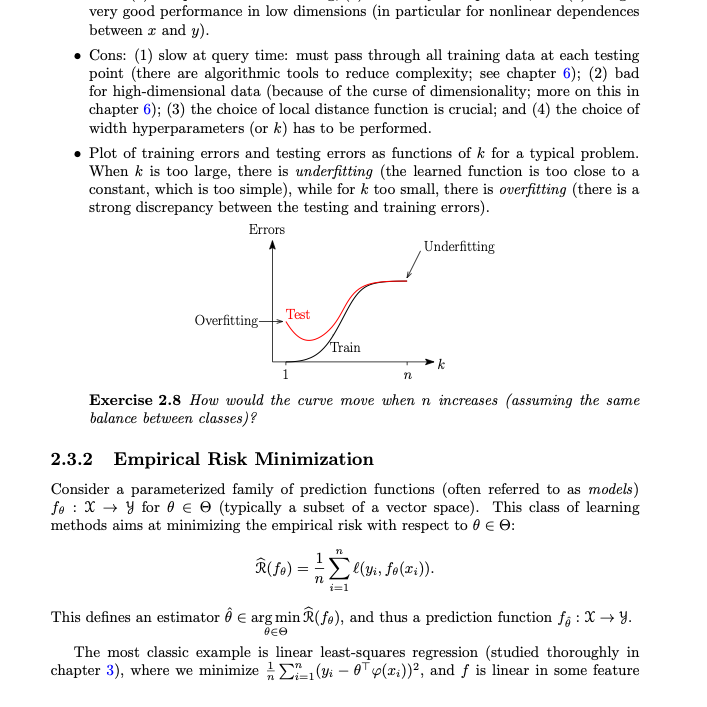
"Learning Theory from First Principles" (MIT Press, 2024) is a rigorous, 496-page graduate-level textbook exploring the mathematical foundations of machine learning, from statistical learning theory and optimization to neural networks, generalization, and overparameterized models.
Freely available, it's an invaluable resource worth adding to your digital library.
https://t.co/AGoGvMFFbG
Elbert Frank Cox (1895–1969) became the first Black person in the world to earn a PhD in mathematics in 1925.
Because of racial prejudice, his advisor had his dissertation accepted by a university in Japan to ensure his achievement could not be disputed by segregated institutions in the U.S.
Kiyosi Itô died on 10 November 2008. His stochastic calculus revealed a surprising rule for Brownian motion:
d(Bₜ²) = 2Bₜ dBₜ + dt.
The extra dt term, absent from ordinary calculus, now underlies models in physics, biology and finance.
In 2025, local fair housing orgs and the DOJ processed 20,805 housing discrimination complaints, 55% involving a disability.
Read NFHA’s 2026 Fair Housing Trends Report to learn how we are advancing Fair Housing alongside our member organizations: https://t.co/bBe8gluUNw
A best is a resting place, not a destination. From every peak, the view reveals a higher one. When did you last believe you had arrived? What did that belief cost you?
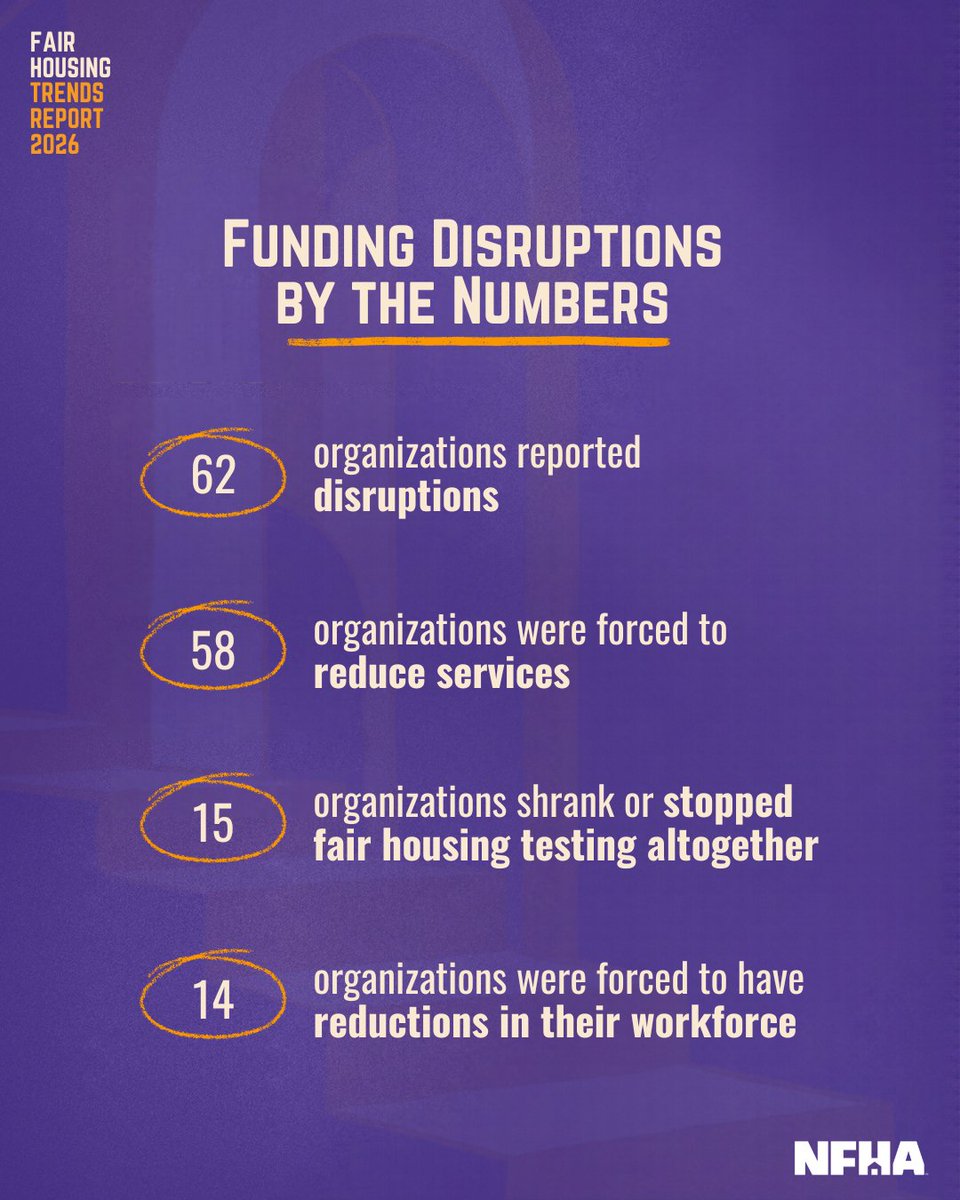
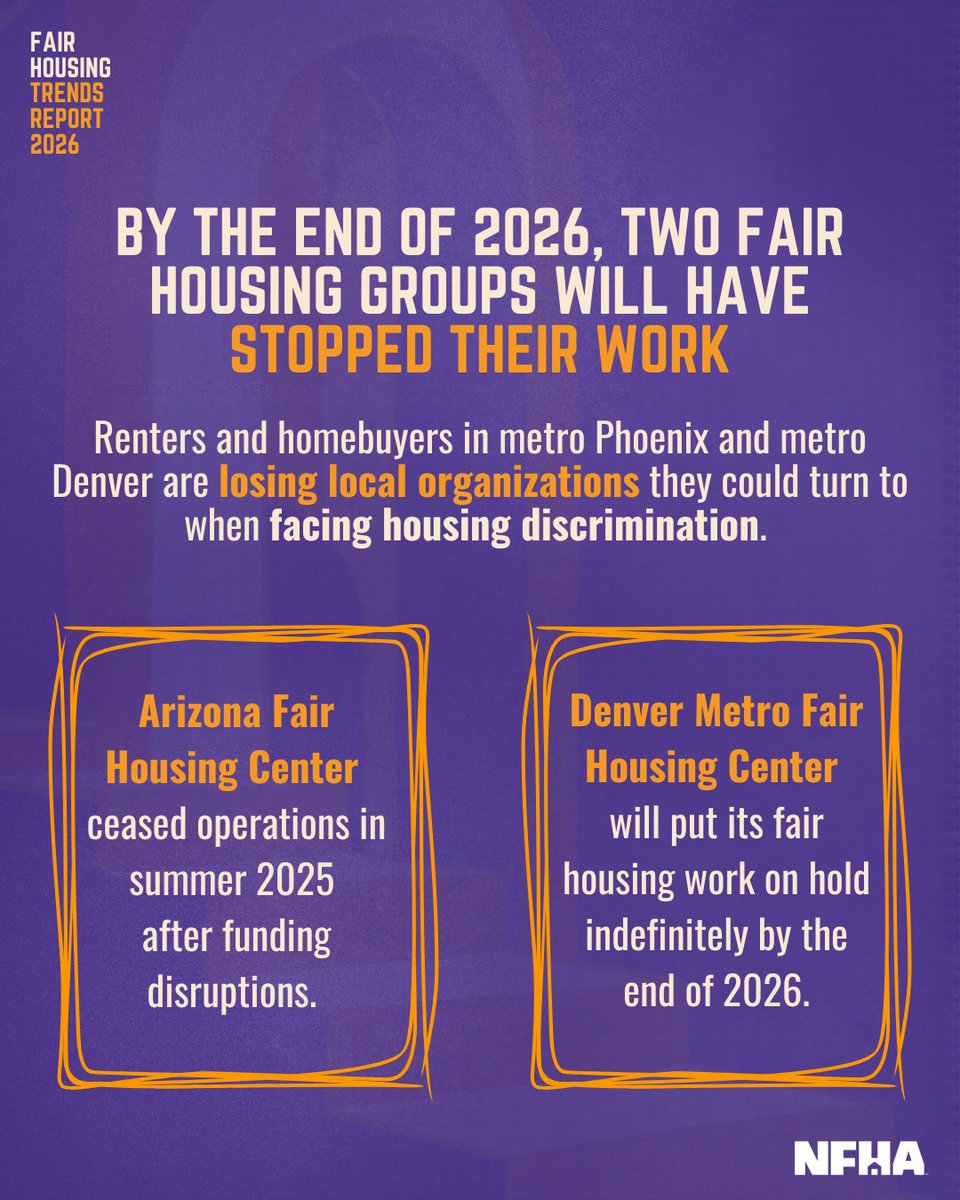
Funding disruptions are leaving communities without local fair housing to help.
NFHA's 2026 Fair Housing Trends Report found three out of four reporting member organizations faced funding disruptions.
Full report: https://t.co/jfw73Hzhyi
Who does the learning when AI is in the classroom?
I’m moderating that conversation at the 11th OneGW Summit with a student and @gwbusiness' Chief AI Officer and Teaching Assistant Professor of Decision Sciences, bring the student-faculty views. I will also chip in social metacognition, thinking together about how we think, with and without AI.
Microsoft is reportedly offering buyouts to 60,000 employees while spending up to $175bn on AI infrastructure this year.
The report doesn't say one caused the other, and voluntary buyouts are not layoffs. But the timing raises the question my latest essay asks of the whole ecosystem: as firms build "token capital," what happens to human capital, and who has a say in that trade-off?
It's a question for every large employer, not one company.
Who evaluates the machine? In one influential AI essay, the answer is: the firm, against its own business outcomes, in private.
Until the many can read the scorecard, the house is still grading itself.
New essay: https://t.co/6VottOtViN
A 2026 Fields Medalist has made a surprising admission about AI.
John Pardon says he has used AI to find “a few nontrivial proofs” for mathematical results he believed were true but hadn't fully established.
AI has also caught subtle errors in his arguments.
But there is a catch: it still struggles with some of his most serious research questions.
His latest interview offers a glimpse into how one of the world's leading mathematicians actually works with AI.