Excited to share an update to D3 (DNA Discrete Diffusion) — an application of score-entropy discrete diffusion model for regulatory genomics!
🧬 Paper: https://t.co/7H8DDqES2B
(See thread below 👇) (1/n)
Excited to share new work on “Designing DNA With Tunable Regulatory Activity Using Discrete Diffusion.” We extend Score Entropy Discrete Diffusion to regulatory DNA! Work led by @ani_itsme.
paper: https://t.co/qK47aTrJMC
@anindya_ece@EaseMyTrip@British_Airways Why don't you take care of customer's money and satisfaction if things don't go as planned? Please show some kindness as well as professionalism here and arrange for the refund ASAP.
@PajamaStew Thank you for putting the whole incident down so nicely. I could relate to this more as I experienced a death of an elderly figure in my family recently.
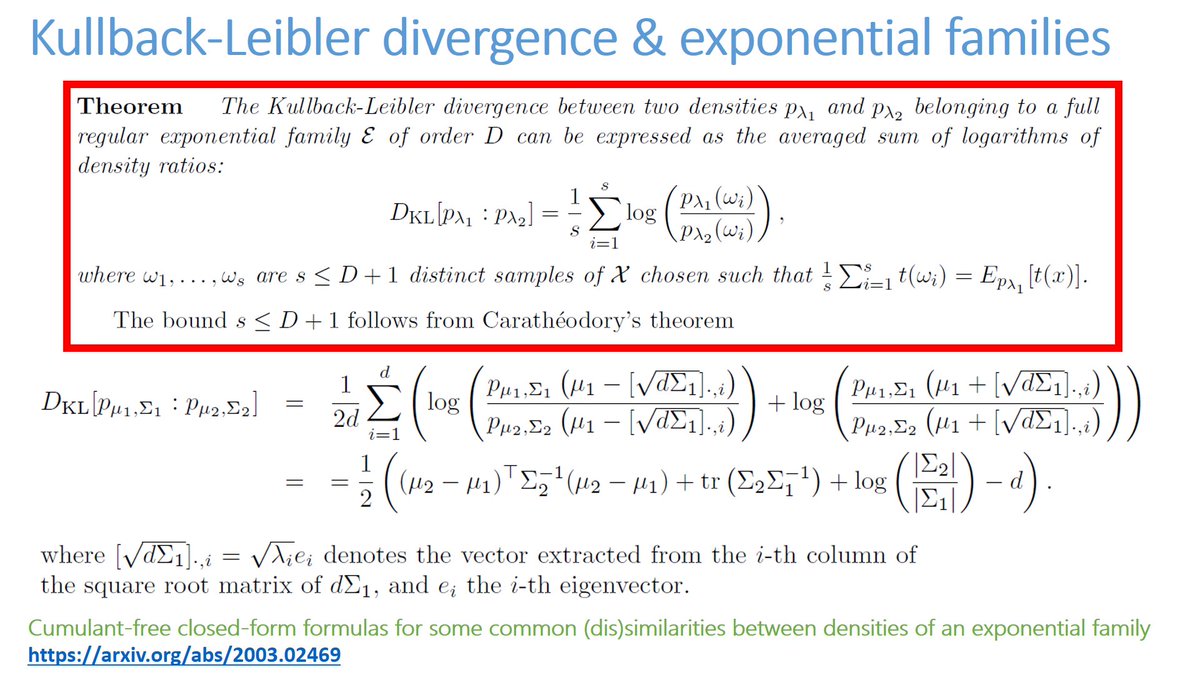
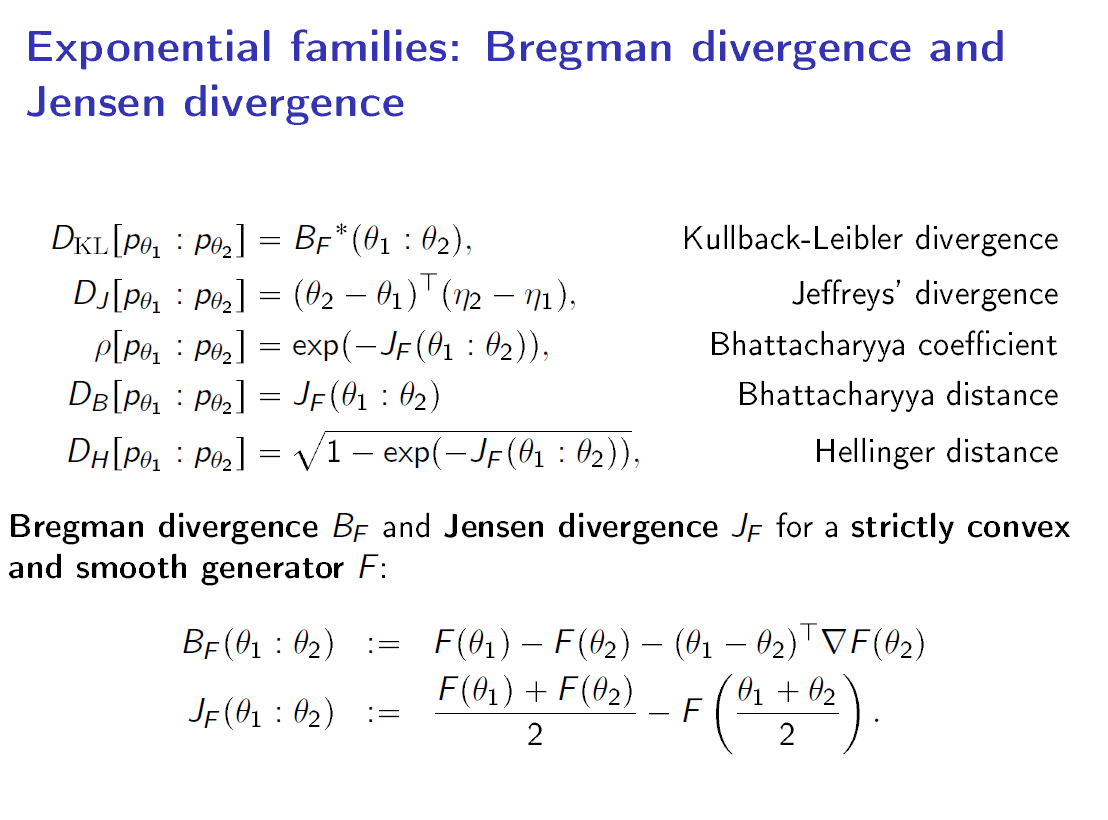
Common formula for statistical (dis)similarities between any two densities of a same exponential family (incl. Gaussian, Beta, Dirichlet): Implement those formula *easily* from legacy statistical library APIs.
Slides: https://t.co/cTdZIV1zaJ
Report: https://t.co/H0475IkB8t
I am in receipt of a comprehensive paper on the role of causality in vision https://t.co/X1rO0QdS8a Although I find the section on "causal Bayes Nets" a bit incoherent, there is a lot I can learn from it, especially the interplay with naive physics and object-oriented reasoning.
Very pleased to find a powerful completeness result in the theory of transportability: https://t.co/NByCvF2NiY
This time the heterogeneous data sets can have missing components and the targets can be group-specific causal effect.
Did you know that the optimal ridge penalty λ in linear regression can be *negative*? It's always strictly positive when n>p. Or when cov(x)=I. Or when true β is random. But here we argue that it can be zero or even negative when p>>n: https://t.co/LzS6L5xrbP. HOW?! [1/n]
New method to calculate and express the Kullback-Leibler divergence between densities of an exponential family (normals, gamma, etc.) by expressing the KL as an averaged sum of log density ratio. Bypass integral calculations and use of Bregman generators https://t.co/Blx3eQlmlG
Speaking of DL and causal inference (CI) and keeping with our commitment to on-line education, I am retweeting here a video-ed lecture on the subject https://t.co/JnSDTceXEY. It's more than a year old, but covers many of the questions raised here, squarely and transparently.
For the many students of economics who express frustration with the way a problem known as “bad control” is evaded, if not mishandled in econometrics, our "Crash Course" in now accessible as Technical Report: https://t.co/eQnCbLDsuE
Enjoy and teach your professor.
#Bookofwhy
The reason I said "insurmountable obstacle" is that it cannot be solved by model-free ML methods. The examples in https://t.co/dEPwcuLbPS show that the same shift in probability may require two different repairs, depending on which structure caused the shift.#Bookofwhy
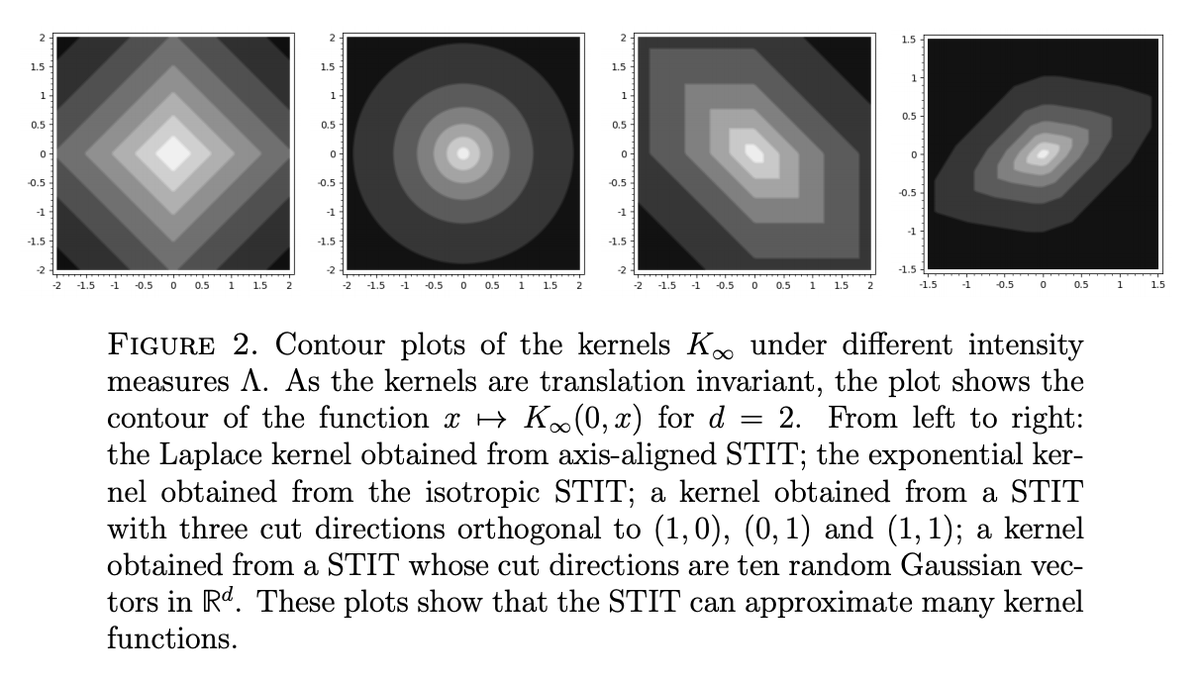
In "Mondrian Kernel", we showed the Mondrian process can approximate the Laplace kernel. Using the Mondrian process <> STIT connection, O'Reilly and Tran have now uncovered whole classes of kernels that can be approximate by stochastic geometries. Beauty! https://t.co/xVDHpZycte
I cannot overemphasize the importance of page 24 for
understanding: "intervention", "parents", "invariance"
and other notions, often treated informally. Chapter 3 later explicates the ramifications of this one page, and gives us backdoor, do-calculus and much more, #Bookofwhy



![hippopedoid's tweet photo. Did you know that the optimal ridge penalty λ in linear regression can be *negative*? It's always strictly positive when n>p. Or when cov(x)=I. Or when true β is random. But here we argue that it can be zero or even negative when p>>n: https://t.co/LzS6L5xrbP. HOW?! [1/n] https://t.co/gIkCHxXnEl](https://pbs.twimg.com/media/EVpDcfjXkAEoBkS.jpg)