Let me explain what just happened today because it deserves so much recognition.
GalaxEye is a Bengaluru startup founded in 2021 by IIT Madras engineers. Today they launched Mission Drishti on a SpaceX Falcon 9. It is India's largest privately built satellite at 190 kg. And it carries a technology that no commercial satellite has ever carried before.
Normal satellites take photos of the Earth using optical cameras. Like your phone camera, but from 500 km up. The problem is obvious. Clouds. Night. Fog. Smoke. If any of these are in the way, the photo is useless. India has monsoon cover for 4 months a year. That is 4 months where optical satellites are partially or fully blind over large parts of the country.
The alternative is SAR. Synthetic Aperture Radar. Instead of taking photos with light, it sends radar waves down and reads what bounces back. Radar goes through clouds, through darkness, through smoke. A SAR satellite can image a flooded village at 2 AM during a cyclone when no optical satellite can see anything.
The problem with SAR is that the images look nothing like photos. They look like grainy black-and-white radar maps. A military analyst or a trained geospatial engineer can read them. A farmer, a disaster response team, or a city planner cannot.
Until today, if you wanted both optical and SAR data for the same location, you needed two different satellites, passing over at different times, at different angles. Then someone had to manually align and fuse the two datasets. Expensive, slow, and the data never perfectly matched because the satellites saw the same spot minutes or hours apart.
GalaxEye put both sensors on one satellite. Optical and SAR, fused into what they call OptoSAR. Three times more information than a single sensor. Processed onboard by an NVIDIA AI chip at 1.8 metre resolution.
Now in practice, during the next cyclone hitting Odisha, one satellite pass gives you a clear image of which villages are flooded, which roads are cut, and which buildings are standing. Day or night. Cloud or clear. In near real-time.
For defence, it means you can monitor a border area 24/7 regardless of weather. For agriculture, it means tracking crop health across an entire monsoon season without a single cloud gap. For infrastructure, it means monitoring construction progress on highways and bridges without waiting for a clear day.
GalaxEye tested their SAR tech on ISRO's POEM orbital platform. The satellite was tested at ISRO facilities. IN-SPACe provided regulatory clearance. NSIL, ISRO's commercial arm, will distribute the imagery globally. And it launched on SpaceX because ISRO's PSLV doesn't have the right orbit slot for this mission.
Yes, four IIT Madras graduates built a world-first satellite in 4 years in Bengaluru.
Take a bow!
@JasonKuperberg This is spot on. I have experienced something similar with Claude 4.6 this week.
One thing that’s probably not talked about here is the speed with which humans can keep up with AI. That is the bottleneck now and AI can’t solve that.
Fine-tuning massive models can feel impossible on limited resources.
In his workshop “Axolotl on a Budget: Fine-Tuning 70B-parameter LLMs”, Aniket Kulkarni shares practical ways to make it achievable at #PyConIndia2025.
Full schedule: https://t.co/dvfMy7brkR
#Workshop#python
Here's a simple yet powerful solution: Google Sheets.
Why Google Sheets?
• Easy integration with Typescript for customization
• Support for deterministic calculations
• Dashboards for quick visual insights
• Seamless collaboration and sharing with your team
oo excited to see Andrej use the term "Software 3.0" publicly for the (first?) time at the @ycombinator ai startup school
it was a fairly obvious consequence of the original Software 2.0 essay + LLMs but i think the "1+2 = 3" thesis, aka code orchestrating LLMs, is underdiscussed still.
Read this amazing article on how effectively to design UIs by Colin Mathews and @lennysan.
I think the best delivery teams out there will eventually develop a synergy with AI and have a custom workflow that works extremely well.
https://t.co/WEFtqTdFiM
we dropped the price of o3 by 80%!!
excited to see what people will do with it now.
think you'll also be happy with o3-pro pricing for the performance :)
Today we’re excited to introduce Bland TTS, the first voice AI to cross the uncanny valley.
Several months ago, our team solved one-shot style transfer of human speech. That means, from a single, brief MP3, you can clone any voice or remix another clone’s style (tone, cadence, or pronunciations, etc.).
With Bland TTS:
• Creatives can turn text into realistic sound effects or AI voice tracks with precise control over style and emotion.
• Developers can plug in our TTS API to build voice apps fully customized to their liking.
• Enterprises can launch AI-driven support lines that sound so natural — customers will save you as a contact (try talking to it on our site).
🧵Check out the thread below or visit our website to get started for free
@pratykumar The link is a great read. I also tried prompting in Kannada. The thinking tokens are in English with the final answer in Kannada, still aligning with the deduction in the article you have shared.
Great work!
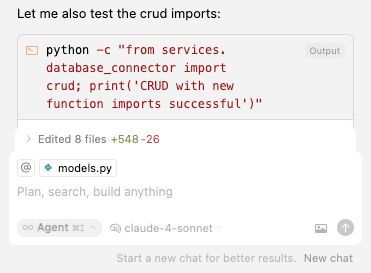
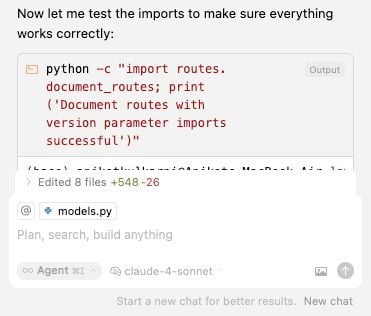
Claude 4 has had major improvement. 8 out of 10 times it runs various small tests in command line for verifying small things like library import, port availability.
That is after development of code and not while debugging.
The devs must hone a workflow using AI. Else NGMI!