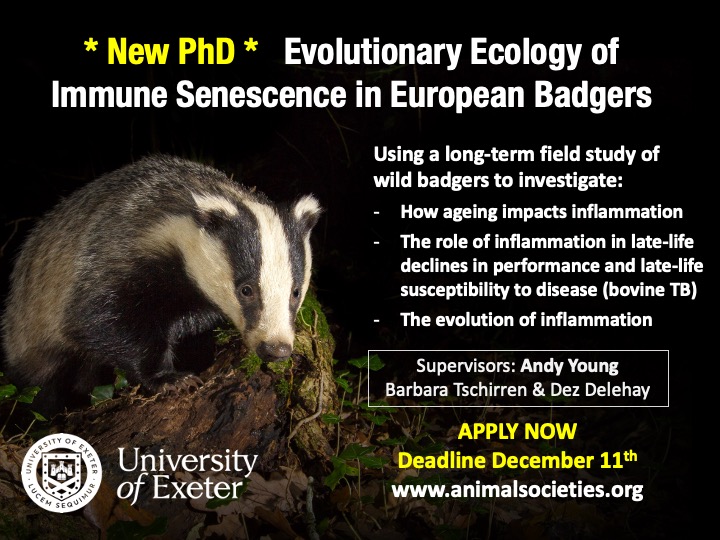
* NEW #PhD * #Evolution#Ecology of Immune #Senesence in Wild Badgers with me, @B_Tschirren and our brilliant collaborators @ APHA, at @UniExeCEC in Cornwall. 50 year data sets+immune analyses.
PLEASE SHARE!
See https://t.co/XKw2Y26bwh and apply here: https://t.co/LKf7J0DeXB
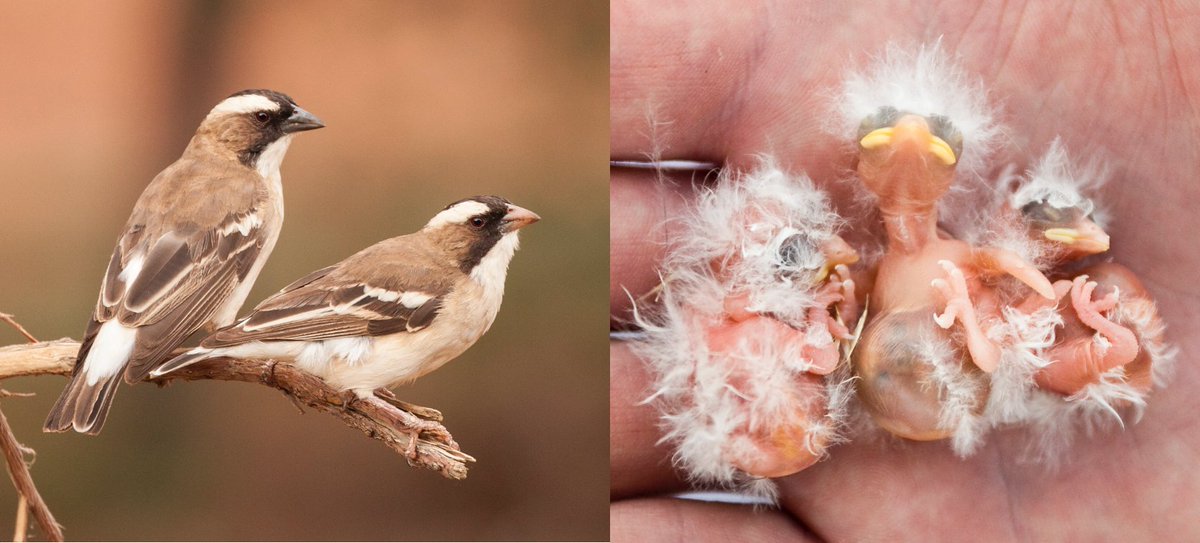
Male birds help their parents less than females because they’re too busy scouting for new places to live and breed, according to new research from @uni_exe_cec.
https://t.co/W6fHnnFLnb
@exetergses @uniofexeteresi @p_capi @animalsocieties
Why do the sexes differ in their #cooperation within families? @p_capi @animalsocieties &co use #RadioTracking of cooperative #birds to reveal that sex differences in cooperation can arise from tradeoff between cooperation & dispersal #PLOSBiology https://t.co/btXVgCBWlk
Cool new #cooperation paper - purple-crowned fairy-wren helpers help breeders more when they are UNrelated to the opposite-sex breeder (a potential mate). Rare evidence suggestive of direct benefits of helping. Will check our weavers! Cool stuff @NikiTeunissen@AP_BirdBehavEco 👌
Our latest paper shows that how much fairy-wrens will help feed others' young depends on the type of breeders they are helping by doing so. It highlights how social context can play an important role in explaining cooperative behaviour.
Read it here: https://t.co/CIr17XbcQ7
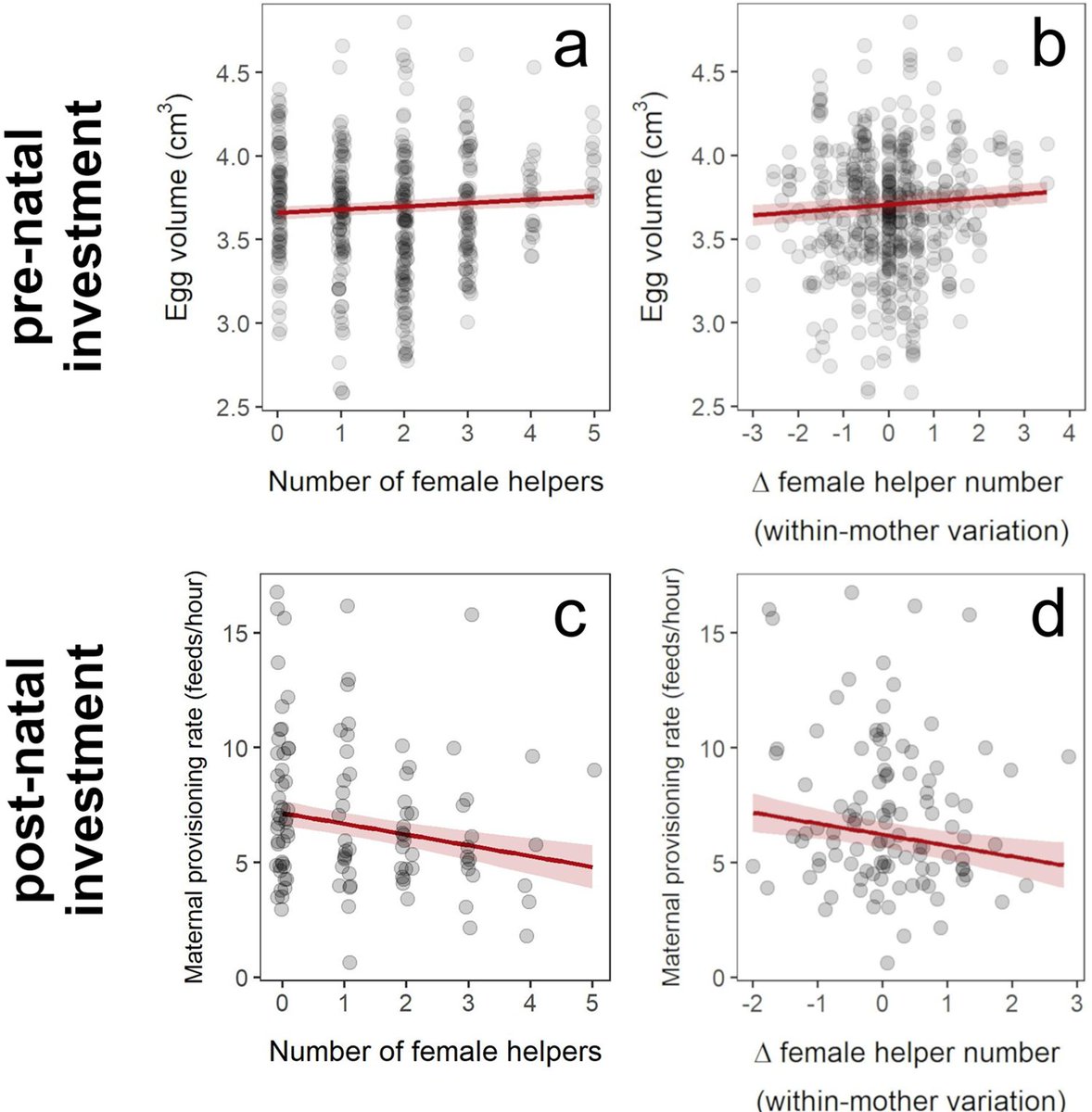
*New #evolution paper* Sparrow-weaver mothers lay larger eggs when they will have more help feeding chicks. Maternal reaction norms to help are *opposite* for egg size & nestling feeding rate. Cool. But why do this? 1 of 3. Fine work @p_capi. https://t.co/ufaWbh84Dt #ExeterCEC
@Wild_Ecol_Cons@DaveHodgson00 and @erik_postma Of interest for rewilding / human-wildlife conflict elements of your fieldcourses... https://t.co/4VenlkUsmf
Nice new paper from @Wild_Ecol_Cons - visitors (local income stream) keen to see wolves returning to protected areas on the German/Czech border... I would be too! 🤩. Great to have an evidence base for this. One of many stakeholders in a complex debate.
Nice new paper from @Wild_Ecol_Cons - visitors (local income stream) keen to see wolves returning to protected areas on the German/Czech border... I would be too! 🤩. Great to have an evidence base for this. One of many stakeholders in a complex debate.
Visitors to #NationalParks are key stakeholders, but what are their attitudes towards returning #wolves? 🐺⁉️
We (@Wild_Ecol_Cons) investigated this in a NEW PAPER using visitor surveys in Bavarian Forest 🇩🇪 and Šumava National Parks 🇨🇿
https://t.co/qsRuFyC1hu
A summary:
1/5
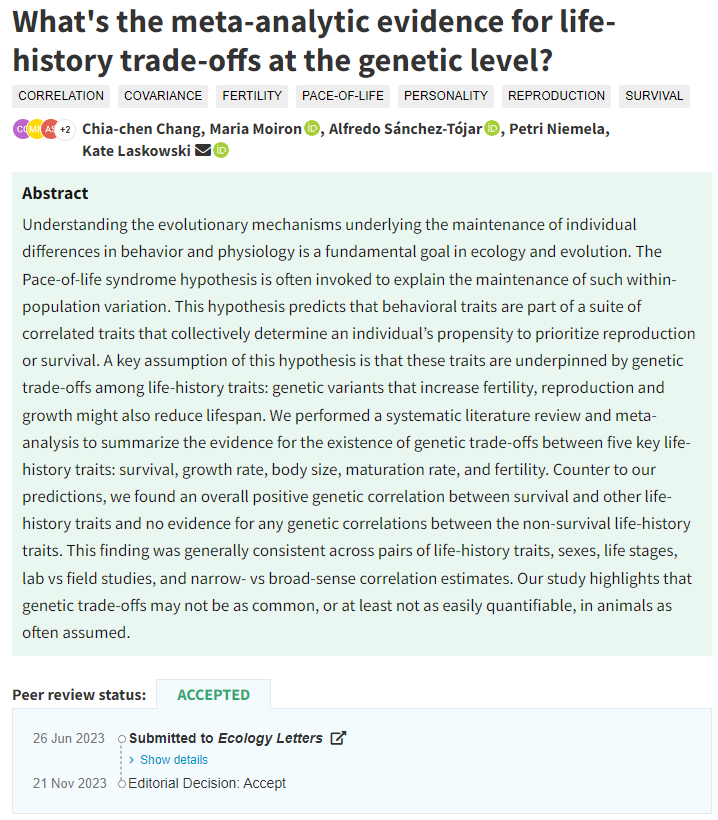
Great new paper on life-history trade-offs... meta-analytical confirmation of the missing (yet much invoked) -ve genetic covariance. So in a 'resource allocation trade-off' world, standing genetic variation within pops may lie more in resource acquisition than allocation. Cool.
Always good to start the workday with a manuscript accepted
➡️Did you ever wonder what's the evidence for life-history trade-offs at the genetic level?
The answer is coming out soon @Ecology_Letters, but if you can't wait, the #preprint is available at: https://t.co/cWNwWXRyyd
You are a PhD student in Ecology or evolutionary biology and are looking for a conference combining both science and fun?
Say no more! #EMPSEB29🦅 is here for you!
@Roasty247 @p_capi @AP_BirdBehavEco@NikiTeunissen Hey @Roasty247 - hope you're well! Oooh... what's going on with that "@ ecoevo . social" thing after your handle - enlighten me please! (I'm a total social media dinosaur 😂)
Age influences behaviour, which should affect our exposure and susceptibility to infection!
A bit belated, but I'm delighted to see this review out with @arsweeny and @webber_quinn. Give it a read if you're curious about behaviour, ageing, and disease: https://t.co/E44bbktvjz
@Gfalbery@arsweeny @webber_quinn Nice! Thanks for highlighting - timely for us investigating impacts of senescence in Euro badgers on bovine TB dynamics 🤟
@p_capi 2/3 We show helpers reduce mum's post-natal workload; may allow mums to invest > in egg (only mums can do). +/or: We know helpers increase overall nestling feeding rate (https://t.co/fYYMRCcFTL); may increase mum's benefit from investing in egg. Or: not adaptive (modest effect!)
@p_capi 3/3 Why cool? -> helpers in cooperative breeders (e.g. us) could have cryptic maternally-mediated beneficial effects on pre-natal development. Our data implicate help not group size as mat reaction norms to *female* helpers (help twice as much as males; https://t.co/fYYMRCcFTL)
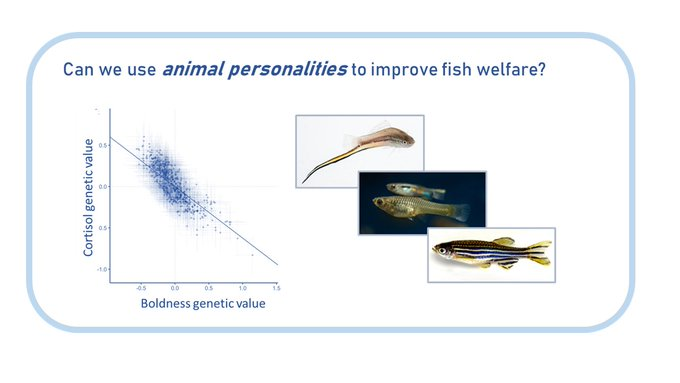
Anyone looking for a PhD student interested in behaviour and evolution, but with an applied (welfare) twist? If so maybe you could join @C_C_Ioannou @erik_postma and me. Info + app at https://t.co/XE7hP1BDOg. More on the group at https://t.co/2aTjr99hFk Pls RTWT
Exciting PhD project for competitive funding (start date Sept/Oct '24), exploring how gut microbiota affect pesticide resistance in aphids! The project is based at UExeter's wonderful Cornwall campus @uniexecec in collab w @Rothamsted: https://t.co/ofxa6fOIIn
In many societies (incl. humans), helpers assist with the post-natal care of the young. @p_capi @ali__wilson & @animalsocieties show that mothers in a wild cooperatively breeding #bird lay larger eggs when there's more help with nestling care #PLOSBiology https://t.co/Nh2JpvGd4o