“AI related valuation corrections may have a positive impact in terms of capital inflows (in India)” - RBI Governor
Just anticipating the AI boom to play out exactly like the dot com bubble and mortgage crisis isn’t a coherent plan
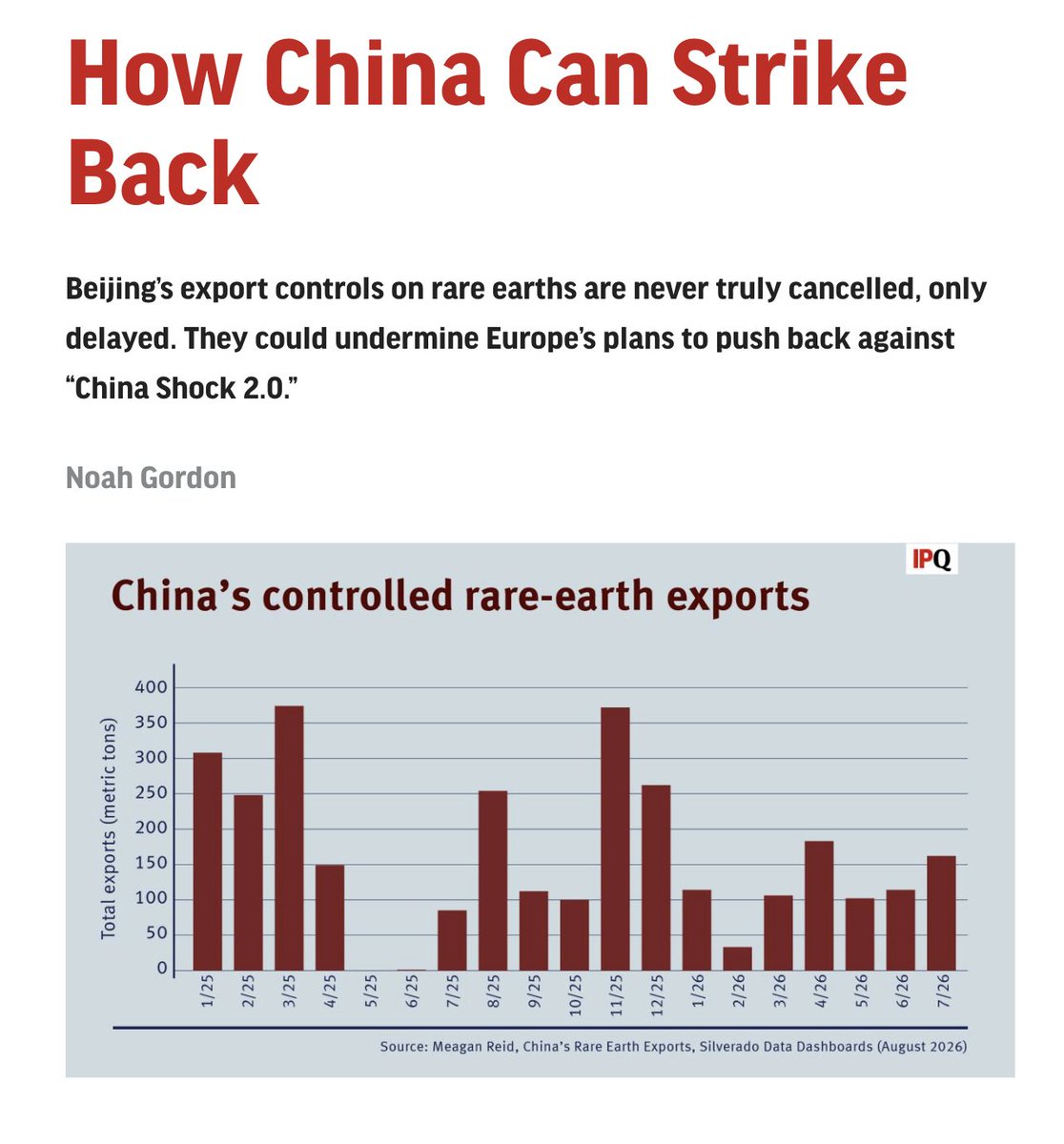
The EU is rightly standing up to China to protect its economic interests. But with its export controls on rare earths and magnets, Beijing still possesses the weapon that made the US back down last year.
My new piece for @IPQuarterly
My newest piece for Carnegie revisits the Plaza Accord and its relevance for China. The Plaza Accord was not an externally imposed punishment of Japan but part of a broader restructuring that Japanese economists and policymakers themselves recognized was necessary. Its effects were undermined, however, when Tokyo responded to the resulting slowdown with policies that exacerbated investment, credit expansion, and the very imbalances the exchange-rate realignment was intended to resolve.
https://t.co/U8Bc4l0WNF
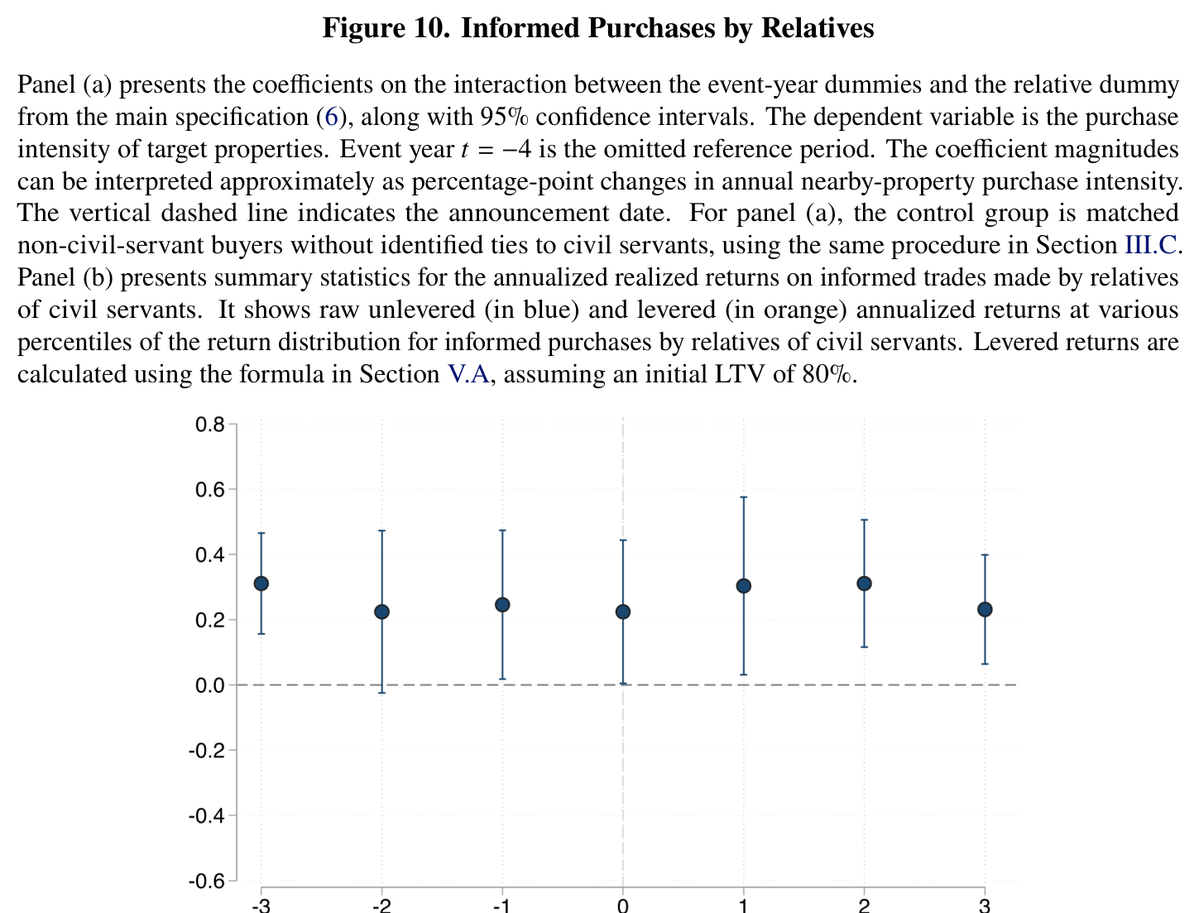
Fui ler o paper do NBER que tá sacudindo Singapura. Pesquisadores de Stanford e Columbia usaram IA pra varrer TODAS as transações imobiliárias do país entre 1995 e 2019 e cruzaram com o cadastro de 141 mil servidores públicos.
Funcionários compravam imóveis perto de futuras estações de metrô 1-2 anos ANTES do anúncio oficial. 60% acima da taxa normal. Não pagavam mais caro na compra, mas revendiam com retorno de 12% ao ano. Os parentes faziam a mesma coisa. S$270 milhões no total.
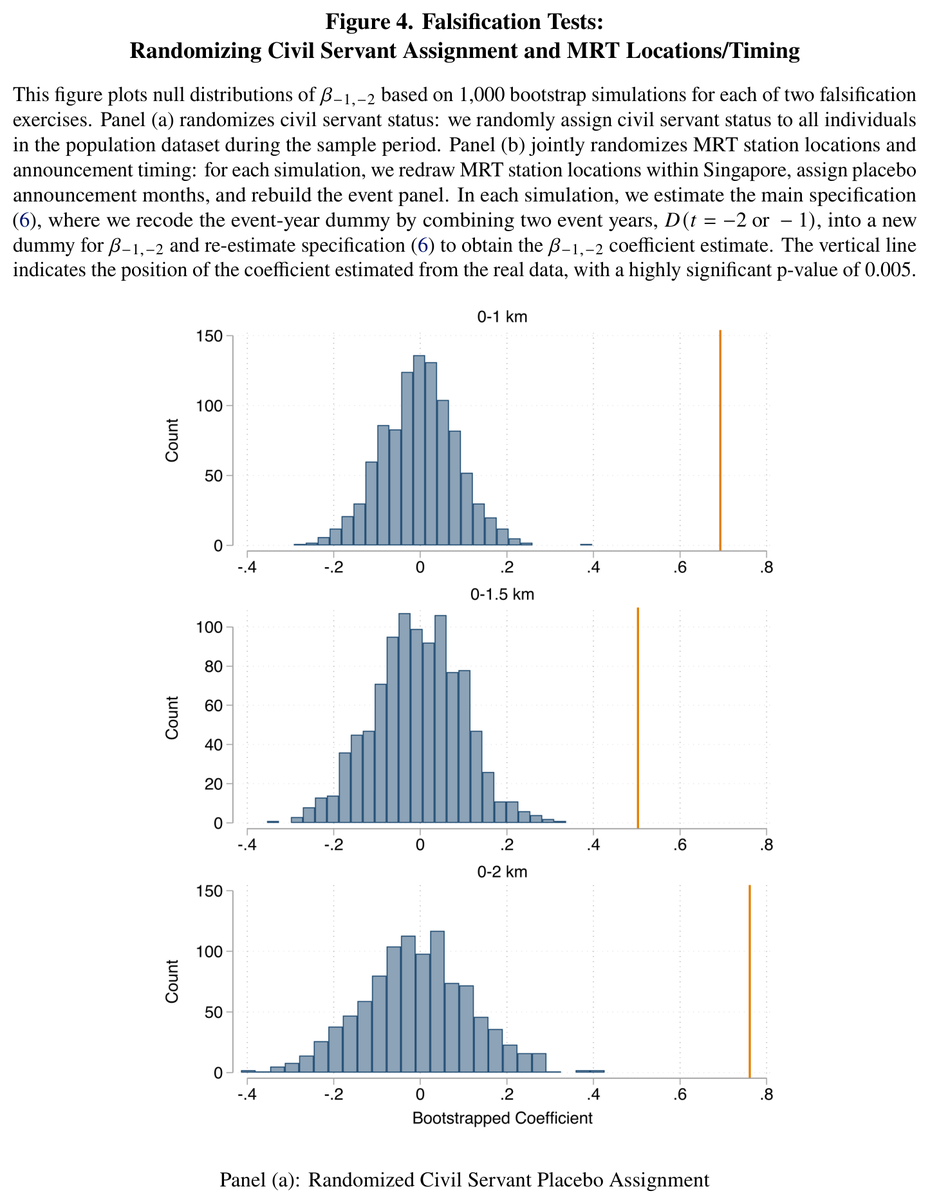
Pra descartar que fossem só mais espertos, compararam com corretores de imóveis e diretores de empresa. Nenhum dos dois mostrou o mesmo padrão. Rodaram 1.000 simulações aleatórias e o efeito real ficou totalmente fora da distribuição.
Quem mais operava? Gerentes médios do planejamento de transporte. Cargo suficiente pra saber, baixo o bastante pra ninguém olhar.
Em 2012, Singapura apertou a fiscalização com novas leis e punição de casos de alto escalão. O padrão sumiu, dos funcionários e dos parentes.
Singapura é top 5 em transparência no mundo. Norma social sozinha não segurou.
fonte: NBER WP 35756
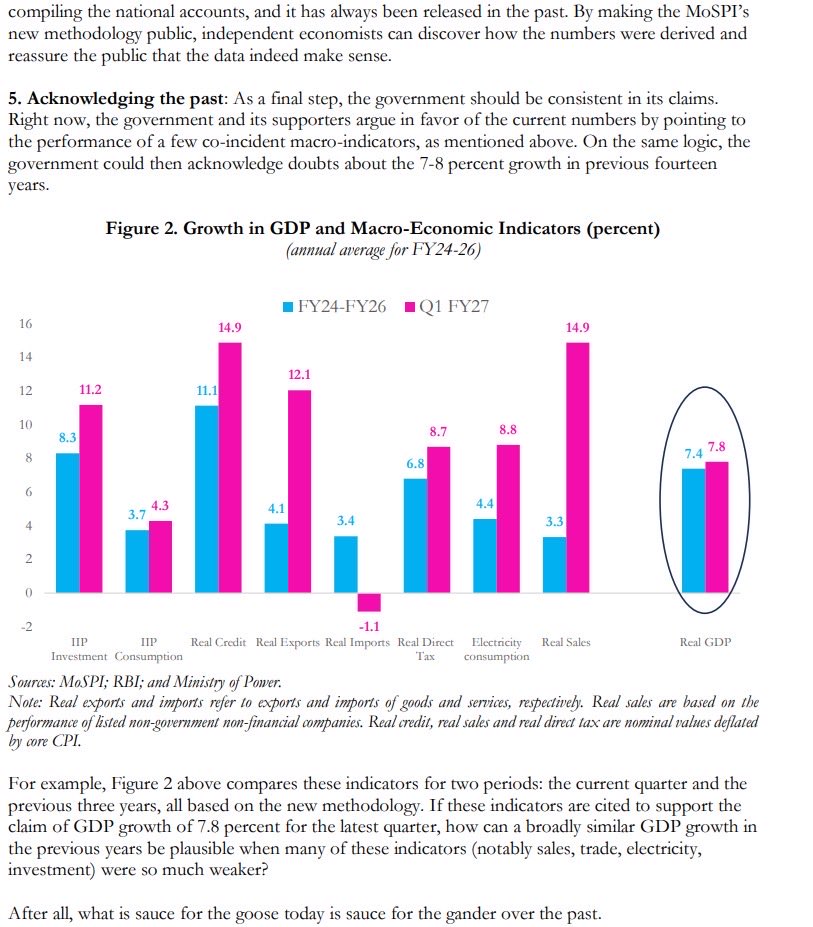
.@IndianExpress piece by @abhishekecon@FelmanJosh & me on latest GDP numbers and the raging controversy
Link: https://t.co/pmn7UBJ8PT
I will discuss this with @sardesairajdeep at 930 PM IST (1130 EST)
Four take-aways
Thread
1/
In our new blog post we analyse how public debt managers are adjusting their portfolios to increased yields and elevated financing requirements.
#DebtManagement#GovernmentBonds
https://t.co/lRC5H2PIEo
The simplest possible fact is this: China has broken a number of theoretical economic taboos, shown that they are wrong, and economics will have--whether it likes it or not-- to adjust to that & revise what it currently holds and teaches.
You cannot treat the most successful economic growth in the history of the world as an exception to the generally valid rules of economics.
“Over the past week they meted out the same treatment to ‘so-called overcapacity’ in the Chinese economy…The paper is fascinating because it is both rigorous and disingenuous.”
@S_Rabinovitch https://t.co/1bmFQva7nL
There are two reasons saving is so high, Gita. One, as you noted, is precautionary saving. With the economy slowing and employment uncertainty rising, that is hardly surprising. The standard IMF and World Bank recommendation is to strengthen the social safety net., but even if Beijing were to introduce Scandinavian-style welfare provisions tomorrow, the credibility of the system is so low that it would take many years, perhaps even decades, before household saving behavior changed materially. We saw this last year with the pension reforms. Very few workers chose to contribute to the new system because, they argued, they were unlikely ever to receive the promised benefits.
The more important reason for China's exceptionally high saving, however, is simply the extraordinarily low household share of GDP. Households must receive, directly or indirectly, a much larger share of what they produce. There are essentially two ways to accomplish this, but each comes with its own costs.
The sustainable solution is to redistribute income from businesses and governments to households. This can be done in many ways: raising wages, appreciating the currency, increasing deposit rates, eliminating the hukou system, strengthening labor protections, and so on. But none of these change can possible happen quickly enough to matter to China's trade partners, and, as you point out, none of these policies is painless. They would almost certainly slow growth by reducing the profitability of manufacturers that are already struggling to earn returns.
The alternative, and the one you seem to prefer, is to increase fiscal transfers to households without reducing the fiscal support that currently subsidizes investment in manufacturing and infrastructure.
That might have been a reasonable proposal fifteen years ago, or perhaps even ten, but China already has one of the highest debt burdens in the world relative to GDP (second only to Japan's) and by far the fastest-growing. To argue that China should postpone a difficult but necessary adjustment by allowing debt to grow even faster strikes me as a poor recommendation in light of the historical evidence.
The fundamental point is that China's low consumption share is not a temporary weakness but a structural feature of its growth model, and one that has been central to the explosive expansion of its share of global manufacturing. It took Japan eighteen years, from 1991 to 2008, to raise its consumption share of GDP by just ten percentage points, even though Japan began with smaller domestic imbalances and far lower debt levels than China has today. Even if China achieved the same adjustment, its consumption share of GDP would still remain exceptionally low.
During those eighteen years, however, Japan's GDP growth averaged well below 1%. What is less widely remembered is that Japan's share of global manufacturing fell by more than half over the same period. That was no coincidence. Then, as now in China, manufacturing competitiveness depended in large part on the systematic transfer of resources, directly and indirectly, from households to producers and investment.
It seems to me that you want to propose a way for China to enjoy the benefits of a profound structural transformation in its economy without bearing any of the associated costs, by relying on an even faster increase in an already alarming debt burden. This, among other cases, is essentially what Brazil and the Soviet Union attempted in the 1970s, and Japan in the 1980s. In every case, postponing the adjustment only ensured that it became much more difficult later.
My final point is a practical one. There are many precedents for the European Union demanding that large external imbalances be addressed through exchange-rate adjustment. There are almost none for demanding that a trading partner eliminate the hukou system, transform its social welfare system, raise wages, strengthen labor unions, liberalize interest rates, or undertake any number of other politically difficult domestic reforms quickly enough to matter for Europe's economy.
I do not think anyone, including Brad Setser, is arguing that currency appreciation is the only way to resolve China's domestic imbalances, or even necessarily the best way. It may, however, be one of the very few adjustment mechanisms that China's trading partners can realistically expect Beijing to implement within a timeframe that matters to them.
Can we all agree: China's growth model needs to be fixed & its trade footprint causes large domestic& global distortions; RMB is undervalued, a managed currency & authorities could significantly accelerate pace of appreciation, which would be the correct course & beneficial?
Adam Tooze, as provocative and insightful as usual
"What China is delivering in the 2020s is an industrial policy shock of global scale"
1/
https://t.co/rXS3oNKvHI
What happens when you invite 150 AI economists (Claude Code) to a research conference, give them the exact same data, and ask them to test the same hypotheses?
We did just that. The results reveal a new phenomenon: Nonstandard Errors in AI Agents. 🧵👇
What are the effects of large human-capital shocks on innovation?
In a new paper, we study how WWI military deaths across British communities affected local invention over the next decades.
We find that places that lost more young men became persistently less innovative.
(🧵1/11)
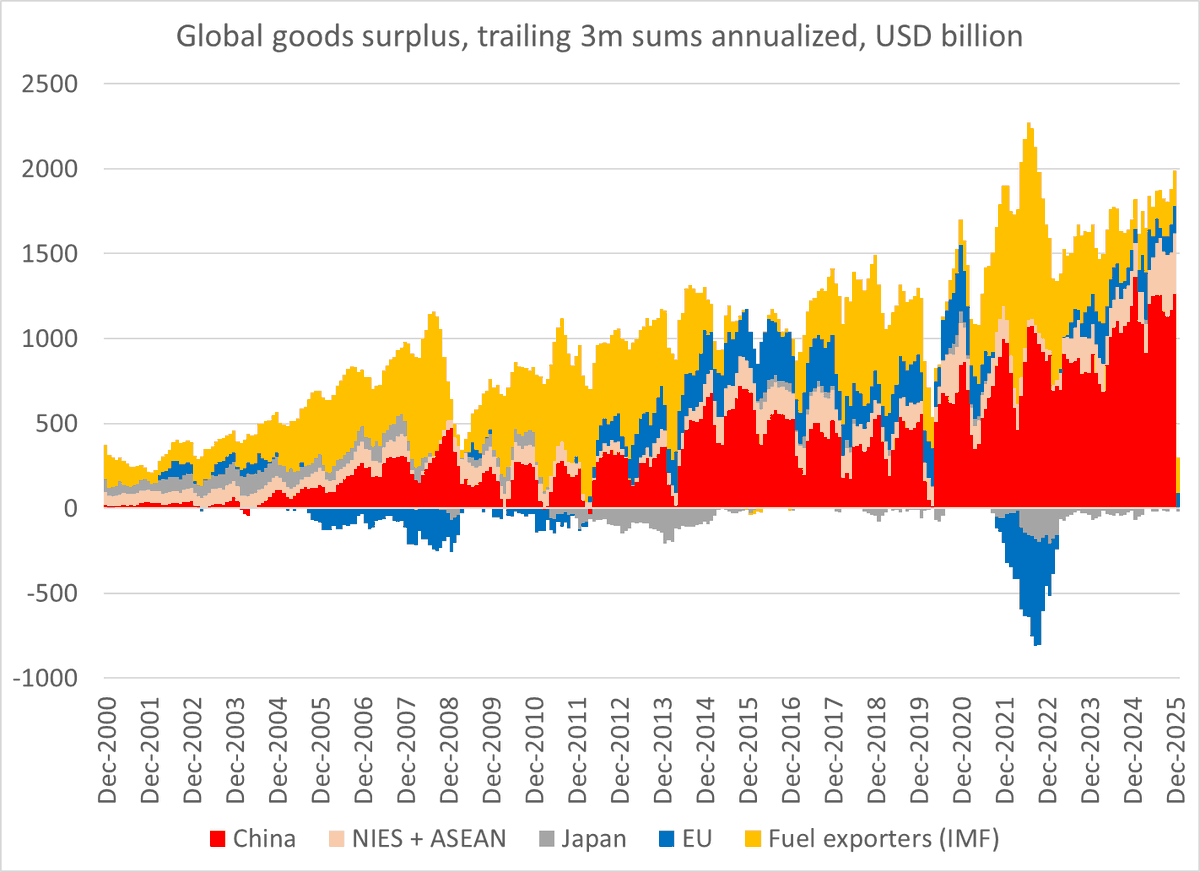
Some basic oil shock math, focusing on the impact on global trade ...
Remember that we are starting from an unusually low surplus in the fuel exporting economies ...
1/
@MishraPrac@livemint@Mint_Opinion@AshokaUniv@EconAtAshoka A very interesting article indeed professor- I’d have thought the relationship wasn’t inverse as well…
I am curious to know if you have also checked to see if this relationship is robust across different years in the past?