Building apps has never been easier.
With Sites, Codex can turn your work, ideas, and plans into an interactive website or app your team can explore, use, and share with a URL.
Rolling out to Business and Enterprise plans, before expanding more broadly.
1. We believe in iterative deployment; although GPT-5.5 is already a smart model, we expect rapid improvements. Iterative deployment is a big part of our safety strategy; we believe the world will be best equipped to win at the team sport of AI resilience this way.
2. We believe in democratization. We want people to be able to use lots of AI; we aim to have the most efficient models, the most efficient inference stack, and the most compute. We want our users to have access to the best technology and for everyone to have equal opportunity. We have been tracking cybersecurity as a preparedness category for a long time, and have built mitigations we believe in that enable us to make capable models broadly available.
3. We love you and we want you to win. We want to be a platform for every company, scientist, entrepreneur, and person. (My whole career has largely been about the magic of startups, and I think we are about to see that magic at hyperscale.)
Introducing GPT-5.5
A new class of intelligence for real work and powering agents, built to understand complex goals, use tools, check its work, and carry more tasks through to completion. It marks a new way of getting computer work done.
Now available in ChatGPT and Codex.
Happy Tuesday. Codex has hit 4M active users, adding over 1M users in less than two weeks. To celebrate we will reset the rate limits again in a few hours. Enjoy!
ChatGPT’s new image model can take in a picture of a house and “generate an entire floor plan”
It blows every single other image model out of the water.
I’ve been trying it all day and here are 10 unbelievable things it can do:
1/11
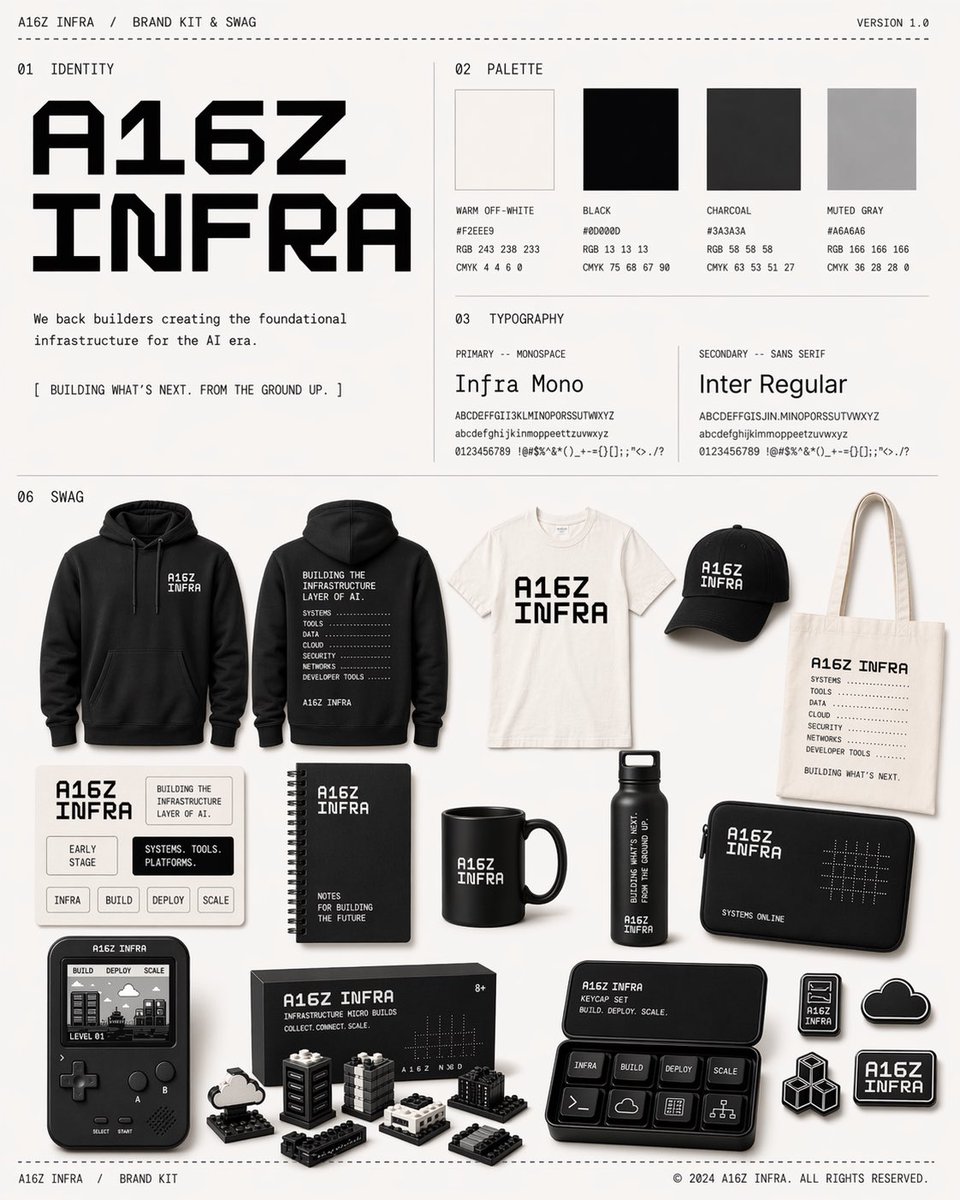
GPT-Image-2 is insanely good at making brand kits.
You can give it a URL or a logo + color guide, and it will pull together everything for you.
I think it’s fun to ask for some swag, too 😉
Sam absolutely nailed this.
That dry, dark humor cuts straight through the fear-based marketing. Too many AI players act like this: build the bomb, warn everyone about the bomb, then sell a bunker to a tiny elite.
I’ll take optimistic mass access over sanctimonious techno-gatekeeping any day.
🚀 health sync is out
Analyze your health data locally across providers.
It syncs data from Oura, Withings, Hevy, Strava, and Eight Sleep (more coming) into a local database you fully control.
I run it on a cron and use @openclaw to generate daily summaries of my activity and sleep.
https://t.co/FA83ykWyMR
We’re watching a Cambrian explosion in AI, and it didn’t start with OpenClaw. It didn’t start with MoltBook. Those were simply two organisms that adapted quickly and rose to prominence in this new evolutionary race.
The inflection point was roughly two months ago, when GPT-5.2 and Opus 4.5 landed. Models were already useful before that. They could write code, fix substantially complex bugs, summarize docs, answer questions, even do structured tool calling with good quality results over 30 minutes. But they had a failure mode that kept showing up in practice: error compounding.
The previous models could produce impressive bursts of competence, but they were dynamically unstable over long horizons. Small mistakes hardened into assumptions. Assumptions compounded. Eventually the session drifted into incoherence or locked into a flawed path you couldn’t steer it out of.
What changed was not just raw capability. It was trajectory stability.
And even though these landed as incremental releases, it took weeks for the ecosystem to notice what had changed. The shift doesn’t show up in short sessions. Short-horizon evals under-measure the thing that moved: stability over time.
A particularly important turning point was the release of OpenClaw (previously MoltBot, previously ClawdBot). This didn’t require the new models. The idea itself wasn’t new. The harness made it trivial to bolt on tools and keep context alive long enough to test long-horizon behavior. The model no longer had the persistence of a Boltzmann brain, flashing into existence and collapsing back into noise. But heartbeats, episodic memory, and a long continuous chat gave it the appearance of experience. Not true continuity. Not true memory. But enough temporal coherence to sustain the illusion.
This was technically possible two months ago. It simply took time for the ecosystem to realize that these models could be pushed as ongoing systems rather than single interactions. Incremental capability releases had created incremental expectations. There was a lag between release and a full realization of what had actually changed. And I would argue we still haven’t pushed hard enough to understand the real boundary conditions of this current generation.
So here we are, in the middle of a Cambrian explosion. New harnesses, frameworks, and tool interconnectivity appear every day. Each one probing a different ridge of the jagged frontier. There is no unified playbook.
Everything is emerging. Everywhere. All at once.
Also, welcome to the team @steipete!
I'm joining @OpenAI to bring agents to everyone. @OpenClaw is becoming a foundation: open, independent, and just getting started.🦞
https://t.co/XOc7X4jOxq
Peter Steinberger is joining OpenAI to drive the next generation of personal agents. He is a genius with a lot of amazing ideas about the future of very smart agents interacting with each other to do very useful things for people. We expect this will quickly become core to our product offerings.
OpenClaw will live in a foundation as an open source project that OpenAI will continue to support. The future is going to be extremely multi-agent and it's important to us to support open source as part of that.
Terveiset kesälomalta Berliinin kukoistavan start-up -ekosysteemin ääreltä! Haluan systeemimuutosta edistävän kasvuyhtiön toimitusjohtajana sanoa pari sanaa Compensate-yritystä kohdanneesta pilkasta, jota tulee joka tuutista. Ja pari sanaa keskustelukulttuurin muutoksesta 1/9