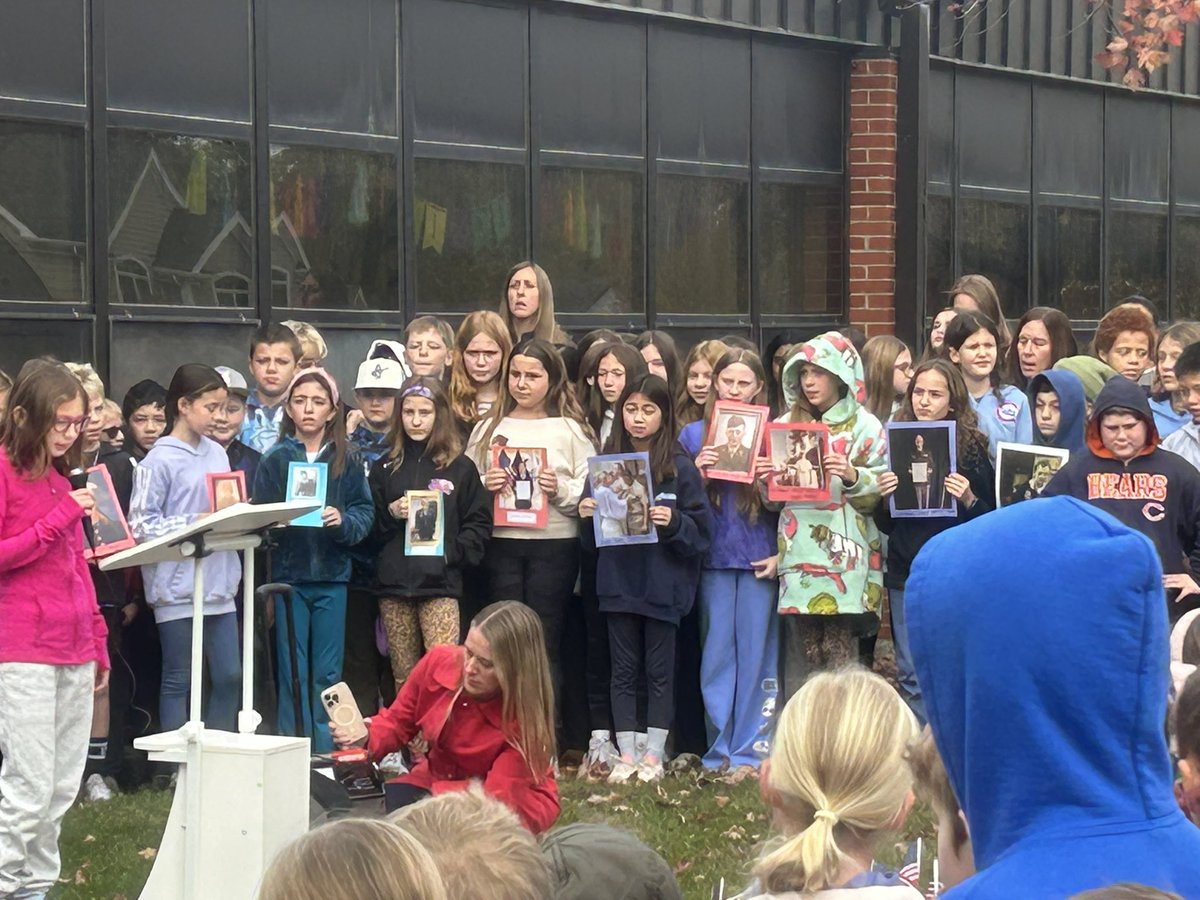
🇺🇸 THANK YOU TO OUR VETERANS! 🇺🇸
Our K–12 schools should do more than give students a day off. Invite veterans into classrooms, hold assemblies, teach military history, write thank-you letters, and explain the meaning of service and sacrifice.
Freedom isn't free. Teach it. Honor it. Never forget it.
God bless our veterans! 🇺🇸
#VeteransDay #Education #K12 #HonorOurVeterans
Happy Veterans Day. This is me holding my daughter Emily, right after I got back from a tour in Saudi Arabia with the Air Force. Grateful for everyone who served and for the families who served right alongside them. #VeteransDay#USAF#ThankAVet
Today, I had the privilege of attending the Veterans Day ceremony at Fairmount School. It was a wonderful event and I’m grateful for all our schools do to recognize and support our veterans. Special thanks to @Fairmount58 and @Areinholz1 for organizing the event. #dg58pride
Principals are often encouraged to visit classrooms because that's how they provide instructional leadership.
And that's true.
But I think there's another reason principals should spend time in classrooms.
To remind themselves just how difficult teaching really is.
Last year, I wrote an entire book on instructional leadership. I get it. Classroom visits provide valuable opportunities to observe instruction, engage in meaningful conversations about teaching and learning, and support teacher growth.
But there's something else that happens when principals spend time in classrooms.
They are reminded of the challenges teachers navigate every single day.
The challenge of providing individualized support to a struggling student while keeping 25 other students engaged.
The challenge of responding to disruptive behavior without derailing an entire lesson.
The challenge of capturing the attention of students who are accustomed to the constant stimulation of their phones.
And the challenge of doing all of this while trying to deliver a meaningful learning experience for every student in the room.
Classroom visits shouldn't just make principals better instructional leaders. They should make them more empathetic leaders.
More supportive.
More understanding.
More gracious.
And more appreciative of the incredible work their teachers do every day.
So here's a shoutout to the principals who make classroom visits a priority.
Not just to observe instruction.
Not just to complete feedback forms.
Not just to identify areas for improvement.
But to stay connected to the work of teaching… and to the people doing that work.
Rock on,
Danny
Dear Principal,
I suspect you're tired.
Your job is demanding. The expectations are enormous. And some days, it can be difficult to remember why you wanted to become a principal in the first place.
As Tim Messick once noted:
"Job descriptions are written in such a way that a principal needs to be a superhero. A principal needs to have the power and strength of Superman, the intelligence of Albert Einstein, the popularity of Princess Diana, the political savvy of a presidential candidate, and the care and compassion of Mother Teresa."
Sound familiar?
You're expected to raise test scores, improve instruction, manage personnel, navigate mandates, respond to parents, and prepare students for an uncertain future.
And that's just before lunch.
With so many competing demands, it's easy to lose sight of what matters most.
So how do we respond?
We keep our eye on the ball.
We remember that our most important work isn't managing programs or completing paperwork. It's creating a school where teachers want to work and students want to learn.
We remove barriers for our teachers. We create a safe and supportive environment for our students. We build a culture where expectations are high, relationships are strong, and everyone feels valued.
We take student achievement seriously. We analyze data, examine instructional practices, and challenge our teachers to continually improve.
But we never forget that behind every data point is a student with a name, a story, and a future.
We didn't become educators because we wanted to raise test scores. We became educators because we wanted to make a difference in the lives of young people.
We remember that there are students walking our halls who desperately need us.
The student who is being picked on.
The student who has little support at home.
The student who feels invisible.
We advocate for them. We encourage them. We make time for them.
And we remind our teachers that their influence extends far beyond the curriculum.
Students may not always remember the lesson, but they'll remember the kindness.
They may forget what we taught them, but they'll remember how we made them feel.
There may not be one magical instructional strategy, but there is magic in connecting with kids.
We've all written school improvement plans. We've all participated in developing mission statements. We've all attended meetings about goals, strategies, and initiatives.
Those things matter.
But people don't follow plans. They follow passion.
And the best mission statements aren't framed on a wall. They're lived in the hallways and classrooms of our schools.
The job of a principal will always be challenging. There will always be another mandate, another problem to solve, another fire to put out.
But don't let the demands of the job distract you from the purpose of the job.
You have the opportunity to empower teachers, inspire students, and help create a brighter future for the young people who walk through your doors every day.
That's why you became a principal.
And that's why your work matters.
Keep your eye on the ball.
I have so many lyrics living rent-free in my head that I never cared about.
So I started making music that encodes topics I actually want to learn.
First WIP: React functions, built with @anabology's Claudia, @suno , and @higgsfield .
Love to get weird with visuals and audio. Best time ever for learning and oddity.
It's already stuck in my head few hours later.
Rap album incoming.
Today, Modern Classrooms Project is announcing that we have raised $12 million to build a free Tier 1 math curriculum for middle and high school, grounded in cognitive science.
The more time I spend in math education, the more concerned I get. Outcomes have been falling for more than a decade, and the steepest declines are among the lowest-performing students.
Meanwhile, many of the leading cognitive scientists and learning scientists have been sounding the alarm that their research is not being applied at scale in math classrooms. We think they might be right.
So we are building a curriculum that treats cognitive science as its north star. We plan to launch middle school in summer 2027 and high school in summer 2028.
Three things to know about what we are building:
1. It will be free. All lessons and materials, teacher-facing and student-facing, will be publicly available online, printable, and modifiable.
2. It will be built with the researchers. In the coming weeks, we will announce a research advisory committee of leading learning scientists. We will work as hard as we can to make sure the structure, design, and underlying content align with what cognitive science tells us about how students, especially struggling learners, master math.
3. It will work with or without technology. Modern Classrooms Project has spent years at the intersection of technology and classroom instruction. This curriculum will have two clear implementation pathways. One that is completely paper-based, built around whole-group, teacher-facilitated instruction. The other will be designed to leverage technology to enable flexible pacing, mastery-based progressions, and increased 1-1 and small-group support from educators.
Perhaps most importantly, we want to understand what works. While we have conviction that following cognitive science is the right path, we are deeply committed to trying to move the field forward so that students can achieve their full potential in math, particularly students farthest from opportunity.
To learn more about what we are building and explore ways to get involved, go to https://t.co/Oz9lTS62hS.
Polish 26 year old guitar master Marcin Patrzałek respond to those who have made public comments claiming that his music is fake.
He made this video in a tutorial form showing how he manages to play so extraordinarily well in response. And yes, it's all played on one guitar.
Most organizations misunderstand the AI transformation journey. They imagine it as a linear progression from experimentation to scale, or from one maturity level to the next. But the real journey is much less tidy, following a more 'squiggly' path. It does not move cleanly from human-led operations to AI-led operations. It passes through a long, difficult middle phase in which humans and AI must operate together and where neither humans nor AI are really in charge. We called that phase Hands Ready after the experience we’ve all had with our cars on their own journey to autonomy.
That autonomous journey involves three phases. Hands On, where the car provides supportive features like braking or lane alerts, but the human remains fully in control. Hands Ready, where the car drives autonomously in most cases but the human must remain vigilant and ready to intervene instantly, and where control and responsibility are therefore shared. Hands Off, where the car manages operational control while the human’s job is obviously to determine the desired destination and journey objectives (stops along the way to pick up family members, groceries etc.) and to decide how they want to spend their newly freed up time.
The enterprise AI transformation journey is far more complex but the three phases remain the same. In previous articles we introduced the organizational work that needs to be done in the Hands Ready phase in terms of 7Rs: Reskill, Redeploy, Redesign, Reclaim, Recalibrate, Restructure and Remandate. These describe how the human organization must adapt as more operational control begins to move from people to AI - this is about relational transformation. But there is another side to the same squiggly line, a technological workstream running in parallel to the 7Rs. This is the work of helping agents become progressively more capable, more reliable, more integrated, more governable and more autonomous over time.
https://t.co/JgFB14HvXZ
Hey there ... I'm Matt 👋🏻👋🏻
Teacher. Speaker. Author. The "Ditch That Textbook" guy.
Are we following each other? Say hey in the comments and let's make it happen!
#teacherlife#reachersfollowteachers#teacher
A third grader just scored a 5 on AP Calculus BC. The system that trained him contains no LLM. The core is a knowledge graph one man spent 250 hours encoding by hand, two minutes per edge.
The platform is Math Academy. Its "AI" is an expert system that routes each student through nearly 3,000 math topics, from 4th grade arithmetic to the math behind machine learning. Every node, every prerequisite link, every weight was placed manually by a team of mathematicians.
The weights alone took Justin Skycak a full month: 1,500 topics at the time, roughly 5 prerequisite links each, 2 minutes to estimate each one. 8 hours a day of pure encoding, done before ChatGPT existed to ease the load.
Why go through that? Because the graph unlocks mastery learning, the closest thing education research has to a cheat code. In 1984, Benjamin Bloom showed that students with one-on-one tutoring perform two standard deviations above a regular classroom. The average tutored kid beats 98% of the lecture hall.
Nobody could afford a tutor per child, so the finding sat in journals for 40 years. A prerequisite graph with a mastery gate is the workaround. The system always knows the exact next topic a specific kid is ready for, drills it until proven, then moves on. Zero time spent waiting for 29 classmates.
That waiting is most of school. A year of classroom math is roughly 150 hours of instruction, and the majority goes to pacing, review, and re-teaching. Strip it out and a motivated kid covers six grade levels in one calendar year.
The origin makes it better: this grew out of a math program at Pasadena High School where 8th graders were passing AP Calculus BC, back when the founders were still hand-grading the whole thing.
The most effective education AI running today is a graph a few humans built by hand, one edge at a time.
ChatGPT has quietly built a file on you. You've never seen most of what's in it.
Every message you send feeds it. It studies your patterns to map your personality and habits, things you never actually told it.
Here are 15 prompts to pull up everything it has on you, and wipe what you never agreed to:
"(The winners) are the ones who learned to pick problems that matter and ship solutions that barely work, before anyone else has even finished thinking about it."
If you’re passionate about joining a fantastic team that’s making a positive impact, the Newport-Mesa Unified School District EdTech department is currently hiring. #edtechtosa#hiring
https://t.co/ekIDDCjimr
Want to make meaningful changes in schools in the age of AI, join the global Courageous Minority community of inquiry: The Courageous Minority: Invitation to the HIP+AI 2026 Global Teacher Inquiry Community
https://t.co/FM14WZOITd
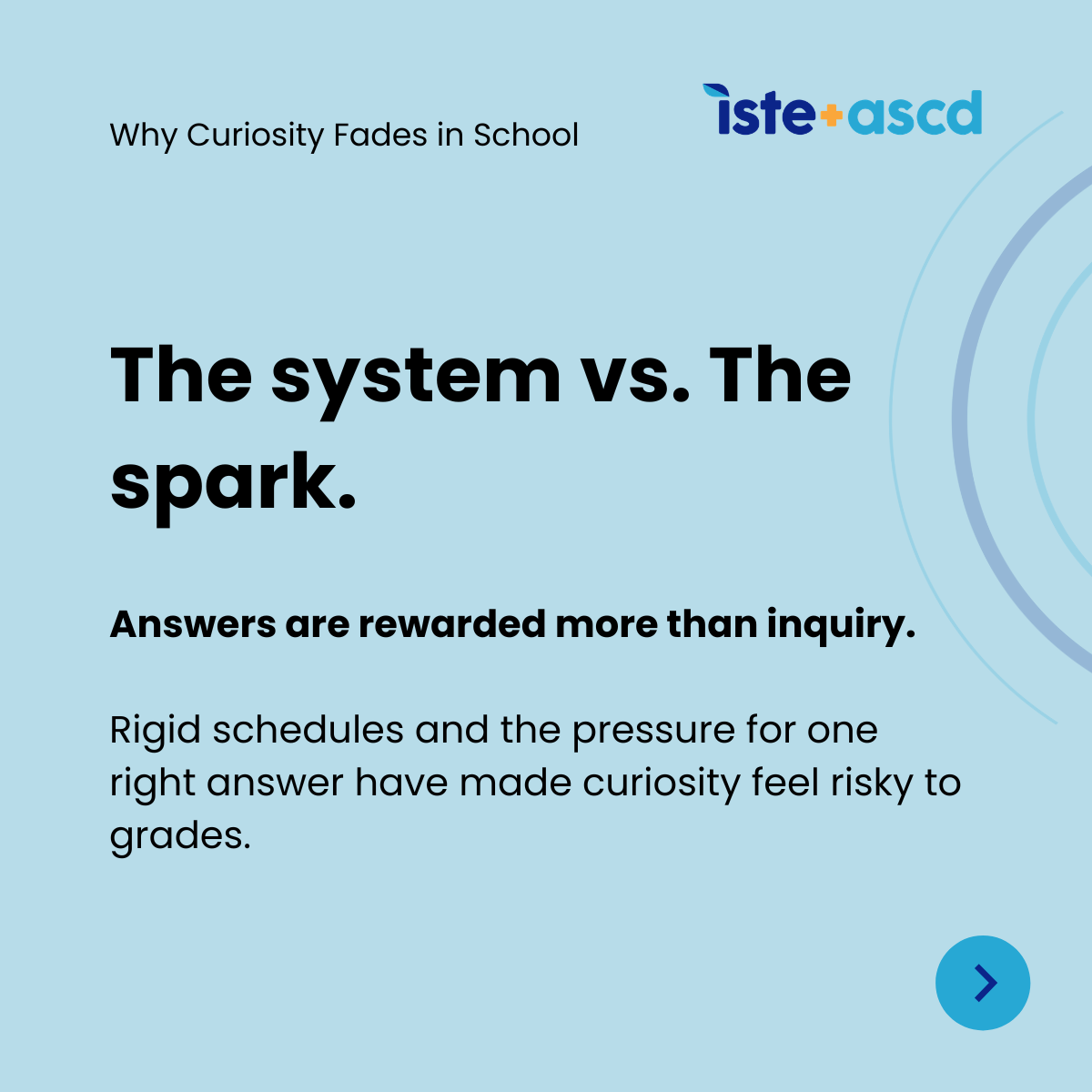
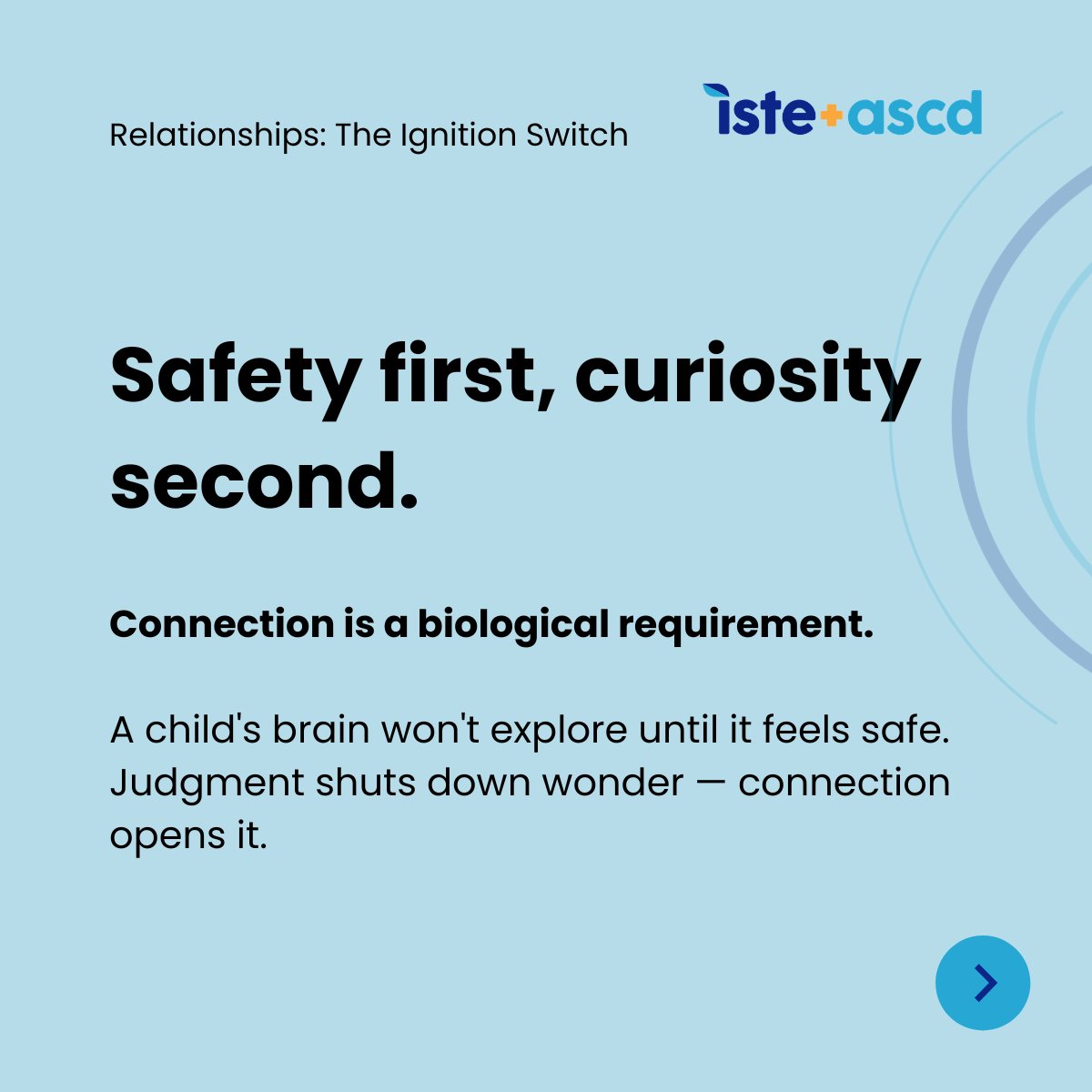
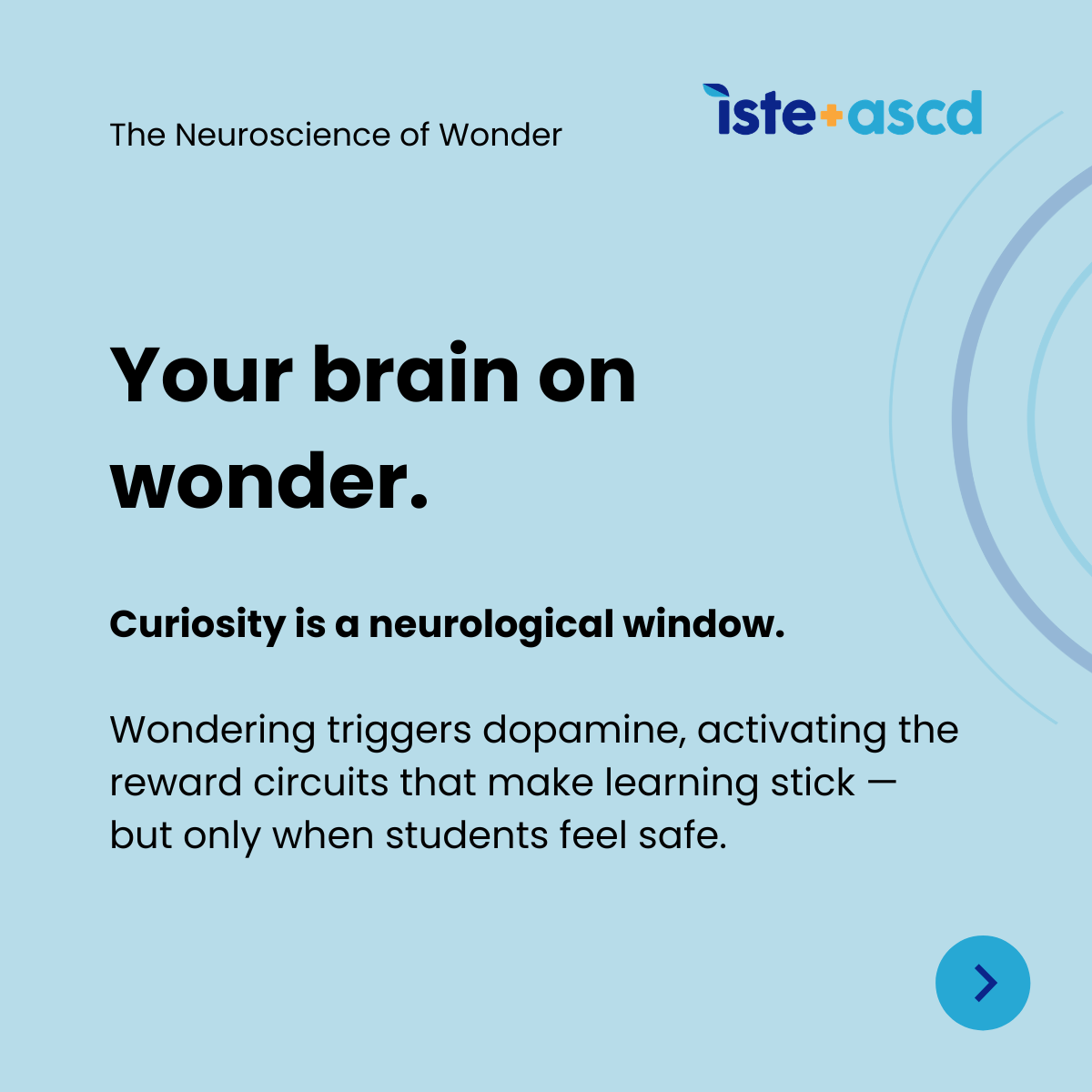
Kindergarteners ask ~26 questions an hour. By middle school, it’s fewer than two. 📉
Curiosity isn't disappearing; the relational conditions that support it are eroding. Isabelle Hau explores how to rebuild "Wonder-Full" classrooms: https://t.co/j0WcUT4KN2 #edchat
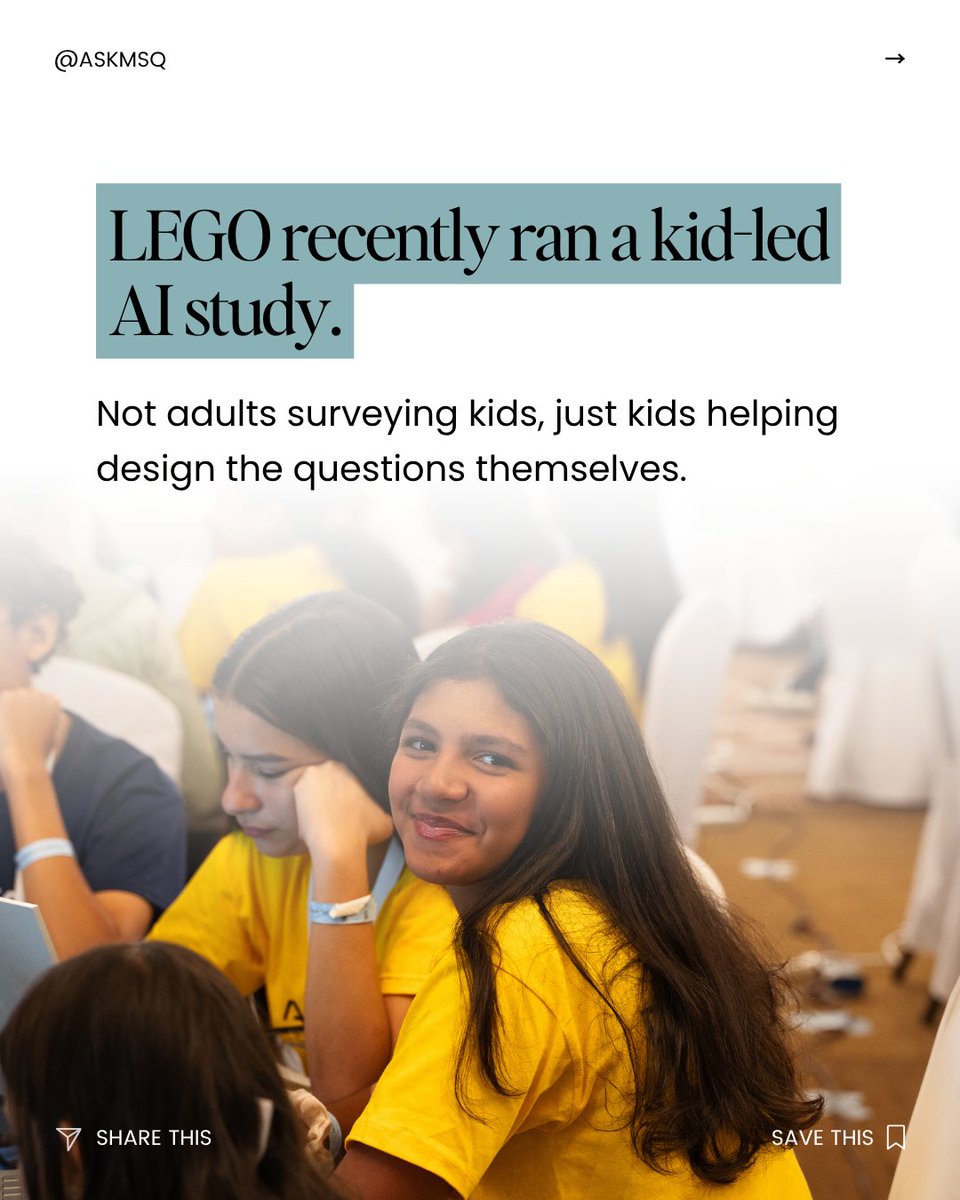
We spend a lot of time wondering whether students are ready for AI. What this LEGO study shows is something encouraging: they already care more than we think. Students aren’t dismissing the risks. They’re asking thoughtful questions, checking information & wanting clear guidance.