Heaviside-1 represents a crucial milestone on our quest to build EM superintelligence.
Try Atlas Fields Studio, now in Beta, to experience a window into Heaviside-1! Start a design, adjust the geometry, and watch the predicted electric and magnetic fields update in milliseconds, magnitudes faster than a commercial solver which can take hours.
Congratulations to the team (@m__frei, @chris_m_bryant, @HaoLiu69889370, @nathanmirman , Tommaso, Roberto, Ruichen, Noah, Boyuan, @Trevs_Dev) on the launch and thank you to our RF experts for their input and testing (@hk2532_harish, @anrfic, @suyangcn and Zhaoji).
Today, we’re excited to unveil Heaviside-1, @arenaphysica's second generation foundation model for electromagnetism. 5 months since the release of Heaviside-0, Heaviside-1 is a crucial milestone on our quest to build EM superintelligence: a foundation model that understands EM across the spectrum, from RF through photonics, capable of designing the next generation of electronics.
Major updates:
- Heaviside-1 is >10x the size of Heaviside-0 (roughly the size of GPT-2), trained on 250k unique designs with >500B unique EM field samples.
- It runs 10^5 x faster than commercial solvers, with accuracy <1 dB.
- Heaviside-1 natively encodes 3D structures, their material properties, and excitation patterns as input.
It predicts full EM fields at arbitrary locations in space, not just downstream quantities like S-parameters.
- Most importantly, our bet on fields lets Heaviside generalize OOD proving that it’s learning real EM physics: Heaviside-1 generalizes outside of distribution very well, leaping from 0.99 dB to 0.53 dB S-parameter error.
Try it out in Atlas Fields Studio in beta today (link in replies). I personally had a lot of fun seeing how EM fields twist and curl around different circuits. I wish I had this when I was learning EM in college. I hope you enjoy it as much as we did.
Today, we're announcing Heaviside, our foundation model for electromagnetism.
Trained on tens of millions of designs and over 20 years of proprietary simulation data, Heaviside predicts electromagnetic behavior from geometry in 13ms, which is 800,000x faster than a commercial solver.
Heaviside is not a language model, and it’s not a surrogate model. Heaviside marks a new class of foundation model for physics which understands the fundamental relationships between materials, the geometries and the electromagnetic fields they generate.
We’re releasing a research preview of Heaviside in Atlas RF Studio, an interactive agentic sandbox where you describe the EM behavior you want and the model generates the physical structure that produces it.
@arenaphysica , we believe the implications of this class of model extend well beyond RF, as the frontier of exquisite hardware is electromagnetically-governed: wireless communication, radar, power delivery, high-speed computing, and the interconnects inside every chip on earth.
In the months ahead, we’re excited to scale up Heaviside to broader frequency ranges, design spaces, and to support silicon-level designs, and deploy it with our closest partners and collaborators in service of their biggest design challenges.
If you’ve read our thesis, this is just Step 2 in our pursuit of electromagnetic superintelligence.
Read the full announcement and try Atlas RF Studio…tell us what you think: https://t.co/oCOsJQvF1h
@MSZeghdar@NatalieFratto@PratapRanade@packyM@arenaphysica Definitely don't want to take away from the innovation and ingenuity in EM over decades. Given the complexity and size of EM design space, we think of this as a part of a human-driven design that lets us explore a large design space than we typically do given time constaints.
@bmgentile@_i_am_arya The post (https://t.co/r8BhHowC8R) shares a lot about the approach and objectives. You can try the design tool here: https://t.co/ghWY0haEmi
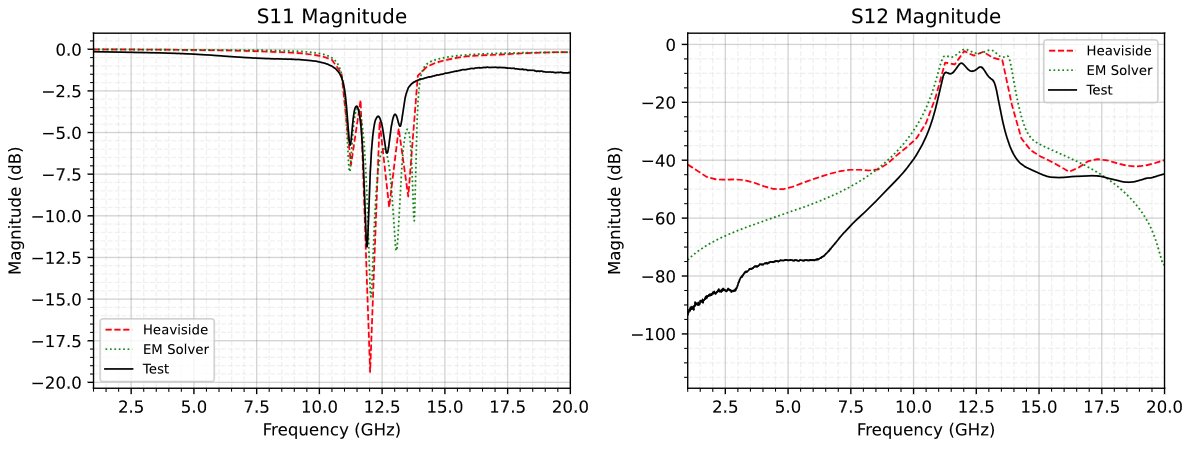
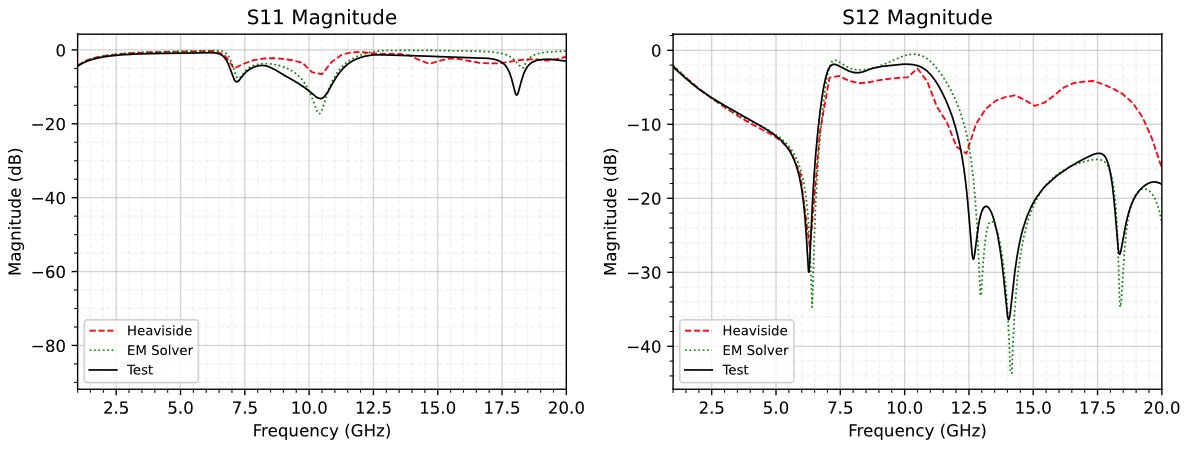
@DavidBGrys@_i_am_arya Here's a plot that compares measured, full EM solver and the model for a couple of examples - one a traditional design and one an unconventional design that achieves a bandpass response as well.
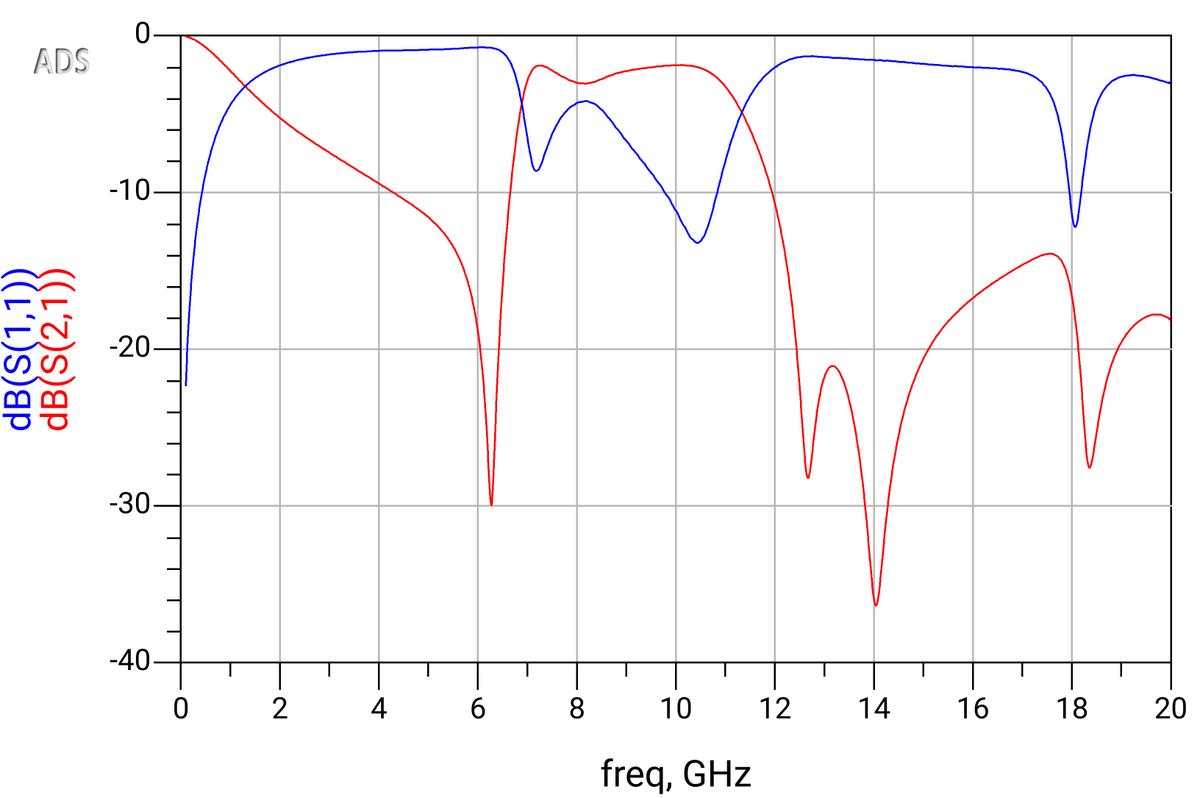
@Macrohard2026 @NatalieFratto@PratapRanade@packyM@arenaphysica Interesting question. Here's the measured response. The sharp filtering is not that easy to design in a small area and the model does it in the order of seconds. These are early stages in this design process - interesting to see how the design process and the design evolves.
@0x440x46@NatalieFratto@PratapRanade@packyM@arenaphysica It can potentially be smaller for a given performance spec since it uses unconventional geometry - but like @PratapRanade said, it'll be interesting to see what it can achieve long term. We've only explored a small fraction of the design space.
@FrostForger@NatalieFratto@PratapRanade@packyM@arenaphysica More on the training model here (https://t.co/r8BhHowC8R). Since the model training set includes designs that include randomly generated shapes, it comes up with complex geometries.
@PratapRanade@LTG1455@NatalieFratto@packyM@arenaphysica And the structure generated by the model creates a geometry that we woudn't come up with but it does get a steep roll-off with a sharp transition band from ~6GHz to 7GHz.