How well do the security community's techniques hold up against AI-enabled cyberattacks?
We examined 832 malicious accounts and mapped their activity onto a longstanding database of tactics and techniques used by threat actors.
Here's what we learned:https://t.co/fgOqJRh2rx
This Executive Order is an important step in strengthening America’s leadership in AI.
We look forward to collaborating with the White House to support its implementation.
https://t.co/ZwDimPrp3t
We’re expanding Project Glasswing. We’ve extended access to Claude Mythos Preview to approximately 150 additional organizations, based in more than fifteen countries.
Read more about this expansion and our future plans for Project Glasswing: https://t.co/QrtHSBdRbh
Anthropic has confidentially submitted a draft S-1 registration statement to the Securities and Exchange Commission.
Pending completion of SEC review, this gives us the option to pursue an initial public offering.
Read more: https://t.co/onGZAhRLvD
Before we ship a new model, these teams try to break it.
They build with it, push it to its limits, and tell us where it falls short. What they find makes the final model better.
Earlier this month, our run-rate revenue crossed $47 billion.
This growth has been driven by organizations across many industries deploying Claude in their core operations, and by a growing number of people using it for their everyday work.
Read more: https://t.co/V1fdqOxQdY
We've raised $65 billion in Series H funding at a $965 billion post-money valuation, led by @AltimeterCap, Dragoneer, @Greenoaks, and @sequoia.
This investment will help us advance our research and expand our capacity to meet growing demand for Claude.
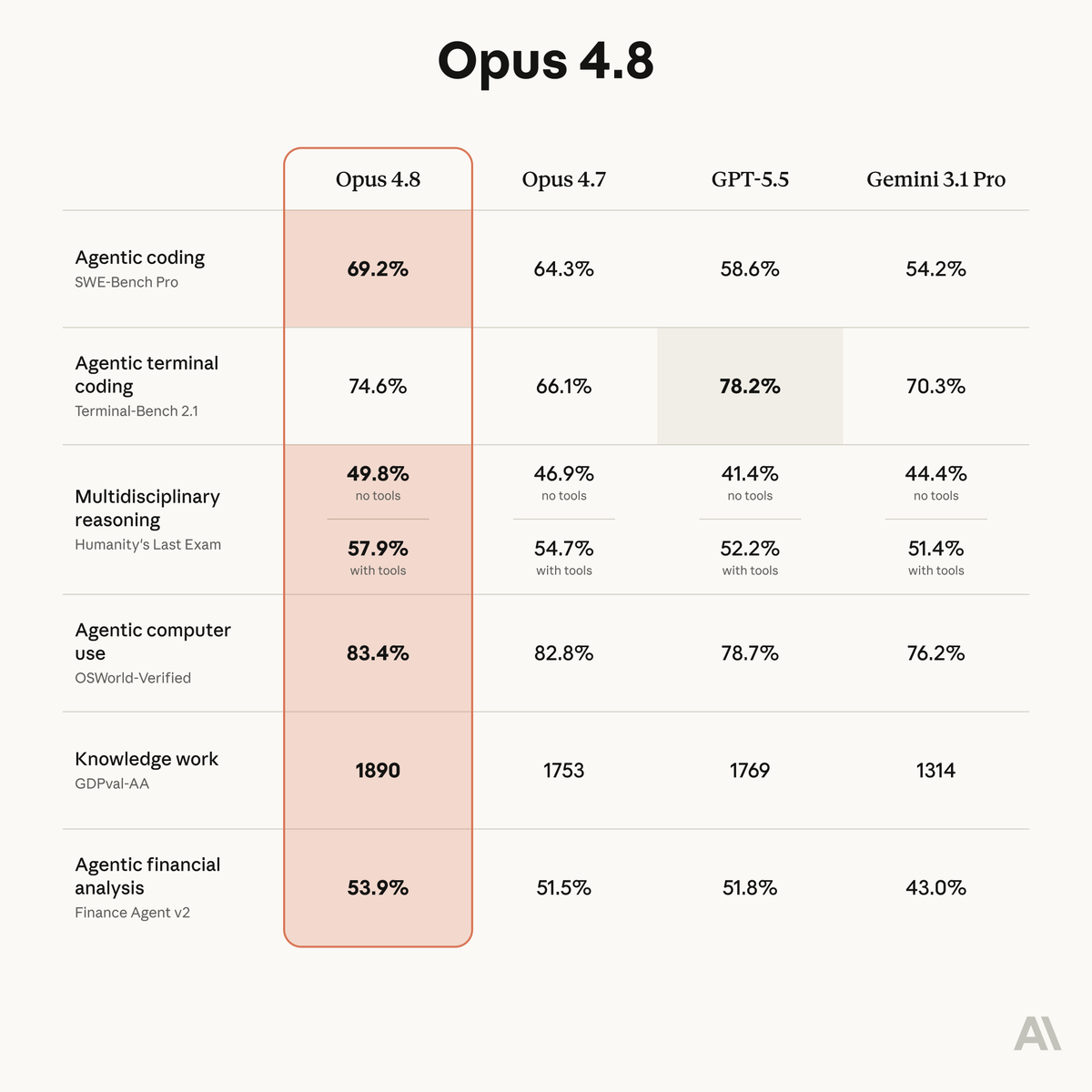
Introducing Claude Opus 4.8: it builds on Opus 4.7 with sharper judgment, more honesty about its own progress, and the ability to work independently for longer than its predecessors.
Available today at the same price.
New on the Engineering Blog: The access and permissions we grant agents should evolve with their capabilities. In our own products, we set these parameters through sandboxing, which limits the scope of any potentially destructive actions.
Read more: https://t.co/KfBKW8O9kP
Anthropic co-founder Chris Olah was invited to speak at today's presentation of Pope Leo XIV's encyclical "Magnifica humanitas."
Read the full text of his remarks: https://t.co/CoBfkVOVcy
Patching these vulnerabilities will make us safer. But the software industry will need to adapt to the volume of vulnerabilities that models like Claude Mythos Preview will be able to find.
We discuss this in our initial update on Project Glasswing: https://t.co/3cSgHHZXgG
Last month we launched Project Glasswing, our collaborative AI cybersecurity initiative. Since then, we and our partners have found more than ten thousand high- or critical-severity vulnerabilities in essential software.
Over the past few months, we've been holding dialogues with scholars, philosophers, clergy, and ethicists on the questions AI raises—starting with how good character forms.
Read more about how we’re widening the conversation on frontier AI: https://t.co/vKGiODEq6q
Anthropic is acquiring @stainlessapi, an SDK and MCP server platform that has powered every Anthropic SDK since the earliest days of our API.
Read more: https://t.co/ZQbsZKnicv
We've published a paper that explains our views on AI competition between the US and China.
The US and democratic allies hold the lead in frontier AI today. Read more on what it’ll take to keep that lead: https://t.co/TgJBeodWYK
We’re partnering with the Gates Foundation, committing $200 million in grants, Claude credits, and technical support to programs in global health, life sciences, education, agriculture, and economic mobility.
Read more: https://t.co/eqCrLKtNCq
Claude's Constitution is now an audiobook, read by two of its authors, Amanda Askell and Joe Carlsmith.
It includes a Q&A on the writing process, the philosophies that shaped the document, and how it might change as models become more capable.
Listen at https://t.co/dKMfpeOblm
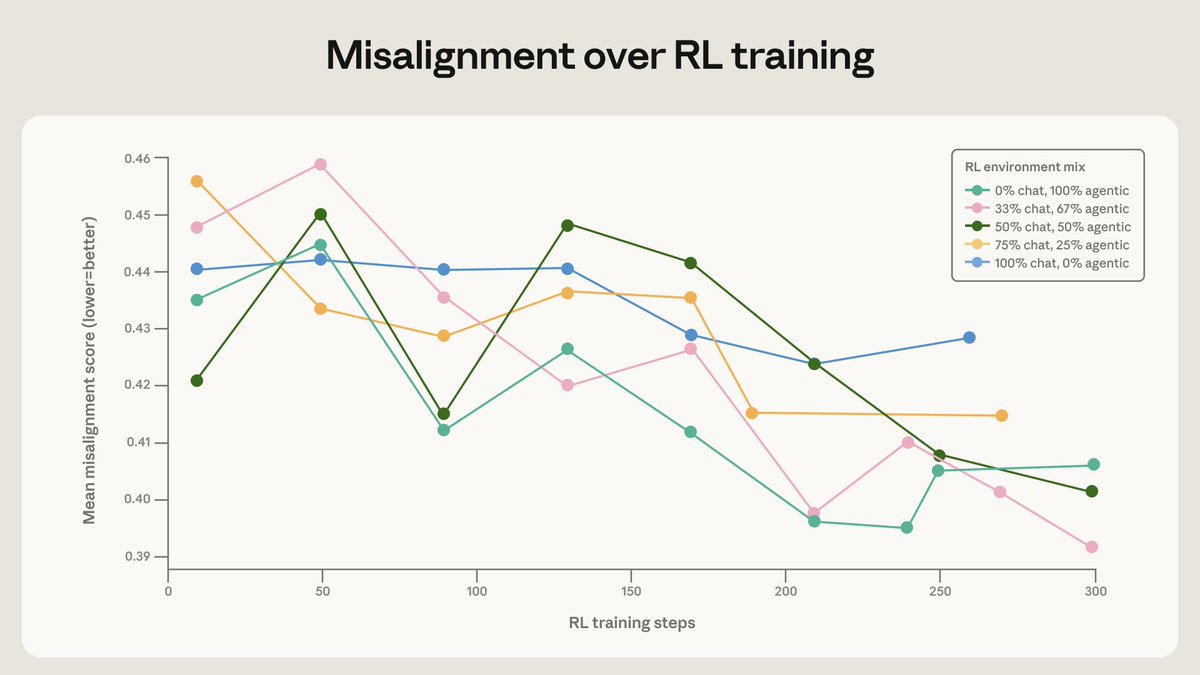
New Anthropic research: Teaching Claude why.
Last year we reported that, under certain experimental conditions, Claude 4 would blackmail users.
Since then, we’ve completely eliminated this behavior. How?
Finally, simple updates that diversify a model’s training data can make a difference. We added unrelated tools and system prompts to a simple chat dataset targeting harmlessness, and this reduced the blackmail rate faster.