We're seeking postdocs with a background in chemical biology, especially synthesis and screening. RNA expertise is a plus, but we'll train you! We Offer.
Dynamic team environment; Opportunities to broaden your horizons in RNA biology. Part of a new RNA Center. [email protected]
@MBTA What’s happening when train goes from central to Harvard square with a turtle speed? And stops often? New slow zone? It’s worse this part every day @MBTA
TULIP International Summer School 2025
"Biological interactions from genes to ecosystems"
🗓️ From June 21 to 27
🏔️at Germ, French Pyrénées
Registration OPEN ✅
https://t.co/xdVTd9oh6F
Open to PhD students, masters students and postdocs.
> dim(d0)
[1] 16284 5
> cutoff <- 1
> drop <- which(apply(cpm(d0), 1, max) < cutoff)
> length(drop)
[1] 0
> d <- d0[-drop,]
> dim(d)
[1] 0 5
... and it continues like nothing happened. That's all I wanted to know about R
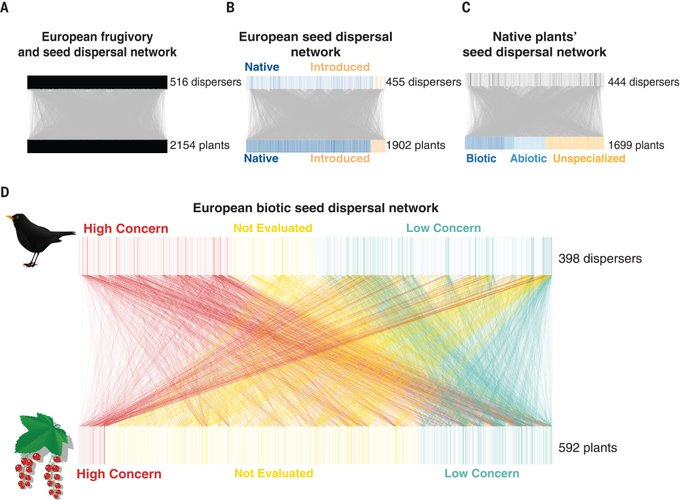
Europe is facing a seed dispersal “crisis,” due to extinction threats and population changes among the animals that do the seed dispersing, according to a new study in Science.
Learn more👉https://t.co/DSy2G0L44g
via @ScienceMagazine
Amazing work from first author and recent IBB graduate @anlozovska along with @IGCiencia PhD student @ArtemisKorovesi and alumnus @_andre_Dias_. They discover how Tgfbr1 regulates the developmental plasticity of hindlimb/genitalia development in mice! 🐁 🧬 Congratulations team!
It's a pity that it was retracted (and so fast). 1) Calls for "retraction" justify Frontiers as a scientific publisher, not just an internet blog. 2) If it's a scientific matter, it's good for history to have on record. 3) wanna see more commenters jealous of the rat's dick size
In #academia, publishing for the sake of publishing makes you a noise generator.
How does it work?
Quite simply:
- When you’re a strong scientist, people follow your publications and research.
- The deeper your studies are, the less you publish. Then, your research is more interesting and easy to follow.
- However, if you publish a lot of shallow studies, others don’t see so much value in it. Boring research pushes experts AWAY.
- With a lot of papers, you feel like you’re getting a bigger audience. BUT in fact the quality of this audience drops. The experts will find better scientists to follow.
▫️
In social media, one can notice a similar effect:
- Posting just because you “have to post something once a day” makes you a noise generator.
- Yes, more posts expose you to a bigger audience.
- BUT this “noise” makes high-level professionals wanting to “unfollow” you
(no time to read low-quality posts)
- In the end, the quality of your audience drops. Reclaiming back the professional audience is a lot harder than being careful with what you post/publish.
▫️
My point is:
Don't publish for the sake of publishing.
Only publish to move science forward.
Quality over quantity. Even if everyone pushes you into the opposite direction.
#AcademicTwitter #AcademicChatter
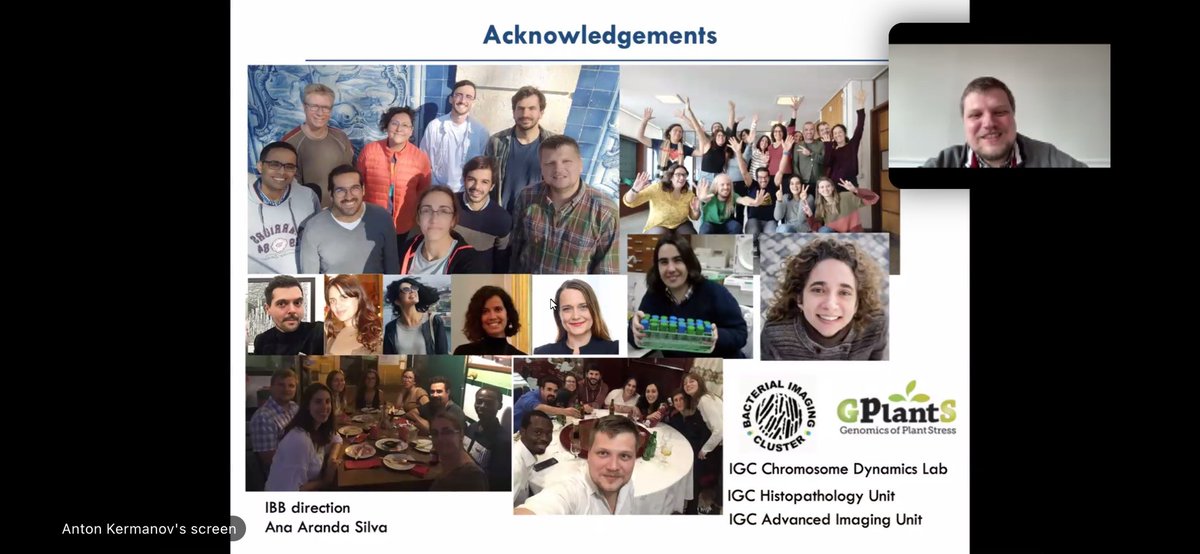
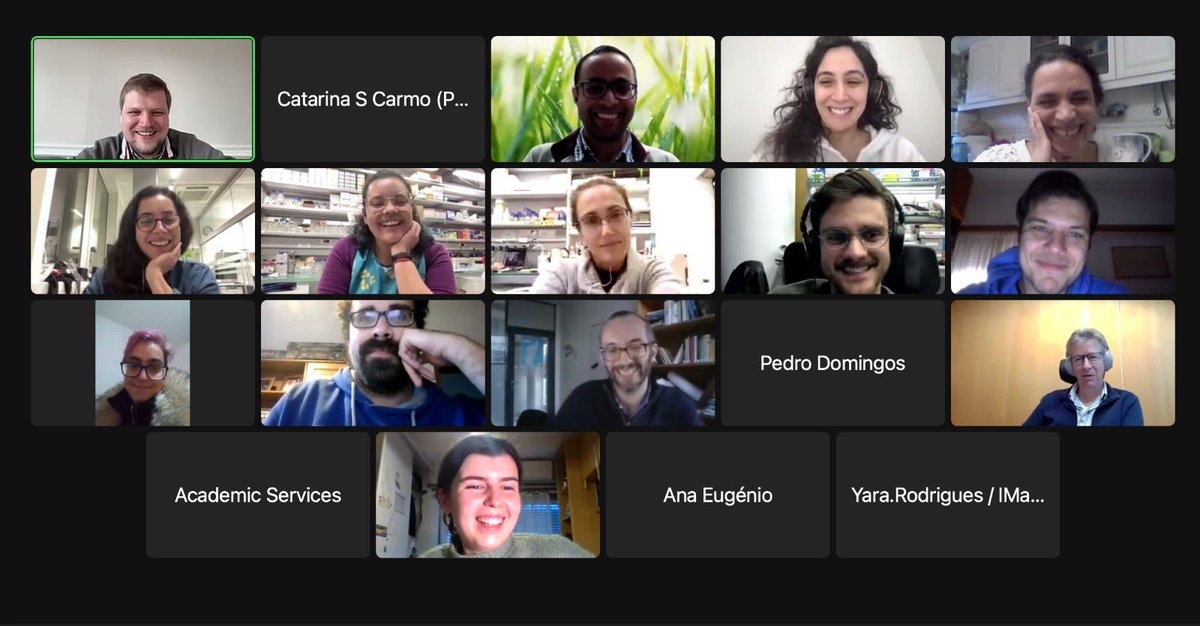
Congratulations Dr. Kermanov! 🍾👏
@anton_kermanov defended his PhD thesis excellently yesterday. Best of luck with your future endeavours Anton, you will be missed dearly by the PhD community! ✨🍀
#ibb#gulbenkian#science
Fear of retaliation in academia goes well beyond our workplace.
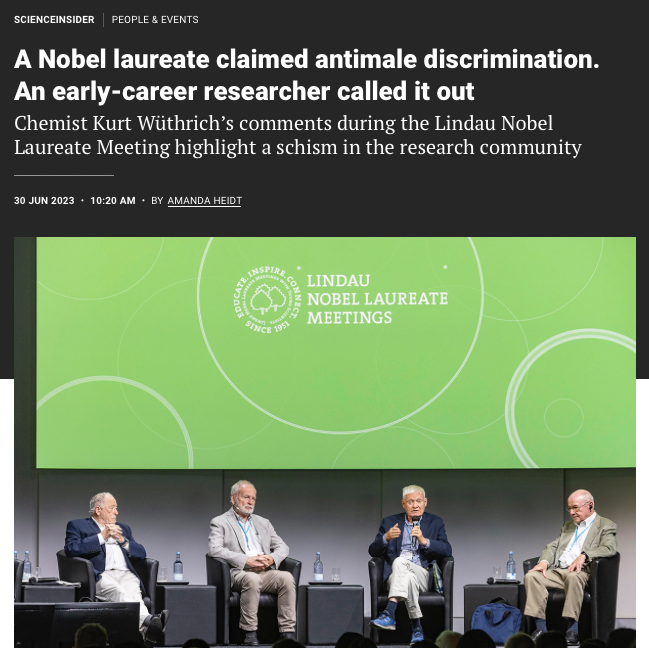
During the Lindau meeting, Kurt Wüthrich (Nobel prize for NMR) argued against the meeting’s focus on diversity and even mentioned that discrimination against men is real. Here, I would just cite the statistics that says it all: only 60 women become Nobel Laureates, compared to 892 men.
Now, I want to draw your attention how Science describes a comment from one researcher:
- Another attendee who asked not to be identified over FEAR of damaging his career, tells Science he looked forward to the meeting for the peer networking opportunities: "I also want to learn some life lessons from these excellent laureates about navigating a research career and how to be a responsible scientist. We’re not discriminating against white men — we’re criticizing the system, but they take it very personally.”
As you see, this attendee didn’t say anything that can damage his career.
He didn’t say anything bad about his advisors, funding agencies, department, etc.
He just said he is against the system that doesn’t help women in #science become equally represented.
And yet there is fear. Real fear of getting retaliated against.
Unfortunately, this dark side of academia is so common that many people think it’s a norm.
This is not about one specific researcher. This is about all of us, the scientists and educators:
Academia is a place where people are afraid of saying any statement in public that someone may find questionable or system-damaging. Even one on one, VERY few people are ready to discuss issues in academia.
Scientists are not afraid to discuss science! But we become paralyzed when the topic is about academic environment.
There is a tiny faction of researchers who are not afraid.
Yet the vast majority stay in total silence. Many seem afraid of their own shadow.
Please, BE brave!
Don't just focus on your own research in your labs. Take a stand.
Remember, your words hold power. They help reshape the system.
#AcademicChatter #AcademicTwitter
Recently I met a big recruitment manager from a well known corporation.
He told me in a non-appealing tone that:
- They mostly hire fresh BS / MS graduates
- In some cases they hire PhD graduates (but it’s not preferred)
- In almost no cases do they hire people with postdoc experience
- beyond postdoc: forget about getting hired there
They compile short lists using keywords. You don’t have enough number of skills in your CV…? Bye bye.
If your background is a bit off-topic, you will be ignored. Even if you are a great professional.
Why? They don’t want to wait for you to learn a new skill (even if it takes some weeks). They don’t want to spend resources on educating new hires even if they are outstanding professionals.
At first, I was surprised. The reply sounded arrogant and lacking respect for candidates.
But then I thought that, in academia, most PIs are just like this.
Rarely would they hire you because you’re a great problem solver and can think deeply and analytically.
Normally, they would hire you for a PhD and postdoc position because you have relevant skills and experience. (even for a PhD opening - I heard it so many times!)
My message is:
1. While in academia, invest into your skills! DIVERSIFY your skillset and expertise. Ask your advisor to help you get access to spectrometers, microscopes, chemical synthesis, clean rooms, etc. Join your group members and friends for synchrotron beamtime. Get as much hands-on experience as possible, even if it’s not that deep.
2. DO programming. As much as your free time allows for it. For example, explore how you can process your data using Python. Download open-access datasets, learn how to do machine learning. This can be a huge plus in the future.
Sticking to a very narrow skillset can hugely damage your career opportunities.
Diversity your CV.
#AcademicTwitter #phdlife #research