In Uttar Pradesh's Sambhal, Dalit children were made to wear Islamic caps, and Muslim teachers pressured them to learn Namaz.
In a village with an 80% Muslim population, Dalit Hindus fear speaking out.
How was a religious agenda being run in a government-funded school? Watch @Keshavmalan93's ground report.
From North Carolina to Bastar: Exposing the US-Funded 'House Church' Syndicate.
Forget multi-level marketing for soaps and shampoos, welcome to the world's most lucrative 'Christian MLM' network, where saving souls comes with a foreign commission structure.
ED raids reveal how 'House Churches' were weaponized to launder foreign funds and stoke anti-establishment sentiment in tribal belts. @RitikaChandola
Decades before the UK grooming scandal, India suffered the 1992 Ajmer grooming and mass rape horror. Journalists and politicians hushed it up for fear of being branded Islamophobic. Children who were raped still do the rounds of courts to get justice. As grandmothers.
My views:
Bengaluru is paying the price for Congress' contractor-driven, car-centric urban planning.
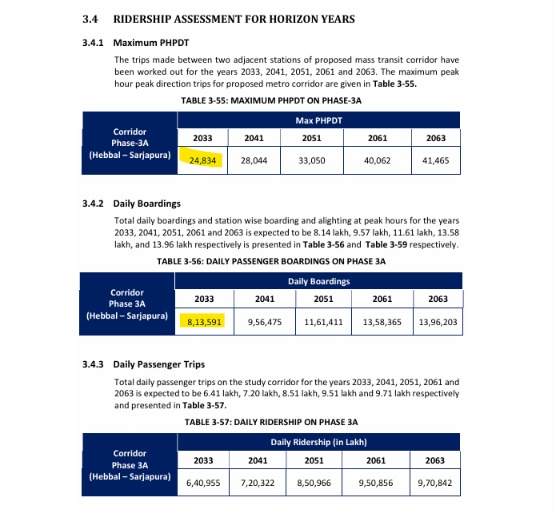
BMRCL has dropped the Veterinary College station from Phase 3A of the Red Line, citing "low ridership." Their own DPR proves otherwise. The veterinary college is removed to accommodate the Short Tunnel Project - a clearly unplanned and ill considered move.
The DPR projects 18,303 daily boardings at Veterinary College by 2031 - higher than several proposed stations and even higher than Sarjapura, the line's originating station. First planned as an underground station, then converted to elevated, and now removed altogether - all to accommodate the Short Tunnel Road project. The DPR further projects peak demand of 24,000 passengers per hour per direction by 2033, with over 8 lakh daily commuters expected on the corridor. In contrast, the proposed car-only tunnel is designed for just 6,500 vehicles per direction.
The escalating cost of the project is a result of construction delays and the loss of nearly two years due to confusion created by the tunnel road proposal. Now, instead of taking responsibility for these delays, BMRCL is using them as a justification to remove the Veterinary College station.
A station for thousands removed to accommodate a tunnel for perpetuating car dependency. This is not urban planning; it's contractor-driven governance.
Empowering BMLTA is the key to making sound urban mobility decisions.
Bengaluru deserves better. Urge the new Bengaluru Development Minister @krishnabgowda to take decisions in the interest of citizens.
6 km a year.
That’s about 0.5 km a month.
For a city that has waited over a decade to build a world-class metro network, those numbers should concern everyone.
At this pace, cities like Kochi and Nagpur could eventually outpace Bengaluru in network expansion despite starting much later.
Meanwhile, Chennai Metro continues to impress with its pace of execution and innovation, second only to Delhi Metro in our view.
Hopefully the new minister takes note and asks some tough questions of @OfficialBMRCL.
More via @ChristinMP_ & @chandrarsrikant at @moneycontrolcom
Spine always grows in the back that is against the wall. America denied us crucial LOX/LH₂ cryogenic engine technology. We developed it indigenously and using it we now send American satellites into space.
India can remain sovereign only if it has a sovereign AI. @narendramodi
Chief Ministers have come and gone, but in all my years I have never witnessed this kind of pent-up rage as is now directed at Mamata Banerjee and her nephew.
What they ran was a grotesque hybrid of mafia and gulag.
And the greater shame? The complicity of the media, the educated class, and the so-called elite. They enabled it. They rationalised it. They helped crush dissent.
The vulnerable were extorted. Political opponents, especially those who supported the BJP were hounded, brutalised, and silenced through unspeakable acts. It is unforgivable.
What we are seeing today: eggs thrown, heads tonsured, white sarees draped in chilling symbolism is still a fraction of what Bengal endured.
And yet, the old Indian instinct will be to ‘move on.’
That instinct has cost us dearly before. History is witness: suppressed anger does not dissipate, it ferments.
There must be, there should be consequences.
By law, first and foremost.
But ‘moving on’ is certainly not an option.
Friends,
Do you want to know what change the presence of @narendramodi in New Delhi has made in media circle in last 4400 days?
My young journalist friend who covers @INCIndia.
She admires @priyankagandhi.
When one meets her it’s visible she believes in ethos of Congress while reporting it.
She comes from humble background, has faced terrible hardships to settle down in Delhi.
It took 20 plus years to carve a career as a reporter as she knows only Hindi.
She had once shared how difficult it was to cover Congress during the UPA regime without knowing English as most senior ministers spoke only English.
Last week, we were discussing ‘the Modi Raj’ and PM overtaking Nehru’s tenure.
During our conversation on the strengths and weaknesses of the Modi government she said something profound.
‘ Ab Delhi main Hindi bolne se jijhak nahi hoti! Bahut bada farq hai.’
(Now, there is no hesitation in speaking Hindi in Delhi. It’s a big change.)
In 2012 it was considered meek to ask a question in Hindi in @MEABharat press conferences.
Now, @DrSJaishankar to @MEAIndia responds in fluent Hindi if asked question in Hindi.
Since last many years, the reporters and editors of English media have been enjoying correcting desi pronunciations of Hindi, Telugu, Tamil, Malayalam, Bengali or Kannada speaking journalists in full public view.
But, their fun has gone, now.
I think, by plan @narendramodi and @AmitShah speak in Hindi.
Recently, at @BJP4India event, when journalists asked questions in English Shah responded in Hindi.
For millions of non-English speaking Indians this is a fantastic thing to happen.
First time since days of Nehru someone who has total grip on levers of power and has been governing India for more than a decade is not an English speaking Indian.
Those of us who have only working knowledge of English loving this change.
This notification is one of the most important fuel documents of the decade.
Let me explain what just happened.
The government charges a tax called excise duty on petrol. This paper says petrol mixed with 22%, 25%, 27% or 30% ethanol will pay zero excise duty.
Zero tax is the government's way of telling oil companies, start blending more ethanol, we will make it worth your investment.
This was coming.
On May 15, the Bureau of Indian Standards quietly notified IS 19850:2026, the official specification for E22, E25, E27 and E30 petrol. So they have mentioned the standard, and then the tax exemption.
But why is the government in such a hurry?
Three reasons;
Reason 1
The programme has been a genuine success on its own terms. India hit 20% blending in 2025, five years ahead of the original 2030 timeline.
Twenty years ago we could barely manage 5%. Crude imports fell, foreign exchange was saved, and over ₹1.18 lakh crore has gone to farmers through ethanol purchases.
For a country that imports most of its oil, every litre of ethanol is a litre of crude oil we did not buy from abroad, making us self-sufficient in our crude oil needs.
Reason 2
There is a supply glut because distilleries went on an expansion spree. India's installed ethanol capacity is close to 20 billion litres a year, with 4 billion more coming, while E20 needs only about 11 to 12 billion litres.
So we have built double the capacity we need. Those plants took loans. They need buyers. The only buyer big enough is the petrol pump.
E20 cannot absorb the supply, so the blend has to go up. The push to E30 is partly climate policy and partly capacity bailout.
Reason 3
Maize has now overtaken sugarcane as the biggest ethanol feedstock, supplying nearly half of all ethanol. The farm lobby behind this programme is now two crops.
But all of this has come at a cost;
When E20 rolled out, regular car owners paid the cost.
A government-funded study by ARAI and Indian Oil found fuel economy dropping up to 6% on E20 depending on the vehicle.
Owners of older cars reported worse.
So even though ethanol is cheaper than petrol. The blending saved money only for oil companies. The pump price you paid did not fall.
On top of that, you got no choice. Most pumps stopped offering plain petrol or E10.
E27 and E30 raise the same questions, with higher stakes. Cars sold in India were made E20-compatible only from around 2023.
There are crores of vehicles on the road before that were never designed for 27 or 30% ethanol. The industry's own target is E30 rollout between 2028 and 2030, which means a huge chunk of today's fleet will still be running when the new fuel arrives.
Brazil is the comparison everyone uses, and it is worth understanding properly.
Brazil runs E27 with nearly universal flex-fuel vehicles. Their cars were built for it over decades. The fuel and the fleet moved together.
So, we are moving the fuel first and hoping the fleet catches up.
So in nutshell, the notification tells oil companies and distilleries to blend more, and it says nothing to the car owners.
Three questions deserve clear answers before E27 petrol shows up at our neighbourhood pump.
1. Will pump prices actually fall this time, since both the ethanol and now the tax are cheaper? Will the zero excise duty gain disappear into oil company margins again?
2. Will older vehicles get a protected option, a pump that still sells E10 or E20 for cars that cannot handle more blending?
3. And will mileage loss be communicated honestly, with numbers, instead of being discovered by drivers at the fuel station?
The ethanol programme is one of the few Indian policies that has been implemented at a break neck pace.
Farmers have earned, imports have fallen, and an entire industry has been built in a decade. That deserves credit.
But going from E10 to E20 strained the system. Going from E20 to E30 with an unprepared vehicle fleet will most likely break it.
30 crore vehicle owners are waiting for answers.
Beyond Bengaluru, was a vision of BJP's Bommai Govt to provide jobs for people closer to their homes.
In 2020 : 48 projects implemented
In 2021 & 2022 : 42 each
Govt changes, Congress enters,
In 2023 : Falls to 15
In 2024 : Further tumbles to 3
In 2025 : We have touched 1
THE PUBLIC IS IN AN UNFORGIVING MOOD.
Trinamool Congress MP Kalyan Banerjee faced intense heckling at the airport as he stepped out to address the media. A protesting crowd surrounded the leader, aggressively chanting "Chor Chor" (thief, thief) alongside loud slogans of "Jai Shree Ram." The incident triggered brief chaos at the venue as security personnel rushed to safely escort the TMC leader away amid the political tension.
There's a convenient story Indians are told about Chinese industrial dominance:
- Beijing picks sectors to win
- It also picks national champions to support.
- This is how BYD, Huawei and CATL were built.
The lesson, we're told, is to copy this and back India's biggest conglomerates unconditionally.
What if this view is wrong?
- Truth is China's present day national champions were once fringe players on the outside and had to claw their way in.
- Industry policy money wasn't even intended to be directed at them - they earned their way in.
How China's champions actually came up:
- Autos were closed - you couldn't start a private carmaker, you went through the state automakers. Geely and Chery broke the rules and snuck past to set up plants anyway.
- Huawei started in small markets and county-government contracts Cisco and Ericsson ignored
- BYD began with cheap, almost-laughed-at cars
- CATL — a 2011 spinoff from a Hong Kong battery firm, an outsider that became indispensable
The pattern we see:
- big state firms sit at the front of the room, and newcomers can't get in that way
- outsiders slip in through the side door, and the state lets them, as long as they stay loyal
- work insanely hard, don't pick fights with the govt (just ask Jack Ma), and win as the underdog
Where this leaves India:
- Some of our industrial policy is aimed squarely at the big, established players
- The schemes are built for firms large enough to bid: investments in the thousands of crores and the like.
- The firms you'd actually want to catch early can't clear that bar
- Truth is outsiders are also making giant strides - how do we catch them? India's BYD and CATL could be here. Not among the giants!
How do we align industrial policy to allow the "outsiders" a fair chance at govt backing/support to become national champions?
Read this story:
https://t.co/d7eHWiFO2m
Congratulations to Highly Revered Assemblyman & Most Exalted Minister of the Most Serene State of West Bengal the Rt Hon’ble @swapan55 Da. What fun I’m gonna have trolling him over the next 5 years 😈.
Also congrats @ReshmiDG di.
Singing Vande Mataram in full is not “optional,” nor is it a matter of a State casually choosing whether to comply.
The Ministry of Home Affairs guidelines are explicit: whenever Vande Mataram is rendered at official functions, the full official version is to be sung, and all six stanzas are to be played at designated government events. The guidelines further prescribe the occasions on which it must be rendered and the protocol to be followed, including standing in attention.
The argument that Parliament must first pass a law before such protocols become binding on government functions is flawed. Every aspect of governance does not require a separate Act of Parliament. The Union Government routinely issues executive directions, protocols, and administrative instructions governing official ceremonies, state functions, national symbols, and public administration. These flow from the executive authority of the Union under the Constitution.
A State government cannot simply declare a Union protocol governing national observances “optional” because it disagrees with it politically. If every State began selectively deciding which national protocols it would or would not follow, the very idea of uniform national observances would collapse.
Vande Mataram is not a partisan slogan. It is India’s National Song and a foundational symbol of the freedom movement. Treating its prescribed rendition at official functions as a matter of political convenience says more about the insecurities of those objecting to it than about the directive itself.
Starting tomorrow, Supreme court of India is on a six-week summer vacation and will be operating at just 19% of its capacity. There are 53 million cases pending in Indian courts - 93,143 of them are pending in the Supreme Court.
A judge can go on a vacation, a judiciary cannot.
Devasish Acharya, the man who had slapped TMC MP Abhishek Banerjee in 2015, died under mysterious circumstances.
In 2021, he was dropped off at a hospital by some men and was declared dead soon after.
Even today, no one knows who killed him, and his family is still waiting for justice.
OH, GET OVER IT ALREADY!
BREATHKESS FOCUS ON THE "END OF AN ERA" IN KARNATAKA. It's as if an "irreplaceable statesman" is passing the baton on to an "irrepressible administrator"! Sure, it means a lot for Sidda and DKS and the Cong but little (squat) for the public.
HERE’S KARNATAKA UNDER 3 YEARS OF CONGRESS "DOUBLE ENGINE":
+ Rs 5,229 cr cut in infrastructure spending: CAG says welfare guarantees strained finances.
+ Fiscal deficit jumped from ₹46,623 crore to ₹65,522 crore in a year.
+ Borrowings surged to ₹63,000 crore; revenue deficit crossed ₹9,271 crore.
+ Over 3,140 infrastructure projects reportedly left incomplete.
+ More than Rs 30,000 crore in unpaid dues towards contractors remain pending across eight departments. CM Sidda acknowledged this.
+ Delay in local body polls could cost Karnataka nearly ₹6,000 crore annually in grants.
In short it's been an "era" defined by relentless scramble for power, perks and political positioning while administration and development drifted into a virtual paralysis. Hope it "ends".