💻 GeneXus Advanced Lab 🚀
➡️ https://t.co/80ORxO2ttl
Aprende a construir aplicaciones digitales de cualquier complejidad de manera eficiente.
📆 Inicio 09 de marzo
🌐 Online
#CursosGeneXus#LowCode#Developers
INSANE: Meta whistleblowers say WhatsApp private messages can be accessed by the company despite assurances of end-to-end encryption. A lawsuit filed in U.S. court alleges Meta misled billions of users worldwide into believing their chats were fully private.
The latest entrant in the coding-agent-constructed web browsers is here, this one by embedding-shapes, and it's REALLY impressive - 3 days of development, 20,000 lines of Rust, no Cargo dependencies and it renders HTML+CSS extremely well
https://t.co/qBr4ZJDbl6
Few facts are more surprising than that, as of early 2026, Latin America has a lower fertility rate than the U.S., reversing a long-standing historical pattern.
I was therefore very glad to see this morning a truly fascinating paper by Milagros Onofri, Inés Berniell (@InesBerniell), Raquel Fernández (@raquel1fernan), and Azul Menduiña on Latin America’s recent fertility decline at @nberpubs:
Understanding Latin America’s Fertility Decline: Age, Education, and Cohort Dynamics
https://t.co/LxCJnx72Jg
I have not yet had time to fully digest all its findings, but I will be reading it repeatedly over the next few weeks.
From a first reading, here are five key results (which align very well with some of my previous posts here on X):
1️⃣ The decline in period fertility between 2000 and 2022 is driven primarily by reductions in within-group birth rates, rather than by changes in population composition.
2️⃣ The largest contributions to the fertility reduction come from younger and less-educated women.
3️⃣ The decline in completed fertility reflects substantial reductions in the average number of children per woman.
4️⃣ This is driven primarily by lower fertility among mothers, rather than by rising childlessness.
5️⃣ There is currently a negative correlation between female labor force participation and the total fertility rate, suggesting that greater engagement of women in market work is not directly driving the fertility decline.
Findings 2️⃣ and 5️⃣ contradict some of the overfacile explanations one often reads in the media (or in the comments section): the reduction in fertility in Latin America is not concentrated among “liberated,” highly educated women with jobs in the market. Finding 3️⃣ says the observed reduction in fertility is not mainly about timing. Yes, timing matters, but much less so than reductions in completed fertility. Finding 4️⃣ is interesting, and perhaps different from more advanced economies.
My own conjectures (not the authors’!):
1️⃣ Their data end in 2022, since they need to rely on final consolidated sources. Everything I have seen in the provisional data for 2023–2025 fully supports their findings and perhaps even reinforces them.
2️⃣ By looking at the cohort level, I do not see much of a differential effect between cohorts with and without access to cell phones. Instead, I see a constant decline over time.
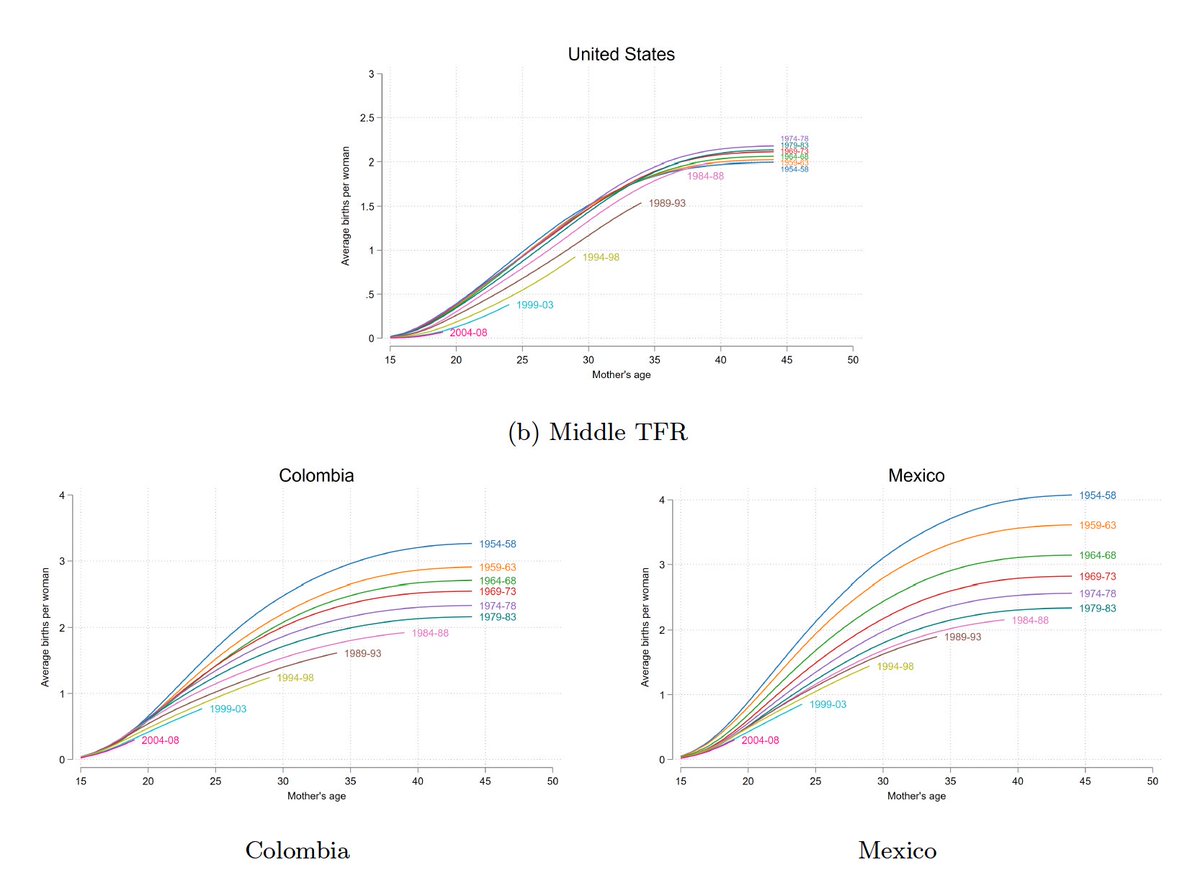
To make this latter point, I include one of the figures from the paper, plotting, for several countries and five-year birth cohorts from 1954–1958 to 2004–2008, the cumulative average number of children a woman has had by each age.
The only point where perhaps I diverge somewhat from the authors is in their more optimistic assessment of the WPP data than mine. But that is a very minor quibble.
Otherwise, anyone interested in Latin America’s fertility should read this paper with utmost attention. This is social science research at its best.
Interesting
CELLULAR AGING BREAKTHROUGH
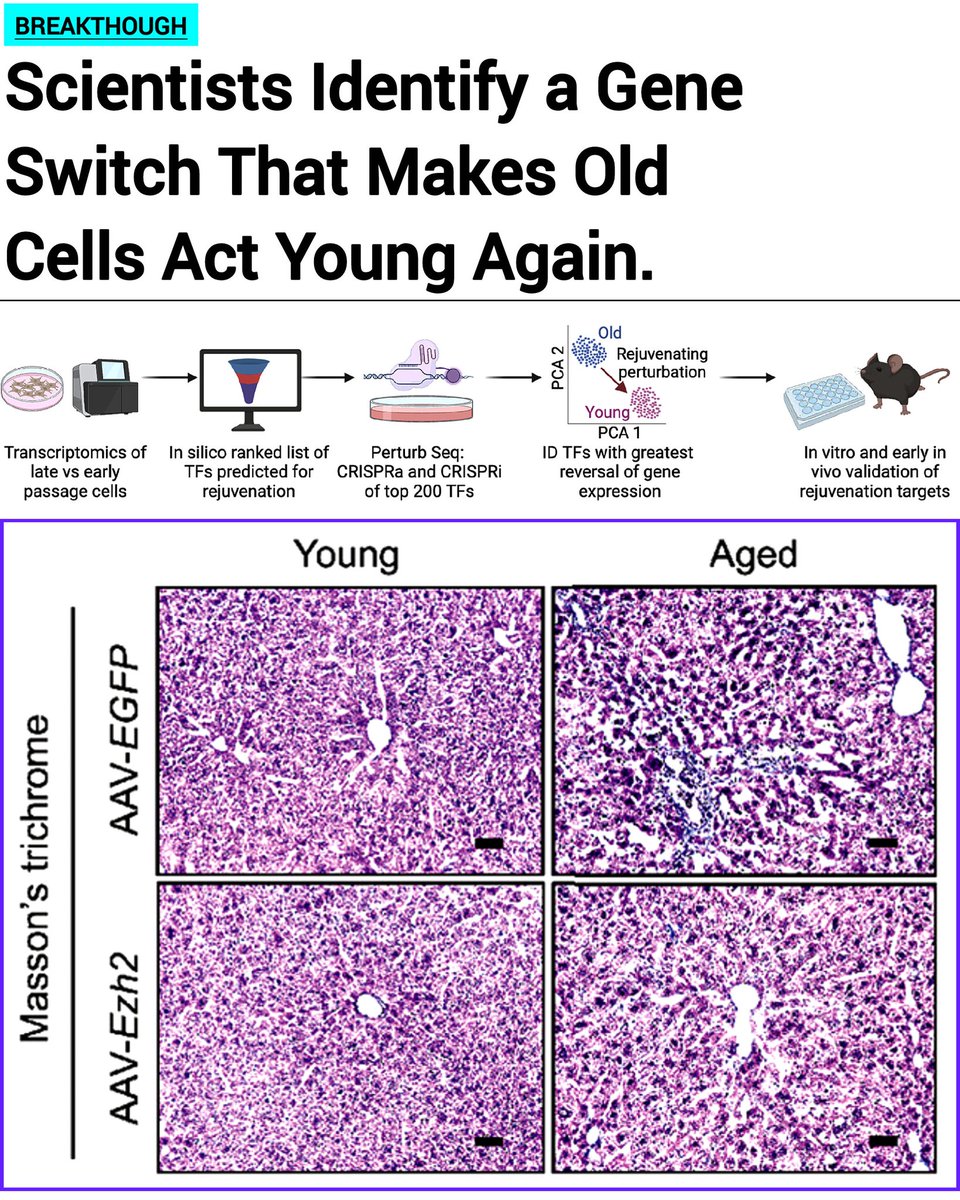
Scientists may have found a molecular blueprint to revive old cells. A new UCSF study identified four key transcription factors, E2F3, EZH2, STAT3, and ZFX, that can push aged cells back into a youthful state.
By reactivating this gene control network, old human cells regained higher energy levels, increased cell division, and younger gene expression patterns. In aged mice, activating one of these factors reduced liver fat and scarring and improved glucose metabolism, making old tissue function more like young tissue.
This discovery suggests aging isn’t just damage, it’s a loss of coordinated gene regulation that may be partially reversible. Instead of replacing cells or turning them into stem cells, this approach hints at resetting cells from within, opening a new path toward therapies focused on extending healthspan, not just lifespan.
RIP Scott Adams
Scott will be missed by a large and wide audience. He was overlooked for his incredible work ethic and was one of the hardest working guys I ever got to know. This went largely unnoticed. When he was at PacTel he was the first person who showed me the Web in 1993. He thought it would be important,
En América Latina, más de dos tercios de los países obtienen menos de 50 puntos en el Índice de Percepción de la Corrupción 2025 de @anticorruption.
Uruguay (76) lidera la región, mientras Venezuela (10) y Nicaragua (14) cierran la lista.
2024 (20) and 2025 (21 so far) are my two highest-earning Platinum Trophy years to date.
I have to say: I owe it all to PlayStation Portal.
The NFL and NHL seasons typically sap my playtime by many hours a week, but now it’s all quite reminiscent of the Vita’s glorious heyday.
ARPANET se diseñó descentralizada para resistir ataques nucleares. Internet podía "enrutarse alrededor del daño" con múltiples puntos de falla.
Hoy esa arquitectura distribuida es apenas historia, explica @valenzine en #RecetaParaElDesastre.
https://t.co/6bAuo9Rz2i