Buenísima pregunta que me lanza @micael_gallego
¿El Spec Driven Development con LLMs se parece un poco a MDE?
Aprovechemos para contestarla con un hilo. 🧵
Respuesta corta: se parece sí y no. :) Vamos a los matices.
Karl Popper on How We Gain Knowledge:
––Karl Popper: "People think, usually, that we acquire knowledge by opening our eyes and our ears and let the sensations stream into us, and they believe then that we record this like a camera. In my opinion, if we wish to get knowledge, we have to have a problem. It has to be knowledge of something.
We have to find out something. We don't have to wait for information to stream into us, but we have to be inquisitive if we want to get knowledge. If we were passive, we would gain a confused mass of sensations or something like that, which we would hardly be able to understand and to convert into what one may call knowledge.
Quite apart from that, perception is not really, in my opinion, the main source of our knowledge. The role of perception is to inform us about a momentary situation in our environment. But we couldn't really interpret our perceptions without knowing much more about our environment, namely, we know whether we are in a house or whether we are in a glacier.
So we have two kinds of knowledge: this wider knowledge of a frame in which we orientate ourselves, and the momentary perception which gives us information about the situation at that particular moment. And it is only this situation in which we can use our perception. So we have theoretical knowledge and, if you like, the momentary practical challenge to our theoretical knowledge.
And here comes perception in."
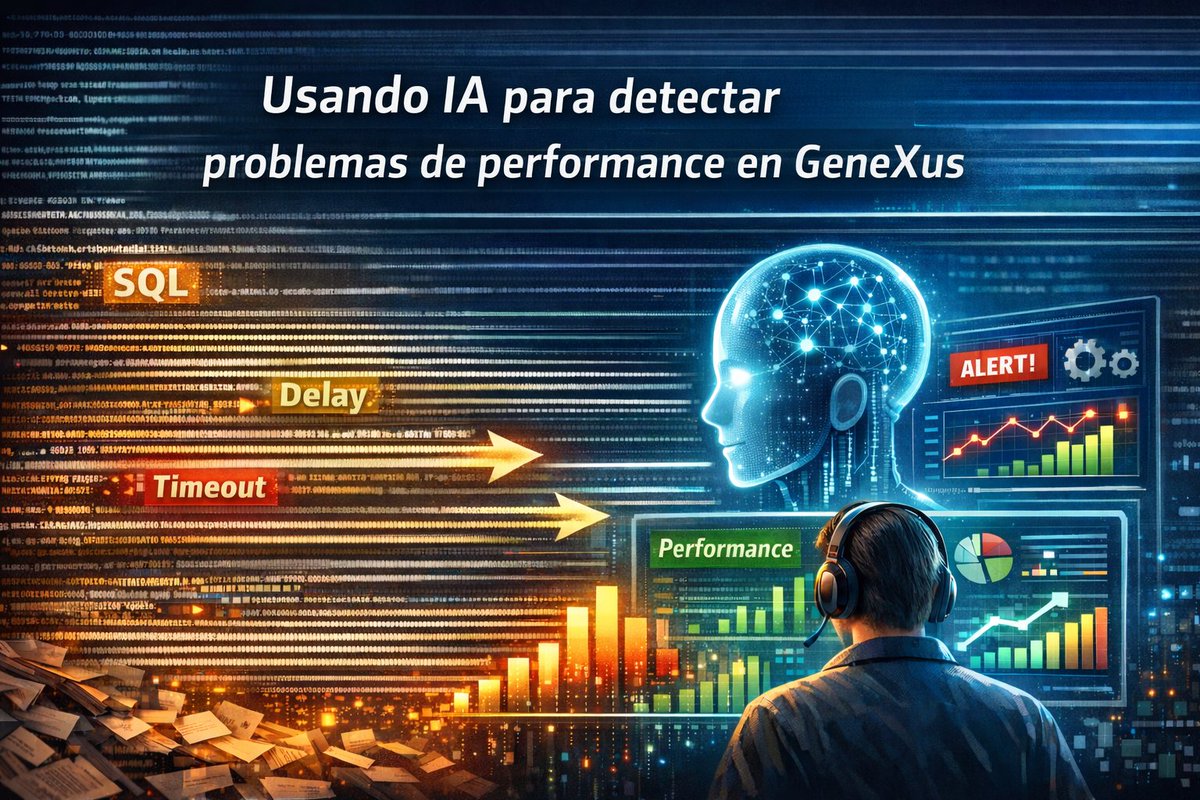
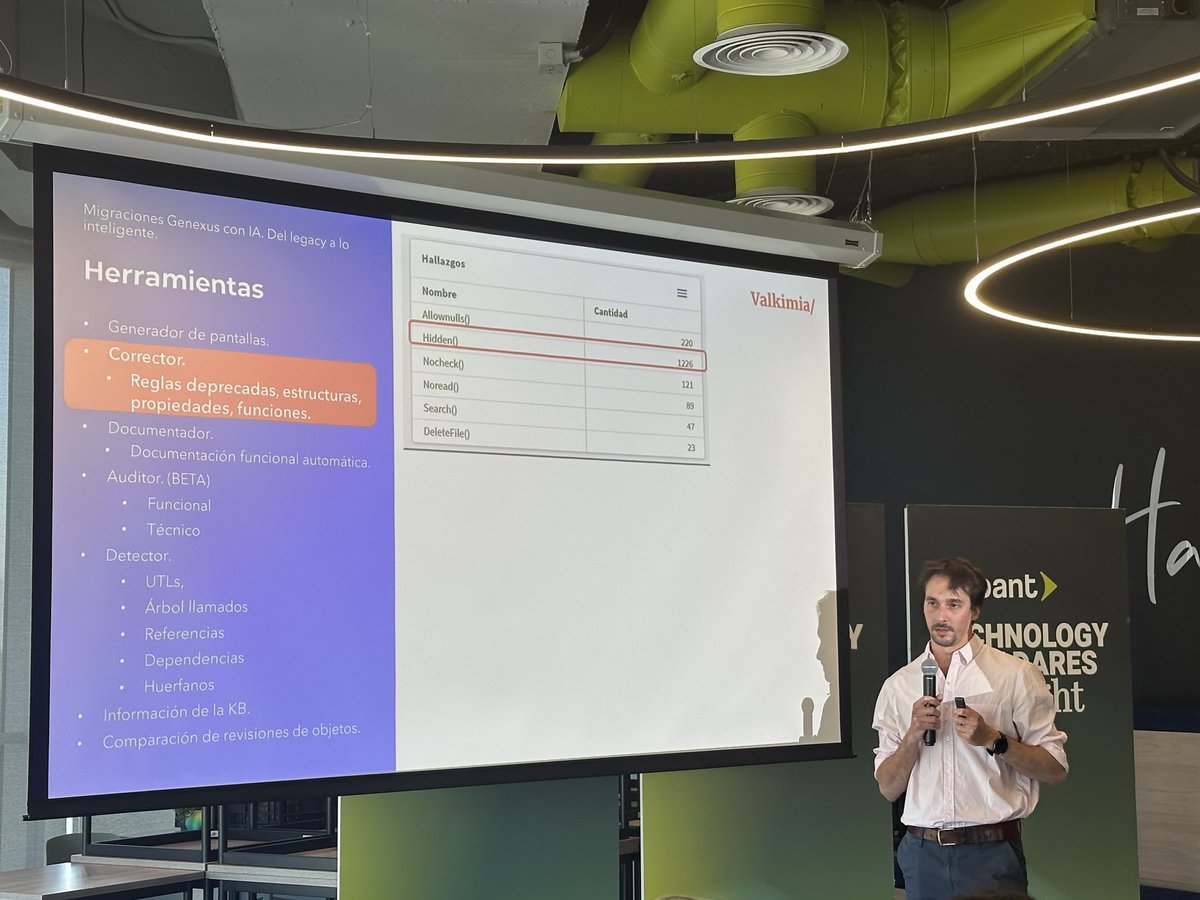
GeneXus News | Introducing GeneXus for Agents: This component, part of the GeneXus Next 2026.01 upgrade, exposes GeneXus as an MCP Server, enabling AI Agents to interact in a controlled and contextualized way with GeneXus Knowledge Base.
See more ➡️ https://t.co/YPXJTp8Rko
Ayer estuve conversando con estudiantes avanzados de ingeniería y licenciatura en sistemas de UDELAR y ORT.
Fue una de esas charlas que, más que responder preguntas, te obliga a repensar qué es lo importante decir.
No porque falte información
sino porque estamos en un momento donde es fácil confundirse sobre qué significa realmente “estar preparado”.
Vi talento, curiosidad, ganas de salir a hacer.
Y al mismo tiempo, una sensación muy presente:
¿ya debería estar trabajando?, ¿qué debería estar aprendiendo?, ¿en qué enfocarme en medio de tanto cambio?
Ahí fue donde me salió una reflexión casi inevitable.
No desde la teoría, sino desde contraste.
Porque cuando yo estudié, el mundo era radicalmente distinto.
No había internet, no había web, no había celulares, no había SaaS.
Ni siquiera había una GUI usable como la de hoy.
Hasta cuarto de facultad no tuve computadora propia.
Programaba en papel. Literal.
Llené cuadernos enteros antes de poder ejecutar una línea.
Y sin embargo, o quizás por eso, aprendimos algo más importante que cualquier tecnología:
aprendimos a aprender.
La universidad, en su esencia, no está para enseñarte herramientas.
Está para darte estructuras mentales.
Matemática.
Probabilidad.
Arquitectura.
Sistemas operativos.
Cómo escribir código, sí —pero como forma de pensar, no como fin.
Ahora, para los que sienten que ya están listos para trabajar:
Tienen razón… pero ojo con interpretar mal qué significa eso.
La industria cada vez va a necesitar menos “coders”
(entendidos como personas que traducen requerimientos a código).
Pero ingeniería nunca fue eso.
Entonces, ¿qué hacer?
Primero: entiendan que el mundo está lleno de problemas.
Y en lo digital, está lleno de problemas mal resueltos.
Segundo: acérquense a esos problemas.
Hablen con la gente. Escuchen. Entiendan el contexto real. Con gente que quizás tienen más cerca de lo que piensan.
Tercero: incorporen lo nuevo, pero con criterio:
•entiendan lo básico de Generative AI
•construyan su primer agente
•comprendan sistemas distribuidos
•lean algo de robótica
•aprendan UX (arquitectura, interacción, visual)
Cuarto: salgan de su burbuja.
Hablen con gente de otras facultades.
Los problemas reales no vienen separados por carreras.
Y quizás lo más importante:
No se enamoren de herramientas.
El ecosistema cambia. Siempre.
Enamórense de problemas.
Después de uno. Después de otro.
Tienen algo que muchos perdemos con el tiempo:
tiempo para explorar.
Úsenlo.
Porque si realmente aprenden a aprender,
esta no va a ser “la revolución de su carrera”.
Va a ser la primera de muchas.
Si llegaste hasta acá , gracias , realmente lo escribí yo y lo formateo y acomodo ChatGPT , espero les sirva. By the way en la Charla si usamos varias cosas de moda Claude, Gemini, OpenAi , SeeDance, Sumo y Eleven, Clawds y otras, pero nada de eso fue la esencia .
At @Globant we have being working around the concept that the next IDE isn’t just a development environment.
It’s a Supervision & Ideation Environment.
And this isn’t a random intuition, it stands on theories that we unified in a completly new way of creating software.
From Bret Victor’s Ladder of Abstraction, we inherit the idea that thinking moves up (generalizing) and down (specifying).
From Sweller & Kalyuga’s Cognitive Load Theory, we learn that structured representations reduce cognitive overload.
From Newell and Minsky, we understand cognition as a society of cooperating agents.
From Harnad’s Symbol Grounding Problem and the Semantic Web, we inherit the need to make meaning explicit and computable.
From research in Explainable Agency, we learn that autonomy without traceability is fragile.
Put together, the implication is clear:
If AI agents are now builders, humans must operate at higher rungs of abstraction, supervising intent, validating semantics, governing trust, and giving sense at any layer of abstraction.
The IDE doesn’t disappear.
It expands.
Not file-centric.
Not prompt-centric.
But abstraction-centric.
A space where you can move up to the why,
down to the how,
and see the entire cognitive pipeline in between.
That’s not the end of programming.
That’s programming as cognitive architecture.
Ayer Globant empezó a reportar ARR por AIPods.
USD 20M en pocos meses.
Es un hito.
Y es solo el comienzo.
Cuando dijimos que el futuro del enterprise software eran agentes autónomos supervisados por humanos, muchos pensaron que era marketing.
No era marketing.
Era cambio estructural que lo estábamos construyendo y viviendo.
El futuro del desarrollo exige mayor abstracción y modelado, adaptabilidad ante IA en evolución, y criterio para saber cuándo confiar y cuándo intervenir. Clave: colaboración, comunicación, pensar en sistemas (no solo en código) y fortalecer pruebas unitarias y de aceptación
@GeneXus Notable experiencia usando #GeneXus y #Globant Enterprise AI para la liquidación de sueldos con AI. La tecnología está, es cuestión de encontrar el caso de aplicación y "learning by doing" https://t.co/Rtf2LgfnUs
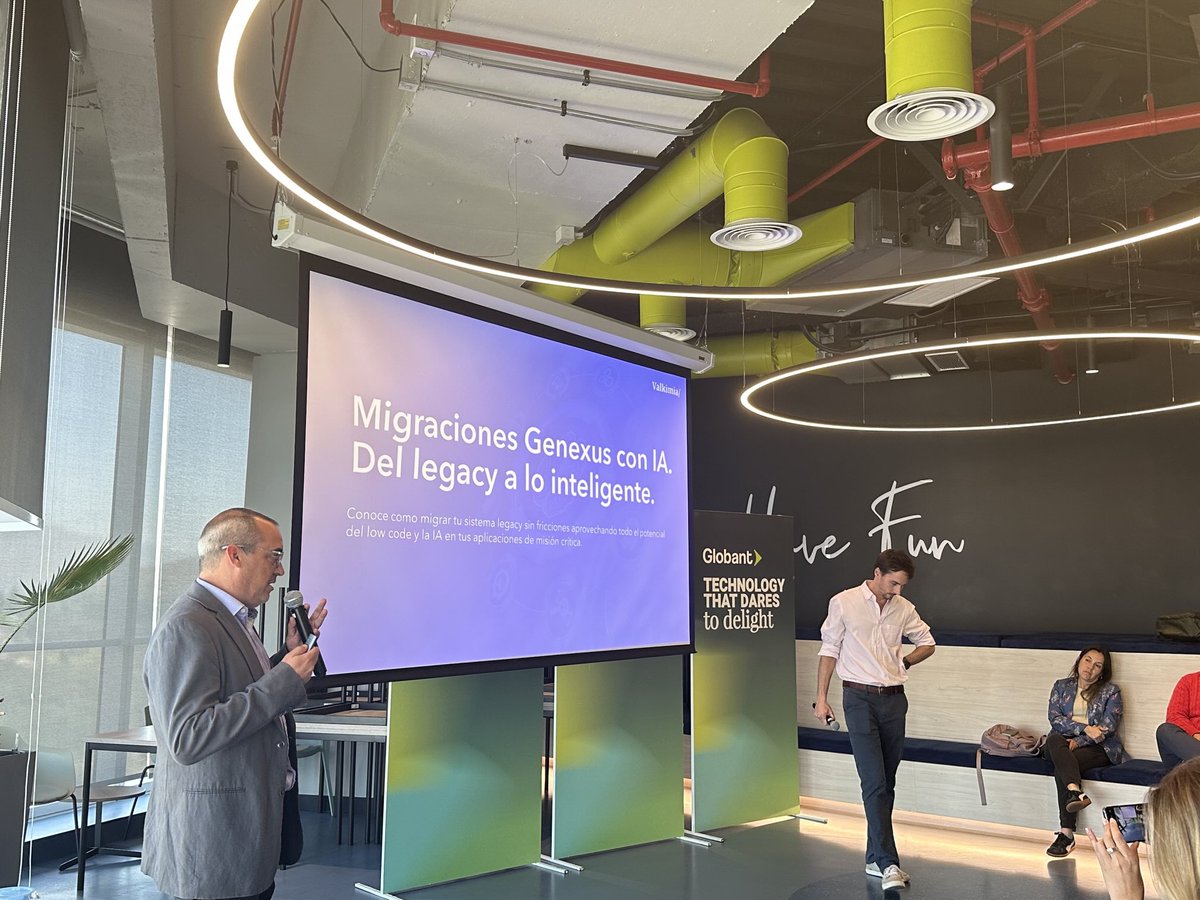
El broche de oro de nuestro próximo Evento "DPSTech, 10 años", será el Keynote del Ing. @njodal , CEO de @GeneXus .
Con la participación de @Bantotal , @workwithplus , @K2Business y @k2btools , esta será una jornada imperdible, especialmente pensada para la Comunidad #Genexus
📍 Este 4 de noviembre, en la sede de Globant Santiago, Sofía Maiolo, CCO de @workwithplus, te contará todas las novedades de esta potente herramienta.
🎟️ Actividad sin costo, pero con cupos limitados. ➡️ Asegura tu inscripción aquí: https://t.co/4GntFh4CGm