Building spacecraft is a team sport. The Apex crew just crossed 400, and we're still hiring for 100+ open roles.
Hear from McCall Richards, our Learning & Development Manager, on how we're training leaders to ensure that Apex's culture and values scale with our rapid growth.
A few of the key roles we're hiring for right now:
🔗 Space Vehicle Systems Engineer → https://t.co/mDA5xrmplj
🔗 Senior Space Simulation Test Engineer → https://t.co/K45kSSmg7e
🔗 Lead Mission Integration Engineer → https://t.co/Z3zq8qtB6O
🔗 Senior Mission Integration Engineer → https://t.co/ghOpGzgcF8
🔗 Mission Integration Engineer → https://t.co/23d6UE0mM2
🔗 Mission Manager → https://t.co/ouebGZzQTw
🔗 Launch Engineer → https://t.co/dJZEBkeSY3
🔗 Site Reliability Engineer → https://t.co/WVL8ocXwoh
If you want to work on hardware heading to orbit — and enable missions that matter — join us.
Space is the foundation of U.S. national security.
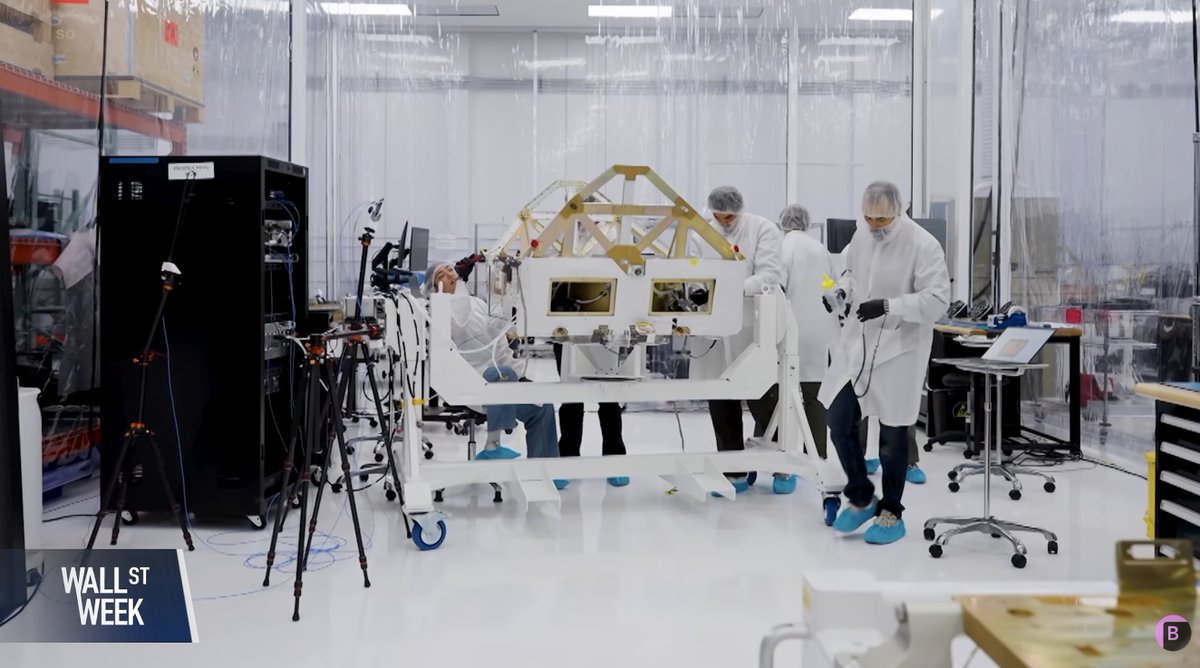
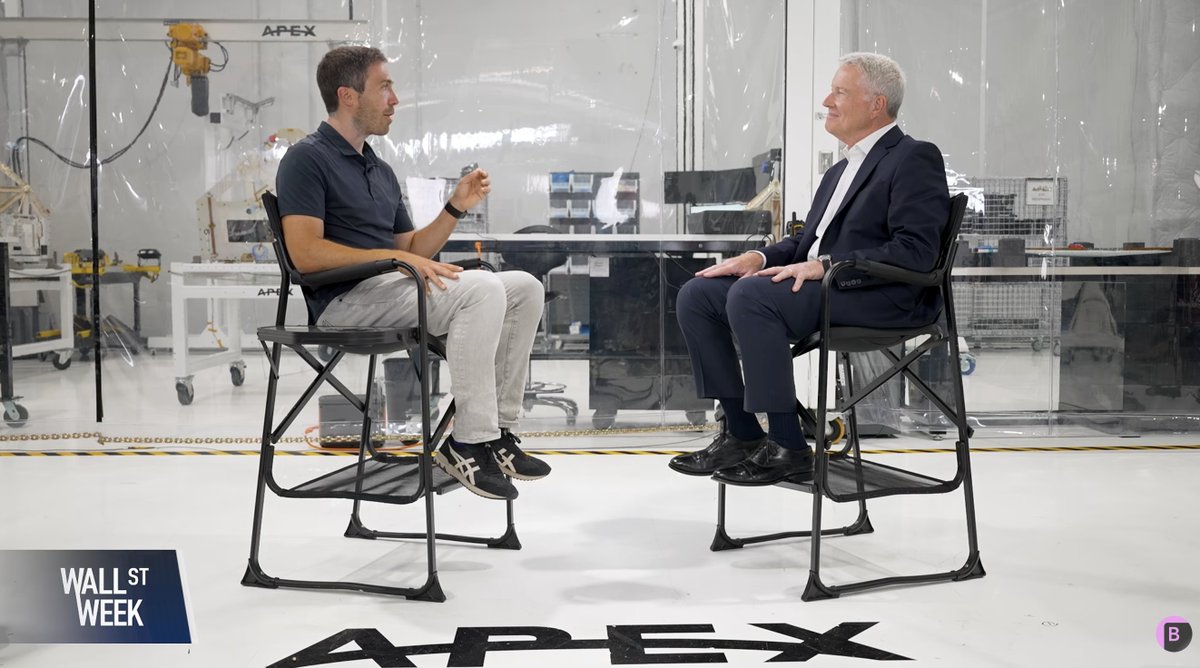
Watch Apex Co-Founder and CEO @IanCinnamon join @DavidWestin on @Bloomberg's Wall Street Week, alongside @a16z General Partner @KTmBoyle, to discuss Apex’s critical role in today’s national security ecosystem.
War in Ukraine, increased conflict in the Middle East, and China's rise have moved manufacturing back to the center of U.S. industrial strategy. The demand for satellites is clear, and Apex is ensuring the U.S. can build fast enough to keep up.
Watch the full conversation on Wall Street Week: https://t.co/xplF6qMXtL
Apex is partnering with @elveomobile to support its direct-to-device (D2D) constellation. By leveraging Apex's Factory X model, Elveo will rapidly stand up its first spacecraft manufacturing facility and jump-start production in the U.S. before expanding globally. The new facility will build on Apex's success scaling manufacturing at Factory One and use Apex's proprietary factory OS, Octopus, to streamline everything from supply chain to satellite build instructions.
"Working with Elveo is a perfect example of how Apex's model can help accelerate proliferated LEO constellation deployments," said @IanCinnamon, Co-Founder and Chief Executive Officer, Apex. "By partnering to stand up a dedicated production facility, we're leveraging Apex's deep expertise in mass manufacturing spacecraft platforms to deploy Elveo's constellation years ahead of traditional bus supplier timelines."
Read the full release here: https://t.co/7LRT3WSI5J
We're excited to share that @AnySignal_Space's Anylink communications services are now being offered as an option on all Apex spacecraft platforms. Part of being The Spacecraft Platform Company means layering additional services on top of our existing platforms to enable new capabilities for our customers. We've already proven AnyLink on Apex's platforms in orbit, and now we're offering it as an option to accelerate and simplify future customer missions.
"Apex builds the spacecraft platforms so our partners can focus on what makes their mission unique," said @IanCinnamon, Co-Founder and CEO of Apex. "AnySignal's deep RF and networking expertise provides optional telemetry, tracking, and command (TT&C) capabilities that further elevate Apex's best-in-class platforms. We're proud to have proven the AnyLink technology on our spacecraft, and we're excited to build what comes next."
Read the full release here: https://t.co/YL2RyQK48T
Apex is The Spacecraft Platform Company.
For most of space history, progress was measured in firsts. First satellite. First human in space. First Moon landing. The next era will be measured in rate: how fast you can deploy, replenish, and refresh the infrastructure everything else depends on.
That’s the New Space Race.
Winning it takes constellations: many satellites working together as systems. And constellations require two industrial capabilities: launch and spacecraft platforms.
Launch is ready enough. Platforms are not. Apex exists to remove that bottleneck.
In typical @mikeroweworks fashion, when he and Apex CEO @IanCinnamon sat down for the latest episode of The Way I Heard It, much of the conversation went beyond Apex's strategy and focused on the people who do the work — or, in this case, build the satellites.
For decades, this industry has relied on bespoke spacecraft built by highly specialized technicians on incredibly long lead times. At Apex, we're forging a different path and building satellites in a way that opens the door to talent traditional aerospace has often overlooked: think technicians with automotive backgrounds or builders from adjacent high-rate industries, bringing their perspective to the table to radically rethink how satellites are made (and help Apex reach true industrial scale).
It's a different model that we're proud to pioneer...and it's working.
Hear the full episode with Mike here: https://t.co/eNQS41PsSG
The Apex team will be on the ground at @SmallSat 2026 in SLC next week to discuss all things Apex satellite platforms, recent and upcoming missions, and the continued production ramp at Factory One.
Email [email protected] to set up a meeting and learn how Apex's satellite platforms can power your next mission.
See you in Salt Lake!
Conquering the next battlefield: Space.
We bet our own money to rapidly design, build, test, and fly a fully integrated satellite. Last month, ANDURIL-216 reached orbit. Anduril, alongside a few core partners, went from clean sheet to on orbit in less than two years.
All systems are nominal. We've made first contact and fully commissioned the bus, power distribution devices, and edge compute payload. The first calibrated images are in from all three payloads onboard the spacecraft: one long-wave infrared, two electro-optical.
The firsts go beyond the vehicle. Our space team used Lattice to commission and task ANDURIL-216, the first time Lattice has commanded an on-orbit spacecraft.
More to come.
Meet Amanda Mosinski, AI&T Technician III at Apex!
Amanda brings over a decade of hands-on manufacturing experience to Apex. She kicked off her career machining V8 and V6 Turbo engines at Toyota Motor Manufacturing before making the leap into aerospace at Blue Origin. She began her time at Blue Origin running vibe testing, thermal and cryogenic testing, and proof/flow testing, then moved into final assembly and integration for the BE-4 rocket engines, where she supported hot fire testing at MSFC 4670. When she stumbled on an opportunity at Apex, she couldn’t turn it down, driving 2,000 miles from Alabama to California to join the team.
Today, Amanda works as an Assembly, Integration & Test (AI&T) Technician supporting bus builds from base deck to finished, flight-ready spacecraft. Technicians like Amanda are the backbone of Apex’s mass-manufacturing strategy, executing the mechanical assembly, integration, and testing that transforms components into complete satellite platforms. Their work on the line is what ensures Apex hits rate, meets customer demand, and delivers mission success in orbit.
Learn more about Amanda here: https://t.co/2jWrQgAjWl
Want to build flight hardware alongside Amanda and Apex’s team of highly skilled technicians? Check out our open production roles: https://t.co/KEWVRo6pIu
The recent Transporter-17 launch was a big day for Apex.
We put four Apex spacecraft into orbit: three customer-owned Aries platforms and one Apex-owned testbed Nova platform.
All three Aries spacecraft are operating nominally, and commissioning continues ahead of schedule. These buses represent a major milestone for our customers, who are using them to support critical missions. We’re excited to reveal more details on those missions in the coming months.
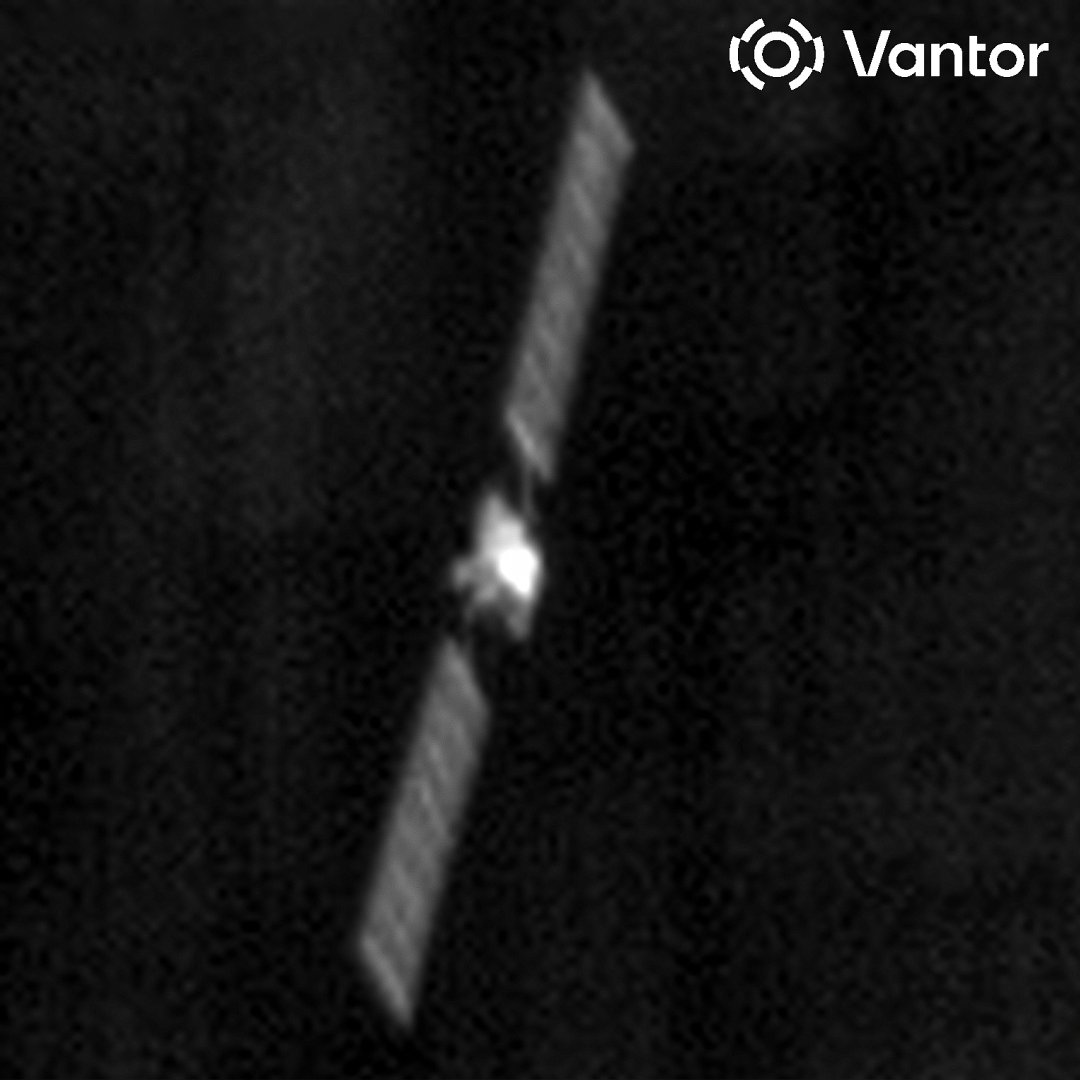
The Nova testbed platform performed as planned through its early mission: it separated cleanly from the launch vehicle, powered on, booted the flight computer, deployed both solar arrays successfully, and entered a GNC-controlled safe state before transitioning into a hold state, awaiting first contact. Unfortunately, we have not yet established communications with the test spacecraft. The Apex team is working to understand the issue and establish communications with Nova.
The very purpose of Nova’s pathfinder mission is to surface issues and prove out vehicle performance before our customer missions. Apex is already set to launch the second Nova testbed platform in the coming months, before flying any customer missions. This rapid mission cadence enables Apex’s risk-on approach for rapidly developing and testing pathfinder satellite platforms to ensure customer-owned platforms maintain 100% on-orbit success.
This is the Apex way: to develop new platforms at unprecedented speed, Apex intentionally accepts higher risk on initial self-funded flights of testbed vehicles to prove out design and performance. Once these systems fly successfully in orbit, our customers are ready to fly them with confidence. For our customers’ spacecraft, reliability is everything, and we treat it that way.
The next Nova is already in production, with our launch coming up in just a matter of months. We will apply learnings from this first mission, make the necessary changes for increased reliability, and fly again before any Nova customer mission.
We are immensely proud of the Apex team for the three customer-owned Aries platforms now operating successfully in orbit, and thankful to our partners for their continued support. We will share more updates on all four spacecraft as we confirm additional information.
(Thanks to our friends @vantortech for the great NEI shots of Nova!)
What is a satellite platform, and why does it matter for the future of space?
Apex Co-Founder & CEO @IanCinnamon joined @suffiyanmalikk on @WeThe_Builders at @RonaldReagan's National Economic Forum to dig into the thesis behind Apex, how productized platforms allow for faster, more scalable production – and what that means for Apex's customers.
Full episode here: https://t.co/pTgV7a5PYh
New pod alert: Apex CEO & Co-Founder @IanCinnamon sat down with @itsmoislam of @payloadspace a few weeks back to unpack why the biggest bottleneck in space is no longer launch; it's the spacecraft itself.
After Ian sold his first company to Palantir, he and now Co-Founder Max Benassi saw the problem up close: rockets were getting cheaper and payloads more capable, but satellite buses were still being built as bespoke engineering projects.
Apex's answer was simple in theory, incredibly difficult in practice: turn spacecraft into products.
Four years in, Apex is delivering standardized platforms for critical commercial and national security missions, and making good on the promise to bring true productization to the satellite industry.
In the episode, Ian digs into:
– Why spacecraft should be products, not one-off programs
– Whether the bus market is underbuilt or heading toward oversupply
– How Apex approaches manufacturing, vertical integration, and scale
– Why bigger satellites may make more sense in a world of cheap launch
– The capital strategy behind Apex's rapid growth
Link to the full episode ⤵️
Why is a satellite like a race car?
@FortuneMagazine's @agarfinks has the answer in her recent piece on Apex’s partnership with @ToyotaRacingUSA.
Leveraging the same precision manufacturing practices used to craft world-class racing engines, Toyota is helping Apex scale by mass-producing precision-machined parts for our Apex satellite platforms.
“We have to think about manufacturing from the perspective of not just how we build something, but how we build it when we’re factoring in all the variables that matter—quality, speed of production, and affordability,” said @IanCinnamon. “Too often we say, ‘Oh, we can build a bunch.’ Well, how long does it take? Or, ‘We can build them really cheap.’ Okay, but are they high-quality? We need to find the middle ground between those core elements. And if we can do that, the U.S. manufacturing base can really fall into its stride.”
Read the full story here: https://t.co/p8OCXRzOSc