The cyber incidents of the last 48 hours have been pretty mind blowing. I’ve been trying to piece together the “why now” question, and I think what we’re seeing is the first of a new kind of super-agent driven vulnerability cascade-- first one vulnerability is found by a malicious actor, then other bad actors pop up to try and take advantage of it before companies patch their systems.
But because each bad actor is using swarms of thousands of super-agents, those agents are not only exploiting the existing vulnerability, but finding new zero days as well, all in a matter of hours. And the cycle repeats. As of the writing of this post there have been vulnerabilities found across at least half-dozen independent systems including LiteLLM, PHP, eMudhra Certificates, NGINX, Bind 9, and NodeJS. The list continues to grow hour by hour.
Basically everything connected to the internet is at risk. Not just company websites and the usual databases of sensitive personal information, but all our critical infrastructure-- banks, power grids, pipelines, government agencies, all of it.
The good news is that cybersecurity and ops teams had a chance to see this coming. This is why from when Mythos first dropped and had our first warning, these teams have been hard at work shoring up systems across the board.
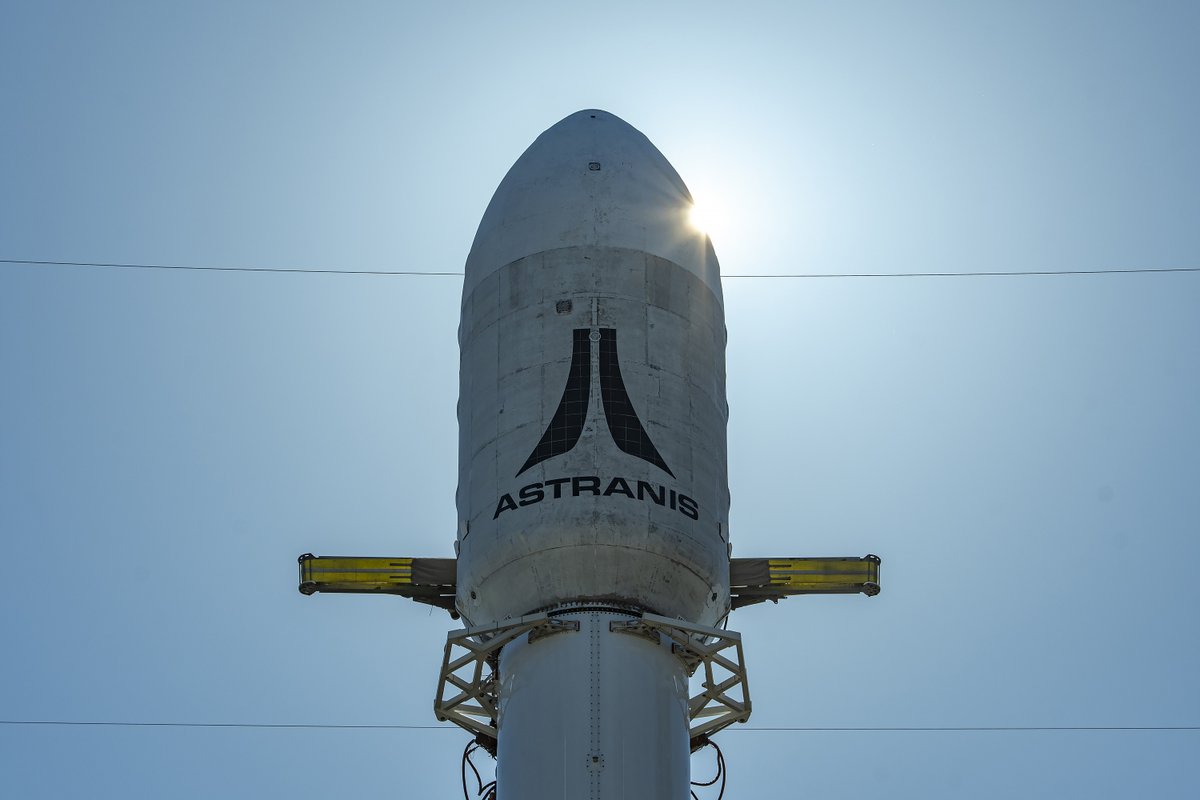
This is also why at Astranis we’ve seen a massive uptick in demand for truly air-gapped, sovereign networks, deployed via dedicated satellite to span an entire country or connect a large enterprise.
It is in fact possible to take an entire category of critical infrastructure off the internet entirely. With a fully self-contained network where all the endpoints are off grid. This is not a new concept-- anyone could do this for your home today with equipment you can buy from Best Buy. But to stand up such a network covering a large geographic area or an entire country, without touching the existing fiber or other network infrastructure, you can only do that with a dedicated satellite. And specifically a satellite in a special orbit called geosynchronous orbit.
Over the past year we’ve begun working with some of our customers on what it will take to implement truly air-gapped, standalone networks in support of mission critical use cases like core government functions, emergency response, defense, core infrastructure, or all of the above.
That might sound extreme, but that is the kind of measure we expect will be required to shrink the attack surface of some of the world’s most critical infra. That’s just the position we are now in. It's a brave new world.
Thanks @payloadspace for having me on live from @NYSE.
Great to talk the future of high orbits with sovereign satellites, cybersecurity, and Space Force.
Today we're excited to announce we have upgraded our 4th launch with our partners at @SpaceX to a dedicated mission, launching in 2028.
Given increased customer demand --in particular from the sovereign and air-gapped network verticals-- we decided to increase the number of satellites we're launching to 6. This is the entire production run of our spacecraft Block 4.
Sovereign satellites, and specifically sovereign satellites in geosynchronous orbit, allow a country or enterprise to have their own dedicated comms satellite with a purpose built network deployed around it.
In this new world of cyber threats and super-intelligent agents in the hands of malicious actors, we're seeing more and more the desire to pull infrastructure off the public internet entirely with dedicated networks. It's the most effective way to shrink the attack surface. And it's where the world is headed.
As a result we've seen huge increase in demand for satellites that our customers can control and lock-down from a cybersecurity perspective. Something uniquely possible on a nation-state scale with a geosynchronous satellite.
We are pumped about this launch. And the best part? We’re going straight to 22,000 miles up, with a direct-inject to GEO using an Impulse Helios upper stage.
We are now seeing an insane amount of commercial and US government demand, and we’re only just getting started.
Hopefully this is the beginning of the end of the internet-connected device fad. Want to have them talk via local network to an opensource model on a Mac mini? ok sure.
But a public internet connected TV, washer, dryer, oven, toaster? Uh... no. Time to put an end that nonsense.
WTF, $3000 Samsung TV has an always-on mic, automatic content recognition, geo tracking, network mapping, and ships your data to Samsung + 400 partners.
Bro Rooted a brand-new 2025 Samsung TV after noticing absurdly targeted ads.
Firmware was locked down, so zero-days it was.
Got a root shell.
then found: always-on voice service, ACR, geo, full telemetry pipeline, and four separate DRM systems.
This isn’t a bug, It’s the product bro.
I do think this is the direction we’re headed— the world retrenching into smaller, heavily guarded or fully air-gapped local networks.
Not clear what the alternatives are if/when the public internet is overrun with cyberattacking super agents.
In Cyberpunk, they had to shut down the internet because of evil rouge AIs. Everything ended up being run on local networks instead of a World Wide Web
That just seems to be the way we are going honestly
The cyber incidents of the last 48 hours have been pretty mind blowing. I’ve been trying to piece together the “why now” question, and I think what we’re seeing is the first of a new kind of super-agent driven vulnerability cascade-- first one vulnerability is found by a malicious actor, then other bad actors pop up to try and take advantage of it before companies patch their systems.
But because each bad actor is using swarms of thousands of super-agents, those agents are not only exploiting the existing vulnerability, but finding new zero days as well, all in a matter of hours. And the cycle repeats. As of the writing of this post there have been vulnerabilities found across at least half-dozen independent systems including LiteLLM, PHP, eMudhra Certificates, NGINX, Bind 9, and NodeJS. The list continues to grow hour by hour.
Basically everything connected to the internet is at risk. Not just company websites and the usual databases of sensitive personal information, but all our critical infrastructure-- banks, power grids, pipelines, government agencies, all of it.
The good news is that cybersecurity and ops teams had a chance to see this coming. This is why from when Mythos first dropped and had our first warning, these teams have been hard at work shoring up systems across the board.
This is also why at Astranis we’ve seen a massive uptick in demand for truly air-gapped, sovereign networks, deployed via dedicated satellite to span an entire country or connect a large enterprise.
It is in fact possible to take an entire category of critical infrastructure off the internet entirely. With a fully self-contained network where all the endpoints are off grid. This is not a new concept-- anyone could do this for your home today with equipment you can buy from Best Buy. But to stand up such a network covering a large geographic area or an entire country, without touching the existing fiber or other network infrastructure, you can only do that with a dedicated satellite. And specifically a satellite in a special orbit called geosynchronous orbit.
Over the past year we’ve begun working with some of our customers on what it will take to implement truly air-gapped, standalone networks in support of mission critical use cases like core government functions, emergency response, defense, core infrastructure, or all of the above.
That might sound extreme, but that is the kind of measure we expect will be required to shrink the attack surface of some of the world’s most critical infra. That’s just the position we are now in. It's a brave new world.
Since your profile indicates you are a former NASA, I thought I would flag a few points:
1. I personally pay for all costs associated with the fleet of F-5 aircraft, be that airshows, NFL flyovers, or NASA workforce incentive flights. The rest of the NASA fleet, including F-15s, F/A-18s, and T-38s, requires currency flights to maintain pilot proficiency. Would you prefer they do that over the desert where no one can see them?
2. Obviously, the first A in NASA is Aeronautics, and throughout our history we have taken NASA X-planes to airshows. In fact, a lot of my strategy at NASA draws upon our proud history. We took the X-31 all the way to the Paris Air Show in 1995, the SR-71 was featured at the Edwards Air Show and Oshkosh in 1997, and the X-29 flew at the Dayton and Oshkosh airshows in 1990. It is part of our history, and do you know why? Because inspiring the next generation of engineers, scientists, researchers, pilots, and astronauts is part of what we do. It always has been.
3. It is also our nation’s 250th birthday and the year we returned NASA astronauts to the lunar environment. We are returning to the Moon, building a Moon base, and this is a great time to get out, engage with the public, and tell the NASA story.
https://t.co/VTLl3TJCXG
Today we are announcing a $468M credit facility from @EXIMBankUS to fund a massive ramp in satellite production here in America. For a New Prime like Astranis, it's a huge vote of confidence from the United States Government.
“Astranis is delivering mission-critical infrastructure to customers around the world at unprecedented speed and scale,” said EXIM Chairman John Jovanovic. “We are confident this is just the beginning. Under President Trump’s leadership, EXIM will continue to help the United States stay ahead of the curve in developing the industries of the future and boost American competitiveness around the globe.”
This means we have capital to build more satellites in the United States and get them into orbit faster. As we sign new customers, this helps us move from contract to satellites in orbit at the speed our customers need.
Astranis's satellites serve a huge unmet need. This year we've signed some of our biggest and most important deals yet. Earlier this month we announced earlier we announced a partnership with stc group for a dedicated satellite for Saudi Arabia.
We have more than $1B in contracts to deliver, and now we can ramp up production to meet this demand and do our part to help re-industrialize America.
Thank you to EXIM for backing us. Now, back to building for the Expansion Era.
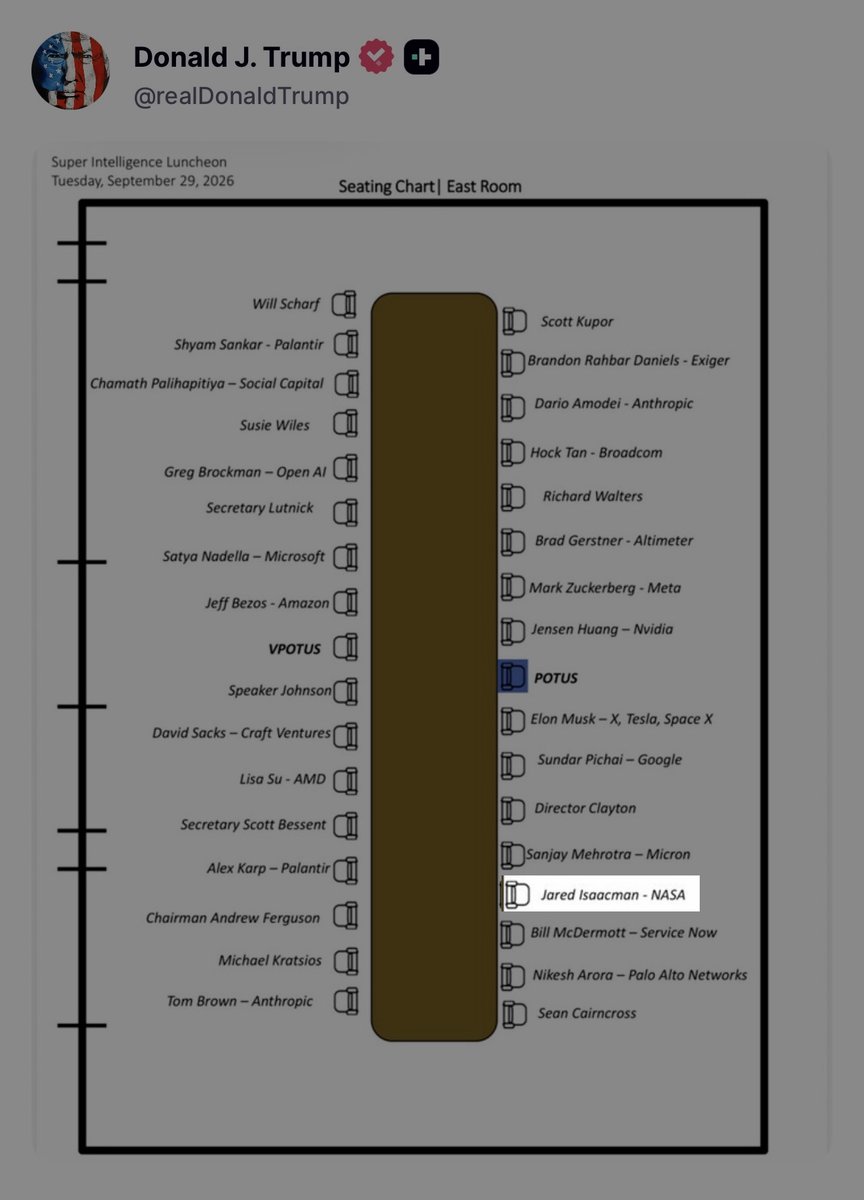
Exciting to see @NASAAdmin at the table here, literally.
I don’t think people realize how rare it is for the NASA Administrator to have a personal relationship with the President of the United States.
Incredible time to be in the American space industry
Interesting, @NASAAdmin - i.e. @NASA - is at this table with @POTUS and @WHOSTP47 director @mkratsios47 and dozens of #AI company heads. But no other tech agency is there. Is #NASA becoming the go-to agency for making cool things happen?
I mean just look at this. Absolutely beautiful flight.
Incredible news for America leadership in space.
Time to begin our expansion out into the solar system
SPEAKER ANNOUNCEMENT:
John Gedmark (@Gedmark), Co-Founder & CEO of @Astranis will be joining the Space & Defense Investor Summit.
Astranis builds geostationary satellites that give a single country, carrier or military its own dedicated capacity, and has pushed the same platform into Resilient GPS, space domain awareness and deployable comms for warfighters.
Astranis raised $450M this spring co-led by @SnowpointVC & @FranklnTempletn, bringing total funding to $1.2B.
📍 The Beverly Hilton
🗓️ November 3 - 4, 2026
Hot off the presses from Space Force. You gotta love the robot grappler arms on the Orbital Attacks graphic.
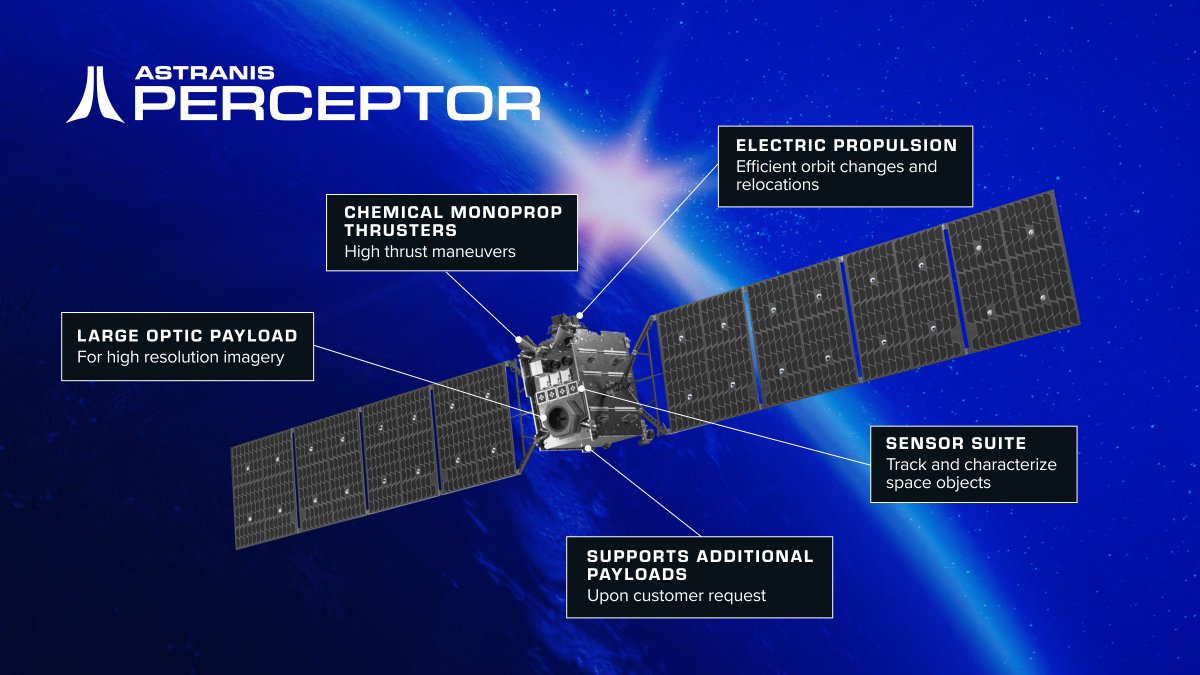
(This is why we are building Perceptor btw)
Space threats are real. To counter them, #SpaceForce is accelerating space acquisition, ensuring we rapidly deploy the capabilities needed to protect our domain. See our video series From Science Fiction to Science Fact: https://t.co/rrQVZD7nrU
We are 100% in a race with China right now.
We need to get to the Moon and secure the permanently shadowed craters that hold valuable Lunar ice, before they do. China is making a beeline there as we speak.
No time to waste. LFG.
Ridiculous headline. The study looked at a lunar city of 1 million people with no recycling.
Instead assume the water recycling of the ISS at 94% and “only” 100,000 people. You get to 1,000 years easy.
Plenty of time to go capture an icy asteroid and park it in cislunar orbit.
Moments ago @CNN cited a study saying that very large settlements on the Moon would run out of water and that much smaller bases are more realistic #Artemis@NASAMoonbase