A Wharton economist ran a randomized controlled trial on almost a thousand high school students in Turkey.
The result was so brutal for the AI-in-education narrative that it had to be peer-reviewed by PNAS before people would believe it.
Her name is Hamsa Bastani. She teaches operations and information at the Wharton School at the University of Pennsylvania, and the study she published in 2025 alongside her co-authors is one of the cleanest experiments anyone has run on what AI actually does to learning when you remove it from the equation and check what is left.
The setup was a randomized controlled trial, the same methodology used in clinical drug trials. Nearly a thousand high school math students in Turkey were split into three groups and put through four sessions of ninety minutes each. One group practiced with GPT Base, a standard ChatGPT-4 interface that could answer any question directly. One group practiced with GPT Tutor, a version of the same model that had been prompted to guide students with hints rather than hand them the answer. One group practiced with nothing but their textbook and their own head.
During the practice sessions, the AI groups looked like a miracle. The GPT Base group solved 48% more problems than the students working alone. The GPT Tutor group solved 127% more. Every administrator looking at those numbers would have written a press release about the transformative power of AI in education and moved on.
Then the actual exam came, and AI was not allowed.
The students who had practiced with GPT Base scored 17% worse than the students who had practiced alone. Seventeen percent worse, despite having solved nearly half again as many problems in the sessions leading up to it. The students who had struggled the most, who had sat with the confusion and worked through it without a tool to rescue them, were now the only ones who could actually do the math when it counted.
Bastani's team read through the chat logs to understand what had actually been happening during the practice sessions, and the answer was exactly what the exam results had already implied. The GPT Base group had not been learning. They had been extracting answers and moving on, and every moment that felt like understanding was actually the model doing the cognitive work while the student's brain waited for the next problem to arrive. The paper describes it precisely: without guardrails, students attempt to use GPT-4 as a crutch during practice, and subsequently perform worse on their own.
The detail that should follow every conversation about AI in education is the one buried in the post-test survey results. The students who had relied on AI the most during practice were also the most confident they had understood the material. The tool had not just failed to teach them. It had convinced them they had learned something they had not, which is a different kind of failure entirely and a much harder one to correct because the student has no idea it is happening.
The crutch had made them confident and weak at the same time.
AI is not floating in the cloud.
It runs on electricity.
And China understands this better than almost anyone.
Researchers from Peking University and Alibaba’s DAMO Academy used AI to map hundreds of thousands of solar and wind installations across China, processing 7.56 TB of satellite imagery.
The result:
319,972 solar photovoltaic facilities.
91,609 wind turbines.
A national “God’s-eye view” of China’s green-energy infrastructure.
This matters because AI is creating explosive demand for power.
China’s data-service and computing facilities saw power consumption jump 44% year-on-year in Q1 2026, reaching 22.9 billion kWh.
So the loop becomes obvious:
Electricity powers AI.
AI maps electricity.
The grid becomes smarter.
Energy deployment becomes more coordinated.
Data centres move closer to wind, solar, land, and cheaper power.
That is not just green policy, but industrial civilization learning to see itself from above.
The West keeps talking about AI as software.
China treats AI as infrastructure — tied to power grids, geography, manufacturing, energy security, and national planning.
That is the difference between building an app
and building an era.
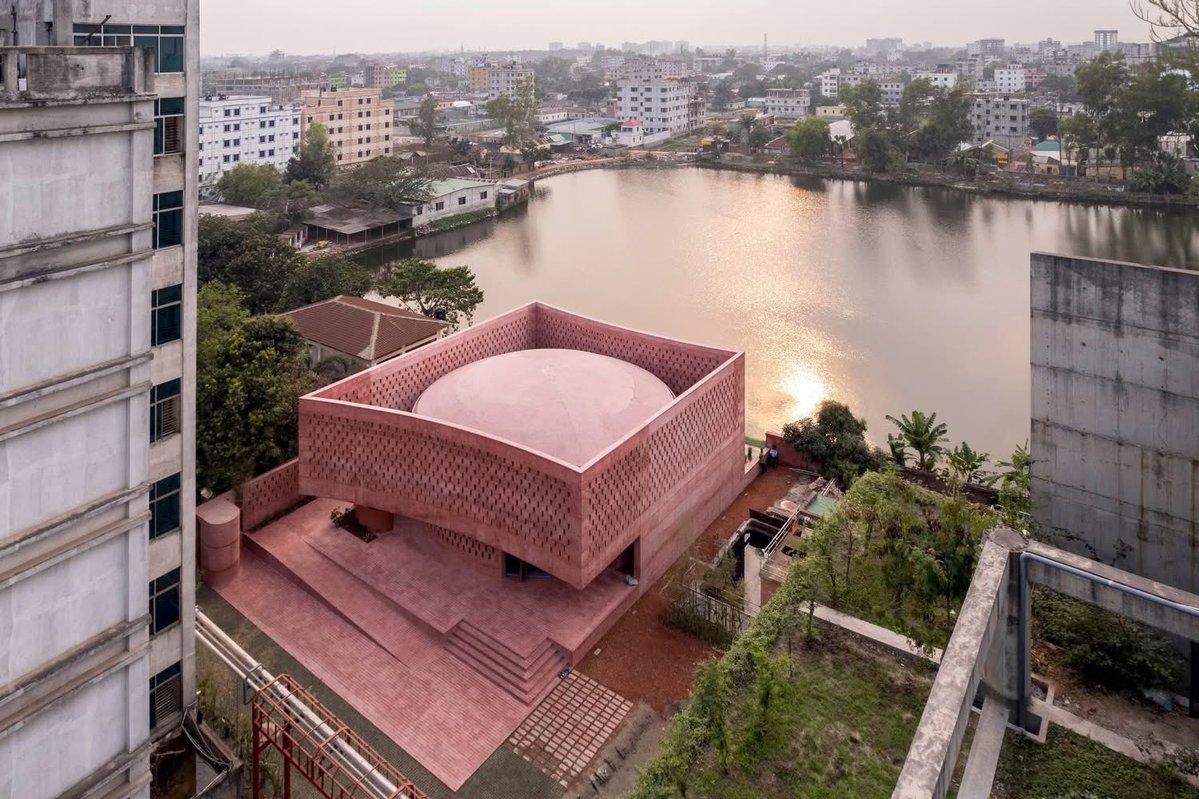
A factory owner in Ashulia, Bangladesh, wanted to build a mosque for his workers. He gave the commission to a Bangladeshi architect. Not an imported name. Not a foreign firm. A local architect who understood the land, the climate, and the culture she was building for.
In 2025, Time Magazine named it one of the greatest places in the world, the first Bangladeshi building to ever appear on that list.
The entire structure is one material. One colour. Pink-pigmented concrete, perforated with small rectangular voids that filter light into the prayer hall the way hanging lanterns did in old mosques. A dome floats unsupported over the circular prayer space. The high plinth references the Bhiti, the earthen mound that Bangladeshi homes have been built upon for centuries in the deltaic floodplain. The building knows where it comes from because the architect did.
Across Africa, clients with the same resources make a different call. Foreign firms. Imported aesthetics. Buildings that could exist anywhere. The brief gets fulfilled. The opportunity gets wasted.
Trusting a local architect with his mother’s name just made global history. That should mean something to us.
Zebun Nessa Mosque, Ashulia, Bangladesh 🇧🇩 | Studio Morphogenesis | Lead Architect: Saiqa Iqbal Meghna | 6,060 sq.ft | 2023 | 📷 Asif Salman, City Syntax
EIGHT WEEKS TO EMPTY SHELVES. SIXTY DAYS TO FAMINE.
https://t.co/8JhVHeuXfs
The data says the United States of America will run out of usable oil by July 4, 2026. Europe will run out this month. The food system that feeds you runs on diesel. Diesel runs out first.
Colombia has declared its entire Amazon biome a reserve zone for renewable natural resources, effectively banning any new oil exploration, hydrocarbon production, or large-scale mining projects in the region.
Colombia has declared its entire Amazon biome a reserve zone for renewable natural resources, effectively banning any new oil exploration, hydrocarbon production, or large-scale mining projects in the region.
The protected area spans approximately 483,000 square kilometers about the size of Sweden and represents 42% of Colombia’s continental territory, covering roughly 7% of the entire Amazon rainforest basin.
Announced during COP30 in Brazil, the decision makes Colombia the first Amazonian country to protect its entire share of the rainforest from new extractive industrial activities. The policy halts dozens of pending concessions, including 43 oil blocks and hundreds of mining requests that had not yet begun operations.
By prioritizing ecosystem preservation over fossil fuel and mineral extraction, the measure aims to reduce deforestation, protect biodiversity, and maintain the Amazon’s crucial role in global climate regulation through carbon storage and water cycle stability.
The initiative, introduced under the Petro administration, reflects a shift toward sustainable development and could set a precedent for other Amazon nations facing similar pressures from resource extraction.
Environmental advocates consider it one of the most significant conservation victories in recent history, safeguarding vital ecosystems and Indigenous territories while contributing to global climate protection.
Say goodbye to synthetic fertilizers.
Dr. Mariangela Hungria, a renowned Brazilian soil microbiologist at the Brazilian Agricultural Research Corporation (EMBRAPA), has been awarded the 2025 World Food Prize—often called the "Nobel Prize for Food"—for her groundbreaking advancements in biological nitrogen fixation.
Over more than four decades, Hungria developed over 30 microbial technologies, including inoculants and co-inoculants that enable crops (especially soybeans) to harness symbiotic soil bacteria. These bacteria naturally convert atmospheric nitrogen into plant-usable forms, dramatically reducing or eliminating the need for synthetic nitrogen fertilizers.
Her innovations have transformed tropical agriculture, boosting yields sustainably while cutting costs and environmental harm. In Brazil alone, these biological solutions are applied across more than 40 million hectares of farmland (primarily soybeans), saving farmers an estimated US$25–40 billion annually in fertilizer expenses.
The environmental benefits are equally profound: by replacing chemical fertilizers, her methods prevent the release of over 180–260 million metric tons of CO₂-equivalent emissions each year (figures vary slightly by source and year, with recent estimates around 230–260 million tons for recent seasons).
Hungria's work has helped position Brazil as a global agricultural powerhouse, turning it into a leading soybean producer with high productivity and lower ecological footprint. Her low-cost, eco-friendly approach offers a scalable model for enhancing food security worldwide, proving that powerful solutions for sustainable farming often lie in the soil's own microbial communities.
[World Food Prize Foundation. Dr. Mariangela Hungria Named 2025 World Food Prize Laureate for Revolutionary Work in Soil Microbiology]
21/ For the full analysis, research, data and the in-depth vision of both the collapse risks, and a comprehensive 5 year roadmap for rapid transformation: see our working paper here END https://t.co/o20wggxzlH
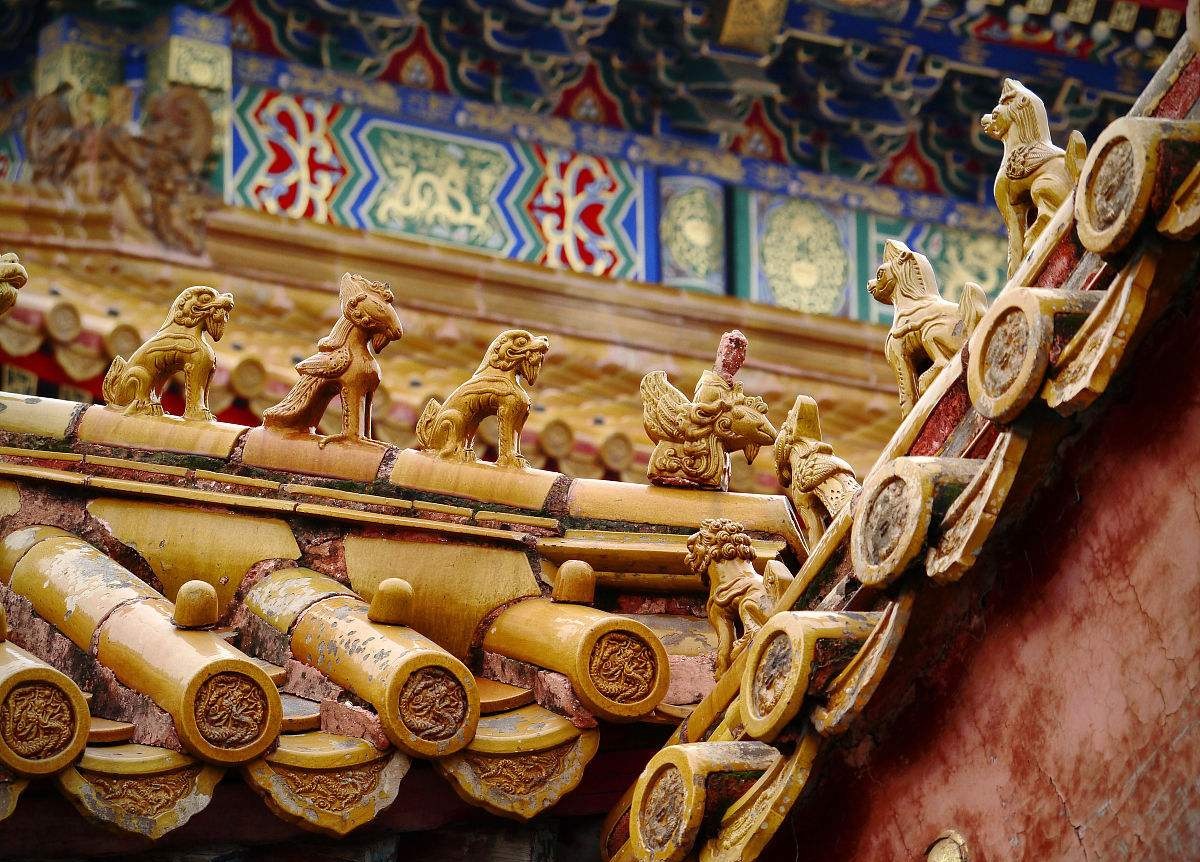
Why is there not a single weed on the rooftops of the Forbidden City (1,200 buildings)? It’s not a matter of daily cleaning, but of painstaking traditional craftsmanship: a systematic project that took a full two years in which workers lifted each single glazed roof tile, extracted roots & seeds, and sealed every gap between tiles to prevent regrowth. No herbicides were used, since any damage to the historic buildings would be devastating.
They also appear clean because, due to their slope and smooth surfaces, they’re not attractive to birds.
This probably sounds like a tour guide story, but I just found out today, and find everything about the Forbidden City fascinating, so we all learn something new.🌱
This rice field in Indonesia has fish swimming in it, and that's a good thing.
The fish eat pests and weeds, their waste fertilizes the rice, and their movement aerates the soil.
Science confirms it works better: rice-fish systems use 68% less pesticide and 24% less fertilizer than conventional monoculture, while producing the same or higher rice yields.
Farmers also harvest the fish for extra income and protein.
This 2,000-year-old practice nearly disappeared during the Green Revolution.
Bonus: in one part of Indonesia, adding fish dropped malaria rates from 16.5% to nearly zero, because the fish ate the mosquito larvae.
More food. Less poison. Extra protein. Built-in disease control.
Trump’s done what no tourism campaign could-sparked huge interest in Persian culture. Posts on history, architecture, food, music, Lego videos-going viral. The hatred we've been fed about Iran for decades-rapidly transformed into support and respect.
New on https://t.co/uxtt5054xt
Prosperity within Limits? Planetary Habitability, Global Convergence & Structural Transformation 2026-2100
More to come in the Global Justice Report
World Inequality Conference Paris June 4-6 2026
https://t.co/4i2iLvZB5W
https://t.co/Ek9jKiJ0tT
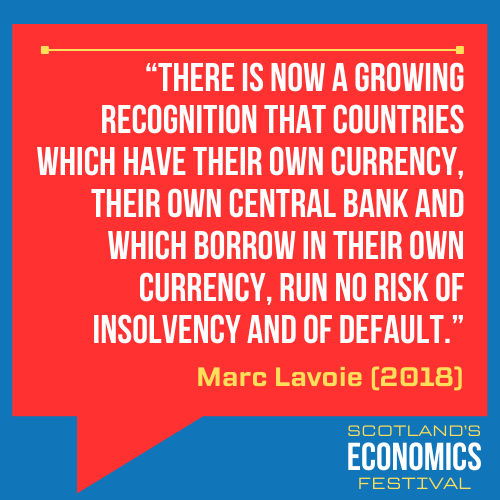
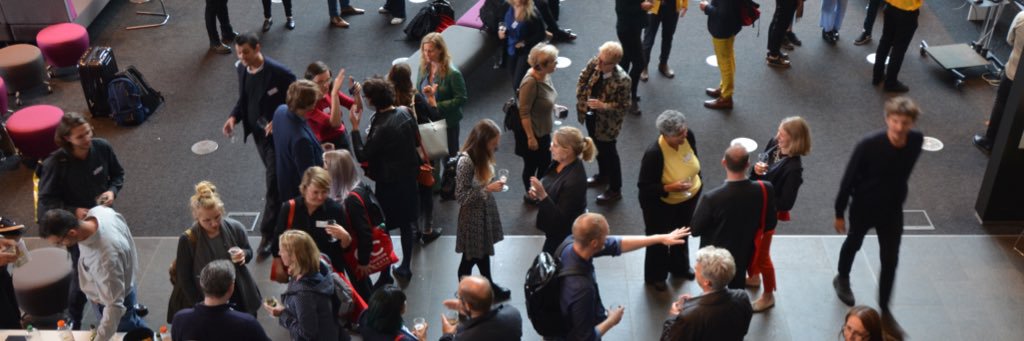
A central theme of many of our sessions will be a modern understanding of money. A few sessions address #MMT (Modern Monetary Theory) directly, and we also offer drop-in, free MMT sessions. https://t.co/4dujrJPQck 19th to 21st March 2026.









![Rainmaker1973's tweet photo. Say goodbye to synthetic fertilizers.
Dr. Mariangela Hungria, a renowned Brazilian soil microbiologist at the Brazilian Agricultural Research Corporation (EMBRAPA), has been awarded the 2025 World Food Prize—often called the "Nobel Prize for Food"—for her groundbreaking advancements in biological nitrogen fixation.
Over more than four decades, Hungria developed over 30 microbial technologies, including inoculants and co-inoculants that enable crops (especially soybeans) to harness symbiotic soil bacteria. These bacteria naturally convert atmospheric nitrogen into plant-usable forms, dramatically reducing or eliminating the need for synthetic nitrogen fertilizers.
Her innovations have transformed tropical agriculture, boosting yields sustainably while cutting costs and environmental harm. In Brazil alone, these biological solutions are applied across more than 40 million hectares of farmland (primarily soybeans), saving farmers an estimated US$25–40 billion annually in fertilizer expenses.
The environmental benefits are equally profound: by replacing chemical fertilizers, her methods prevent the release of over 180–260 million metric tons of CO₂-equivalent emissions each year (figures vary slightly by source and year, with recent estimates around 230–260 million tons for recent seasons).
Hungria's work has helped position Brazil as a global agricultural powerhouse, turning it into a leading soybean producer with high productivity and lower ecological footprint. Her low-cost, eco-friendly approach offers a scalable model for enhancing food security worldwide, proving that powerful solutions for sustainable farming often lie in the soil's own microbial communities.
[World Food Prize Foundation. Dr. Mariangela Hungria Named 2025 World Food Prize Laureate for Revolutionary Work in Soil Microbiology]](https://pbs.twimg.com/media/HGwsHyFXoAA_n-x.jpg)