Hey #AcademicTwitter 👋 ... interested in getting to know me and my various 'omics' research on marmosets and other Brazilian primates... Check out my personal website (cute marmoset pictures and toons included). I would love to hear from you too!
https://t.co/RllDH5FVZG
Remembering the first woman to be awarded a Nobel Prize, the first individual to be awarded two Nobel Prizes and still today the only individual with two Nobel Prizes in two different scientific categories: Marie Skłodowska Curie.
Curie was born #OnThisDay in 1867.
Thank you @KamalaHarris & @HillaryClinton. I am so thankful you care so much, that you radiate excellence, and that you terrify mediocre men and those in thrall to them. #Someday
Never underestimate the power of large groups of stupid people.
He was the worst POTUS in history.
Impeached twice.
Convicted felon.
Tried to stage a coup.
Sold state secrets.
But hey …at least he isn’t an intelligent Black woman.
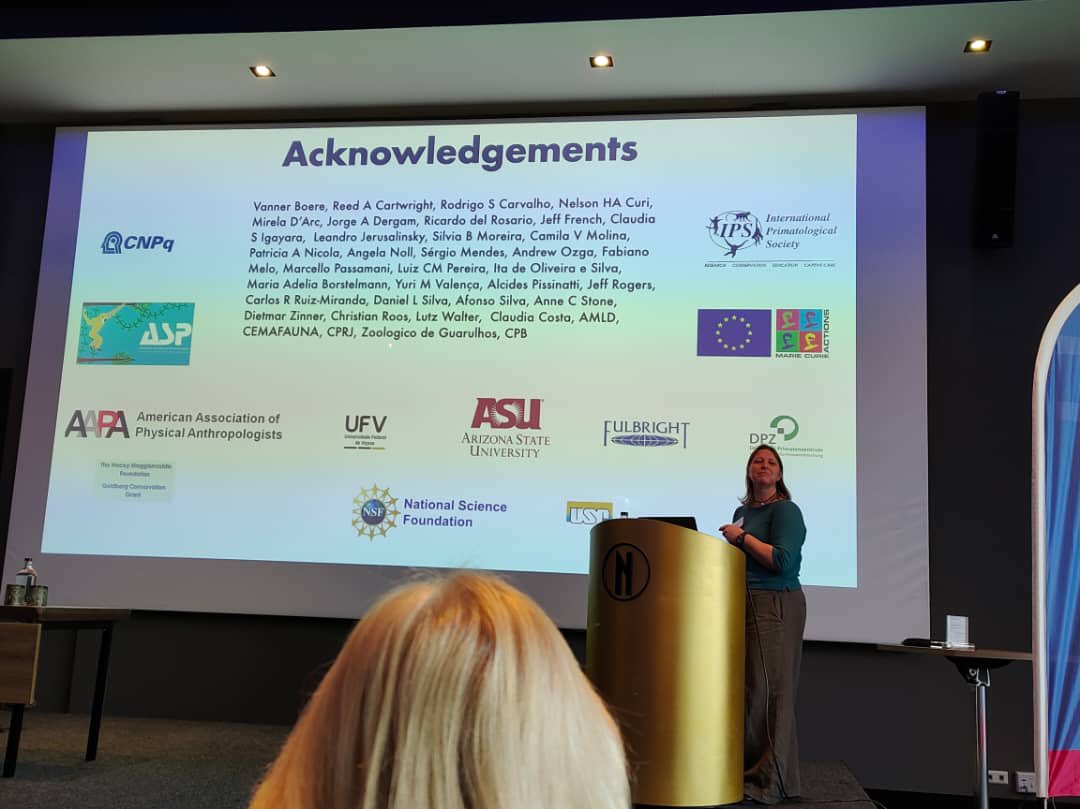
This week I discussed some of my primate MHC work at SIB Conference for Evolution and Characterization of the Immune System in the Netherlands. The best part was acknowledging all the people and organizations that support this work including @evotobi@MeyerBritta.
For anyone interested in using portable DNA sequencing with Oxford Nanopore MinION as a teaching and capacity-building tool in conservation and biodiversity research, here is a great article by Watsa et al. (2020) with training advice, case studies, step-by-step protocols, and lots more!
It's also worth checking out the supplementary information for equipment lists, a generalized course syllabus, protocols and pipelines, and a post-course questionnaire.
You can read the article here:
Watsa et al. (2020). Portable sequencing as a teaching tool in conservation and biodiversity research. PLoS biology, 18(4), e3000667.
https://t.co/t821rsaNBR
You can also read all the protocols on https://t.co/sR9b9QGixM:
https://t.co/C5vTXHRhMX
And, since field sequencing methods advance quickly, it's also worth checking out a more recent article on field sequencing by Pomerantz et al. (2022):
Pomerantz et al. (2022). Rapid in situ identification of biological specimens via DNA amplicon sequencing using miniaturized laboratory equipment. Nature Protocols, 17(6), 1415-1443.
https://t.co/YQlLXm4wqA
And an even more recent article by Srivathsan et al. (2024) featuring real-time DNA barcoding via ONTbarcoder 2.0:
Srivathsan et al. (2024). ONTbarcoder 2.0: rapid species discovery and identification with real‐time barcoding facilitated by Oxford Nanopore R10. 4. Cladistics, 40(2), 192-203.
https://t.co/NlsL7Ilf1e
***
https://t.co/t821rsaNBR
I'm recruiting students / postdocs to join my new lab at the University of Rochester for Fall 2025 onwards! If you're interested in phylogenetic comparative methods, genome evolution, and/or computational biology, please get in touch! More info:
https://t.co/YqAB88jbEA
Genetic evidence from the Huanan Seafood Market strengthens the #COVID19 animal origin hypothesis. Scripps Research, @CNRS and @uarizona identified raccoon dogs and civet cats in stalls with positive samples of #SARSCoV2. More at: https://t.co/OCSXv5VH00
Earlier this month I had the great pleasure of attending the @DPZ_eu Primate Genomics meeting and presenting on some of my work on annotation of primate MHC using long read sequencing technology.
New work on morphological phenotypes of marmoset hybrids (aurita and jacchus groups). We hope it serves the primate community for understanding marmoset identification, evolution, and differences between marmosets in and out of biomedical facilities https://t.co/bk0eaDOMRJ
2 and a half weeks until BGA starts and all of our sessions are fully booked!
However, we will be uploading everything to YouTube, and the GitHub repo's will have everything you need to follow along!
GoaT by @CibeleCaio
ASCC by @EerikAunin
GFastar by @giulio_formenti
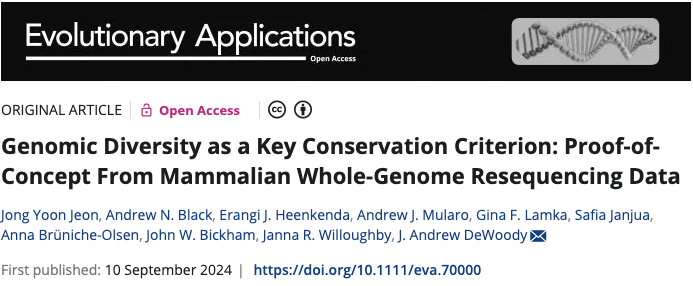
Interested in how genomic data can help improve conservation assessments and population monitoring? Check out our paper in @EvolAppJournal where we outline background, provide a bioinformatic pipeline, and suggest an analytical framework🧵https://t.co/JWvXF5SDV1
From single cell to spatial multi-omics: unveiling molecular mechanisms in dynamic and heterogeneous systems
Curr Opin Biotechnol from @BurnumJohnson
https://t.co/7evGSb53Xf
Preprint on "BWT construction and search at the terabase scale". We can compress 100 human genomes to 11GB in 21 hours, find SMEMs with it, do affine-gap alignment and retrieve similar local haplotypes. 7.3Tb commonly sequenced bacterial genomes ⇒ 30GB https://t.co/DiRwZNHVVa