What makes strangers “click” with each other? What does it mean to have merged minds with a close partner?
Our new JPSP paper (w/@ardollam, @KatherineZee, @ericaboothby, Tory Higgins) explores the experience of generalized shared reality:
https://t.co/0eSFFB1OZl
A thread:
1/
So excited to announce our paper in Current Directions in Psych Science “Visible and Invisible Support: How, Why, and When” https://t.co/2g3aPHqsuj and even more excited to have written it with Niall Bolger @ardollam, who wrote the original paper on invisible support in 2000! 1/2
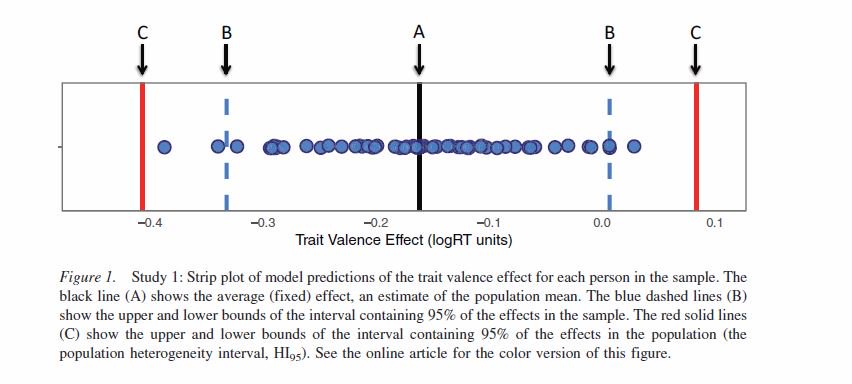
Oops, I forgot to tell you about the new paper. It is called "Causal Processes in Psychology are Heterogeneous" and it makes the case that we often fail to allow for between-subject variability in experimental effects. Follow this link: https://t.co/3ANb4K4nYA
@joejps84@PaoloAPalma Take a look at the paper. We say it is wise to work from the assumption that causal effects are heterogeneous, but what matters is how big the hetergeneity is. We show one example where it is tiny and can be ignored and another where it can't reasonably be ignored.
What's happening? What's happening is that Katherine Zee, Maya Rossignac-Milon, Ran Hassin and I have published a paper. That's what's happening! This paper took only 10 years to complete, an improvement on the 17 years it took for an earlier paper.
@LudoAmelsvoort We argue in the paper that in the case of repeated-measures experiments, where there are many stimuli used (e.g., 40 to hundreds), it makes sense to check for causal effect heterogeneity. No additional resources are likely to be needed.
@LudoAmelsvoort Just to be clear, the paper deals with heterogeneity in the effects of within-subject factors in repeated measures experiments. We are not examining heterogeneity in treatment effects in clinical trials.
@DrSLDesmarais Sarah: All the data and R/SPSS code are available as supplemental materials. I hope you will find them useful in you want to try out our analysis approach. Check out:
https://t.co/qDREGOqJbY