While everyone’s offering their two cents on the decline of reading and math achievement in the United States over the last decade, here’s my unvarnished take: for years, inconsistent instruction was often cushioned by strong academic support at home with parents reading to their children, discussing current events, taking them to museums, and building background knowledge through everyday life.
That support helped compensate for instructional approaches that often expected students to infer too much, discover too much independently, and learn without enough explicit teaching or shared knowledge. As academic engagement at home has declined, those instructional weaknesses have become much harder to ignore.
For decades, too much of our system was accomplishing less with more—more background knowledge, more vocabulary exposure, and more literacy experiences outside of school. Now we’re trying to accomplish less with less, and the cracks are becoming impossible to ignore.
So what’s the path forward? We start doing better with less: explicit instruction, knowledge-rich curriculum, retrieval practice, and teaching informed by cognitive science. In other words, instruction intentionally designed around how learning and memory actually work.
We need to talk…
Reading a script from a teacher’s manual is something you do as you prep for your lesson. Reading a script to kids is not teaching. 🛑
Referencing it as you teach to ensure you cover critical content & create equitable learning experiences is necessary. 👏
Now is the time to ensure that tier 1 instruction in Kindergarten is working! Provide lots of retrieval practice and feedback to students. Early prevention is critical with foundational reading skills!
igh quality material does not guarantee high quality implementation.
Because teacher knowledge matters.
Because philosophical instructional shifts don’t happen just because you have good tools…
Because giving a handiman construction tools does NOT guarantee that he builds a house with a solid foundation and/or appropriate layout .
What explicit instruction practices should you look for when observing for fidelity of implementation? Our new eLearning module supports instructional coaches and admins observing explicit instruction, with classroom demonstration videos and an observation rubric. https://t.co/3N8fq7ndFs
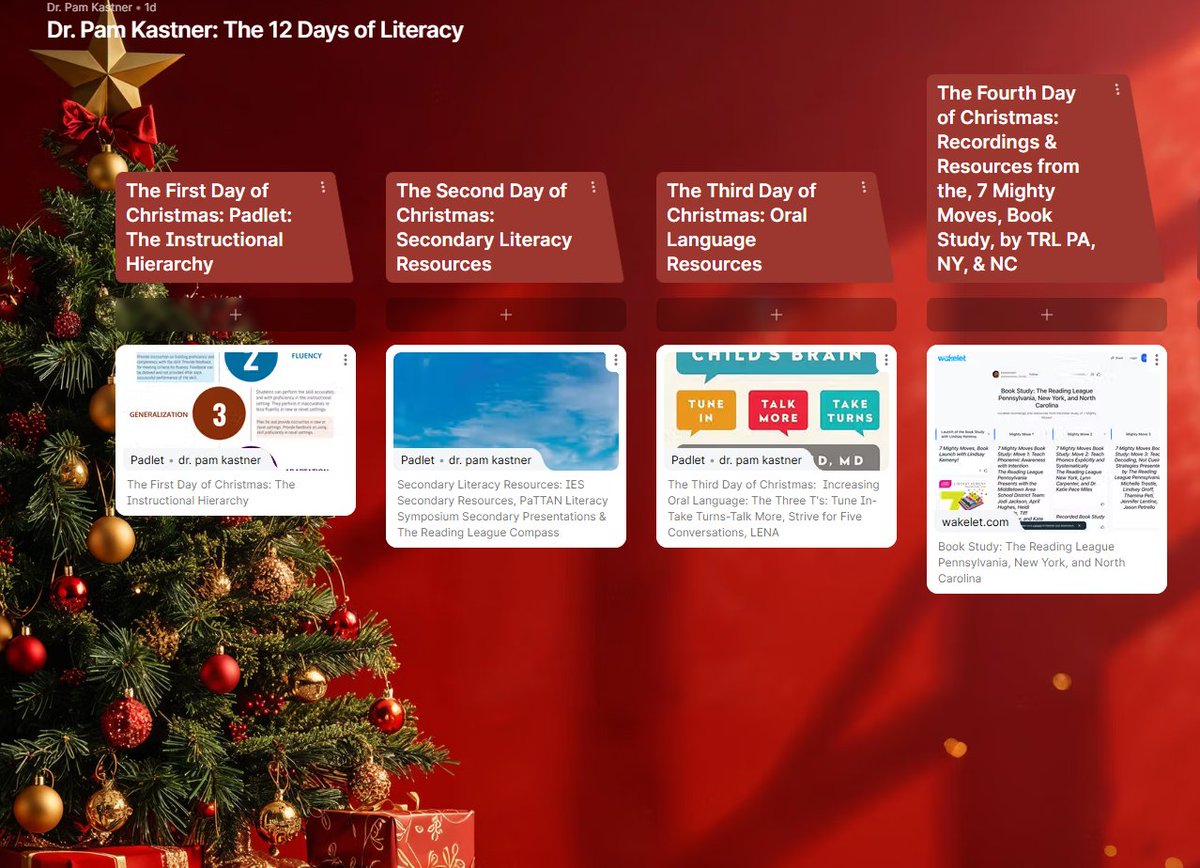
🎄 12 Days of Evidence-Aligned Literacy: Day 4 🎄
This season, I am sharing 12 days of evidence-aligned literacy resource, one per day, designed to support teachers, coaches, and leaders in strengthening instruction from foundational skills through skilled application.
Day 4 highlights a Wakelet of curated recordings and resources from a multi-state book study of, 7 Mighty Moves, by Lindsay Kemeny, a study collaboratively hosted by three state chapters of The Reading League:
📘 The Reading League Pennsylvania
📘 The Reading League New York
📘 The Reading League North Carolina
7 Mighty Moves is a powerful example of what happens when research, instructional clarity, and classroom realities intersect. Lindsay Kemeny’s work is especially impactful because it reflects the voice of a practicing classroom teacher, someone actively navigating the complexities of instruction while remaining grounded in evidence.
Her work reminds us how essential it is to learn with and from practicing educators as we translate the science of reading into effective instruction.
If we want research-aligned practices to take root, we must continue to elevate and learn from educators who are doing this important work every day.
📌 Explore Day 4 and every day after, here: https://t.co/pXD63OBHKF
@LindsayKemeny
Just published in Gifted Child Quarterly:
Advanced first-grade readers still benefit from (and enjoy) explicit, advanced decoding and spelling instruction—with measurable gains in fluency. https://t.co/19p87Ph0f0
It’s “light enough that teachers can breathe life into it…”
Currently, most are so heavy that teachers can’t even manage it or even consider breathing life into it.
In the last 15 years, we’ve molded a school system where the students who follow the rules get the least attention…because all the energy goes into managing the ones who don’t.
Go to this website!
This website's organization/arrangement, the ease of navigating it, along with the range of resources and their quality, will blow your mind.
I have never seen anything as well-organized and free.
https://t.co/EP5T631yjv
Kudos to @ksirach! Well done.
Former Louisiana state leaders @Kunjan19 and Jessica Baghian weigh into the WonkaThon, and it’s 🎯 .
“Adding literacy onto a pile of pre-existing state priorities won’t help more kids read—the pile has to go...
As the saying goes, you can do anything but not everything.”
@MichaelPetrilli@educationgadfly@kellibottger
I caught part of Dr. Shanahan’s webinar yesterday. He made a key point: leveling systems often leave parents in the dark about their child’s reading skill level in relation to grade-level standards and expectations.
If I had kids in K–6, one question I would ask at the November PTC would be: What is my child’s reading benchmark score, and what is the expected score for this time of year? If my child were below benchmark, I’d ask: What specifically did the score show? Was the issue, was it PA, phonics, comprehension, fluency, or sight words? And then I would ask how specifically my child can be helped through the school day?
Not to be accusatory—just to ensure the issue is understood and being addressed.
WHY? Because the statistics that Patrick shares below are alarming, and when it comes to reading development, "the gift of time" is a myth.
@MmeLockhartLDS@dr_costello I think this is really key. Expert teachers should be teaching pre-service teachers. Additionally, it is important that those who are supporting new teachers have a clear understanding of classrooms now and not those of 15 years ago.
Teaching kids how to read is one of the most complex and rewarding parts of our work. A central challenge lies in knowing when to scaffold, how to scaffold effectively, and when to step back so students can take ownership.
This balance is easier said than done, and without clear models and trusted guidance, teachers may feel like they’re guessing—while students can become frustrated.
That’s why we all play a role. Teachers need and deserve meaningful coaching and leadership support. Leaders and coaches, in turn, must be present in classrooms and deeply knowledgeable about the science of reading and effective Instructional practices.
I know I sound like a broken record, but we teachers are lucky to have access to Dr. Lane and the UFLI team's rapid and insightful responses.
Exhibit # 109,038,943,060
This has come up a bit recently: Stating success criteria at the start of a lesson.
My take: Stop doing it. Students usually don’t understand the success criteria stated in isolation. If you try to verbally explain the success criteria, you’re killing lesson momentum.
Instead…