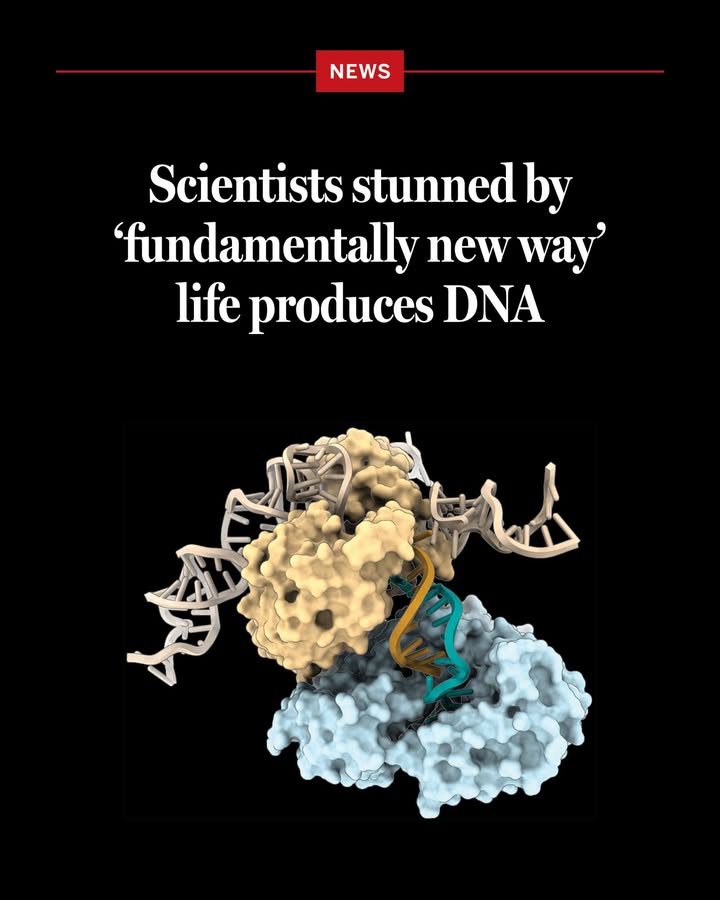
For decades, biology textbooks have enshrined a simple rule: DNA is made by copying a template. After one enzyme unzips a DNA double helix into separate strands, another called a polymerase builds a complementary sequence, base by base, for each strand. Presto: two copies of the original DNA.
But new research into how bacteria defend themselves from viruses now shows this synthesis rule isn’t absolute.
Now, a team describes a bacterial enzyme that synthesizes DNA without a nucleic acid template, using its own structure as a guide.
Learn more: https://t.co/TeUWvyO0OD @NewsfromScience
Highlights from Disease Outbreak News on #hantavirus linked to MV Hondius:
▪️ As of 8 May, a total of 8 cases, including 3 deaths, have been reported. 6 cases are confirmed as Andes virus. 4 patients are currently hospitalized. One case previously reported as suspected has now been reclassified as a non-case after testing negative for Andes (ANDV) virus through specific polymerase chain reaction (PCR) and serology.
▪️ Epidemiological investigations are underway to determine the source of exposure, including on the travel history and potential exposures of the first case.
▪️One expert from WHO, one from the European Centre for Disease Prevention and Control (@ECDC_EU) are on board the cruise ship to provide support to the passengers, crews and ship operators during the journey.
▪️ WHO has developed and shared technical guidance documents in support of countries affected by the event, including covering management of the event on the ship, investigation of cases, disembarkation and management of returning passengers and crew members.
▪️ An adult male, who disembarked in Tristan da Cunha on 14 April, is currently stable and in isolation. He is currently a probable case until laboratory confirmation.
▪️ Passengers who travelled on the same flight from St Helena to South Africa along with one of the confirmed cases have been contacted.
👉🏽To date, 75 contacts have been identified in South Africa, of whom 42 have been traced by national authorities and are currently under monitoring.
Here is what WHO advises:
▪️ Countries involved in this event continue public health coordination and management efforts on board conveyances and in countries where cases and/or contacts are present or will be returning to. Early recognition of suspected cases, prompt isolation, and consistent adherence to recommended infection prevention and control measures remain essential to protect healthcare personnel, other passengers and crew members. Current evidence does not support usefulness of routine laboratory testing or quarantine of asymptomatic contacts.
Read the full disease outbreak news here: https://t.co/lD9f1hy7Xu
A man spends 50 years teaching at MIT.
He knows his time is running out.
So he records one last lecture — everything he knows, distilled into a single hour.
He died 5 months later.
This is that lecture.
The most important hour you'll watch this week. 👇
Bookmark it for later
Black History Quick Fact #10
Anna Julia Cooper was a leading Black intellectual whose work influenced education reform, feminism, and civil rights thought decades before these movements gained traction.
#BlackHistoryMonth#BlackHistory#AmericanHistory#PrincetonAAS
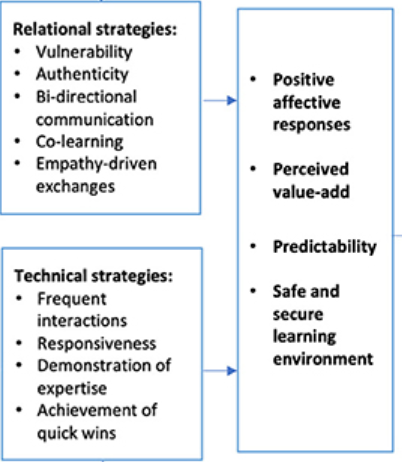
In the field of implementation science, there's lots of research on technical strategies & rational choices but little on the critical role of trusting relationships in enabling change to happen. So it's great to see this article by @allisonjmetz et al: https://t.co/KgExLWaRn1
Often in the development sector, we see two problems playing out simultaneously:
❌ Policies are launched without evidence backing them up,
❌ And transformative research remains underutilized
In a world of limited resources and pressing challenges, we can't afford to make uninformed decisions or generate unused evidence.
IDinsight Chief Technical and Learning Officer, @Marc Shotland, shares two practical frameworks that organizations can use to bridge this gap:
✅ Value of Information Approach: Treat evidence generation as an investment decision.
✅ Response Framework: Map every data you collect to specific decisions, decision-makers, and timelines.
Read Marc's latest blog on closing this gap ⬇️
https://t.co/cIZd7e1MUw
PUBLISHED TODAY: 'Putting Evidence to Work: A School's Guide to Implementation' - our latest guidance report.
Implementation is what schools do to improve: to change and be more effective. Find out how here: https://t.co/HIn8DuoCMp
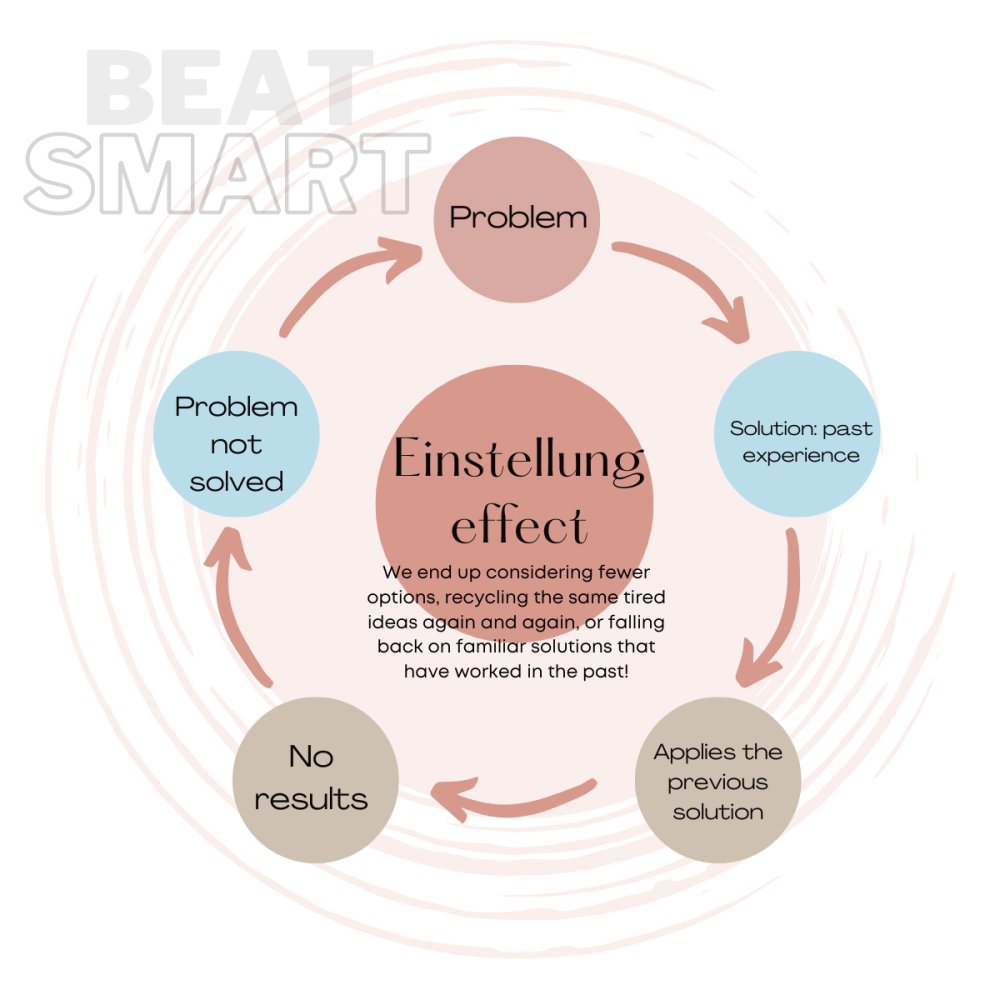
A major barrier to change in health & care is the Einstellung effect. It occurs when, facing a new problem, we apply a repeated solution we have learnt from old problems, based on what we know and are comfortable with, preventing us finding a better solution. It creates a cycle of non-achievement of results. See graphic by @suyashi_dwivedi. We can address it by:
1) Bringing in different voices & perspectives on the problem.
2) Engaging everyone who will be impacted by the potential change early on, so there is ownership, not resistance, to new ways of doing things
3) Small scale testing and experimenting with new approaches.
4) Being divergent in our thinking & not rushing to convergence.
5) Using a structured methodology like design thinking where we focus on fully defining the problem.
6) Being curious to find out how other people have tackled similar problems.
New solutions need new approaches.
Classic article: https://t.co/vpvvyLn5V0 Via @emollick. Additional ideas from @interacting
A new study in #BMCPublicHealth examines cyberbullying as a potential Adverse Childhood Experience (ACE). Among US adolescents, exposure to exclusion and identity-based targeting, is strongly associated with PTSD symptoms. Find more here: https://t.co/2IUMish222
"We have to disarm the war on woke. It's like a gun that's been loaded and it's on the table, and it's available to be targeted at things that people clearly care about, which is our democracy."
https://t.co/TJwwvmi6OJ cc @democracynow