Introducing the USDC Bridge.
A direct way to move USDC crosschain.
Built and operated by Circle, USDC Bridge gives you a predictable, transparent way to move USDC between chains:
→ Native burn-and-mint transfers
→ Clear fees upfront, with live status and progress
→ No route selection. No bridge complexity.
→ Destination gas handled automatically
Move USDC. That’s it.
https://t.co/PpWmUG18o8
The crypto market might be volatile, but the fundamentals have never been stronger!
In this short video, I walk through data showing how adoption continues to accelerate despite short-term price swings:
🔹$36B in tokenized real-world assets (excluding stablecoins)
🔹Explosive growth in tokenized treasuries, commodities, and stocks
🔹Ethereum ecosystem throughput surpassing 11,000 TPS
🔹Solana network revenue and activity rising steadily
🔹DeFi protocols now integrating real-world assets as collatera
🔹lnstitutions like Visa, Citi, and Revolut moving on-chain
Timestamps:
(00:00) Intro – why data matters
(01:10) $36B in tokenized assets
(03:35) Solana’s strong fundamentals
(04:10) Ethereum’s exponential growth
(07:00) Stablecoin volume surge
(07:45) 11,000 TPS milestone
(09:50) RWAs in DeFi
(10:30) Final thoughts
At onchain, we help projects, investors, and institutions make sense of these shifts through data-driven research reports and market intelligence.
👉 Learn more at @OnchainHQ
Our clients say it best.
We help web3 leaders drive business results with tailored research + actionable advice.
Data → Insights → Decision → Success
Could tailored research & guidance could help you too?
Learn more about our Services via our link in bio.
Token2049 Singapore was an absolute success! 🇸🇬
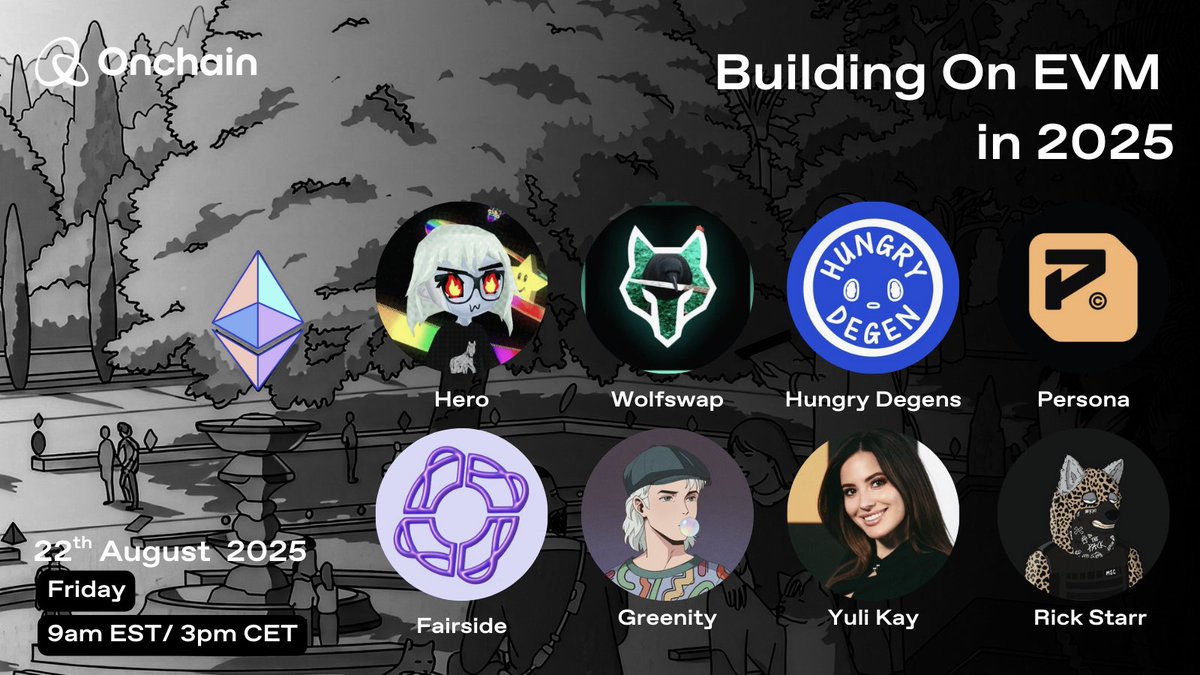
The Onchain team is coming back with lots of partnerships in the pipeline, deeper community bonds & strengthened relationships with existing clients.
Where will we meet you next? ✈️
This is the kind of DeSci use case we’ve all been waiting for.
Samsung is working with @GaleonCare to train AI on ultrasound diagnostics – not by just “collecting data,” but by building a system where hospitals keep control, patients remain private, and model training is fully transparent.
– The records stay where they are.
– Hospitals decide what gets used, when, and under what terms.
– Patients can choose to participate, and when they do, they’re compensated.
– Nothing leaves the institution unless someone explicitly agrees to share it.
This setup provides researchers with the clinical insights they need, while the sensitive data itself remains within the hospital's secure environment.
🤝 Congrats to @GaleonCare for building (and selling!) it. But equally big kudos to @SamsungHealth for choosing a non-obvious, but fundamentally more sustainable path for sourcing data.
JUST IN: We’ve rebuilt what @OnchainHQ is. And how we can actually help you.
Over the past year, we have published essays, dashboards, and reports that have been used by thousands.
But the most meaningful work happened in direct collaboration – when teams brought us in to help with positioning, customer insight, or product focus.
After some time – and a few honest conversations – it became obvious: this is where we bring the most value. And where we can contribute to Web3 in a way that actually matters.
📣 Onchain is no longer just a research outlet. We became a research partner – built to help teams make faster, smarter decisions.
We support startups, protocols, funds, and infrastructure providers on questions like:
– What makes us relevant in this market?
– How do our customers actually think and choose?
– Where do we stand against competitors – and what do we do with that?
– Which ideas are worth building – and which are worth killing?
The format depends on the need – not everything ends in a research report. It might be a benchmarking analysis, an internal deck, a recurring brief, or a custom dashboard.
The point is: it’s built for decisions, not distribution (unless you, as a client, want it!).
✍️ On a personal note: Leading this shift meant reshaping how the entire team operates. We basically moved from a content-first model to a decision-first practice and rebuilt how we scope, collaborate, and deliver.
Managing such a change and accomplishing it in just two months (without lowering the bar) made me honestly proud of what we pulled off.
And what about the traction? We’re already working with teams I deeply respect – while 30+ more are in the pipeline. Both the external and internal momentum are stronger than they've ever been.
So, this new chapter for us isn’t just about bringing people onchain. It’s about bringing Onchain to people 🤝
Onchain is evolving.
Over the past months, we noticed increasing requests from startups & enterprises seeking tailored web3 insights for decision-making.
And we are uniquely positioned to help.
Introducing Onchain Research Services 🧵
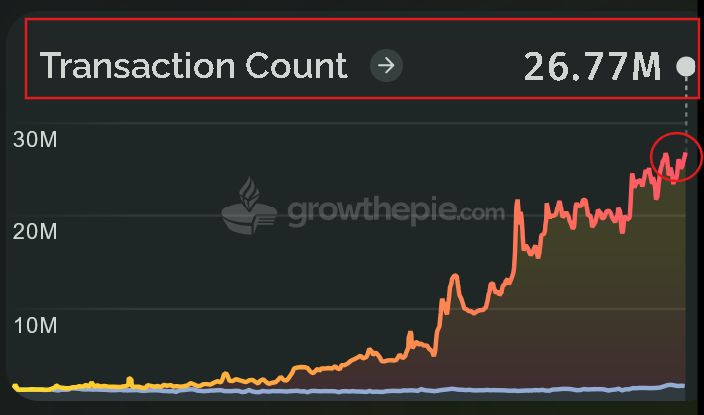
The Ethereum ecosystem (Mainnet L1 + L2s) is hitting new record levels of network activity!
🔸 In 2022, daily transactions were under 5M
🔸 By 2024, the ecosystem stabilized above 10M
🔸 Today, it’s consistently above 20M and just reached 26.7M in a single day
What’s interesting is that this growth looks organic and sustained, not just hype-driven. L2s like Base and Arbitrum now handle the majority of the load, while Mainnet remains steady.
Ethereum is quietly proving it can scale throughput without losing demand! The next milestone to watch: will the ecosystem push past 30M daily transactions soon? Very likely, if you ask me.
Grouping all stablecoins under the 'digital dollar' label is a cognitive shortcut that misses the entire point.
💸 Some issuers treat them as cash cows, earning yield on reserves with minimal operational risk.
🤝 Others use them to lock users into a broader ecosystem, where seamless payments reinforce platform loyalty.
🏦 A growing group of banks utilizes them to modernize outdated payment infrastructure without rebuilding it from scratch.
🏛️ And in some cases (hidden in the graphic), they create a controlled channel for the Fed to conduct quiet quantitative easing — without touching the public balance sheet.
The peg might be the same. But the purposes – well, they usually vary a lot.
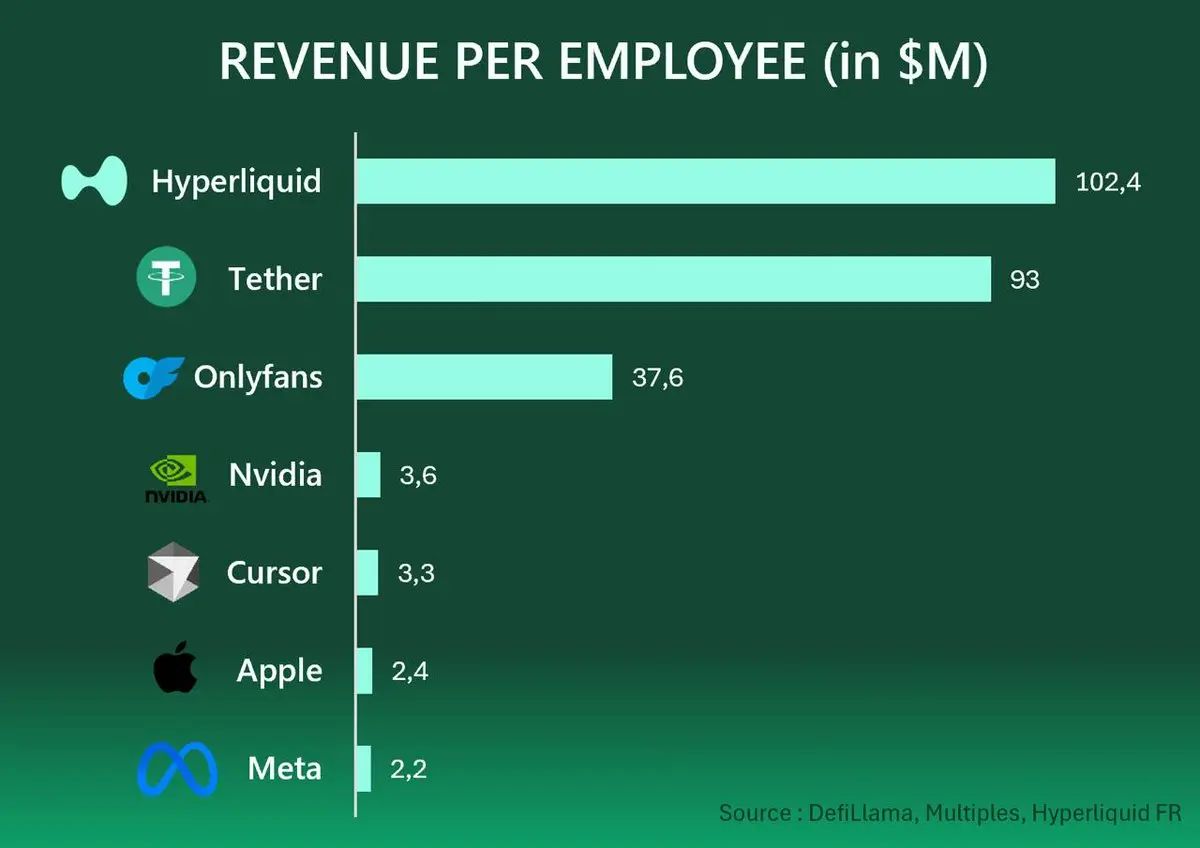
I know you like Hyperliquid’s perps. But it’s their business model that might be the real alpha.
The “$102M revenue per employee” figure obviously requires some context. Onchain protocol revenue is functionally different from traditional corporate revenue, and it isn't all being distributed to the 11-person team.
However, this number effectively illustrates the potential of Web3 business models in achieving extreme capital efficiency.
This level of operational leverage makes even a powerhouse like Nvidia, or the famously lean Tether, look almost “traditional” by comparison.
📚 These new onchain business models aren't present in standard business books. For example, I really enjoyed 'The Business Model Navigator,' which maps 55 traditional frameworks – but the ones used by Hyperliquid or Tether would be completely new additions.
Web3ish sequel, anyone?
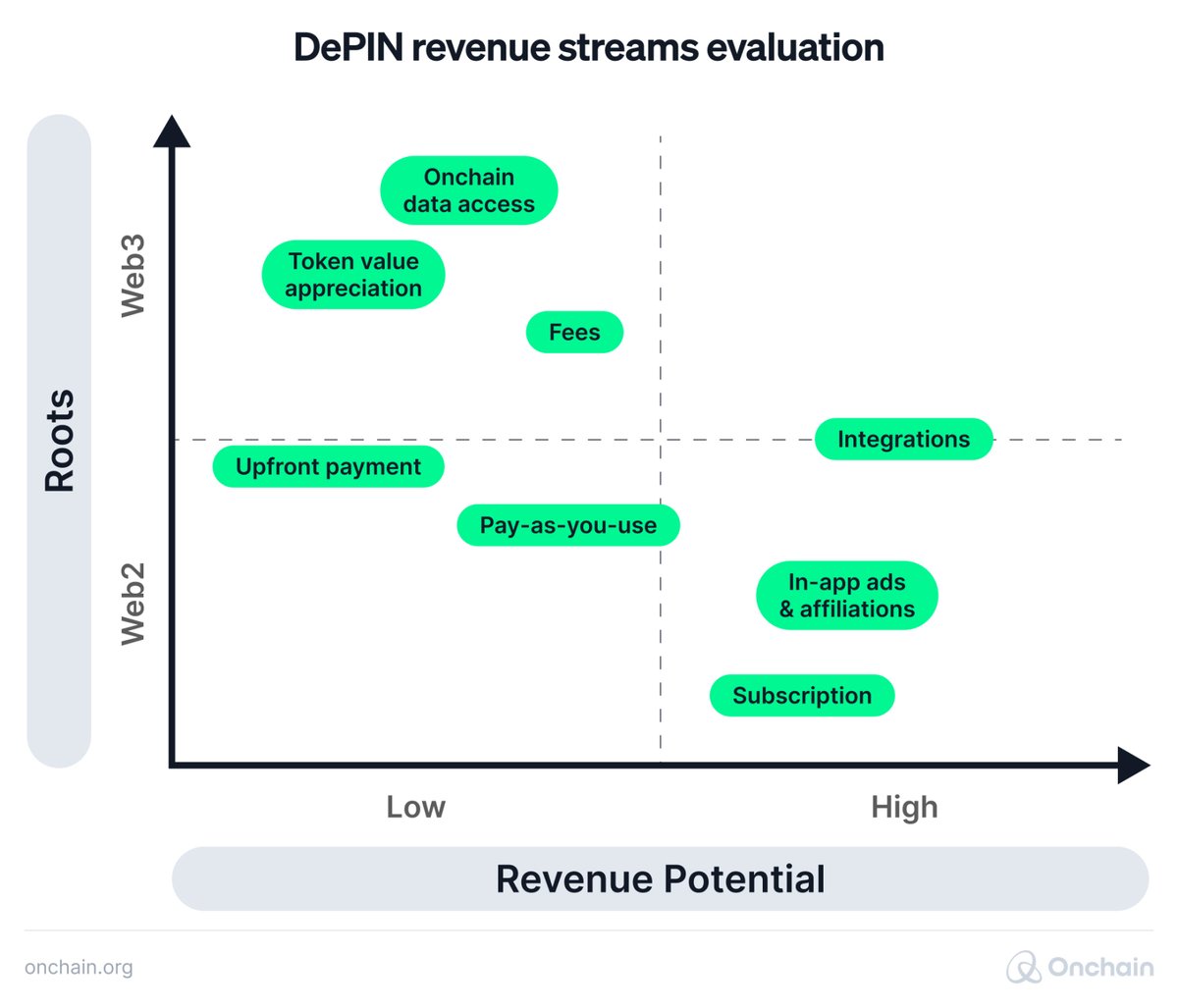
PS We’ve already begun exploring this territory in our @OnchainHQ's "DePIN Brings Real-World Business Opportunities for Web3" report last year. But it’s clear that the design space is still wide open.