Friends, I don’t think we Christians fully understand how radically we must think about the goal of the Christian life. It is not to become a nice person. An atheist can be a nice person.
The goal is to become a new creation, someone living the very life of God. Jesus is the Son of God by nature, but we become sons and daughters of God by adoption, brought into a share in his life like a child welcomed into a family and their home.
That’s what it means to be a saint: to be invited into the household of God, and to worship God by eating and drinking the body and blood of Jesus, becoming assimilated unto him.
Try as I might, my words don’t suffice. I am so blessed to have worked with one of the greatest as he purred my name, “Tasha” with such grace. My colleague, my Captain, “no good-byes, just good memories…”#StarTrek@SirPatStew#PatrickStewart
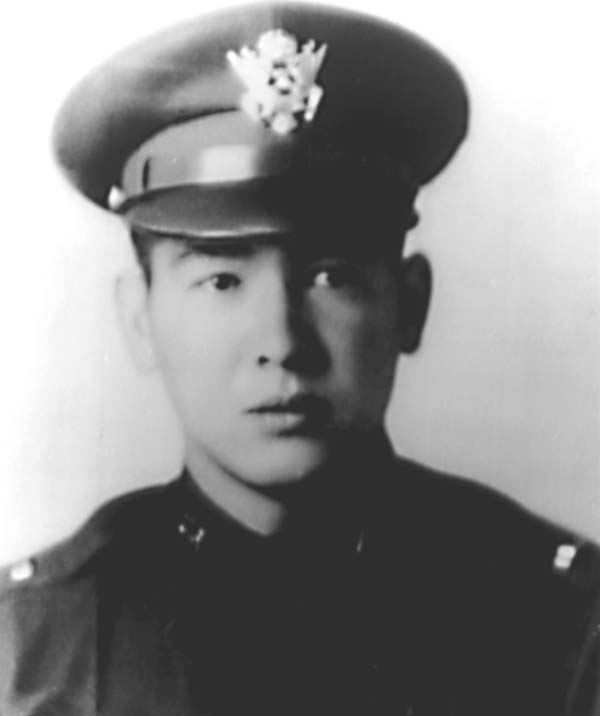
On the very afternoon MacArthur waded ashore, another officer was dying a few hundred yards away to make that beach safe. Captain Francis Wai found the first waves of the Leyte landing leaderless and pinned in the sand, stood up, took command of them, and led them off the beach, and it killed him. He earned the Medal of Honor on Red Beach on the 20th of October 1944, though it took more than half a century for his country to award it.
Wai was a company officer with the 34th Infantry, part of the 24th Division, in the assault waves that hit Red Beach near Palo that morning, the same beach MacArthur would come ashore on later in the day. The landing had gone wrong in the way landings do. The first four waves of American soldiers were down on the open beach, their officers killed or hit, the men leaderless, disorganized, and pinned flat by Japanese fire pouring from pillboxes and from the swampy ground beyond the sand. The attack had stalled at the waterline, the most dangerous place to be, bunched up on an exposed beach under fire.
Wai, coming in with a later wave, took in the chaos and did the thing that breaks the paralysis. He got up. He moved among the pinned-down men, upright and deliberately conspicuous, drawing fire onto himself to locate the hidden Japanese positions and to shame and rally the stalled troops into moving. He reorganized the leaderless soldiers, got them up off the sand, and led them forward off the beach and into the attack on the Japanese defenses, personally leading the assault toward the pillboxes that were holding everything up. He was killed leading that charge, hit as he assaulted the final strongpoint, but the beach was moving by then, the paralysis broken, the men driving inland.
Here is the part that says something about his country as well as about him. Francis Wai was a Chinese-American, born in Hawaii, one of the relatively few Asian-American officers of his era. For his actions he was awarded the Distinguished Service Cross, the second-highest award, but not the Medal of Honor, and there was a pattern to that. In the 1990s a review examined whether Asian-American servicemen of the Second World War had been denied the Medal of Honor because of their race. The review concluded that many had, and in the year 2000 a group of them finally received the medal they had earned decades before. Francis Wai was among them, his Distinguished Service Cross upgraded to the Medal of Honor, the recognition arriving fifty-six years late and long after his death.
So his story carries a double weight, like that of the Buffalo Soldiers I told you about. He gave his life leading American soldiers off a deadly beach on the day of the great return to the Philippines, and he had to wait more than half a century, because of his ancestry, for his nation to call it what it was. On Red Beach on the 20th, though, none of that mattered to the men he got up and moving. To them he was simply the officer who stood up when everyone else was pinned down, and led them off the sand.
Johnny Carson’s last time on television is a cancelled Top 10 list.
Letterman brings him out to deliver the card. The room stands for a minute and a half.
Carson sits at Dave’s desk, puts a hand on the wood and does not say a word.
Dave does the only correct thing left: he takes the guest chair in his own studio.
Carson could have talked, Dave could have interviewed him. Either choice would have been smaller than the entrance.
So they both refuse to add a second act.
This is not a victory lap, It is a host who knew the bit was over while he was still in it.
Who on late night now would walk after the applause instead of cashing it for five more minutes?
Word has just come down that St. Paul’s Cathedral in London—the second most important church in the Anglican world—has imitated Canterbury Cathedral in permitting “raves,” nightclub-like entertainments, to take place in its confines.
The usual reasons for acquiescing to this have been trotted out: reaching out to the young, trying to get with the times, etc. But this development simply shows that the leadership of the Church of England has lost any sense of the crucial distinction between the sacred and the secular.
Across the centuries and across the cultures, our ancestors seem to have intuitively grasped the importance of this demarcation. Whereas the secular is the arena of ordinary experience and activity, the sacred is another realm, a different dimension.
Accordingly, in the properly sacred space, one is lifted out of the conventional and introduced into the numinous. This is why Christian cathedrals are filled with images of the saints and angels and why their interiors are meant first to disorient us and then to reorient us toward the divine.
It is also why, in the initiation rituals of primal peoples, a young person is purposely ripped out of the ordinary and introduced into the mythic and mystic dimension. And it is why, throughout the Bible, sacred spaces are carefully set apart from common spaces.
The contemporary West is, quite literally, the first culture in human history that is in danger of collapsing the sacred into the secular, or better, losing any sense of the difference between the two.
This is doing enormous damage, especially to young people, whose lives have been flattened into a preoccupation with money, worldly success, and material things.
The Church indeed should go out into the secular space to find those who have wandered away from God, but it should then lead those wanderers back to the holy.
Having “raves” in the nave of one of the most sacred spaces in the Christian world is, I’m sad to say, another sign of our pitiful surrender to ideological secularism.
“The day of the Nativity of the Mother of God is a day of universal joy, because through the Mother of God, the entire human race was renewed, and the sorrow of the first mother, Eve, was transformed into joy.” —St. John Damascene
If Jesus rose from the dead, then you have to accept all that he said; if he didn't rise from the dead, then why worry about any of what he said? The issue on which everything hangs is not whether or not you like his teaching but whether or not he rose from the dead.
On a dark night in 1943, a wounded submarine captain, unable to climb down off his own bridge, gave a two word order that killed him and saved all 80 of his men. The order was "Take her down," and it became one of the most sacred phrases in the United States Navy.
His name was Commander Howard Gilmore, and here is the moment. On the night of February 6, in the southwest Pacific, Gilmore had his submarine, the USS Growler, running on the surface in the darkness, stalking a Japanese convoy for an attack. Then a Japanese escort ship spotted them and swung around to ram, charging straight out of the black. Gilmore reacted instantly, ordering a hard turn to strike first, and the Growler smashed into the enemy ship at speed, a collision violent enough to crumple 18 feet of the submarine's bow over to one side.
At that same instant, the Japanese crew raked the Growler's exposed bridge with machine gun fire. The officer of the deck and a lookout were killed outright, and Gilmore himself was cut down, badly wounded on his own bridge.
Now understand the situation. A submarine's bridge is a tiny platform on top of the conning tower, and to dive, the crew scrambles down a hatch into the hull and seals it. The wounded men who could still move began dropping down the hatch. But Gilmore, hit and unable to climb down, understood the arithmetic instantly. The submarine was still on the surface, exposed, being fired on, and every second it stayed up it might be sunk with every man aboard. The only way to save the boat was to dive right now. But you cannot dive with the hatch open, and he could not reach the hatch.
So he gave the order that would kill him and save everyone else. Clinging to the bridge, bleeding, he called down into the hull, "Take her down." He was ordering his own crew to seal the hatch and submerge the submarine while he was still on top of it, knowing it left him on the surface to die. His officers hesitated at the sheer horror of the command. Then they obeyed their captain. They closed the hatch and took the Growler down. Gilmore was never seen again.
The battered submarine survived, submerged, and limped home, alive because her captain had traded his life for hers in the space of a few seconds. Howard Gilmore became the first submariner of the war to receive the Medal of Honor, and his final order, "Take her down," lives on in the United States Submarine Force as the ultimate expression of a commander who put his crew and his ship above his own life.
Baseball legend Babe Ruth was a Catholic who wrote this letter about Communion, Confession and the Miraculous Medal:
“In December, 1946, I was in French Hospital, New York, facing a serious operation. Paul Carey, one of my oldest and closest friends, was by my bed one night.
- They’re going to operate in the morning, Babe, Paul said. -Don’t you think you ought to put your house in order?
-I didn’t dodge the long, challenging look in his eyes. I knew what he meant. For the first time, I realized that death might strike me out. I nodded, and Paul got up, called in a chaplain, and I made a full confession.
-I’ll return in the morning and give you Holy Communion, the chaplain said, -But you don’t have to fast.
-I’ll fast, I said. I didn’t have even a drop of water.
-As I lay in bed that evening, I thought to myself what a comforting feeling to be free from fear and worries. I now could simply turn them over to God. Later on, my wife brought in a letter from a little kid in Jersey City.
‘Dear Babe,’ he wrote, ‘Everybody in the seventh grade class is pulling and praying for you. I am enclosing a medal, which if you wear will make you better. Your pal—Mike Quinlan. P.S. I know this will be your 61st homer. You’ll hit it.’
-I asked them to pin the Miraculous Medal to my pyjama coat. I’ve worn the medal constantly ever since. I’ll wear it to my grave.”
These days you will often hear: “Every individual must be free to determine what is right or wrong for him or her. Don’t impose your morality on me."
That assumes that there is either no God or there is a God who does not hold you accountable for your beliefs and behaviors.