Interested in exploring cognitive flexibility in the auditory domain using EEG / brain oscillations. Released our human EEG data on salient distractor processing along with T1- MRI maps @ScientificData@priyankatweets4@KIRTISALUJA22@DBT_NBRC
https://t.co/lMLsDvFQsq
Excited and delayed on first time ride in the Shinkasen of India - Vande Bharat to Amb @RailMinIndia@AshwiniVaishnaw . Apparently 1 hour delay is norm!
It is about time we develop a national level policy of how to catapult #Neuroscience research in India to next level in mission mode identifying apex centers, stakeholders, industry partners @dasgobardhan@NITIAayog@PMOIndia. Integration of large data sets is need of the hour.
Scouting industry partners for a population level study integrating EEG and behavior for dementia detection across rural India. Portable research grade EEG makers, please connect with DM. Serious engagements to develop novel R&D is more welcome than marketing pitch! @DBT_NBRC
They say life is full of surprises. And nothing beats a testimonial like this which certainly made my day. Thank you @AshokaUniv for this opportunity ! All the best dear student
#WATCH | Mumbai, Maharashtra: At an event hosted on 'Quantum Research', German Physicist and Nobel Laureate, Klaus von Klitzing says, "... I am fascinated to see that a basic research laboratory, privately funded, will be created here in India, like a Max Planck Institute. I am coming from Germany, and we have the Max Planck Society, which is free to do basic science, to generate new knowledge, and to have a higher understanding of our world. If you look in Germany, nearly all Nobel Prize winners work in the Max Planck Society, and the result of basic research is visible only after a certain time. Today in our hectic world, everyone is looking for results in the next year or the next three years; only a few people have the long‑term vision. I’m happy that the Lodha* Foundation has this vision to support basic science..." (26.5)
📢 An interactive session on Technology Licensing & IP Management is being organised at NBRC in collaboration with @Biotech4India 🔬💡
The session will feature expert talks by Dr. Purnima Sharma, MD, BCIL, and Dr. Suvarna Pandey, followed by an interactive Q&A session with students.
Faculty members, PhD scholars, and MSc students are participating in the session.
@BricDbt@DBTIndia@rajesh_gokhale@DrSagarSengupta@arpansview
#WATCH | South 24 Parganas, West Bengal: Polling begins in Falta Assembly Constituency.
A voter says, “It is the same as it was back in my childhood. We were scared to cast our votes 15 years back, but not anymore. 15 years back, we were not even allowed to come to the booth, the goons would stop us at the gate…I am very happy today.”
I have spent my entire life working on this and thinking about this for the past 4 years. I don't know what will happen in 20 years, but I can promise you that on the 5-10 year timescale, scientists are not out of their jobs. AI is going to massively accelerate the pace of science, increase productivity, let individual scientists make way more discoveries way faster, and is going to make science overall more fun. But the model is going to be collaboration between humans and AI, not replacement.
The key difference here between science and e.g. software engineering is that science is not verifiable in any rapid/convenient way (unlike software), unlike programming. We still need humans for their scientific taste.
Remembering the amazing scientist, teacher, author and institution builder - Padma Vibhushan Dr. Jayant Narlikar on his first Punyatithi 🙏
Dr. Narlikar did pioneering research work in cosmology and astrophysics at Cambridge and TIFR, early on in his career. He wrote many books (fiction and non fiction) in English and Marathi... books that made science interesting and fun. He was a guide and mentor to many students, and helped build and nurture India's premier astronomy and astrophysics institute, IUCAA in Pune. He served as IUCAA's Founding Director.
I was fortunate to meet Dr. Narlikar a few times and will always remember those meetings.
Amongst his many books, I would highly recommend his own autobiography, which he first wrote in Marathi and then translated it himself into English - 'My Tale of Four Cities'. He chronicles his entire life journey across Varanasi (he lived on the BHU campus, where his father was a Professor), Cambridge, Mumbai and Pune.
Recently, he had also set up his own blog and published some interesting articles and memories there. Do check that out as well.
About 65 million years ago, an asteroid hit our planet and changed the course of life on Earth. Non-avian dinosaurs died, thus ending their reign. Walter Alvarez, a UC Berkeley geophysics professor, co-discovered (with his father, Nobel prize-winning physicist Louis Alvarez) the impact theory for dinosaur extinction. Their hypothesis was vindicated in 1991 when the massive Chicxulub Crater was discovered on the Yucatan Peninsula. Hear famous palaeontologist Steve Brusatte on the 21st May at the India International Centre, Delhi, on the rise and fall of these beasts. @GlobalAshoka@AshokaUniv
1/8 Ever wonder why daydreaming makes you forget things? A new EEG study just cracked open the brain mechanism behind it 🧵 #Neurosciences#WorkingMemory#BrainWaves
New publication alert from CBDL @DBT_NBRC@saide_iitj@iitjodhpur led by PhD student @ankitcog investigating human memory using dual task EEG and self-related processing along with @arpansview
Yadav, Banerjee & Roy (2026), Frontiers in Human Neuroscience
#EEG #CogNeuro #BetaWaves #MindWandering #WorkingMemory
https://t.co/4zttszxKgU
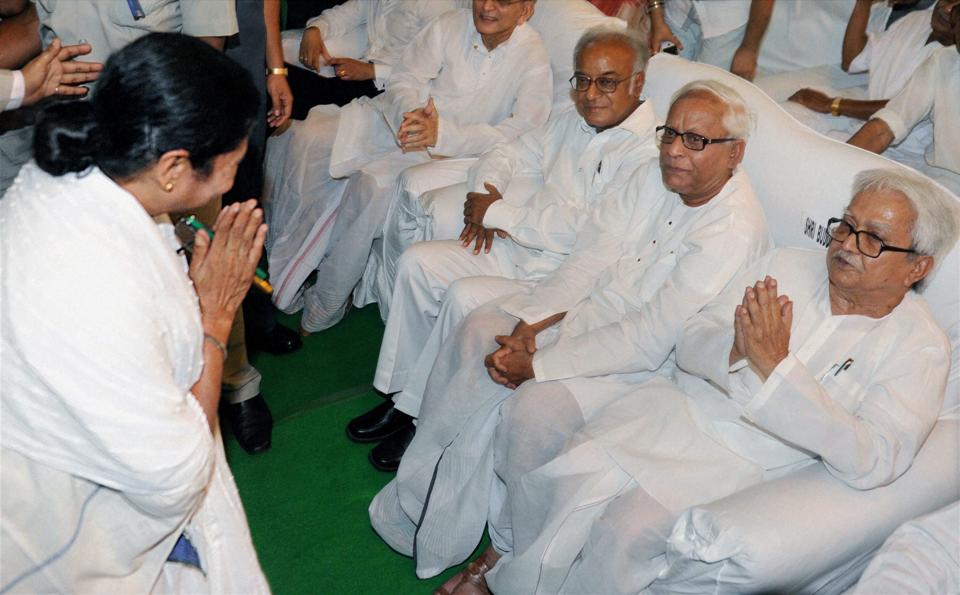
At 1.15 pm on May 13, 2011, CM Buddhadeb Bhattacharya left Raj Bhavan, tendering resignation as trends showed Left decimated. Counting was still underway, results yet to be declared. Seven days later, he along with Biman Bose & Asim Dasgupta attended Mamata Banerjee's swearing in
🧠 NEW PAPER ALERT in @CerebralCortex! from Cognitive Brain Dynamics Lab
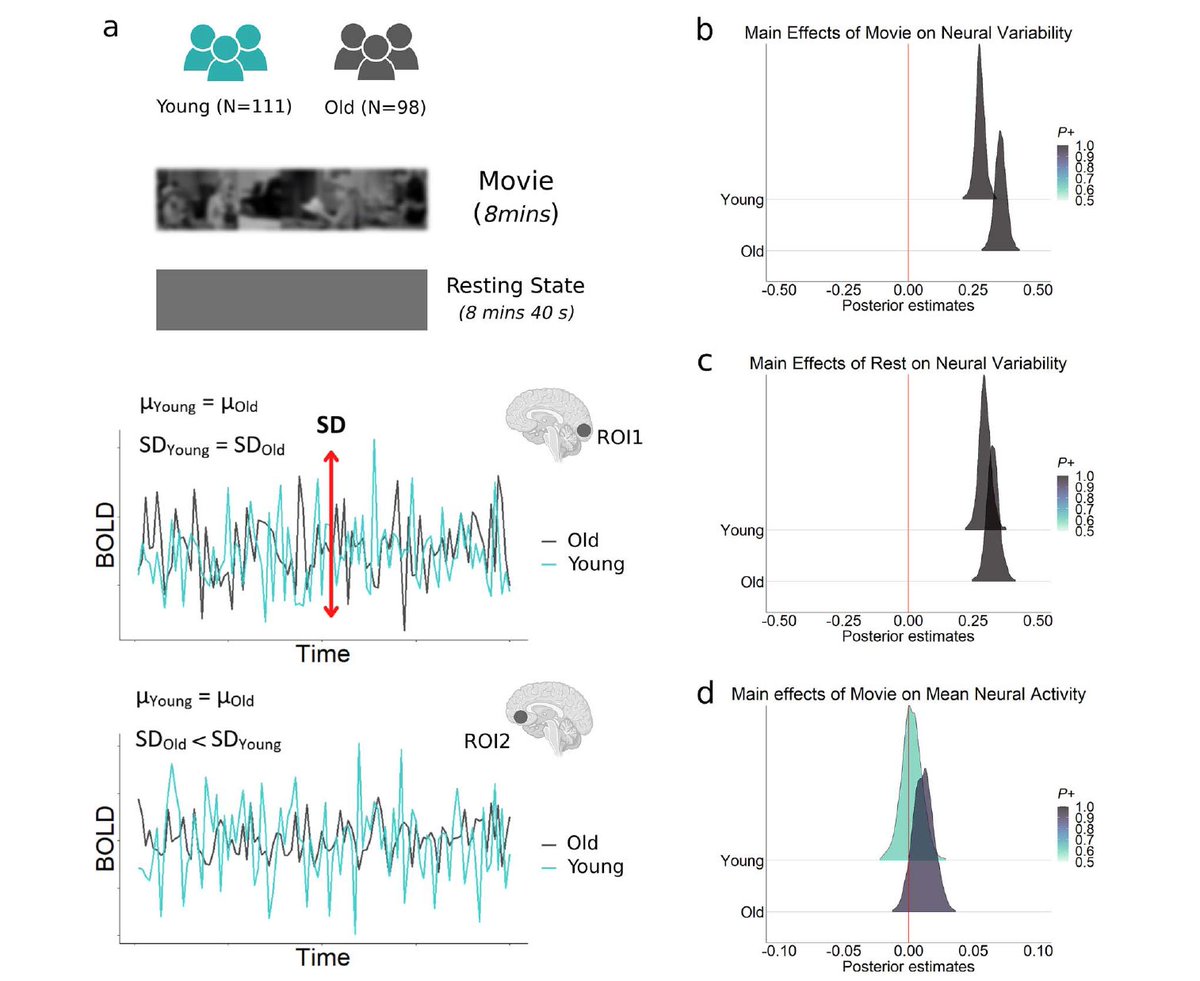
@iitjodhpur@DBT_NBRC@DBTIndia@EduMinOfIndia@MoHFW_INDIA We discovered how aging changes emotional brain processing during movie-watching. Spoiler: It's not about average activity—it's about VOLATILITY.
Huge thanks to first author @gargi_4 this study part of her final PhD thesis work with amazing co-authors @FahdYazin, @ArpanBanerjee, and the entire team at NBRC & IIT Jodhpur!
📄 Read the full paper: Cerebral Cortex (2026)
🔗 DOI: 10.1093/cercor/bhag053
#Neuroscience #Aging #Emotions #fMRI
Study: 209 participants (young vs older adults) Hitchcock movie watching
Thread 👇 https://t.co/ZLVCjwwm6Q
A landmark election in my home state Bengal has one final day and refreshingly very peaceful from the times I grew up. I congratulate @ECISVEEP, central forces and state police for conducting a complex exercise succesfully. Govt employees role often stays hidden in system!!