Topographic structure and function of locus coeruleus norepinephrine neurons
This preprint investigates the organization of locus coeruleus noradrenaline (LC-NE) neurons, which are traditionally viewed as a global brain-wide arousal system.
Using mice, the researchers combined:
anatomical tracing,
gene-expression analysis,
morphology reconstruction,
and neural activity recordings.
They found that LC-NE neurons are not homogeneous. Instead, neurons in different spatial regions of the LC showed:
distinct projection targets across the brain,
different molecular identities,
different cellular morphologies,
and different activity patterns during behavior.
Some subpopulations were more strongly linked to learning, behavioral flexibility, and context-dependent processing.
The study argues that the locus coeruleus is organized more like a structured functional map than a single diffuse neuromodulatory broadcaster. This suggests that noradrenaline signaling may provide targeted, specialized modulation to different brain systems depending on behavioral demands.
https://t.co/HsEWs6WPJs
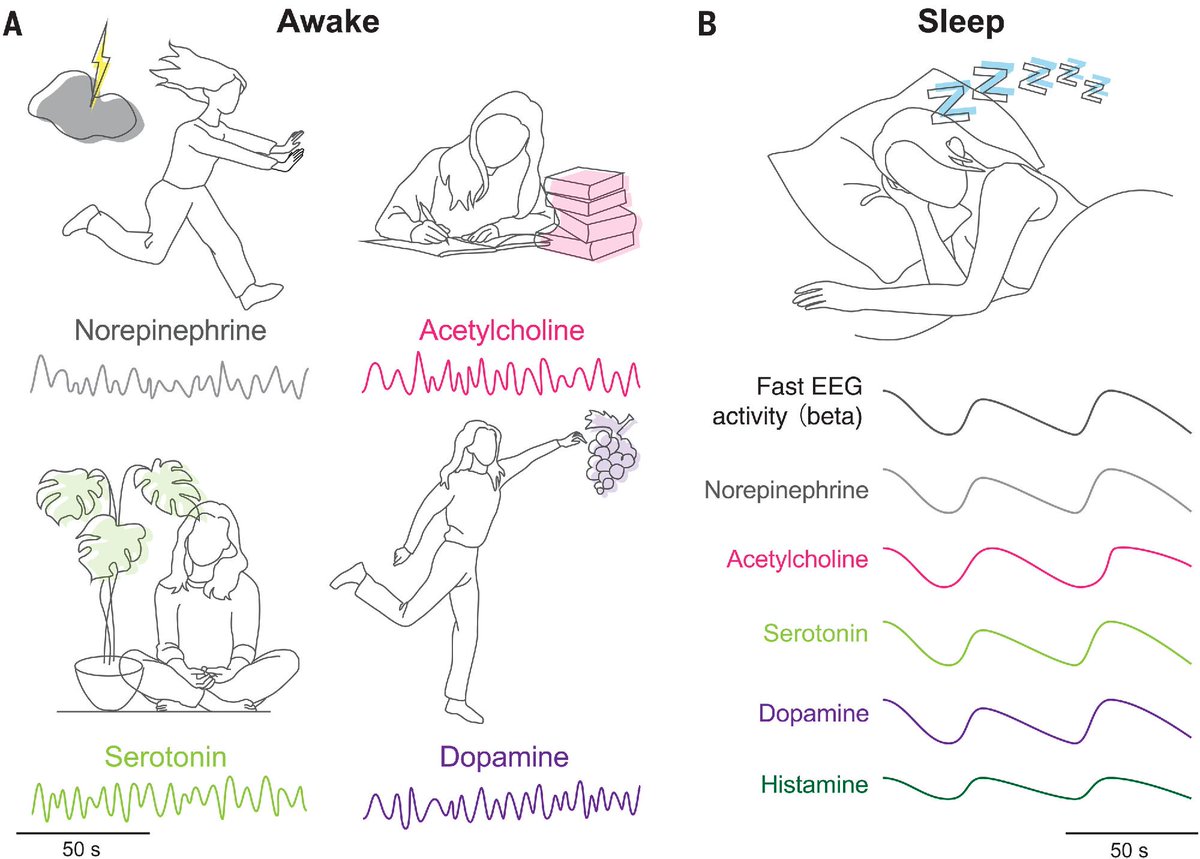
Recent studies have revealed the synchronization of neuromodulators including norepinephrine, serotonin, acetylcholine, dopamine, and histamine during sleep.
A new #ScienceReview explores what potential role the synchronization of these oscillations may play in health. https://t.co/fcDdHm1SDP
8/8 TL;DR: When you're thinking about yourself — even briefly — your brain literally rewires how it encodes the world around you. Beta oscillations that normally protect working memory get overridden.
Next time you zone out in a meeting, now you know exactly which brain wave is responsible 😅
1/8 Ever wonder why daydreaming makes you forget things? A new EEG study just cracked open the brain mechanism behind it 🧵 #Neurosciences#WorkingMemory#BrainWaves
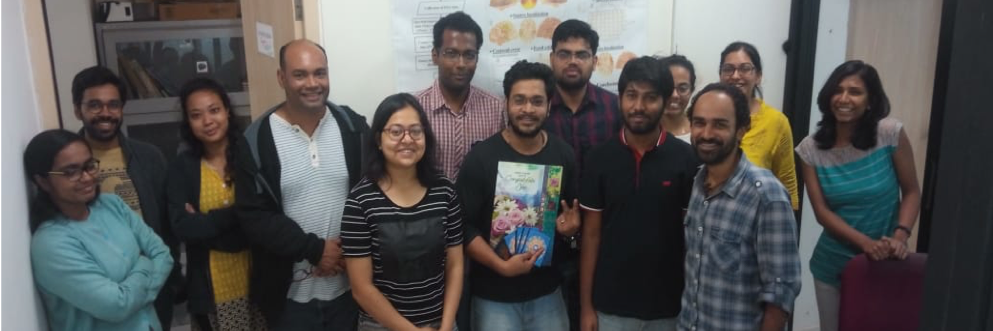
New publication alert from CBDL @DBT_NBRC@saide_iitj@iitjodhpur led by PhD student @ankitcog investigating human memory using dual task EEG and self-related processing along with @arpansview
Yadav, Banerjee & Roy (2026), Frontiers in Human Neuroscience
#EEG #CogNeuro #BetaWaves #MindWandering #WorkingMemory
https://t.co/4zttszxKgU
7/8 The impactful finding: medial-frontal beta power during encoding was the key predictor of memory errors — but only in the externally focused group.
In the self-reflection group? Beta's protective effect on memory was completely disrupted.
Great to know you found this interesting.
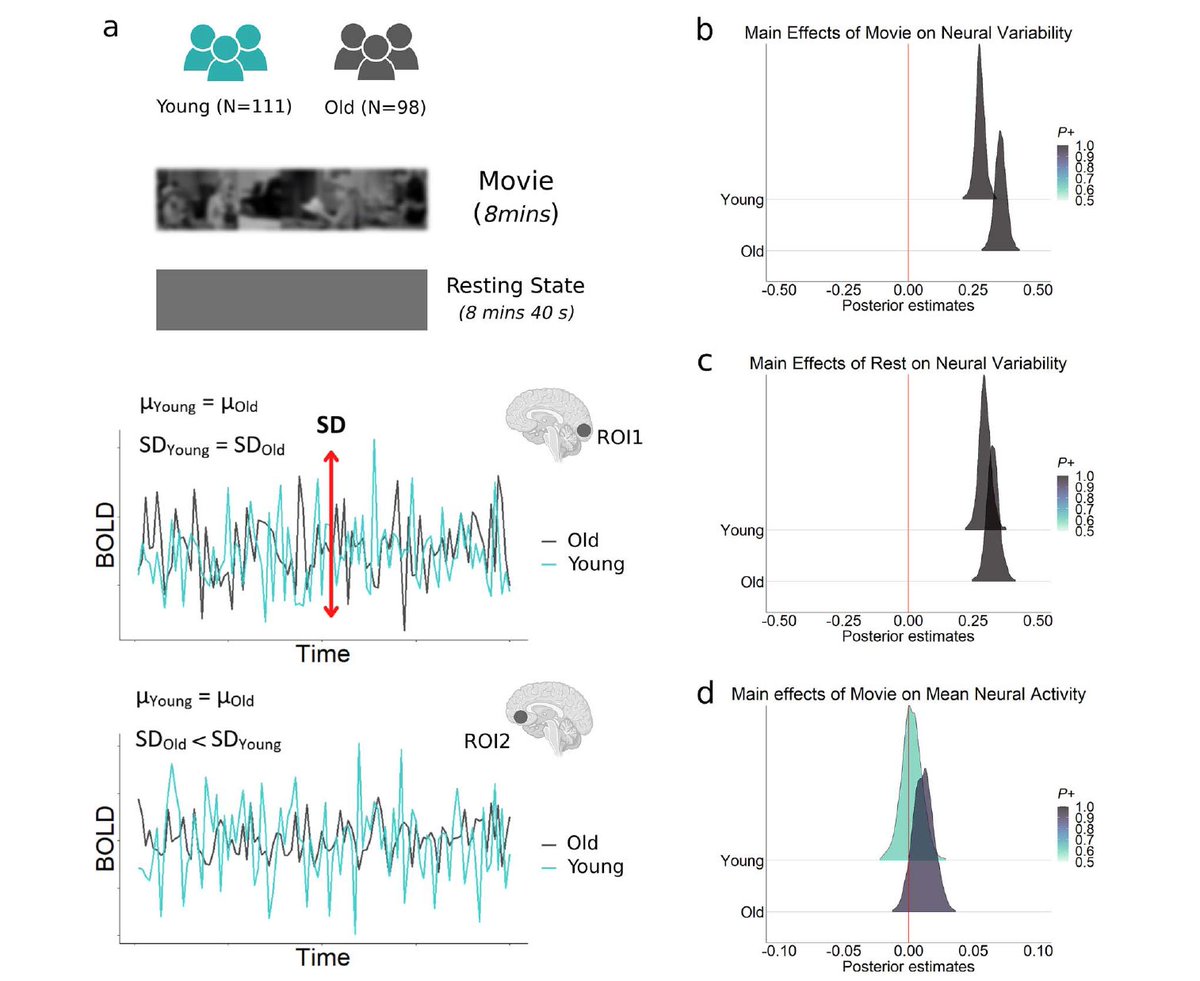
Mainstream emotion studies primarily focused on mean BOLD responses, missing neural & behavioural variability entirely. We found behavioural variability is conserved regardless of static vs dynamic experience. In elderly, uncertainty → frequent belief updates → more idiosyncratic emotional experiences — not explained by attention or sensory differences. Neurally, medial & lateral OFC sit atop the Bayesian inference hierarchy for emotion’s temporal dynamics. Elderly show distorted latent emotion spaces with clear spillover.
Cross-species emotion circuits? Likely rich in both shared & unique signatures — not fully explained by genetics. Resilience & adaptation drive neural & behavioural variability under emotional uncertainty. 🧠
🧠 NEW PAPER ALERT in @CerebralCortex! from Cognitive Brain Dynamics Lab
@iitjodhpur@DBT_NBRC@DBTIndia@EduMinOfIndia@MoHFW_INDIA We discovered how aging changes emotional brain processing during movie-watching. Spoiler: It's not about average activity—it's about VOLATILITY.
Huge thanks to first author @gargi_4 this study part of her final PhD thesis work with amazing co-authors @FahdYazin, @ArpanBanerjee, and the entire team at NBRC & IIT Jodhpur!
📄 Read the full paper: Cerebral Cortex (2026)
🔗 DOI: 10.1093/cercor/bhag053
#Neuroscience #Aging #Emotions #fMRI
Study: 209 participants (young vs older adults) Hitchcock movie watching
Thread 👇 https://t.co/ZLVCjwwm6Q
Part 10 - The Big Picture & Impact
🎯 TAKEAWAYS:
Neural volatility reveals aging signatures invisible to traditional measures
OFC shows heightened uncertainty in affective inference
This may be an ADAPTIVE response to aging
Naturalistic paradigms (movies!) unlock real-world brain dynamics
📄 Full paper: DOI 10.1093/cercor/bhag053
Part 9 - The Pattern Emerges (Figure 6, Part 2)
Think of it like blurred vision for emotions:
Increased uncertainty → Adjacent emotions blend (anger/fear), but distant ones stay separate (anger/happiness).
Neural volatility creates systematic distortions in emotional space—not random noise!
Part 8 - Beyond Movies: Emotion Recognition (Figure 6, Part 1)
Does this extend to other tasks? We tested facial emotion recognition (Happy, Sad, Anger, Fear, Disgust, Surprise).
Older adults:
📊 Higher variability in accuracy (SD: 17.44 vs 11.08, P<0.0001)
🔀 "Spillover" between ADJACENT emotions (Fear↔Surprise, Anger↔Disgust)
Part 7 - Neural State Transitions (Figure 5, Part 2)
Model prediction: More uncertainty → More state transitions
We tested with Hidden Markov Models:
✅ Young: Stable OFC states
✅ Older: Rapid, frequent transitions
Predictions matched neural data! Control (visual cortex): No difference between groups.
Part 6 - Computational Mechanism (Figure 5, Part 1)
We built a Bayesian learning model to decode what's happening computationally.
The winning model revealed older adults:
⬆️ Represent MORE uncertainty around changing emotions
⬇️ Update beliefs about environmental stability differently
Math meets mind! 🧮🧠