To wrap up the series on baby reflex, you should know that as your little one grows, their reflexes change too.
Some reflexes disappear, new ones appear, and others stay with them.
But here’s the important part;
If certain reflexes are still present,or missing beyond expected ages, it could signal a health concern. 🚩
Tracking your baby’s reflexes and milestones is key to ensuring they’re developing well.
Every reflex counts.
If you ever have doubts about your baby’s reflexes or overall development, don’t hesitate to reach out to your pediatrician. Early intervention makes all the difference.
#BabyReflexes #EarlyIntervention #ParentingTips #MilestoneCheck #HealthyBabies #TrustYourInstincts
@af_ecn@CDCGlobal@WHO@AutismCapital@EarlyChildAust
👣 Step Reflex in Babies
When a baby is held upright with their feet touching a firm surface, they appear to "step" or make walking motions.
🕒 This reflex typically lasts from birth to around 2–3 months.
🔧 It helps prepare the leg muscles for walking later and supports coordination and flexibility.
🚩 When to Be Concerned:
If the reflex persists beyond 3 months
If your baby folds up their legs instead of placing their feet on the surface
If the legs feel stiff or overly floppy.
If you notice these signs, it’s a good idea to consult a pediatrician or early intervention specialist.
#Babyreflex
#GrowWithGrace
#developmentalDomain
Understanding Your Baby's Crawling Reflex (STNR)
The Symmetrical Tonic Neck Reflex (STNR) is one of those amazing reflexes God built into your baby to support movement and posture helping your baby’s head, neck, and body work together in perfect harmony.
STNR helps your baby get into that classic hands-and-knees crawling position. That’s why it’s often called the “crawling reflex.”
It usually appears around 6–9 months and fades away between 9 to 12 months, just in time for your baby to begin standing or walking without support.
If STNR stays too long or doesn't appear at all, it could affect your child’s coordination, posture, or learning skills later on. That's why early observation matters.
Every reflex counts.
Every stage has a purpose.
Asymmetrical Tonic Neck Reflex. (ATNR)
Have you noticed that when a baby lays on his back, and turns their head to one side, the arm and leg on that side will straighten, while the opposite arm and leg bend.
This reflex helps babies learn to notice their hands, improve coordination, and prepare for skills like rolling and crawling. The presence of this reflex beyond 6months might make crawling, writing and even sitting difficult.
#LearningBabyReflex
#childDevelopment
#ConsciousMom
#GrowingaWithGrace
Tonic Labyrinthine Reflex (TLR)
When a baby's head tilts forward (chin to chest), their arms and legs automatically bend inward. This curling helps them learn to bring their body in close, a bit like when they're cuddling up.
Head tilts backward? Their arms and legs tend to straighten out.
✔️ It develops the muscles and prepares them for posture control, balance, standing and sitting.
❌If the reflex stays after 6 months, it may indicate developmental delays or neurological abnormalities.
#arrowsnquivers
#childDevelopment
#ChildReflex
Palmar Grasp Reflex
When you place your finger in a baby's palm, he grips it tightly.
✔️ Why it matters: Indicates wrist strength and motor readiness.
❌Absence of reflex may mean: Developmental delay or neurological issues.
#PalmarGraspReflex#BabyReflexes#InfantDevelopment
#MotorSkills
#ParentingTips
#ParentingSupport
Moro (Startle) Reflex
When baby hears a loud sound, they throw out their arms in surprise. (Startles)
✔️ Why it matters: Shows that the child receives information/sound from the environment.
❌Absent reflex may signal: Muscle weakness or neurological concern.
#arrowsnquivers
#reflex
#childdevelopment
Let’s explore a few baby Reflexes
🍼 Sucking Reflex
As soon as a nipple or bottle touches the baby's mouth, they begin to suck. This isn’t taught, it’s automatic.
✔️ Why it matters: Helps with feeding and calming.
❌Watch out for: Difficulty coordinating sucking, swallowing, and breathing. Do check with a pediatrician if you observe this.
Why Baby Reflexes Matter in the first year of a baby's life.
The first year of life is full of wonders to the tiny toes, baby giggles, first rolls, and those precious first steps. But before babies start walking or talking, something powerful is happening behind the scenes. It's called reflexes.
Reflexes are not just “cute” movements they are signs of a developing, healthy brain and body.
So, what are Reflexes?
Reflexes are automatic movements that babies are born with. They don’t think about them, they just happen. And they tell us A LOT about how the brain and body are working.
Physical Growth Begins with Reflexes
Physical development is not just about babies getting bigger or taller.
Before they even begin to crawl, walk, or run, something foundational is happening inside their little bodies something many parents often overlook.
Did you know?
✨ When your baby grabs your finger it's not just cute. That grip reflex shows early muscle strength in the wrist.
✨ When your baby startles at a loud sound, it means their sensory system is integrating information correctly.
These involuntary movements in infants that play vital roles in development is called reflexes.
Reflexes are the building blocks for movement, coordination, and motor skills.
They are automatic, involuntary responses in infants that play a vital role in preparing the body for controlled movement later in life.
As babies grow, some reflexes disappear, some emerge, and others are retained all forming the foundation for balance, posture, and coordination.
So the next time your baby flinches, grips, turns their head to suck, or stretches their arms out suddenly…
🚨 Don’t ignore it. It could be a key milestone
Let’s dive deeper into these reflexes which ones should disappear? Which should stay? And how do they affect future learning and movement?
Stay tuned
#PhysicalDevelopment
#InfantReflexes
#BabyMilestones
#ParentingWithPurpose
#SensoryIntegration
#ChildDevelopmentMatters
#GrowingWithGrace
#BabyReflexCheck
#EveryChildDevelopsDifferently
Understanding Developmental milestones
Developmental milestones are a set of functional skills or age-specific tasks that most children can do at a certain age range.
Note the word skill and age specific from the definition. Skill is the ability to do something well. This means your child has the ability to do certain things or has certain skills which is age appropriate.
When a child meets this age specific skills, it shows that the child is developing and meeting milestones. These skills cut across the developmental stages from 0 - 18 years.
These skills are categorized into 6 Domains;
*physical
*Language and communication
*Social
*Emotional
*Cognitive
*Adaptive skills
When a child meets this age specific skills, it shows that the child is developing and meeting milestones. However, meeting this milestones varies from one child to another. Some achieve their milestones easily and early, some may need more time and others need may additional support.
Over the next posts, we will explore key developmental skills across each stage from birth to early childhood helping you understand;
•What to expect
•When to be concerned
•How to support your child at every stage.
#EveryChildDevelopsDifferently
#MilestoneMatters
#GrowingWithGrace
#ChildDevelopment
#RaisingGodsArmy
Understanding Developmental milestones
Developmental milestones are a set of functional skills or age-specific tasks that most children can do at a certain age range.
Note the word skill and age specific from the definition. Skill is the ability to do something well. This means your child has the ability to do certain things or has certain skills which is age appropriate.
When a child meets this age specific skills, it shows that the child is developing and meeting milestones. These skills cut across the developmental stages from 0 - 18 years.
These skills are categorized into 6 Domains;
*physical
*Language and communication
*Social
*Emotional
*Cognitive
*Adaptive skills
When a child meets this age specific skills, it shows that the child is developing and meeting milestones. However, meeting this milestones varies from one child to another. Some achieve their milestones easily and early, some may need more time and others need may additional support.
Over the next posts, we will explore key developmental skills across each stage from birth to early childhood helping you understand;
•What to expect
•When to be concerned
•How to support your child at every stage.
#EveryChildDevelopsDifferently
#MilestoneMatters
#GrowingWithGrace
#ChildDevelopment
#RaisingGodsArmy
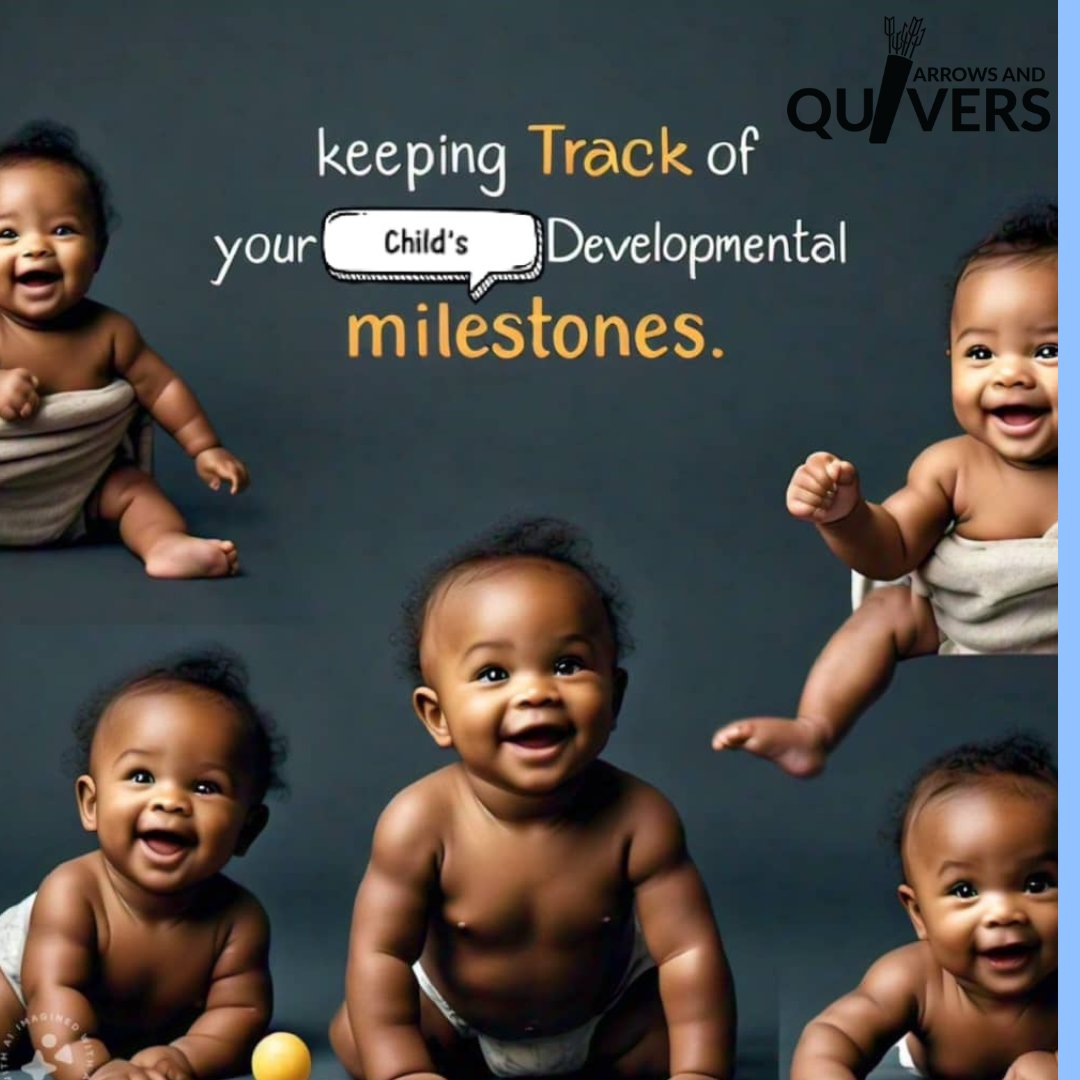
We adults often keep track of all our daily schedules such as meeting appointments, parties etc. For our children, we keep track of the meals they eat and how often they eat. We also keep track of our children's birthdays, what they wear and appointments with the photographer for a glam photoshoot. In keeping tabs on their performance at school, we only concern ourselves with ensuring they've got A's in all subjects and how well they speak with phonetics.
We however fail to keep track of an important aspect of their lives that binds the overall performance of our children physically, socially, emotionally cognitively and of course language and communication.
Keeping Track of these 5 or 6 aspect of your child's development is called Developmental milestones.
As your child is turning a new age, be it year or month, apart from planning a birthday bash, buying party packs, fancy clothes and cakes, booking appointments with hair stylist and photographer, occupying yourself with activities. Pause , take a break and ask yourself these questions.
What is expected of my child at this certain age? What are the things he should be doing at this age? What are the things he should have stopped doing at this age? Is he developing at the right pace? Is he meeting his DEVELOPMENTAL MILESTONES??
STAY TUNED AS WE DISCUSS DEVELOPMENTAL MILESTONES ACROSS DIFFERENT AGE BRACKETS IN OUR NEXT EPISODE.
#arrowsnquivers
#developmentalmilestones
#childrengrowth