The brick shell that saved David.
During World War II, Michelangelo’s David was too large and too fragile to move safely from Florence’s Accademia Gallery.
So instead of moving it, the city protected it where it stood.
In 1943, a brick enclosure was built around the 17-foot marble statue, with sand used as part of the protective barrier against possible air raids.
Across Florence, many artworks and monuments were shielded with sandbags, scaffolding, and temporary walls as the city prepared for wartime damage.
For a while, one of the most famous sculptures in the world disappeared behind brick.
Inside was David.
Stan Beaton from West Yorkshire had kept a saved voicemail from his late wife Ruby.
During a technical upgrade with his phone line, the voicemail was accidentally deleted.
A team of 11 engineers worked for three days to search backups and archived systems, successfully recovering the message despite low odds.
Sometimes, love is not found in grand gestures. Sometimes it is just hidden in one saved message.
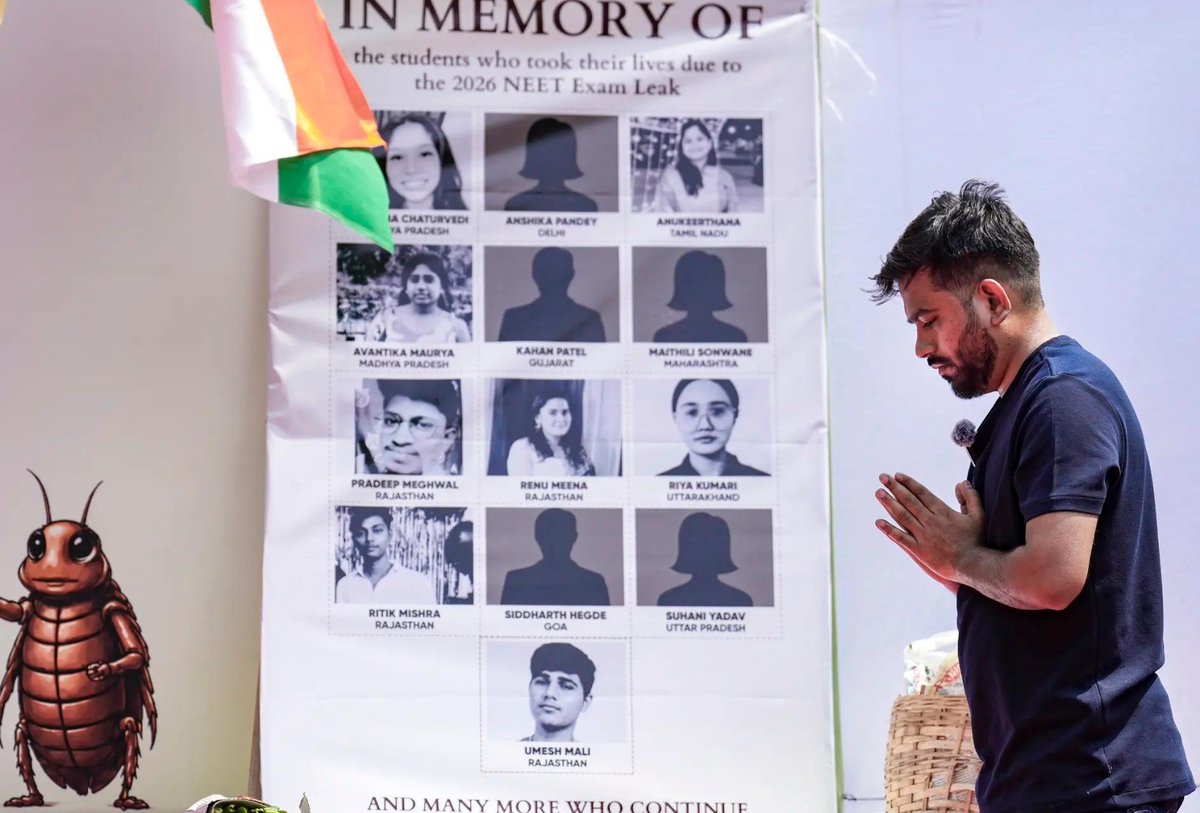
#InPics | Cockroach Janta Party (CJP) founder Abhijeet Dipke and activist Sonam Wangchuk participate in a protest at Delhi’s Jantar Mantar, raising concerns over alleged examination irregularities, repeated paper leaks and demanding accountability from the government.
News beyond the headlines — on the TOI App 👉 https://t.co/ogFaRsUKyn
#Delhi #JantarMantar #CJP #AbhijeetDipke #SonamWangchuk #DelhiProtest
In 2023, researchers in a deep-sea submersible west of Australia came across several whale skeletons 2400 meters deeper than had ever been described.
As the expedition continued, the scientists found an unprecedented abundance of skeletons—the biggest, deepest, and oldest collection ever seen on the sea floor.
Learn more: https://t.co/erashDTYrQ @NewsfromScience
The zig-zag spillway of Pimburaththewa Wewa, also known as Pimburattewa Tank, is one of the most remarkable examples of ancient hydraulic engineering in Sri Lanka 🇱🇰
The reservoir is believed to have been constructed during the era of the ancient Sinhalese kingdoms, when sophisticated irrigation systems were developed to support agriculture in the island’s dry zones.
Unlike conventional straight spillways, the unique zig-zag design was engineered to slow the velocity of overflowing water, reducing erosion and protecting the earthen embankment. This innovative structure reflects the advanced understanding of water management possessed by Sri Lanka’s ancient engineers more than a thousand years ago.
The spillway’s winding pattern increased its effective length, allowing large volumes of excess water to be discharged safely during periods of heavy rainfall.
Pimburaththewa Wewa formed part of a wider network of reservoirs and canals that transformed seasonal rainfall into a reliable source of water for farming communities.
The tank helped sustain rice cultivation and rural settlements, contributing to the prosperity of the region for centuries. Despite the passage of time, the zig-zag spillway continues to demonstrate the durability and ingenuity of ancient Sri Lankan irrigation technology.
Historians and engineers regard the structure as a testament to a civilization that mastered the challenges of water conservation long before modern hydraulic science emerged.
Today, the zig-zag spillway of Pimburaththewa Wewa stands as a rare and fascinating monument to Sri Lanka’s rich heritage of engineering, innovation, and environmental adaptation.
#archaeohistories