🇮🇳Gen Z #RoleModels
Taking a direct bullet to his head, he refused to fall. Bleeding profusely from a fatal wound, this young Ghatak Commander eliminated his fourth terrorist at point-blank range & dragged a wounded comrade to safety before taking his final breath.
Most men would instantly collapse upon taking a gunshot wound directly to the head. What this 25-year-old fearless officer did to annihilate an entire infiltration module in the treacherous mountains of Gurez earned him Bharat’s highest peacetime gallantry award.
On the midnight of August 20, 2011, around 0030 hours, Lieutenant Navdeep Singh, serving as the ferocious Ghatak Platoon Commander with 15 Maratha Light Infantry, received critical intelligence regarding a heavily armed group of 17 infiltrating terrorists in the high-altitude Gurez sector of Jammu & Kashmir.
Displaying masterclass tactical acumen,
Lt Navdeep swiftly analyzed the treacherous terrain, predicted the hostiles' exact infiltration route, and laid a deadly, silent ambush. As the infiltrating pack walked into the kill zone, the fearless young officer sprung the trap.
Leading the charge from the absolute front, Lt Navdeep engaged the hostiles in fierce, point-blank combat, single-handedly eliminating three heavily armed terrorists in rapid succession. Suddenly, spotting a fourth hostile maneuvering to target his men, he completely disregarded his personal safety and swiftly repositioned himself to neutralize the threat.
In that split second, a fatal enemy bullet struck Lt Navdeep directly in the head.
Despite sustaining a catastrophic, life-threatening head wound and bleeding heavily, his warrior spirit completely refused to yield. With sheer, superhuman willpower, he locked onto the fourth terrorist and shot him dead on the spot. Even while losing blood at a rapid pace, the gallant commander crawled through the heavy crossfire to physically drag an injured comrade to hard cover, continuing to fire his weapon at the remaining infiltrators until he fell unconscious.
His supreme valor and sacrifice broke the back of the massive infiltration bid, leading to the elimination of 12 terrorists in total.
Lt Navdeep Singh made the supreme sacrifice in the line of duty, attaining eternal immortality.
For his indomitable spirit, terrifying raw courage, and extraordinary leadership under fire, Lieutenant Navdeep Singh was posthumously conferred the nation's highest peacetime gallantry award, the ‘Ashok Chakra’
He proved that an Indian Army Ghatak commander fights past the point of death itself to protect his men and the motherland.
Salute to this immortal legend.
Jai Hind 🇮🇳
#IndianArmy
Credits: MaroonEagle
पिछले 10 मिनट में दस बार सुन चुका हूँ…
नागालैंड के Wangnao Yato ने राष्ट्रीय गान के साथ अपनी आवाज़ का जो समां बाँधा वो अद्भुत है!
एक बार आप भी सुनिए फिर और लूप में डाल कर सुनते रहेंगे
Love you Wangnao Yato, Love you Nagaland 🇮🇳
Death Anniversary today of Ahilyabai Holkar
Born into a humble background, choosen by Malhar Rao Holkar to be the bride for his son.
Widowed at an early age, educated by her father in law in administration and state craft.
Becomes the ruler of Malwa after her father in law's passing away.
Keeps Malwa as an oasis of peace in a turbulent atmosphere.
Builds a completely new capital Maheshwar on banks of the Narmada with temples, ghats, forts. Makes it a center of trade and commerce.
Patronizes scholars, poets.
Holds daily durbar with her subjects, carries out public works like roads, sarais.
Signs on every order with Shri Shankara.
Convinces the nomadic Bhils to give up dacoity, grants them land to settle down.
Gets Kashi Viswanatha Temple reconstructed after it was destroyed by Aurangzeb, renovates Manikarnika Ghat in Varanasi.
Gets renovated many temples, ghats all over India, builds choultries, sarais for pilgrims.
From Somnath to Gaya, from Varanasi to Dwaraka every holy place in India marks her contribution one way or another.
Airport , University in Indore named after her.
Naman to one of the greatest queens of India.
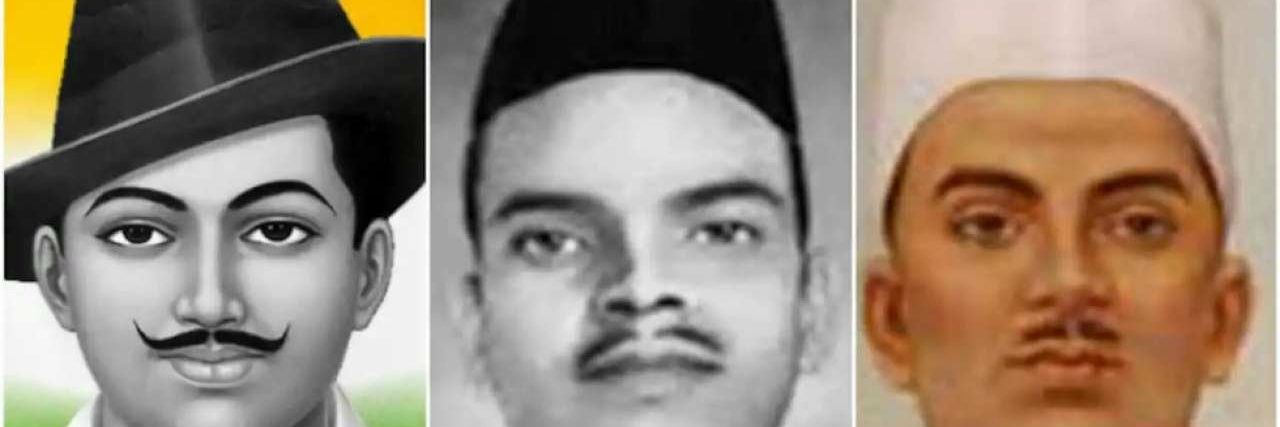
We know Bhagat Singh.
But do we know the husband and wife who risked everything alongside him?
Bhagwati Charan Vohra and Durga Devi Vohra.
To the revolutionaries, she was simply Durga Bhabhi.
Bhagwati Charan Vohra was one of the important thinkers and organisers of the revolutionary movement around Bhagat Singh and the HSRA.
Durga was his wife.
And theirs became one of the most remarkable partnerships of India's freedom struggle.
In December 1928, Lahore was under intense police watch.
Saunders had been killed and the British were hunting for Bhagat Singh.
Getting him out of Lahore seemed almost impossible.
Then Durga Bhabhi stepped in.
Bhagat Singh cut his hair and beard and dressed in Western clothes.
Durga posed as his wife.
But she did something even more extraordinary.
She took her little son Sachindra with them.
Imagine the scene.
One of the most wanted revolutionaries in British India walking through Lahore railway station disguised as a respectable young husband.
Beside him was Durga Bhabhi.
With them was her little child.
Rajguru accompanied them, posing as their servant.
The disguise worked.
They passed through the police cordon and boarded the train.
Bhagat Singh escaped Lahore.
Meanwhile, Durga's real husband was himself deeply involved in the revolutionary underground.
Bhagwati Charan Vohra was an organiser and intellectual force within the HSRA. Their home, resources and lives had become intertwined with the revolutionary movement.
Then tragedy struck.
On 28 May 1930, Vohra was testing a bomb on the banks of the Ravi near Lahore, connected with preparations for an attempt to rescue Bhagat Singh and his imprisoned comrades.
The bomb exploded prematurely.
Bhagwati Charan Vohra died.
He was just 26.
Durga Bhabhi was left with a young child.
But she did not abandon the struggle.
She remained involved in revolutionary activity and even participated in armed action against British officials.
And then came perhaps the most unexpected chapter of her life.
After the revolutionary years, Durga Bhabhi gradually withdrew from politics.
She turned towards education, established a school in Lucknow and spent much of her later life away from the fame surrounding the men with whom she had once fought.
The young woman who had once walked through a railway station under the eyes of British police, carrying her child and pretending Bhagat Singh was her husband, lived until 1999.
She was 92.
We remember Bhagat Singh.
We should also remember the family that risked everything beside him.
Bhagwati Charan Vohra & Durga Bhabhi.
#HistoryTheyNeverTaught
PIC REFERENCES
PIC 1: Durga Bhabhi. Young portrait
PIC 2: Bhagwati Charan Vohra, Durga Bhabhi and their son Sachindra. The revolutionary family
PIC 3: Durga Bhabhi in later life
THE LAST MORNING OF KHUDIRAM BOSE
11 August 1908. Muzaffarpur.
It was early morning.
Outside Muzaffarpur Jail, people had already begun gathering.
Inside was an 18 year old revolutionary waiting to be hanged.
His name was Khudiram Bose.
A few months earlier, Khudiram and Prafulla Chaki had been sent to Muzaffarpur to assassinate British magistrate Douglas Kingsford, notorious among revolutionaries for his harsh treatment of nationalists.
On the night of 30 April, they threw a bomb at a carriage they believed was carrying Kingsford.
They were wrong.
Kingsford was not inside.
Two British women, Mrs Kennedy and her daughter, were fatally wounded.
Khudiram and Prafulla fled.
Prafulla Chaki later took his own life rather than be captured.
Khudiram was arrested.
He was only 18.
During his trial, something about this teenager astonished even those watching him.
When the death sentence was pronounced, Khudiram smiled.
His lawyers appealed.
The sentence remained.
And so came the morning of 11 August 1908.
The execution was fixed for 6 am.
Contemporary newspaper accounts recorded something extraordinary about his final walk.
Khudiram walked towards the gallows firmly and cheerfully.
Even as the executioner's cap was placed over his head, he was reported to be smiling.
The next morning, Amrita Bazar Patrika carried a headline that captured how Bengal would remember him:
“Khudiram's End: Died cheerful and smiling.”
He was 18 years, 8 months old.
The British had executed a teenager hoping to punish revolutionary violence.
Instead, they created a martyr.
His name entered Bengali popular memory.
Songs were sung about him.
And generations would remember the young man who walked towards the British gallows without allowing them to see fear on his face.
Khudiram Bose.
18 years old.
Hanged on this day, 11 August 1908.
Remember the name.
Vande Mataram.
#KhudiramBose
Pictures:
PIC 1: KHUDIRAM BOSE
PIC 2: KHUDIRAM BOSE IN BRITISH CUSTODY
PIC 3: THE CELL WHERE KHUDIRAM SPENT HIS FINAL HOURS - The preserved Khudiram Bose cell at Muzaffarpur jail.
62% of Indian resident doctors work more than 36 hours at a stretch. 86% report severe sleep deprivation. 97% earn less than an entry level civil servant. 76% are assaulted while on duty.
We can call ourselves civilised only when we learn to treat our doctors like they treat us.
It's a shame no major film has been made about Biju Patnaik. He lived a life that sounds almost fictional:
In 1938, he flew his entire wedding procession by aircraft to Rawalpindi for his marriage to Gyanwati Sethi (who became the first Indian woman to hold a commercial pilot’s license, and the couple later flew daring missions together.)
While serving in the Royal Indian Air Force (including as head of Air Transport Command), he secretly ferried freedom fighters like Jayaprakash Narayan, Ram Manohar Lohia, and Aruna Asaf Ali to their hideouts. He also airdropped 'Quit India' leaflets to Indian troops while evacuating British families.
The British once jailed him for transporting nationalist leaders and distributing anti-British literature but also honored him for bravery in evacuating civilians from Japanese-occupied Burma.
During WWII, he flew daring missions delivering arms and supplies to Soviet forces in Stalingrad, and over the treacherous 'Hump' route to China in
support of Chinese Nationalist forces against the Japanese.
In July 1947, he and his wife flew a Dakota into Indonesia, landed on an improvised airstrip while evading Dutch anti-aircraft fire, rescued Prime Minister Sutan Sjahrir, refuelled using abandoned Japanese fuel, and flew him safely to India via Singapore.
A couple of months later, during the Pakistani invasion of Kashmir, he airlifted one of the first Indian troops into Srinagar.
The same year he founded Kalinga Airlines, one of India's earliest private airlines.
As Odisha CM post-1962 India-China war, he secretly visited CIA headquarters at Langley to forge a covert India-US partnership against China, which led to the Aviation Research Centre (ARC) at Charbatia, which supported U-2 recon missions over Tibet.
He was also a legendary administrator and statesman, laying much of the foundation of Odisha's industrial empire (mines, ports, heavy industries etc).
When he passed away, Indonesia observed 7 days of state mourning. Russia observed 1 day. He remains the only person in Indian history whose body was draped in the national flags of 3 nations - India, Indonesia, and Russia.
Few public figures have left such a footprint.
His extraordinary life needs to be brought to the big screen.
27 Years of Kargil
Barefoot. Bleeding. Unyielding. At 16,000 feet in the freezing dark, a 24-year-old officer - "Nimbu Saab" led his men up a sheer cliff under relentless enemy fire.
#LestWeForgetIndia🇮🇳
Capt Neikezhakuo Kenguruse
Maha Vir Chakra (P)
2 RAJ RIF
Capt Kanguruse laid down his life #OnThisDay 28 June 1999 at Tololing during #OpVijay.
That night, as the Ghatak Platoon’s lead commander, Capt Kenguruse faced brutal mortar and automatic fire while scaling the cliff face known as Black Rock. Shot in the abdomen mid-ascent, he refused evacuation, urging his men to press on.
When a final vertical rock wall halted the platoon, Capt Kenguruse secured a rope for them—but his boots slipped on the icy surface.
What he did next became legend.
He kicked off his boots, and barefoot, on frozen, jagged rock in -10°C, he climbed the wall, hauling an RPG launcher with him. Reaching the top, he fired at seven enemy bunkers, destroying them one by one under intense gunfire.
Then, in close combat, he fought two enemy soldiers with a commando knife, took down two more with his rifle, and continued fighting until a volley of bullets struck him fatally.
His last stand enabled his men to storm the post and secure victory.
For this unmatched bravery and devotion to duty, he was posthumously awarded the Maha Vir Chakra 🏵️
Today, we remember Capt Kenguruse and honour his service, valour and supreme sacrifice.
#RememberingKargil
Remembering Sam Bahadur — A Legend Beyond Compare
#LestWeForgetIndia🇮🇳 Field Marshal Sam Hormusji Framji Jamshedji Manekshaw,
Padma Vibhushan (1972)
Padma Bhushan (1968)
Military Cross (1942)
On his 18th death anniversary today - 27 June 2026, we honour the legacy of one of India’s greatest military commanders — a soldier who shaped history, and a leader who inspired generations. 🏵️
Our ancient temples leave us in awe, at their design, engineering, sculpture?
But we really don't know much about the men who built such magnificent temples, who sculpted those masterpieces.
And one such person is Jakkanachari, also known as Amarashilpi Jakkanna.
Born in a small village Kaidala near Tumkur, it's believed he left home after marriage to pursue his passion for sculpting, and temple building.
During his wanderings, he met Ramanujacharya, who asked him to build temples for Vishnu across Karnataka, and was comissioned by the Hoysala ruler Vishnuvardhana.
He was the one who created those magnificient sculptures at Belur and Halebid temples.
There is an interesting story, about how his own son Dankanacharya pointed out a flaw in the deity of Vishnu which he had carved at Belur. Apparently there was a toad in the deity's belly, which was inauspicious.
Jakkanacharya refused to accept it, and promised to cut off his hand, if it were really true. And on the flaw being discovered, he did that.
How Can I Sit When Shri Ram Is My Client?
Standing barefoot while arguing one of the most important case of Ayodhya Ram Mandir, he reminded us that faith, humility, and duty can coexist at the highest level of excellence.
K Parasaran is truly a Pitamah whose story goes far beyond the Ayodhya Verdict
These five Gentlemen have ruthlessly dismantled centuries of deception, distortion, and venom unleashed against Hindus by the entrenched Leftist and Islamist propaganda machinery.
Repost if you agree!
@ARanganathan72@jsaideepak@sanjeevsanyal@Vishnu_Jain1@vikramsampath
Every ounce of flesh had melted away. His ribs were exposed. He had no strength left to even move.
When the British saw that this 25-year-old boy was not giving up, they forcibly tried to feed him milk by inserting a tube into his nose. The tube went into his lungs instead of his esophagus.
The milk filled his lungs. He continued to suffer, vomiting blood, but he did not break his fast.
On September 13, 1929, a revolutionary died in Lahore jail. 63 days... yes, 63 days without eating a single grain of food.
In the pages of history, we often talk about Bhagat Singh's hanging, but forgot the companion who died in Bhagat Singh's arms.
Today we are talking about 'Yatindra Nath Das', known to the world as 'Jatin Da'.
He was a bomb maker by profession, but his own body became his weapon.
If he wanted, he could have apologized, he could have eaten. But he had only one demand: "Stop treating Indian political prisoners like animals."
The British thought hunger would break him. But they didn't know that his body was made of steel, not clay.
When Jatin Da's condition began to deteriorate, the British crossed all limits of cruelty. The prison doctor and guards pinned him down. A tube was inserted through his nose. He screamed in pain, but his resolve remained unshaken.
When news of his martyrdom broke, the entire nation wept.
It is said that when his body was being transported from Lahore to Calcutta, thousands of people stood at every station with flowers. More than 600,000 people attended his funeral in Calcutta.
Subhash Chandra Bose himself shouldered his mortal remains.
But today? How many people today remember that 63-day penance?
As he lay dying, Jatin Da said, "I am not a saint, I am just an ordinary man willing to die for the dignity of his country."
Whether independence came with the spinning wheel or without swords and shields is a matter of debate. But it is true that the decayed bones of young men like Jatin Da are embedded in the foundation of independence.
We did not get this freedom for free; someone sacrificed 63 days of their youth by fasting for it.
It is the duty of every Indian to know the price of the air they breathe.
Share this information so that future generations can know who the real 'heroes' were.
This post is solely to pay tribute to those forgotten heroes.
Jai Hind 🇮🇳 🙏 🫡 🫡 🫡
Vande Mataram
Today, as on every single day, remembering Dr Darshan Ranganathan, my mother, my inspiration. She authored 16 @J_A_C_S papers from India, when just 1 can make a career; never received a single Indian award, never cared.
She died of cancer on her sixtieth birthday, June 4, 2001.
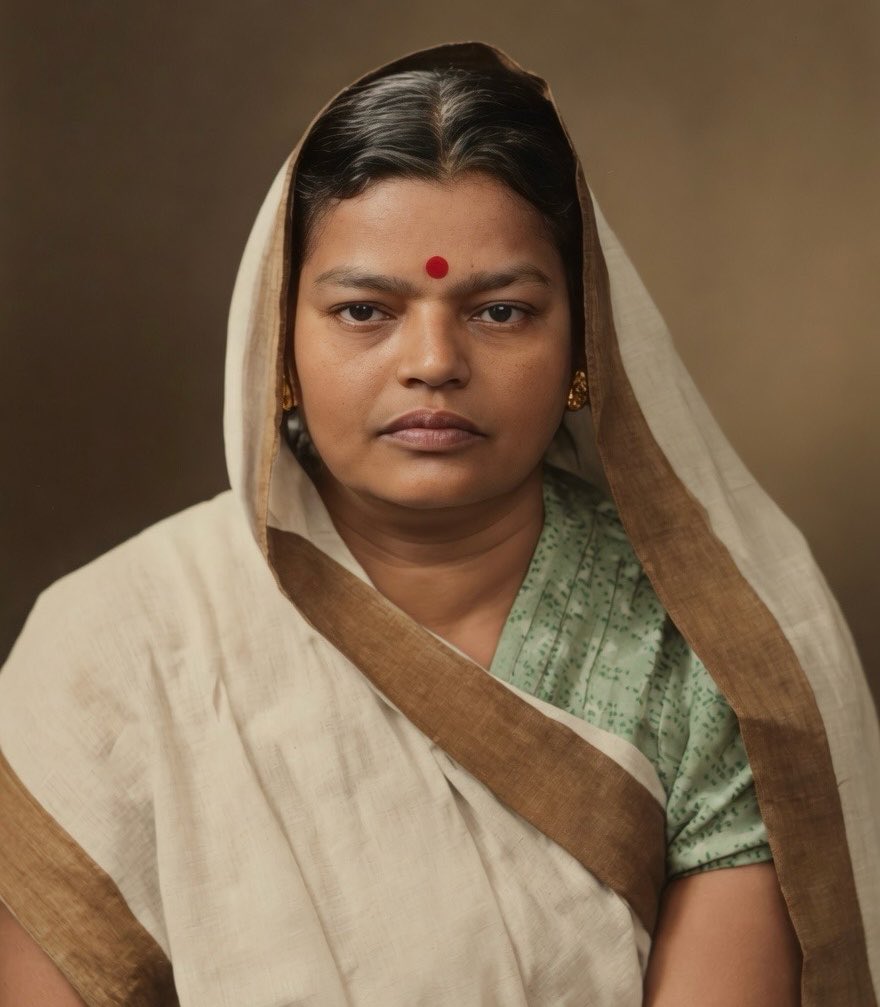
Her name was Subhadra Kumari Chauhan.
She was born on August 16 1904 in Nihalpur village, Allahabad. At nine years old she wrote her first poem. It was published in a national magazine.
At 16 she married and moved to Jabalpur. At 18 she was pregnant and leading protesters through the streets of Nagpur holding the Indian flag.
She was arrested. She became the first woman satyagrahi to be sent to jail in India.
She delivered her first daughter Sudha safely at home after her release. Then went back to the streets.
In 1942 the British came for her again. Her husband had already been arrested. She had five children. The youngest was a toddler with a cleft palate who could barely speak.
She prepared her eldest daughter to look after the younger ones. Left food for them. Then walked to prison carrying her sick youngest child in her arms.
Inside jail she gave up her own food to prisoners facing harsher punishment. She was released months later with a life threatening condition and underwent immediate surgery.
She later described all of this with humor. She said the garlands placed around her neck on the way to jail were so many that she made a pillow of them in her prison cell. They reminded her of the flowers on her wedding night.
Between arrests, pregnancies, court dates and protests she wrote 88 poems and 46 short stories.
Her most famous poem was Jhansi Ki Rani. The one every Indian child has read in school.
Khoob ladi mardaani woh toh Jhansi wali Rani thi.
She wrote it about a queen. She lived it herself.
On February 15 1948 she died in a car accident near Seoni, Madhya Pradesh, while returning from a legislative assembly session in Nagpur. She was 43 years old. A mother of five. A poet. A prisoner. A freedom fighter.
Today is Mother’s Day.
Most Indians know her poem. Almost none know her name.
Follow for stories India deserves to remember.
Three stories. Two wars. One poet.
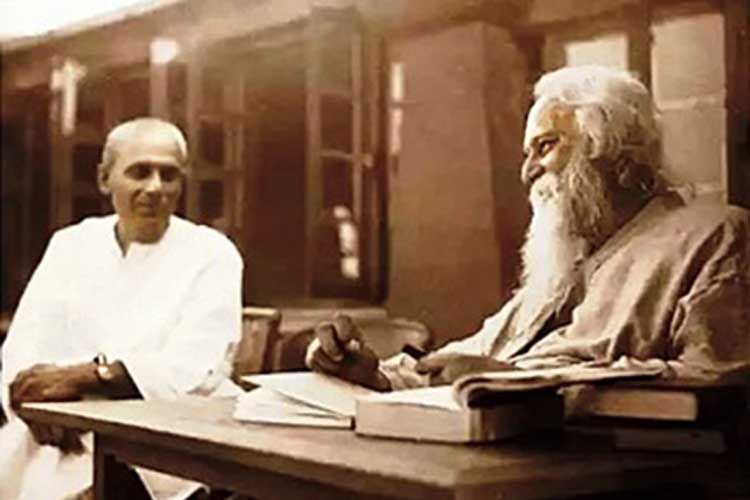
In January 1917, while fighting on the Somme, the English poet Wilfred Owen penciled a verse from Tagore's Gitanjali onto the back of a military message form. The lines began: "When I go from hence, let this be my parting word, that what I have seen is unsurpassable." It was verse ninety-six. Owen had carried it into the trenches.
Eighteen months later, in August 1918, he said goodbye to his mother Susan on the deck of a ship, looking out across what she later called "the sun-glorified sea" — towards France, with breaking hearts. He spoke those same lines aloud. It was the last time she saw him. When his pocket book came back to her after his death, she found the verse written in his hand, with Tagore's name beneath it. She wrote to Tagore. The letter began: "I feel sure your name upon the envelope will be sufficient."
The second story was told in 1961 by the German playwright Carl Zuckmayer. During the First World War, an Indian soldier from a Gurkha regiment had been taken prisoner and wounded. Only amputation of one leg could save his life. But the soldier spoke no German, and the medical officers spoke no language he understood. The more they tried to communicate, the more terrified he became. Finally, a sergeant bent down and whispered the only Indian words he knew — Rabindranath Tagore, three times over. The soldier's face relaxed. A shy smile came into his eyes. He nodded his consent.
The third story is from the Second World War. On 15 July 1942, educator Janusz Korczak, who like all Jews was forbidden by the SS from performing works by Aryan authors, staged Tagore's play The Post Office — the story of a dying boy named Amal who waits for a visit from the King — with the orphans in his care. When asked why, he said the children needed to “learn to accept serenely the angel of death.” In August 1942, Korczak and the children were taken to a concentration camp.
On his birth anniversary, we celebrate the power of the writer and his pen, as exemplified by Tagore.
#RabindraJayanti
In 1906, sending a son to Oxford or Cambridge was a status symbol for India's upper classes. However, Rabindranath Tagore, who like many in his family was sent to England to study, rejected the idea of following tradition when it came to his son. Instead, he sent Rathindranath, along with his son-in-law, Nagendranath Gangopadhyay, and a protege, Santosh Majumdar, to the University of Illinois to study agriculture.
At the time, Indians largely shared the British prejudice that the United States was a land of uncouth roughs and rich upstarts. Choosing Illinois over Oxford took imagination and conviction. His reasoning was blunt. Nearly ninety percent of Indians lived off the land. The country needed people who understood the soil. People who could return home and make farming work better for those who depended on it.
When Rathindranath returned after completing his studies, Tagore put him to work on the family estate at Potisar. A farm was laid out. New crops and implements suited to Indian conditions were tested. A small laboratory was built on the grounds. When New York lawyer, Myron Phelps visited, he was genuinely astonished. He had found “a genuinely successful American farm” in rural Bengal.
The Nobel Prize money Tagore received in 1913 was donated to his school at Santiniketan and to the agricultural cooperative bank he had already established for the peasants of Potisar. It gave them access to loans at fair interest and freed them from exploitative moneylenders and the petty lawyers who fed on rural litigation. He later founded Sriniketan in Birbhum as a formal rural reconstruction centre, connecting his students directly to the lives of peasants around them.
In letters to his son, he discussed suitable crops and setting up rice mills on a cooperative basis. He also wrote about introducing pottery and umbrella-making as ways to keep farm labourers employed between harvests.
On his birth anniversary, we remember the towering man who is largely remembered for his contribution to arts, letters and political philosophy for a lesser discussed chapter of his life— his dedication to the soil and the farmers of this country.
1. Just got off a call with @UnSubtleDesi. I couldn't be happier for her and both of us couldn't help but discuss the harrowing days of post poll violence in West Bengal in 2021. So I am going to share what happened five years ago just so ppl know what happened. #WestBengal2026.