INDIAN EXPRESS DROPS A LAND BOMB ON BJP CM 🔥
After Mohan Yadav became Madhya Pradesh CM, his family and real estate companies reportedly bought at least 137 plots spread over 168 acres in and around Ujjain.
This is the same Ujjain being reshaped for Simhastha 2028 with highways, road widening, townships, riverfront projects, medical city, IT park and new commercial zones.
The most damning part is this: out of the 168 acres bought after he became CM, 111 acres are reportedly located along roads announced by CM Mohan Yadav himself.
His family already had land. But after Dec 2023, the land buying saw a sharp jump, right when Ujjain’s development map started turning into a goldmine.
Indian Express repeatedly asked the CM for answers. He stayed silent.
This is how BJP turns religion into a business model 😡
This is Anagha Rajesh.
And she is crazy.
She wants to store data in bacterial DNA.
Her startup is called BioCompute.
And last year, they actually did it.
They stored data in DNA and retrieved it in their tiny lab in Bengaluru.
This is a huge moment.
But why is she even doing it?
Because DNA is the ultimate storage tool available to us.
Just 1 gm of DNA can store about 215 petabytes of data - that's like storing over 2 million movies in 4K.
On top of that - this data can last for literally 1000s of years.
Right now, they still need to figure out a way to make the reading and writing process faster and cheaper.
But if BioCompute solves this problem - we could theoretically store all the data created in the world every year in the palm of our hands.
And that would be insane.
P.S. Check out this video from @vy0mbhatia going to Anagha's lab and actually doing it.
The Cambridge Prank on Ramanujan!
While at King's College, P. C. Mahalanobis (Father of Statistics in India) became incredibly close friends with iconic Indian genius, the mathematician Srinivasa Ramanujan.
1 afternoon, Mahalanobis was reading a Cambridge strand magazine & found a highly complex mathematical puzzle involving a street of houses numbered 1 to N. The puzzle required finding a house number x such that the sum of the house numbers to its left equaled the sum of the house numbers to its right.
Mahalanobis figured it out after a few mins of trial calculations. He walked over to Ramanujan's room, where Ramanujan was busy frying vegetables for dinner. Mahalanobis read out the puzzle. W/o even turning around from his frying pan, Ramanujan started stirring the vegetables & calmly said: "Take down the solution."
Ramanujan did not just give the single answer to that specific puzzle, he dictated a continued fraction that provided the universal solution for the infinite family of all such streets that could ever exist.
Mahalanobis was paralyzed with shock. He asked Ramanujan how he did it instantly. Ramanujan famously replied, "The moment I heard the problem, I knew that the answer was a continued fraction. Which continued fraction? I just asked myself & the answer came."
We released Sonic-3.5 and Ink-2, the #1 streaming models for text to speech and speech to text you can use in your voice agents today.
New architectures enable new frontiers for speed and quality.
We're now the only provider to have #1 models for both speaking and listening.
I launched 3 more videos in my post-training course!
1. Lecture 5: The rise of reasoning models
2. Lecture 6: DPO derivation, intuitions, and practice
3. A Q&A from readers on lectures 1-4
rlhfbook dot com slash course
More soon!
Andrej Karpathy told Elon Musk that Tesla will grow from $45B to $1.5T using AI - while competitors spent billions doing it the old way
after this presentation Tesla's stock dropped 3.9%
Karpathy stood up and explained why every competitor will lose
"lidar is a crutch - it sidesteps the fundamental problem "
Musk: "every mile driven is training the network - whether autopilot is on or off "
simply because every single driver was training Tesla's model for free
that $45B company is now worth $1.5T
Waymo spent $27 billion. Tesla spent $0 on data collection
then Andrej left Tesla and joined Anthropic - to build their competitor
bookmark and watch today ↓
A French moto vlogger "Frenchy" was traveling through India on his bike, He had a lump on his neck. Curious about the cost and process to remove it, he inquired locally and was quoted just $500 for the treatment.
Stunned by both the price and the short waiting time, he went ahead with the procedure. Within a week, the lump was removed. He documented the whole journey on camera.
He later shared that the same type of surgery in Australia after an accident had cost him $12,000.
If manufactured online hate and negative perceptions in the West didn’t exist, India could easily be earning hundreds of billions of dollars every year from medical tourism alone.
And this is why India needs to fight bad image/perception, that is being promoted by India's adversaries.
A Japanese programmer looked at every existing programming language in 1993, decided none of them made him happy, and spent two years building his own the language he built became the foundation GitHub, Shopify, Airbnb, and Coinbase were all built on.
His name is Yukihiro Matsumoto.
Everyone in the programming world calls him Matz. He was born in 1965, studied information science at the University of Tsukuba, and graduated in 1990 with a head full of ideas about what programming languages could be and a quiet frustration with what they actually were.
He knew Perl. He did not like it. He said it had the smell of a toy language. He knew Python. He did not like it either, because he felt its object-oriented features were add-ons bolted onto a language that was not designed around them from the start. He wanted something that was genuinely, completely object-oriented, easy to use, and built for the person writing the code rather than the machine running it.
He looked for that language. He could not find it.
So on February 24, 1993, he opened a chat window with his colleague Keiju Ishitsuka and typed: "Let us decide the codename now."
They wanted to name it after a gemstone, inspired by Perl. Ishitsuka suggested Coral. Matsumoto suggested Ruby. Ruby was shorter by one letter. Ruby won.
He spent the next two years building it alone, working through the architecture piece by piece. The object system. The string class. The IO streams. He later said he talked through specific features while speaking to his baby daughter, using her as a sounding board the way programmers use rubber ducks. In August 1993, he finally wrote the line of code that produced "Hello, world." on the screen.
The first public version, Ruby 0.95, was released to Japanese domestic newsgroups on December 21, 1995. No press release. No launch event. Just a quiet post to a mailing list.
The design principle underneath everything was the one nobody else had ever made primary. Matsumoto called it programmer happiness. He believed programming languages should be built for the joy and productivity of the person writing the code, not optimized purely for machine efficiency. Every decision in Ruby's design ran through that filter. If it made the programmer's life harder, it was wrong.
That philosophy attracted a small but devoted following in Japan through the late 1990s. Then in 2003, a Danish programmer named David Heinemeier Hansson discovered Ruby and used it to build an internal project management tool for his company. He called the tool Basecamp. He extracted the framework underneath it and released it publicly in 2004.
He called it Ruby on Rails.
Within a year of that release, the framework had changed how web applications were built. Rails introduced the principle of convention over configuration, meaning developers could make decisions about structure quickly because the framework had already made sensible defaults. What used to take weeks of setup took days. What used to take days took hours.
Shopify started on Rails in 2005. GitHub built on Rails a couple of years later. Airbnb, Twitch, Coinbase, SoundCloud, and Zendesk all followed. The first generation of consumer internet companies that defined how people think about software products were largely built by small teams moving fast on a framework that traced directly back to one Japanese programmer who was dissatisfied with his tools in 1993.
Shopify now processes over $200 billion in annual commerce volume. It still runs on Rails. GitHub became the largest code hosting platform on earth and was acquired by Microsoft for $7.5 billion in 2018. It started on Rails.
Matsumoto has said many times that he created Ruby for selfish reasons. He was so underwhelmed by every available option that he built something that would make himself happy. The programmer happiness he was chasing was his own.
The community that grew around Ruby adopted a motto that says everything about who he is. Matz is nice and so we are nice. They abbreviated it MINASWAN. It spread because it was true. He answered emails from strangers. He engaged with the community with patience. He treated the language as a gift, not a product.
He is still the chief designer of Ruby today. The language is 31 years old. It is still being improved.
The last stable release was Ruby 4.0.4, shipped on May 11, 2026.
One programmer, unhappy with his tools, built something better in the evenings in 1993. The companies you use to buy things, to store code, to book travel, and to watch streams were built on top of what he made.
He just wanted to be happy while he worked.
Did you know Ruby was behind the tools you use every day?
Life lessons from @rogerfederer (must watch)
1 Effortless is a myth
2 Belief in yourself has to be earned
3 Grit > Gift
4 Discipline is talent
5 Trust and loving the process is talent
6 You can do your best and still lose
7 Life is bigger than the court
Dr. Muhammad Mashali, lovingly known across Egypt as “The Doctor of the Poor,” never owned a car or a cellphone. He lived without luxury, but spent over 50 years quietly healing thousands of lives.
Every day, he walked the streets of Tanta in Egypt’s Nile Delta to his modest clinic, where patients, rich or poor, were always welcome. Many paid nothing. Some days he treated 40 to 50 people, often covering the cost of their medicine himself.
After graduating with honors in 1967, he made a solemn vow: he would never turn away anyone who couldn’t afford treatment, a promise inspired by watching his father sacrifice everything for his education.
“My reward is not money,” he once said, “it’s the smile of someone whose suffering has ended.”
When a wealthy businessman once gifted him $20,000, a car, and an apartment, Dr. Mashali sold it all and used every penny to buy medical equipment for his patients.
He treated everyone with equal dignity, regardless of religion, status, or background. For more than ten hours a day, he offered not just medicine, but compassion and hope.
Dr. Muhammad Mashali passed away in 2020 at the age of 76, leaving behind no wealth, no grand possessions, only a profound legacy of kindness.
India will never produce an NVIDIA, and it has nothing to do with talent. R&D is the purest form of investment, and the central bank has spent decades making investment the dumbest thing you can do with a rupee.
I've been surfing the semiconductor wave for a while now, reading 10-Ks for fun. Spent last month in the Bay Area and the gap between India and the US is not a gap; it's a different universe. Conversations about agentic AI and the next decade of hardware, with my boomer relatives Waymo-ing around SF and self-driving home on Tesla FSD like it's normal. Nobody there thinks any of this is remarkable; they already live in the future.
NVIDIA spends nearly twice as much on R&D as every listed company in India combined. Silicon Motion, the world's leading maker of NAND flash controllers and around since 1995, ploughs 29.7% of revenue back into R&D. Micron runs 10.2%, NVIDIA 9.9%, on revenue bases that dwarf anything we have. India Inc? 0.85% of turnover, and half our listed companies report zero R&D at all.
The easy move is to lambast our promoters and the dhandomaxxing capitalist class, or the foreign MNCs running India as a glorified offshoring unit, or the babus who fund nothing useful. Satisfying. But Wrong. The reason no rational Indian founder pours money into frontier R&D is that there is genuinely no payoff at the end of it. Why?
1. R&D compounds, and compounding punishes laggards. At the edge of science a 1-2% gain is a moat; Intel spent 20+ years performing impossible physics every 24 months because Moore's Law was the business model, and that consistency makes them one of the goated companies of all time even after they got mogged recently. NVIDIA lives the same way today: invent at the limit or cease to exist. If you're 50% behind, no quantum of innovation closes that. You never touch the high end. You stay a mass-market producer of things that already exist. India is precisely there.
2. The supply side is the real thesis, and it's monetary. Two decades of high inflation, high money-printing, high nominal rates. That regime subsidises consumption and taxes patience. R&D is the longest-duration, highest-variance bet on the board; it is the first thing a 8% risk-free rate kills. Frontier R&D only ever gets funded two ways: a psychopathically risk-tolerant capitalist with cheap capital, or a state with Stalin-grade control. The USSR took agrarian peasants to the first man in space in 20 years; China built its own version. India has neither the state capacity, the political will, nor the balance sheet to do that. So nobody does it.
Talent was never the bottleneck. Capital structure was. If you want a SpaceX or a TSMC born here, you need an environment where a conglomerate can deploy $10B and sleep at night: a low-rate regime that makes long-duration investment rational, IP and patent courts that actually function, and policy that doesn't get rewritten every 2-3 years on a minister's whim. Stability is the input. Innovation is the output.
Bay Area versus Bombay, we are several universes apart, and you cannot print your way across that distance; you can only compound your way there, and we've spent years optimising for the opposite. The gap won't be bridged. With luck, it narrows.
I am a CBSE Class 12 student.
After receiving unexpectedly low marks in Physics, we applied for photocopies of my answer sheets through the CBSE reevaluation process.
Today we received the copies.
And I am shattered because the Physics answer sheet uploaded by CBSE is not mine
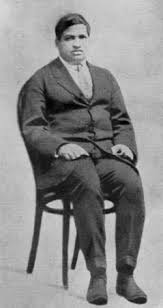
In 1939, Jawaharlal Nehru visited Rabindranath Tagore to ask if Jana Gana Mana could become India's national anthem. A statistician was in the room.
That statistician, P.C. Mahalanobis, would go on to build the system that let a newly independent nation of 350 million people see itself clearly for the first time.
In 1950, nobody knew what the average Indian ate. Or earned. Or whether they had work. Policy ran on guesswork.
Mahalanobis changed that.
He built the National Sample Survey, which knocked on thousands of doors and asked, item by item: what did you eat last month? Rice, dal, cooking oil, fuel, clothing.
Harold Hotelling, then among the foremost statisticians in the world, wrote that no sampling technique developed anywhere could "compare in accuracy" with what Mahalanobis had built.
This is the story of how India built, then lost, and is slowly rebuilding the infrastructure of national self-knowledge.
Issue 4: The Making of Indian Statistics, written by @jainhiya_ , designed & built by @AltCarbonIndia
https://t.co/MdIvN1hXhC
We still don’t know enough about the full consequences of climate change.
But we do know this: intense heat waves in India are no longer exceptions. They’re becoming a way of life.
These homeowners have responded by changing THEIR way of life.
By changing the way they live, they’ve created homes that are cooler, more sustainable, and productive enough to grow their own food.
That’s the kind of adaptive thinking we’ll increasingly need in the years ahead.
Trailblazers. 👏🏽👏🏽👏🏽