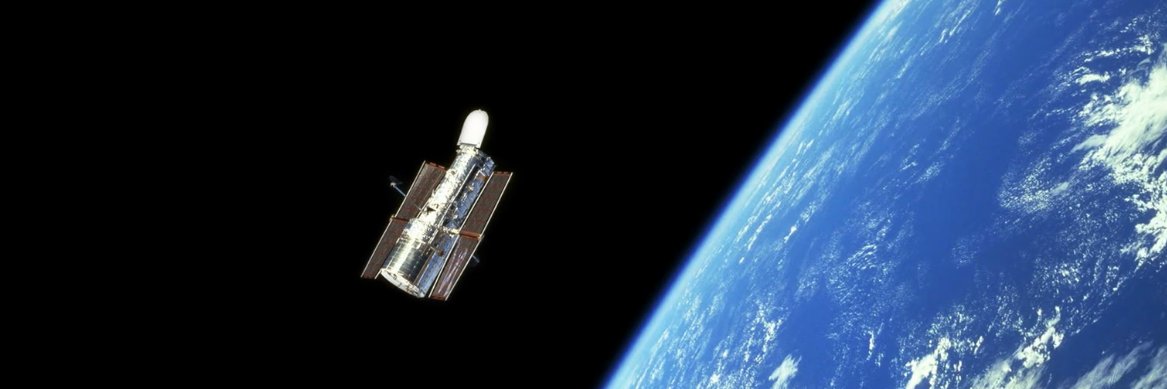
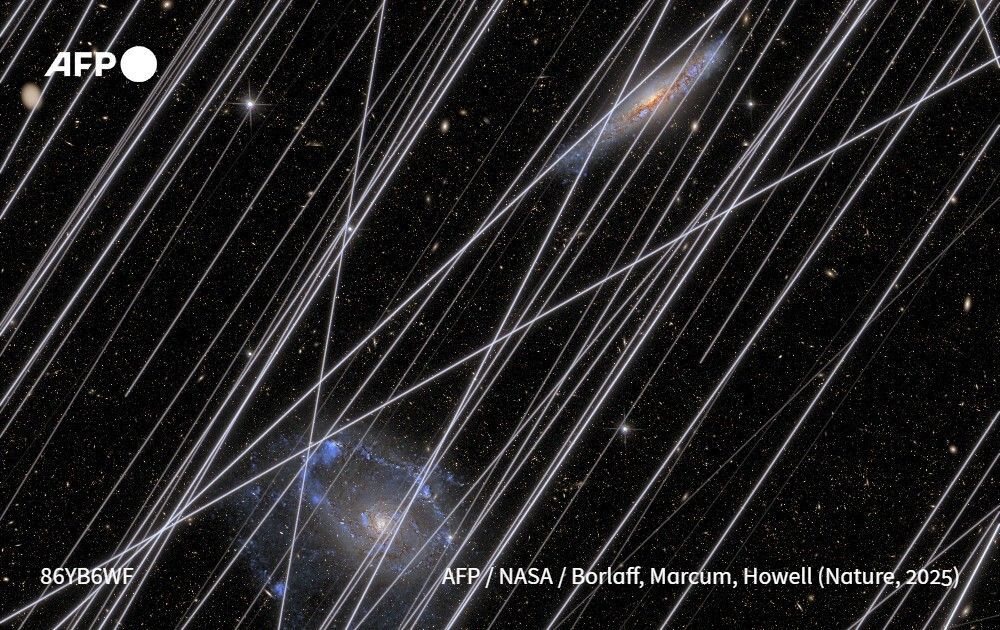
By 2040, ~40% of the images from Hubble Space Telescope, and more than 96% from new and future space telescopes like SPHEREx, ARRAKIHS, and Xuntian will be contaminated by internet satellite constellations.
Read our new NASA article in Nature:
https://t.co/8KCEurrSaC
A big community crowd viewed the historic Artemis II splashdown after a successful test flight around the Moon at NASA Ames Visitor Center @ChabotSpace on April 10.
This special event brought people together to explore the innovations behind the mission and meet the Ames experts that contributed research, engineering, and testing support for Artemis II.
I've updated my megaconstellations list https://t.co/uFI9aoSNnM with details of the planned Blue Origin Terawave system and the enormous CTC1 and CTC2 constellations China just filed with the ITU, for a total of almost 750,000 proposed satellites in the years to come.
Satellite megaconstellations will threaten space-based astronomy: https://t.co/TpkoYKHRTQ -> Planned satellite constellations may swamp future orbiting telescopes: https://t.co/AoJu9yxDFU - planned orbital observatories would see satellites cross nearly all of their images.
A new NASA-led study shows that the increasing number of satellites in low-Earth orbit could ruin up to 96% of images from some orbiting telescopes and space observatories. https://t.co/VSI7WFG6Ok
Light reflected from satellites pollutes the images taken by telescopes orbiting Earth, as well as those on the ground. Without mitigations, this will only get worse
https://t.co/s46kr6BcUP
Humanity launched more satellites in the last four years than in the previous seven decades. Space-telescopes will see how most of their images get contaminated by reflections from internet satellite constellations. Read more behind the paper: https://t.co/rqkHA53OQO
More than half a million satellites are planned to launch by the end of the 2030s, and simulations suggest they will have a severe impact on space-based astronomy https://t.co/MsmgENnOuD
El problema principal es que los telescopios espaciales comparten órbitas con los satélites de telecomunicaciones.
Este video es una representación del aumento del número de satélites en órbita terrestre desde 1958 (Sputnik) hasta las proyecciones en 2040.
Las megaconstelaciones de satélites de internet contaminarán el 40% de las imágenes del telescopio espacial Hubble y más del 96% de las observaciones de los telescopios SPHEREx, Xuntian, y ARRAKIHS.
Link a nuestro nuevo artículo en la revista Nature 👇:
https://t.co/8KCEurrSaC
Hemos lanzado al espacio mas satélites en los últimos 4 años (2021 - 2025) que en las últimas siete decadas. Aunque la mayoría (75%) de los satélites son Starlink, muchos otros llegaran a órbita en los próximos años.
The main problem is that space telescopes in Low Earth Orbit share the similar orbits as the telecommunication satellites.
Here we show a simplified representation of the increased orbital crowding between 1958 (Sputnik) and the projected satellite population for the 2030s.
By 2040, ~40% of the images from Hubble Space Telescope, and more than 96% from new and future space telescopes like SPHEREx, ARRAKIHS, and Xuntian will be contaminated by internet satellite constellations.
Read our new NASA article in Nature:
https://t.co/8KCEurrSaC
Humankind has launch more satellites in the past four years (2021 - 2025) than in the previous seven decades. 75% of the currently active satellites belong to a single operator (SpaceX), but many more will be launched in the coming years.
@JohnBarentine Dear Dr. @JohnBarentine, thank you so much for your message. Your work was without any doubt one of the main pillars that we studied deeply to educate ourselves about this problem. Thanks a lot!
Reflected light from the half a million satellites expected to launch into Earth's orbit in the coming years could contaminate not just ground-based imaging, but also almost all the readings taken by space telescopes, NASA astronomers warn. 🛰️ 🔭 💫
https://t.co/aby1el0n1H
Plus:
- Ending the Gateway Space station program, set to ensure human presence on the Moon in the coming decades.
- End green aviation research programs to reduce air pollution and fuel waste.
NASA Administrator Janet Petro has announced the following changes in the budget president request:
- End the International Space Station in 2030 to replace it with a private space station.
- End Orion, SLS, and the Artemis program.
- A 47% cut in NASA Science Program.
I have reinstalled this app to communicate the latest news from NASA budget cuts, in an attempt to communicate them as wide as possible.
More in a few.