ASI under Ministry of Culture, Govt of India is the premier organization for the archaeological research and protection of the cultural heritage of the nation.
During the ongoing conservation works by ASI at the Trimbakeshwar Temple, Nashik, a stone Shivalinga was discovered during the desilting of the temple’s historic water tank, locally known as Amrit Kund.
The Shivalinga was found at the bottom of the tank while removing accumulated silt and debris.
This remarkable discovery highlights how conservation efforts continue to reveal and preserve India’s rich cultural and sacred heritage.
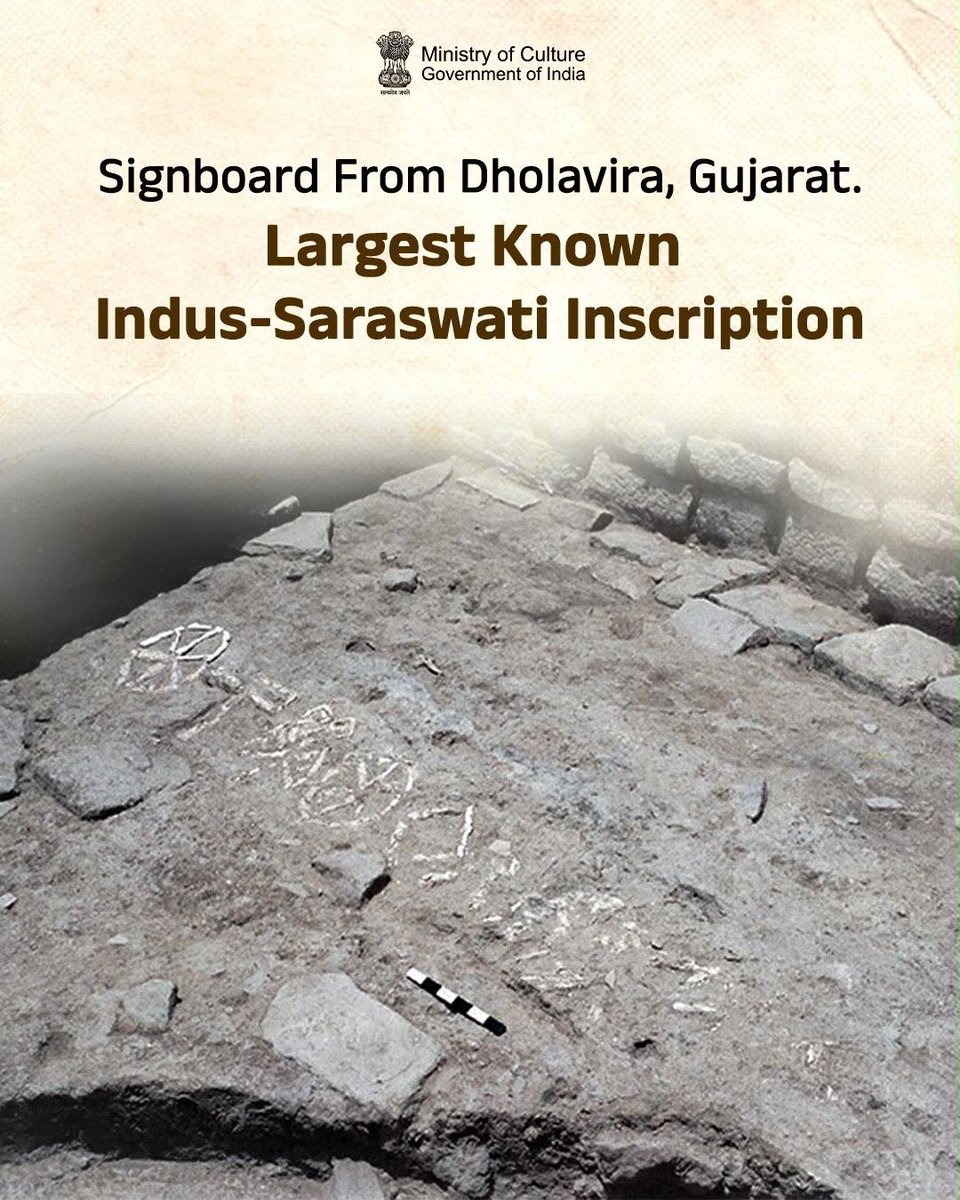
The most elaboratly planned city with one of the rarest find in the form of this tremendous Signboard, strategically placed at the East Gate of the Upper Town of Dholavira, the @UNESCO World Heritage Site
One of the most remarkable discoveries from Dholavira, Gujarat, is this monumental Signboard, the largest known inscription from the Indus-Saraswati Civilisation and 𝐰𝐨𝐫𝐥𝐝’𝐬 𝐨𝐥𝐝𝐞𝐬𝐭-𝐤𝐧𝐨𝐰𝐧 𝐒𝐢𝐠𝐧𝐛𝐨𝐚𝐫𝐝. Comprising 10 large signs/letters made of Gypsum (each sign being appx. 36 cm tall) and the entire inscription stretching nearly 3 metres in length.
The site, located on the arid island of Khadir in Gujarat, was extensively excavated by the @ASIGoI over 13 field seasons from 1989 to 2005, unveiling indigenous urban sophistication in ancient Bharat.
From advanced water engineering to public inscriptions, Dholavira continues to reveal the remarkable capabilities of the Indus-Saraswati people, a legacy deeply rooted in the cultural and civilisational heritage of Bharat.
#IndusSaraswatiCivilisation #Dholavira #CivilisationalContinuity #BharatLivingCivilisation
One of the most remarkable discoveries from Dholavira, Gujarat, is this monumental Signboard, the largest known inscription from the Indus-Saraswati Civilisation and 𝐰𝐨𝐫𝐥𝐝’𝐬 𝐨𝐥𝐝𝐞𝐬𝐭-𝐤𝐧𝐨𝐰𝐧 𝐒𝐢𝐠𝐧𝐛𝐨𝐚𝐫𝐝. Comprising 10 large signs/letters made of Gypsum (each sign being appx. 36 cm tall) and the entire inscription stretching nearly 3 metres in length.
The site, located on the arid island of Khadir in Gujarat, was extensively excavated by the @ASIGoI over 13 field seasons from 1989 to 2005, unveiling indigenous urban sophistication in ancient Bharat.
From advanced water engineering to public inscriptions, Dholavira continues to reveal the remarkable capabilities of the Indus-Saraswati people, a legacy deeply rooted in the cultural and civilisational heritage of Bharat.
#IndusSaraswatiCivilisation #Dholavira #CivilisationalContinuity #BharatLivingCivilisation
Khirkee Masjid, built between 1351 and 1358 CE, is located at Khirkee near Malviya Nagar in South Delhi. Built during the reign of Firoz Shah Tughlaq, the mosque is one of the seven mosques commissioned by Khan-i-Jahan Junan Shah, the Prime Minister of Firoz Shah Tughlaq.
The mosque is known for its fortress-like appearance, with battered corner bastions, a double-storeyed rubble masonry structure, and perforated stone windows (khirkees) on the upper level, from which it derives its name. Its courtyard is uniquely divided into twenty-five squares, with domed and open sections that provide structural support and natural light, reflecting an innovative design in medieval Delhi architecture. Another hallmark of the Tughlaq architecture ie Multiple domes, is also seen here in the form of nine domes, extant over the northeast corner of the grand mosque.
Very heartening to know about the successful repatriation of Tamil Nadu’s priceless antiquities from Australia, bringing these invaluable treasures back to their rightful home.
Originally from historic temples in Tamil Nadu, these treasured artefacts, dating back to the 11th and 12th centuries, include a ceremonial bronze trident of Goddess Bhadrakali, a granite idol of Nandi, and a basalt sculpture of the six-headed Karthikeya.
Their return marks another significant milestone in reclaiming and preserving India’s rich cultural heritage.
The Government’s sustained efforts to bring our cultural treasures back to the country are truly commendable. Since 2014, there has been remarkable momentum in the repatriation of antiquities, with more than 600 such artefacts returned to India, a highly appreciable achievement in safeguarding our civilisational legacy reflecting a strong commitment to the vision of “Vikas Bhi, Virasat Bhi.”
@PMOIndia@MinOfCultureGoI@MEAIndia@ASIGoI
Angkor Wat Temple, Siem Reap, Cambodia, built between the 12th and 14th centuries and dedicated to Vishnu as Vishnu-loka, is one of the most spectacular monuments of temple architecture.
The conservation of the temple began in November 1986 under a bilateral agreement between the Government of India and the State of Kampuchea and continued until 1993 in close cooperation with the Cambodian Government.
During this seven-year conservation project, the northern embankment of the moat, gateway, semi-vaults of the fourth enclosure, Esplanade, Samudra Manthana Gallery, Third Enclosure Gallery, northern corner of the second enclosure, Northern Library, and the central tower of Angkor Wat Temple were conserved and restored.
@narendramodi@MinOfCultureGoI@gssjodhpur@tourismgoi@indembcam@PIB_India@Rao_InderjitS@incredibleindia@DDNewslive@airnewsalerts
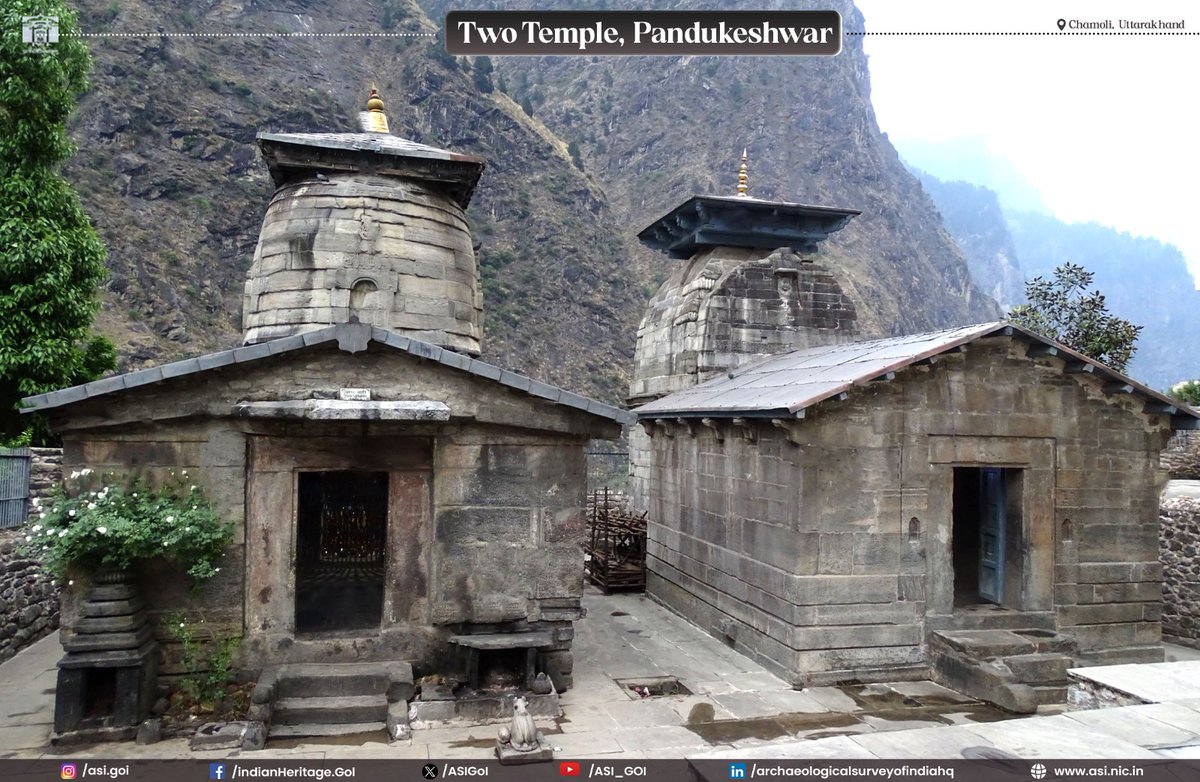
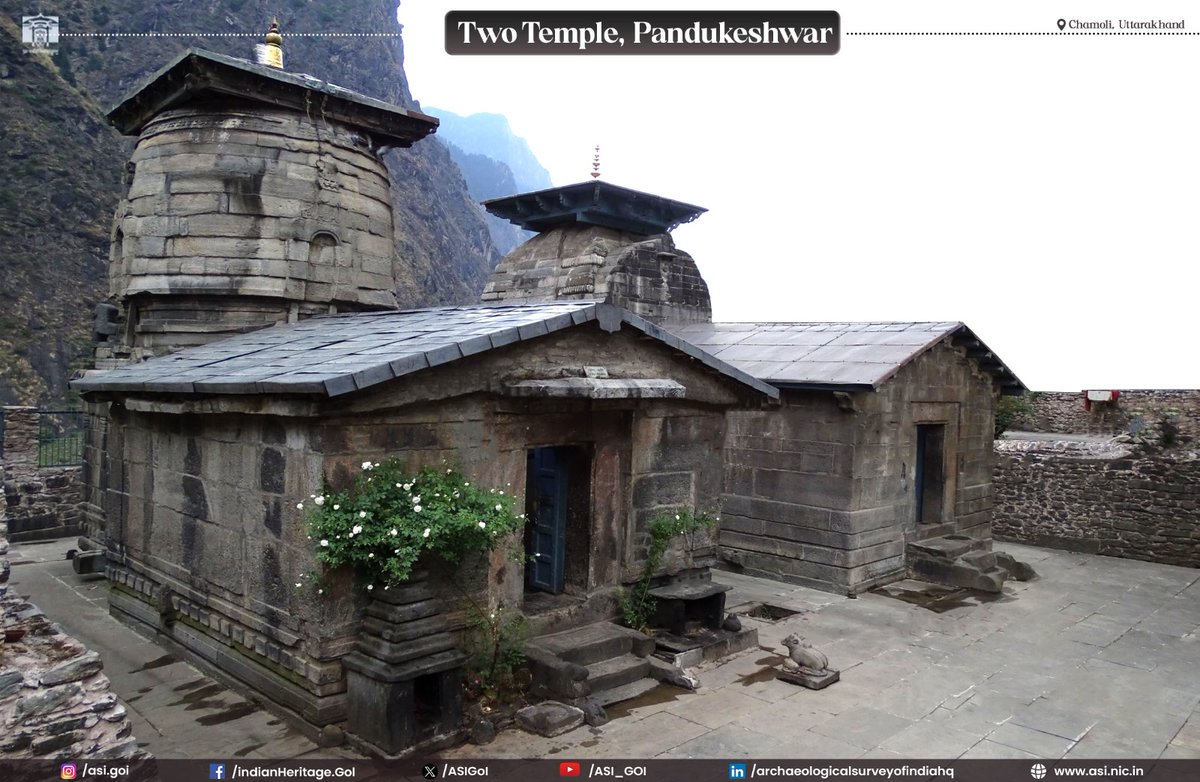
Two Temples at Pandukeshwar, known as Yogadhyanbadri and Vasudevbadri, are dedicated to Vishnu and serve as the winter abode of the presiding deity of Badrinath temple. The temple complex, located in Chamoli, Uttarakhand, also includes the restored remains of another temple, locally known as the Laxminarayan Temple.
The Yogadhyanbadri Temple consists of a garbhagriha, antarala, and mandapa. It has a unique architectural design, with a square plan and a circular varandika that continues into the shikhara, giving the temple a cylindrical dome-like appearance. The Vasudevbadri Temple is a Rekha Shikhara temple. Stylistically, these temples are assignable to the 9th–10th century C.E.
The temples of Pandukeshwar are notable for their diverse architectural styles, showcasing a harmonious blend of Dravida and Nagara traditions.
In a profound testament to the civilisational resonance anchoring modern diplomacy, Australia is set to repatriate three culturally significant ancient antiquities to India.
These artefacts include a ceremonial bronze trident of Goddess Bhadrakali, a majestic granite idol of Nandi, and a basalt sculpture depicting the six-headed Karttikeya.
All of these items date back to the 11th & 12th centuries and were originally sourced from historic temples in Tamil Nadu.
The official announcement of this repatriation coincides with Hon'ble Prime Minister Shri @narendramodi Ji's visit to Australia, further emphasising the strong cultural alignment between the two nations🇮🇳🤝🇦🇺
#CultureUnitesAll
The Sarangatheeswara Temple, also known as Thiruvagneeswarar Temple, is located at Chittur village in Ponnamaravathi taluk, Pudukkottai district, Tamil Nadu. The temple seems to have been built by the Irukkuvel king Buti Vikramakesari in the closing years of the 9th century CE, as mentioned in a later inscription.
The temple consists of a garbhagriha, an ardhamandapa, and a maha-mandapa, which was added in a later phase, but is now in ruins. The temple's elevation is preserved only up to the prati moulding and features a padabhanda adhisthana.
The devakoshta images are conventional in design, with a few belonging to a later period. Several loose sculptures of parivaradevatas, exhibiting the fine craftsmanship characteristic of the Early Chola period, are also found at the site.
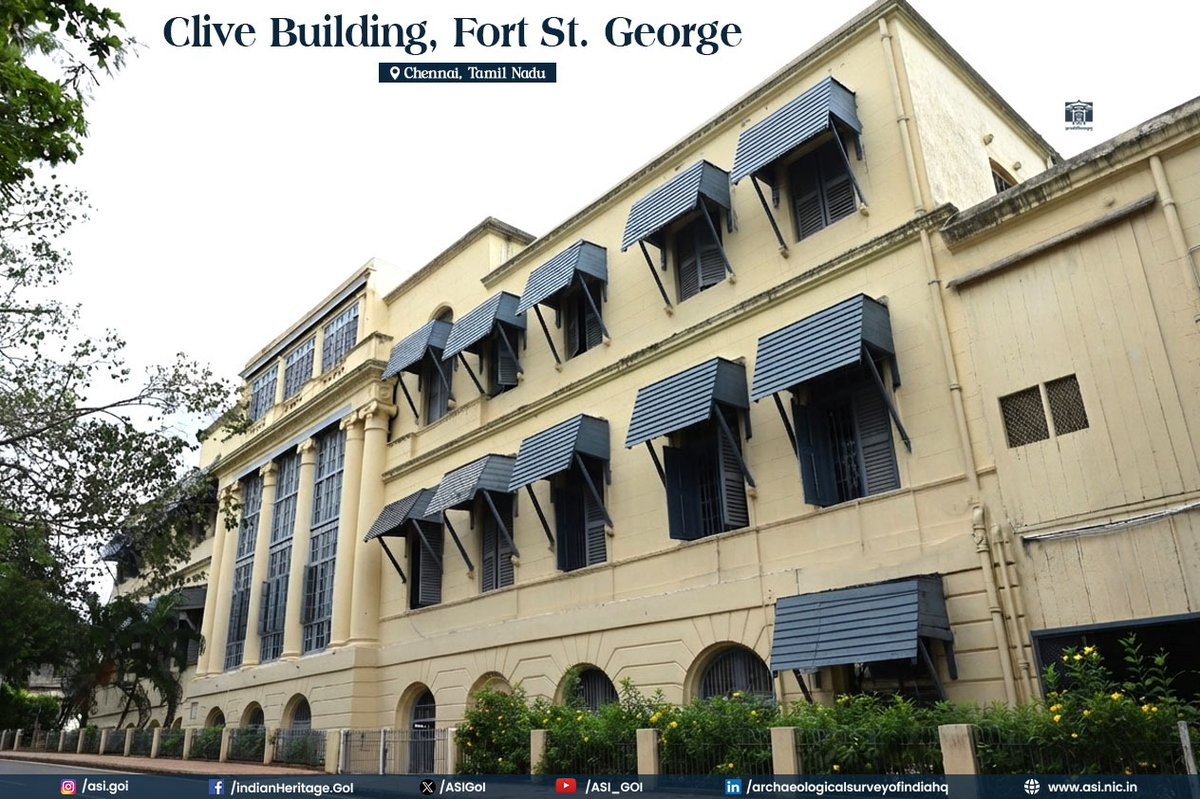
Clive's Building, also known as Admiralty House, is one of the twelve heritage buildings inside Fort St. George, Chennai, protected and maintained by the Archaeological Survey of India. Located opposite St. Mary's Church on Charles Street, the building was originally owned by a wealthy Armenian merchant and was later rented by Robert Clive, first British Governor of Bengal Presidency, who lived here with his wife for some time after their marriage.
Initially, the hall of the building served as the court of three justices and was later used as a banqueting hall for state functions. The large three-storeyed building has a square plan with arched openings, wooden windows, and tall pillars. The first floor features spacious halls with high ceilings and circular columns. A gallery known as Clive's Corner, displaying information about Robert Clive, is open to the public.
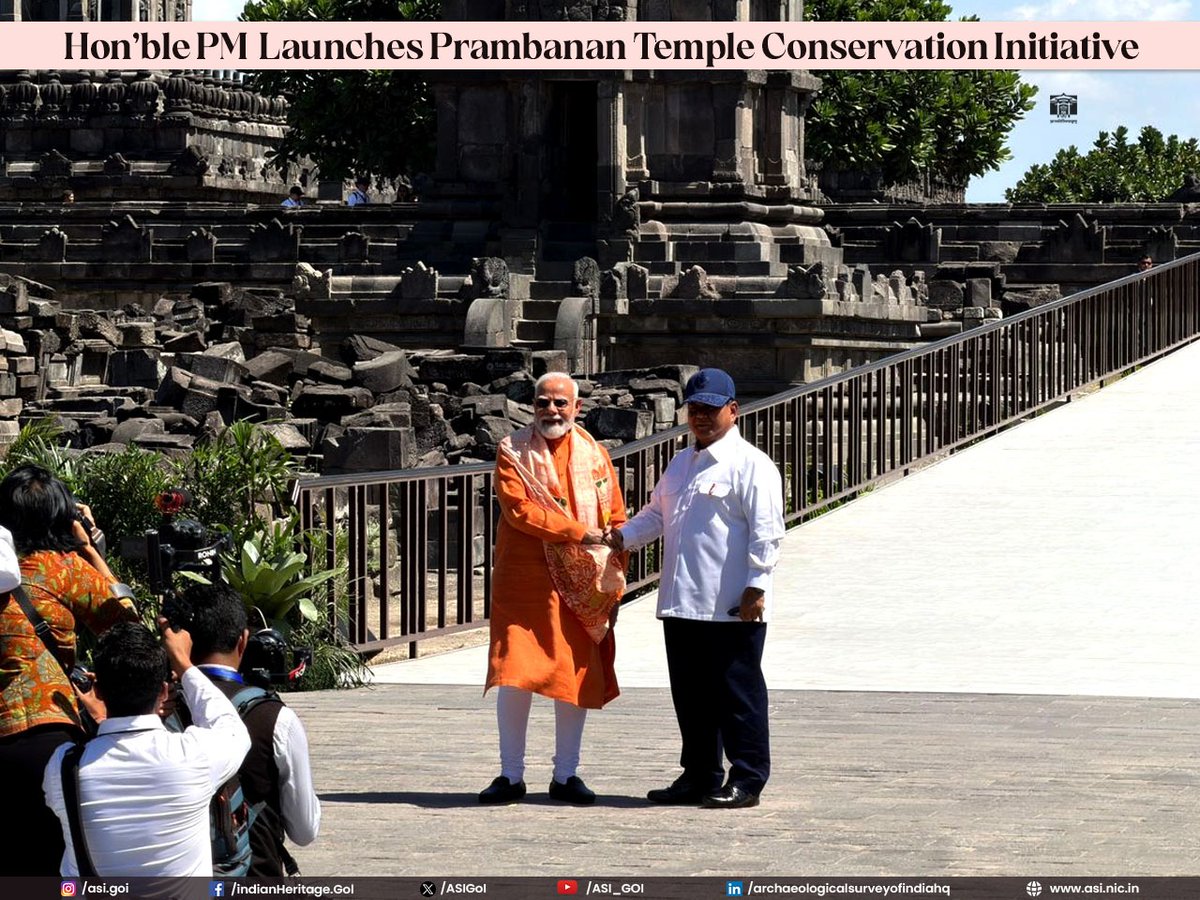
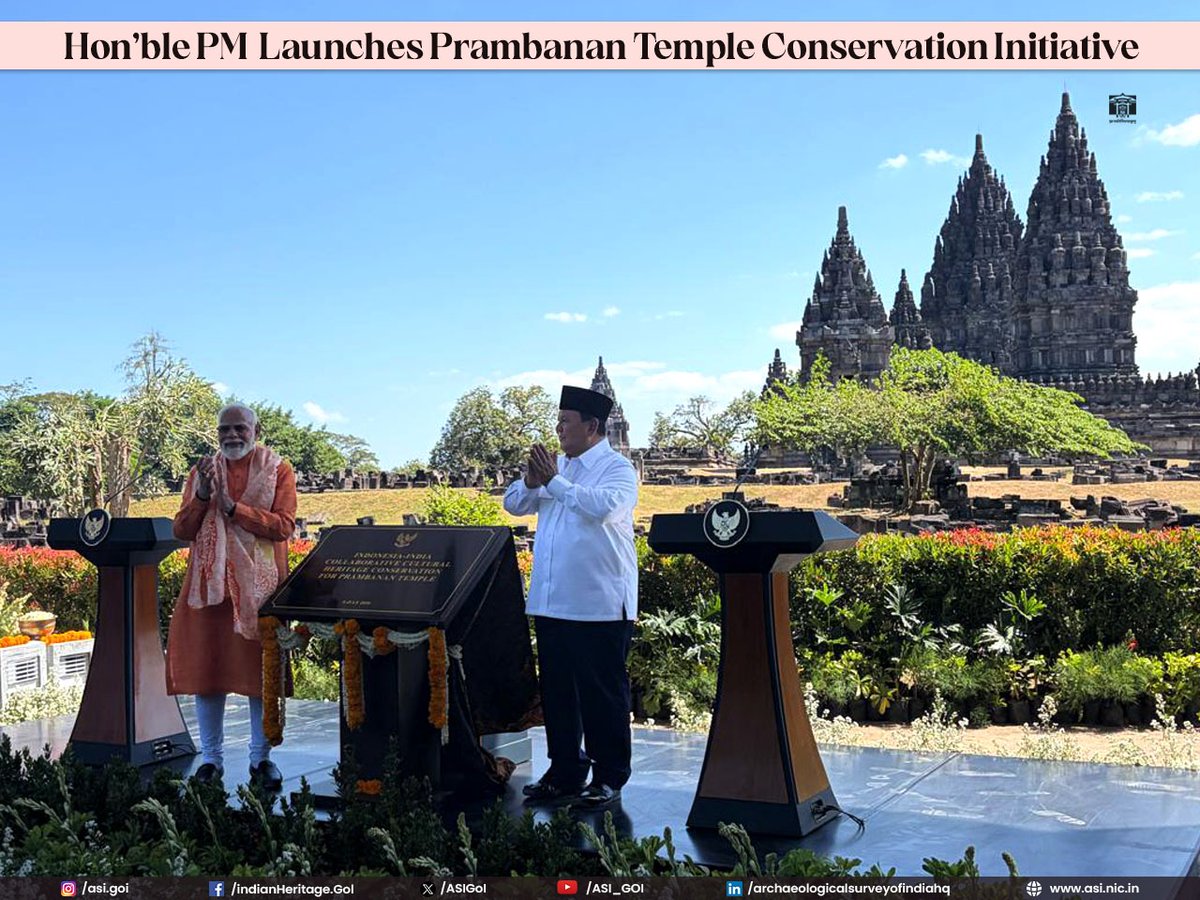
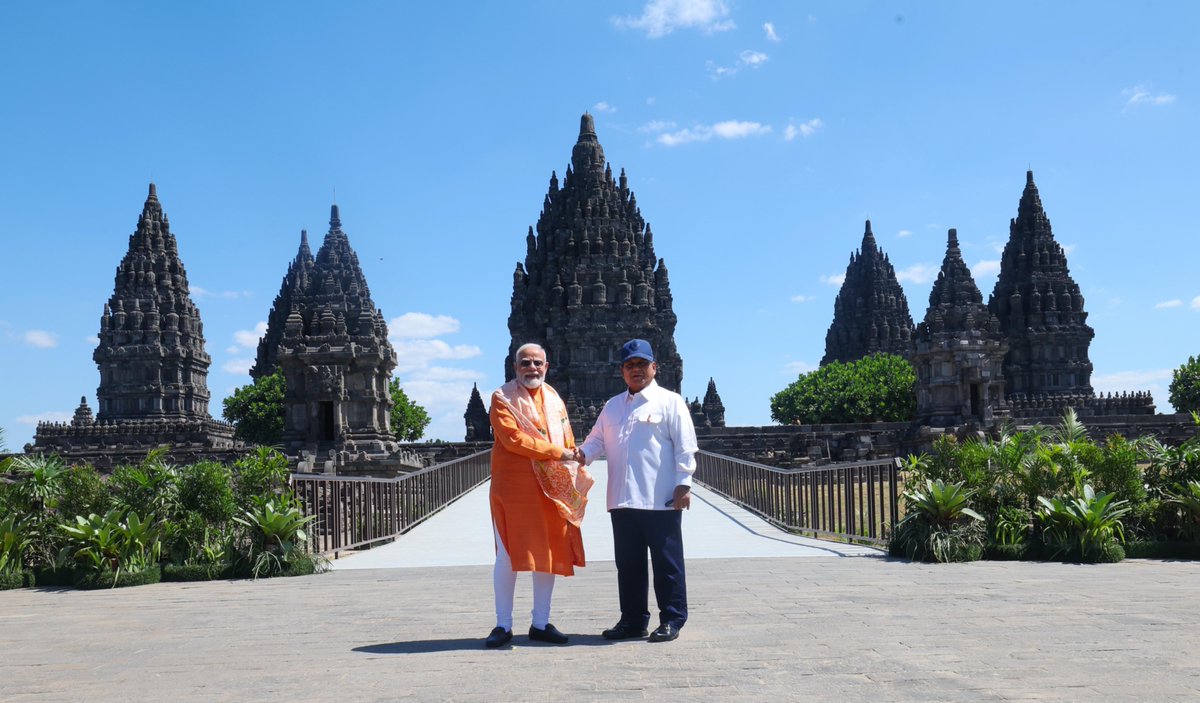
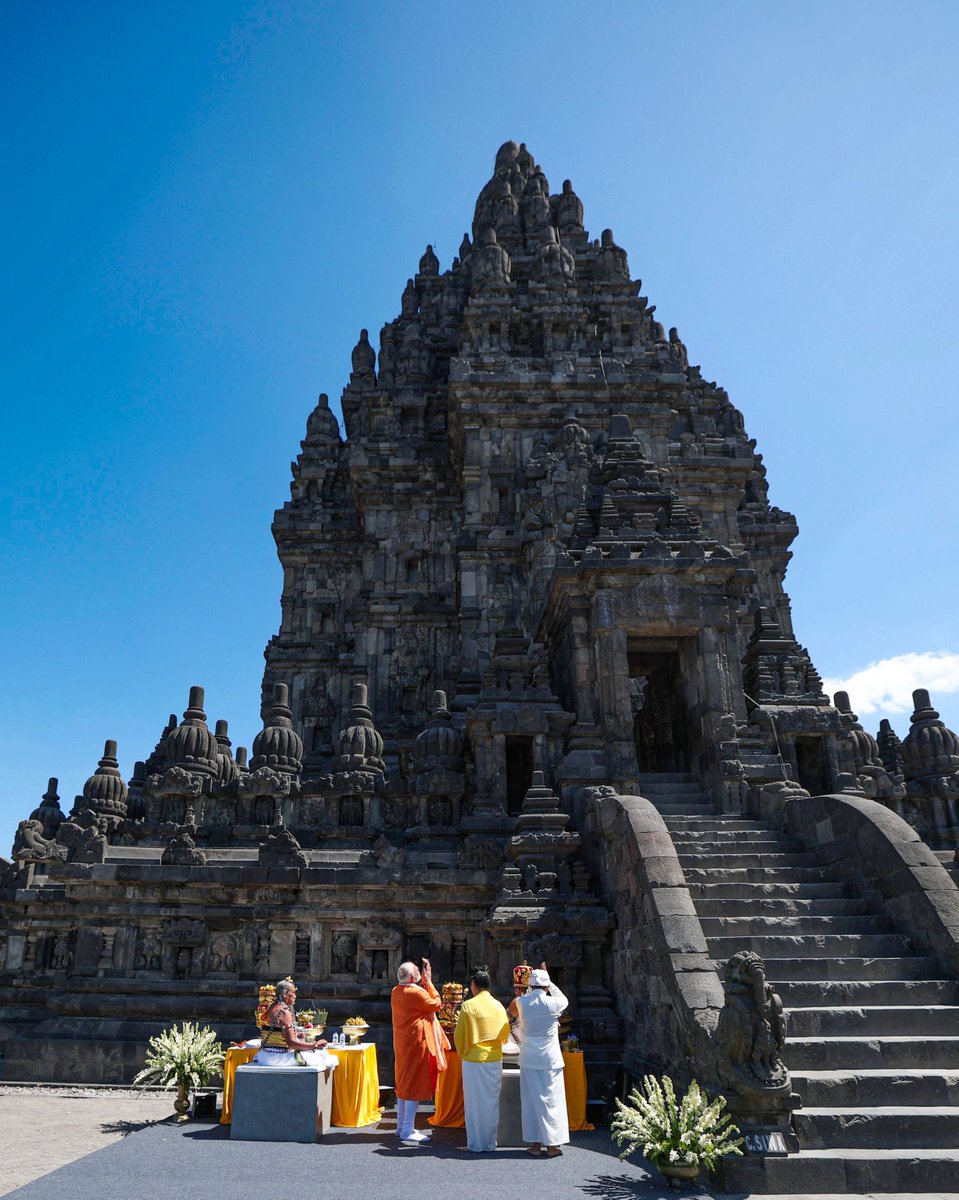
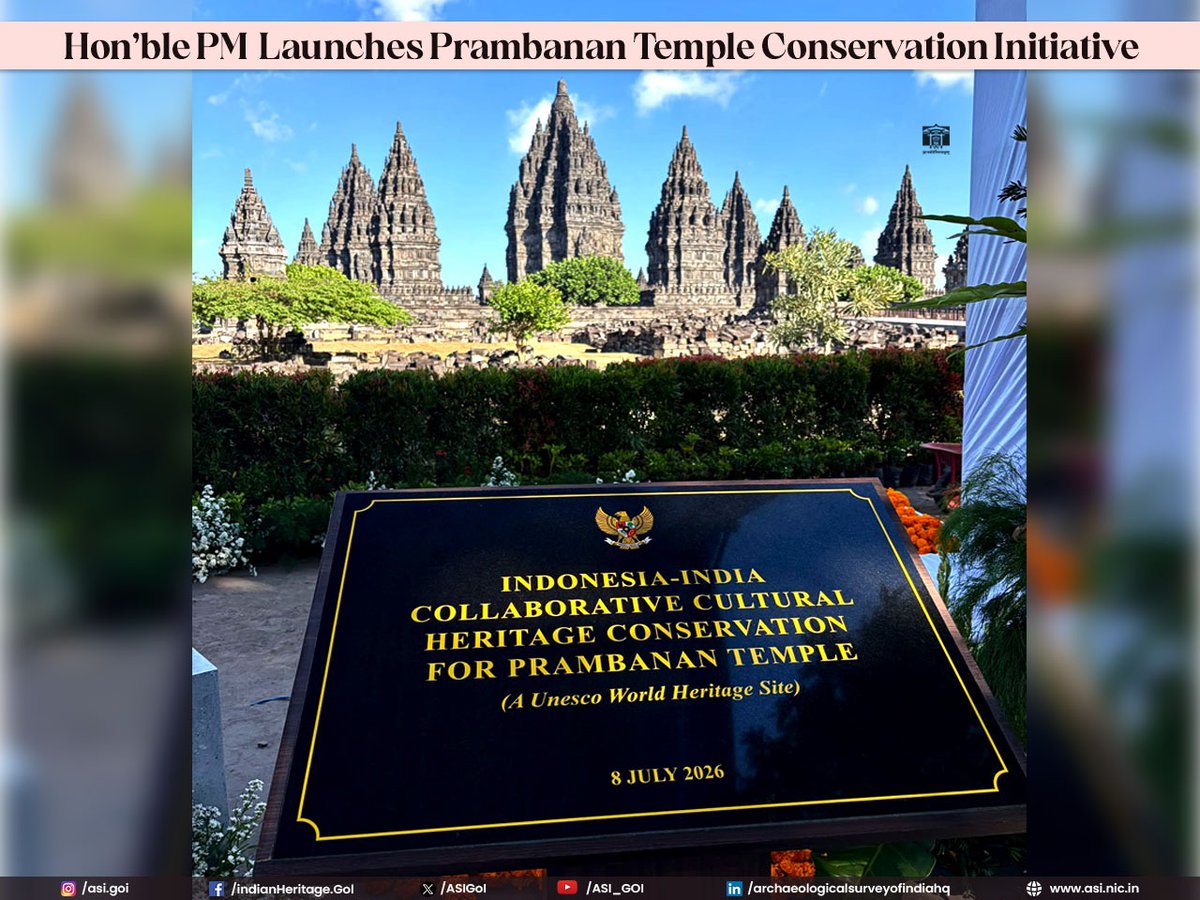
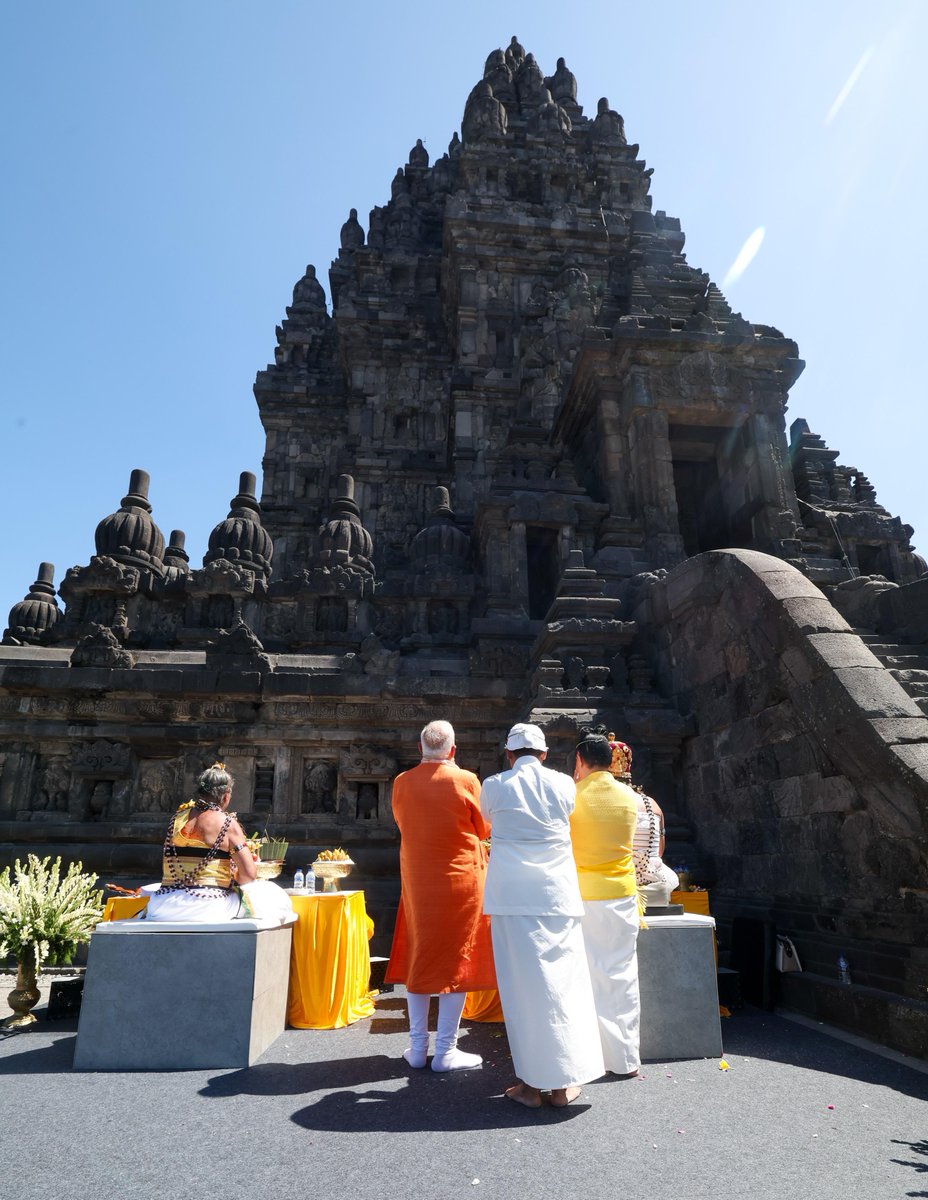
The Archaeological Survey of India is honoured to undertake the conservation of Prambanan Temple, a UNESCO World Heritage Site in the Special Region of Yogyakarta, Indonesia, under the India–Indonesia Collaborative Conservation initiative jointly launched by Hon'ble Prime Minister Shri Narendra Modi and President of Indonesia, Prabowo Subianto.
This landmark collaboration is a testament to the enduring civilisational ties between India and Indonesia, reflecting a shared commitment to preserving our rich cultural heritage and passing it on to future generations.
Dating back to the 10th century CE, Prambanan Temple is Indonesia's largest Hindu temple complex dedicated to Shiva. The sprawling complex consists of 240 temples, with three magnificent central shrines devoted to Shiva, Vishnu, and Brahma. These are accompanied by three temples dedicated to their respective vahanas (divine mounts), while beautifully carved reliefs narrating the story of the Ramayana adorn the temple walls.
President Prabowo Subianto and I inaugurated the UNESCO World Heritage Prambanan Temple Compound Restoration and Conservation Project. This initiative is a shining example of the enduring civilisational bonds between India and Indonesia, rooted in a shared heritage that has connected our people for centuries.
@prabowo
Prime Minister @narendramodi and Indonesian President Prabowo Subianto jointly launch the conservation project of the Prambanan Temple Complex in Yogyakarta, Indonesia.
ASI Additional Director General Jahanvij Sharma says the conservation and restoration of the Prambanan Temple Complex and its Perwara temples require meticulous planning and careful execution to preserve their original character.
He adds that, alongside conventional conservation techniques, Artificial Intelligence is also being used to support the restoration process.
@MEAIndia@IndianEmbJkt #PMModiInIndonesia #PMModiIndonesiaVisit #IndiaIndonesia #PrambananTemple #ASI
Whether it is the journey to Kailash Mansarovar in Lhasa or this sacred Prambanan Temple in Indonesia, the same chant echoes everywhere, the chanting of the Mahamrityunjaya Mantra. Everyone was chanting "Om Namah Shivaya." It was deeply touching. As we are beginning the restoration of this magnificent temple complex, which is a UNESCO World Heritage Site, I am fully confident that pilgrims from India will certainly come here: PM @narendramodi
सनातन संस्कृति की अमर विरासत के संरक्षण की दिशा में एक ऐतिहासिक पहल।
यूनेस्को विश्व धरोहर, इंडोनेशिया के ऐतिहासिक प्रम्बानन शिव मंदिर का जीर्णोद्धार भारत करेगा। इस प्राचीन मंदिर के संरक्षण में भारत की भागीदारी हमारी साझा सांस्कृतिक विरासत और सनातन परंपराओं के प्रति अटूट प्रतिबद्धता का प्रतीक है।
यह पहल भारत और इंडोनेशिया के बीच सदियों पुराने सांस्कृतिक संबंधों को नई मजबूती देगी और उस विरासत को और समृद्ध करेगी, जिसने समय और सीमाओं से परे दोनों देशों को एक सूत्र में बांधे रखा है।
With the addition of the Shiva Temple at Palampet, Mulugu district in Telangana, and the Ancient Mound and Excavated Remains at Kottadibba (Gottiprolu), Tirupati district in Andhra Pradesh, India’s list of centrally protected monuments and sites has just grown richer.
The Shiva Temple, dating to the Kakatiya period (950–1323 CE), is celebrated for its Trikutalaya plan, sculpted parapets, intricately carved doorways and elegant jali work.
The Kottadibba excavation site (Gottiprolu), dating between the 1st century BCE to the 3rd century CE, preserves massive brick structures and has yielded a remarkable collection of antiquities, including terracotta figurines, copper coins, iron objects, stone tools, beads and a variety of pottery.
Now under the protection of the Archaeological Survey of India (ASI), these two sites will be preserved for future generations while enriching India’s protected cultural legacy.
Sarnath, one of the four holiest sites in Buddhism, occupies a revered place in the spiritual and cultural history of India. It was here that, in the 6th century BCE, the Buddha delivered his first sermon to five ascetics after attaining enlightenment.
The site is also sacred to the Jain faith, as it is associated with the penance and nirvana of the eleventh Tirthankara, Shreyansanatha.
These archival photographs preserve glimpses of Sarnath’s enduring legacy - a timeless landscape of faith and history.
@narendramodi@MinOfCultureGoI@gssjodhpur@Rao_InderjitS@tourismgoi@uptourismgov@MIB_India@PIB_India@incredibleindia@DDNewslive
The Archaeological Garden at Deeg Bhawans is a fine example of the char-bagh (four-fold) garden layout. It is divided into four equal sections by four canals radiating from a central octagonal tank, creating a symmetrical and well-planned design. A distinctive feature of the garden is its sunken layout, with deeper parterres and canals. Unlike earlier Mughal gardens with ornate stone flower-beds, it was designed to support a thicker form of floriculture while maintaining the disciplined tree plantation of Mughal horticulture.
The garden's architectural layout is enhanced by flagged pathways, ramps, and flights of steps connecting it to the surrounding palaces. Water features such as canals, fountains, cascades, and chutes play an important role in its design, adding to the beauty of the landscape.
Another important part of the complex is Kachcha Bagh, also known as Rani Bagh, which served as the royal garden of the local rulers. Located behind Gopal Bhawan across the Gopal Sagar, it is connected to the palace through Singh Pol and Suraj Gate. The garden features a central rectangular pavilion enclosed by a plastered stone wall and is planted with various fruit trees. It dates to the 18th century C.E.
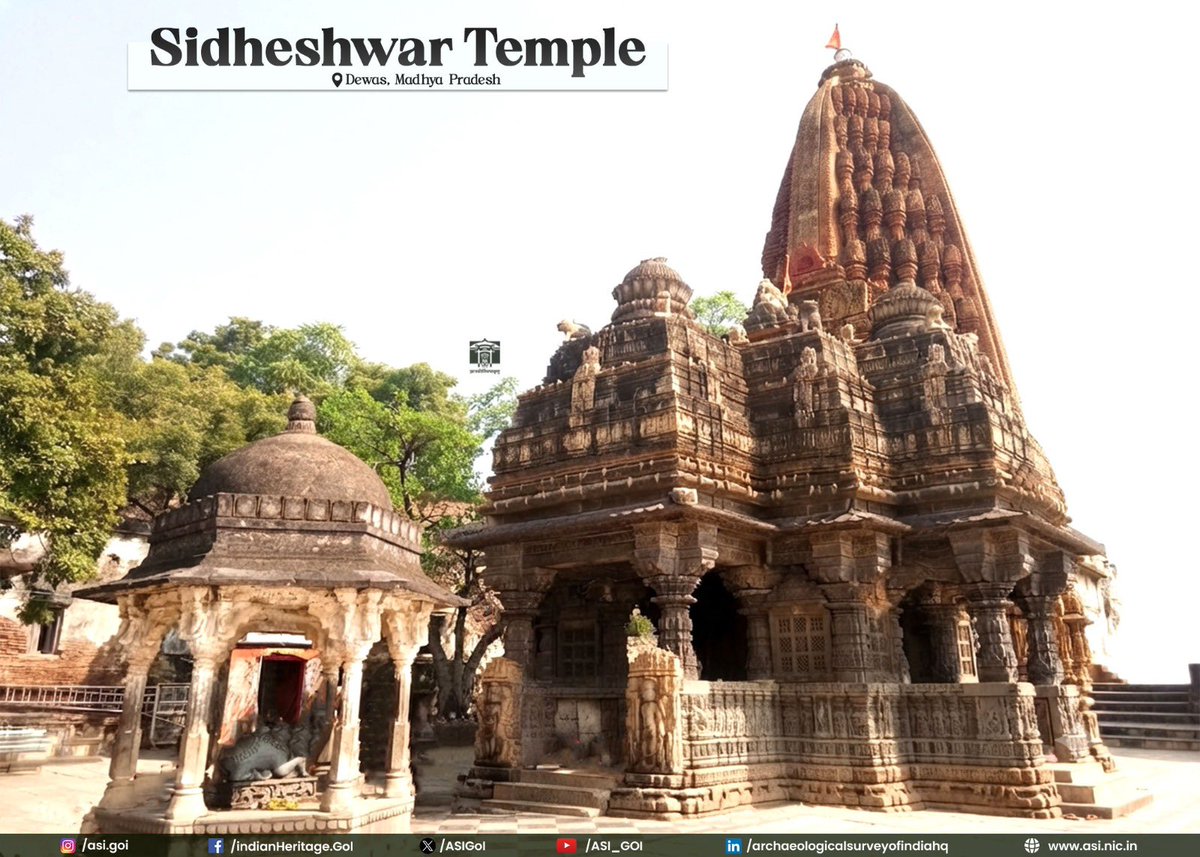
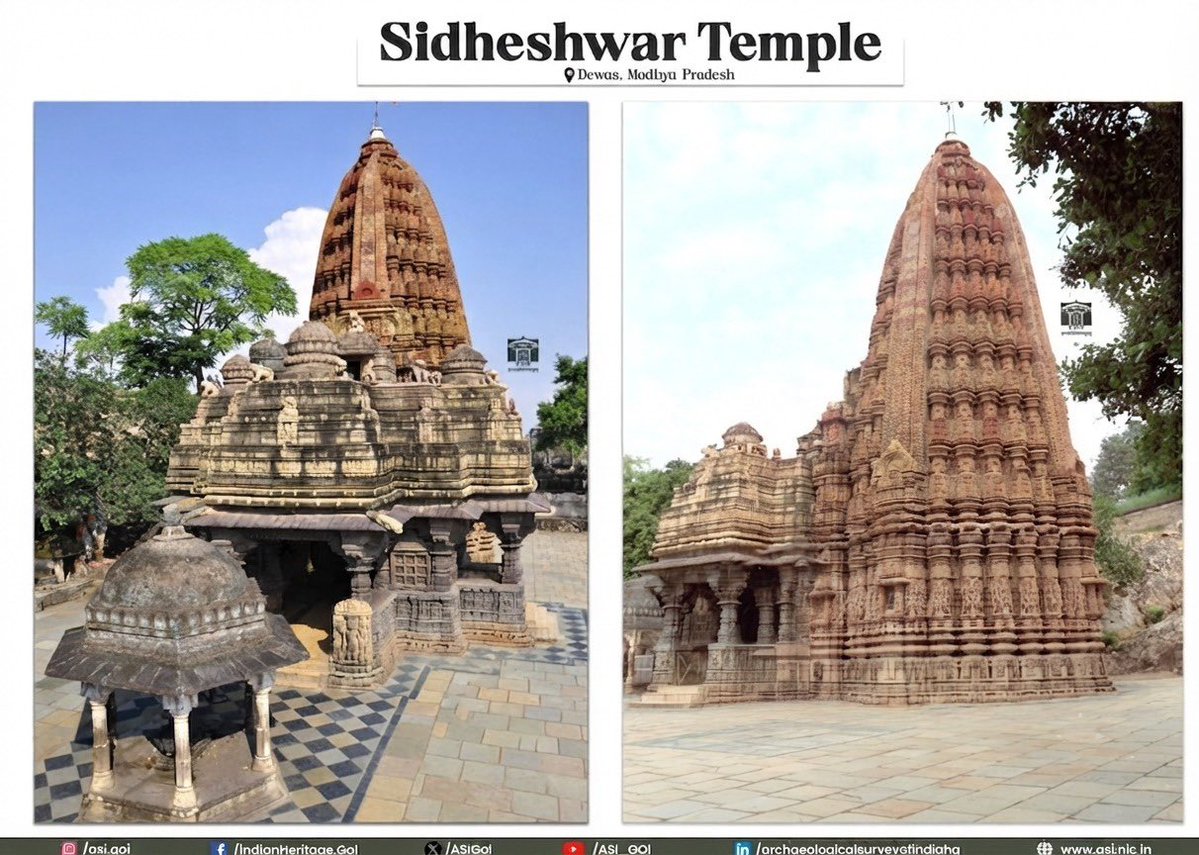
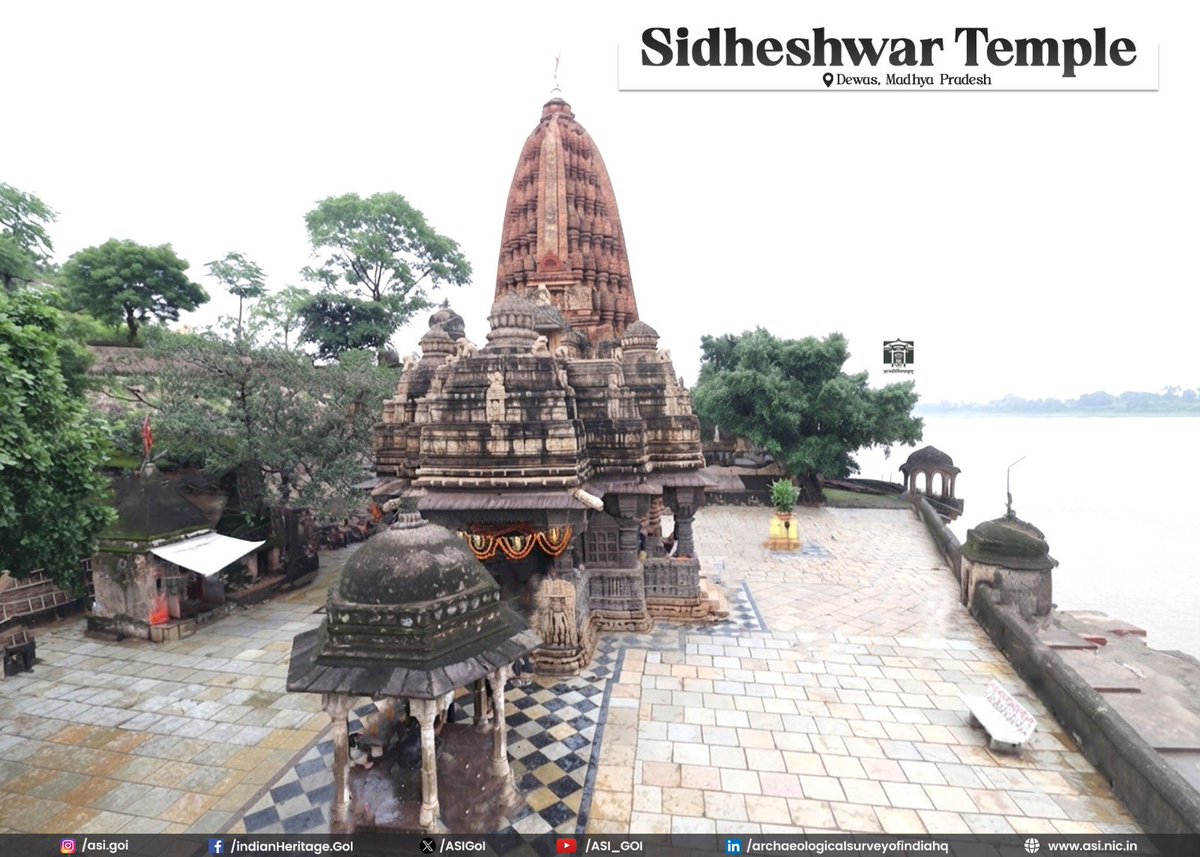
Standing gracefully on the right bank of the Narmada river, the Siddhesvara Temple is a fine example of the Bhumija style of architecture. Built on a distinctive star-shaped plan, the west-facing temple is crowned by a towering nine-storeyed shikhara adorned with miniature spires.
Intricate carvings of deities, elegant surasundaris, and floral motifs embellish its walls, while the main niches enshrine sculptures of Andhakantaka, Nataraja, and Chamunda, making it a masterpiece of medieval temple art.